
15 min 25 sec
Ganbatte!: The Japanese Art of Always Moving Forward
Discover the transformative Japanese philosophy of Ganbatte. This guide explores how embracing resilience, steady effort, and a determined mindset can help you navigate challenges in your professional life, health, and personal relationships.
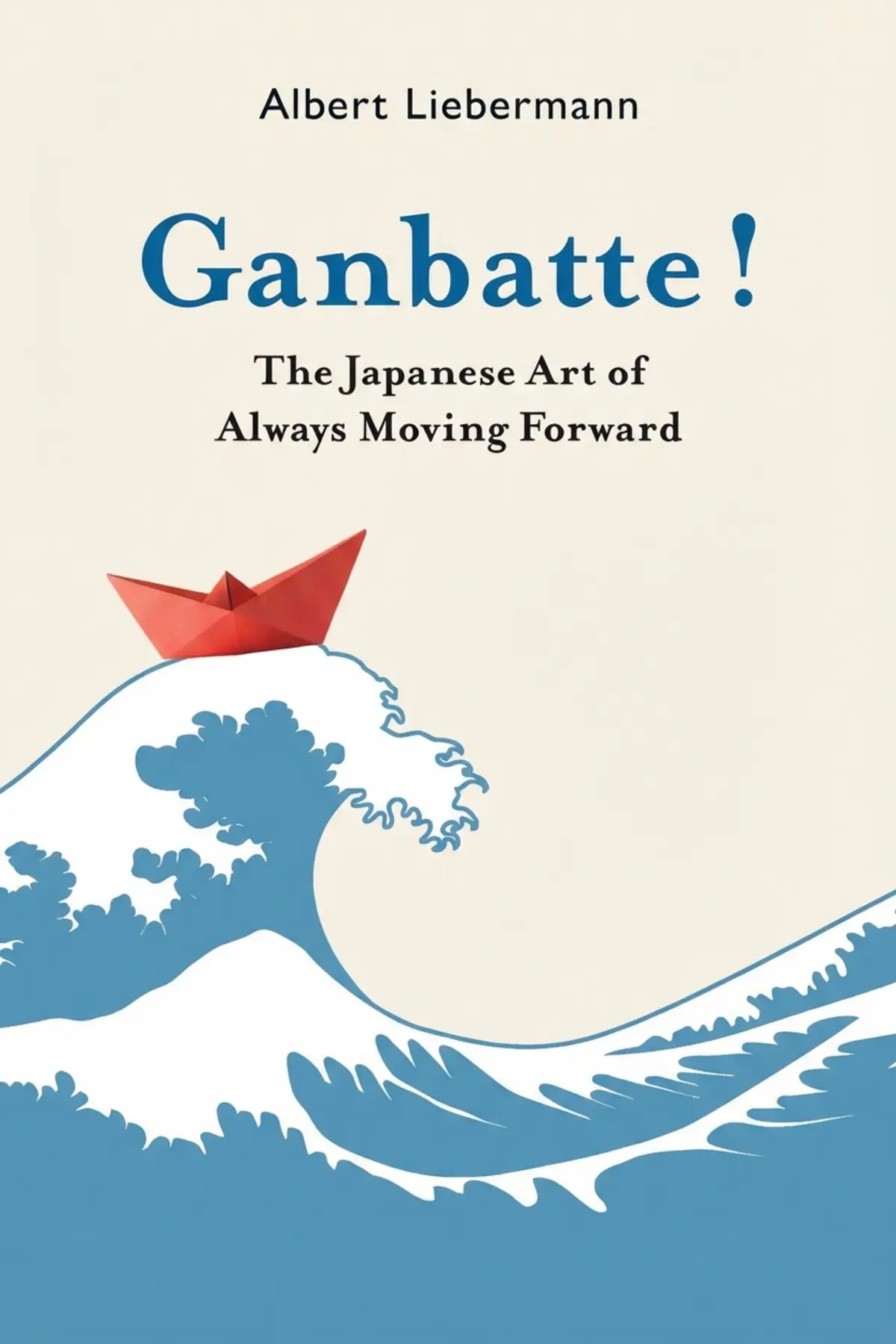
Table of Content
1. Introduction
1 min 36 sec
Have you ever found yourself in a situation where the path forward seemed completely blocked, or where the sheer weight of a challenge made you want to turn back? In our modern world, we often look for shortcuts or quick fixes to our problems. We wish for luck, we hope for a break, and we wait for the stars to align. But there is a different way of looking at the world—a perspective rooted in a centuries-old tradition that focuses not on the outcome, but on the intensity and sincerity of the effort itself.
You may have heard of the concept of finding your life’s purpose, but there is a vital companion to that idea which deals with the daily grind of making that purpose a reality. This is the spirit of Ganbatte. It is a word you will hear shouted in Japanese sports stadiums, whispered in quiet offices, and taught to children the moment they face their first hurdle. It is a call to action that says: do your absolute best, stay the course, and do not let the difficulty of the moment dim your inner fire.
This isn’t just about working harder; it’s about a fundamental shift in how we relate to the world around us. Instead of viewing a challenge as a sign to stop, the Ganbatte mindset views it as the very reason to continue. It’s a philosophy that values the process over the prize. In the following sections, we are going to explore how this way of thinking can be applied to your work, your health, and even your most cherished relationships. We will look at how cultural symbols and historical stories provide a blueprint for a life lived with unwavering determination. By the time we finish, you’ll have a new set of tools to face whatever waves life might send your way.
2. The Power of Constant Motion
2 min 34 sec
Imagine standing before a towering ocean wave with nothing but a small boat and your own strength. Discover how the spirit of persistence can turn a terrifying struggle into a journey of growth.
3. Cultivating Patience and Creativity
2 min 26 sec
What can a stationmaster cat and a patient Zen master teach us about success? Learn why the most significant breakthroughs often require a blend of imaginative thinking and the ability to wait.
4. Applying Perseverance to Professional Life
2 min 25 sec
Success in your career isn’t just about talent; it’s about how you handle the ‘messy middle.’ Discover practical strategies for maintaining your drive in business and creative projects.
5. A Mindful Approach to Body and Heart
2 min 18 sec
How can a centuries-old philosophy help you stay fit and find lasting love? Explore why small, consistent actions are the secret to vitality and deep human connection.
6. Preparation and the Art of Resilience
2 min 32 sec
Success belongs to those who prepare for the winter while it is still summer. Learn the vital lesson of the ant and how to build a life that can withstand any storm.
7. Conclusion
1 min 34 sec
As we reach the end of this exploration, it’s worth taking a moment to reflect on the throughline that connects all these ideas. Whether we are looking at the art of Hokusai, the discipline of a writer, or the daily habits of a healthy relationship, the message is remarkably consistent: the quality of our lives is defined by the quality of our effort. Success isn’t a destination that we reach and then stop; it is a way of traveling. It is the refusal to let setbacks define us and the commitment to keep showing up, day after day, with a sincere heart.
Ganbatte reminds us that we have more power than we often realize. We cannot control the waves of the ocean, the timing of the winter, or the actions of others. But we have absolute control over our own determination. We can choose to be the rower who keeps pulling the oar. We can choose to be the ant who prepares for the future. We can choose to be the person who paints that first eye on the doll and then does whatever it takes to earn the right to paint the second.
As you move back into your daily life, carry this spirit with you. When you face a challenge, don’t just hope for a lucky break. Instead, lean into the work. Find the creative solution. Be patient with yourself and with others. Remember that every expert was once a beginner who simply refused to quit. Life will always have its storms, but with the spirit of Ganbatte in your heart, you have everything you need to navigate them. Keep moving forward, keep doing your best, and trust in the process. Your journey is just beginning.
About this book
What is this book about?
Many people seek a sense of purpose, but finding that purpose is only half the battle; the other half is the determination to keep going when things get difficult. This is the heart of Ganbatte, a Japanese concept that translates roughly to doing one's best and persevering through adversity. This book serves as a roadmap for anyone looking to cultivate a more resilient spirit. It moves away from the idea of relying on external luck, instead encouraging individuals to tap into their own inner reservoirs of strength. Through a blend of cultural symbols, historical lessons, and modern anecdotes, the text illustrates how persistence can be applied to diverse areas such as creative arts, entrepreneurship, fitness, and romantic partnerships. From the craftsmanship of ancient swords to the simple presence of a stationmaster cat, the stories within offer a practical philosophy for long-term success. It promises to shift your perspective on failure, viewing it not as an end point, but as a necessary step in the journey of growth. By adopting this mindset, you can learn to face life's inevitable waves with a calm, focused, and unwavering heart.
Book Information
About the Author
Albert Liebermann
Albert Liebermann is a philosopher and author who holds a deep-seated interest in the realms of art, literature, and the evolution of the self. Following his academic pursuits in Europe, he transitioned his life to Japan. It was there that his observations of local life and culture sparked a fascination with how creativity and resilience interact. Today, Liebermann’s writings serve as a bridge between Eastern and Western philosophical thought, providing readers with realistic methods for achieving a more intentional and mindful way of living.
Ratings & Reviews
Ratings at a glance
What people think
Listeners find the book an effortless read and regard it as excellent reading material.
Top reviews
Tariq
Wow. This little book was exactly the kick in the pants I needed for my upcoming certification exams. Liebermann explains that while "good luck" is passive, "ganbatte" is an active call to put in your absolute best effort. The writing is incredibly simple and concise, making it easy to digest a few pages between study sessions. I found the tables for reframing thoughts particularly helpful for managing my stress levels. It’s not just for Japanese language students; it’s for anyone who feels stuck and needs a roadmap for personal growth. The stories of resilience kept me motivated when I wanted to quit. Highly recommend for anyone needing a mindset shift.
Show moreTong
Finally got around to finishing this, and it left me with such a peaceful, relaxed feeling. Each anecdote is only a couple of pages long, which is perfect for someone with a busy schedule or a short attention span. I really loved the "Fall down seven times, stand up eight" philosophy woven throughout the text. It feels like a warm hug combined with a gentle push forward. While some might find it a bit light, I think the simplicity is its greatest strength. It’s the kind of book you keep on your nightstand to read a chapter before bed or first thing in the morning to start the day with intention. A lovely introduction to a beautiful concept.
Show moreHang
The chapter on "Ganbatte for writers" was easily my favorite part of the whole book. As a creative, I often struggle with the "failing to get back up" part of the process, and this offered some great nuggets of wisdom. Liebermann’s style is very accessible, though I do think some of the anecdotes felt like a bit of a stretch to fit the theme. The tables showing how to reframe negative thoughts into more productive ones were incredibly practical and easy to apply immediately. I wish there had been more of those "top-ten" style lists throughout. Still, it’s a solid read if you want to understand the Japanese spirit of perseverance. It’s a quick browse but very insightful.
Show moreNathan
As someone who has spent years studying Stoicism and Hoshin Kanri, I found the commonalities here fascinating. Both philosophies advocate for a calm mindset while navigating the storms of life. Liebermann does a good job of showing how "ganbatte" isn't about the destination, but the grit you show during the journey. The book is physically small and the chapters are bite-sized, which makes it very approachable for a quick daily read. However, I noticed he mentions wabi-sabi and kaizen assuming the reader is already familiar with his previous work. A bit more detail on those concepts would have helped contextualize things better for a newcomer. Overall, a very enlightening and motivating little guide.
Show moreIngrid
Picked this up because I’ve always been curious about the etymology of Japanese words and how they shape culture. The first chapter felt a bit like a classroom lecture, which I personally enjoyed, but I can see how it might bore those without a linguistic interest. It transitions into various stories that illustrate the "spirit of doing one's best." I liked the focus on small, consistent efforts rather than grand gestures. It’s a very easy read that doesn't demand too much of your time. My only gripe is that a few of the stories didn't feature Japanese perspectives, which felt a bit odd for a book on a Japanese concept. A good, relaxing read nonetheless.
Show moreLek
After hearing so much about Ikigai, I wanted to dive into other Japanese philosophies, and this was a great starting point. The tone is very encouraging without being overly "preachy" or insipid. I particularly liked the quote about not losing the lesson when you lose the game. It’s a simple reminder that every failure is just data for the next attempt. The book isn't deep or academic, but it serves as a nice "ray of sun" for your daily routine. Truth is, sometimes you just need a book that tells you it's okay to struggle as long as you keep moving. It’s a solid 4-star experience that I'll likely revisit when I feel uninspired.
Show moreKevin
Ever wonder how you can stretch a single word into an entire book? Well, Liebermann tries his best, but the results are a bit mixed. While I appreciated the "sticktoitiveness" message, some chapters felt like they were just filler stories with a "ganbatte" label slapped on the end. It lacks a certain depth that I was hoping for, especially given the rich cultural history of the term. The writing is fine—simple and easy to understand—but it didn't quite elicit the deep emotions I felt with other books on Zen or Wabi-sabi. It’s an okay read for a plane ride, but don't expect it to change your life or provide a profound philosophical awakening.
Show moreSombat
To be fair, this is a very pretty book and looks great on a shelf, but the content felt a little all over the place. One minute you’re learning about the history of the word, and the next you’re looking at a list of laws for writers. I enjoyed the reframing tables the most because they provided actual tools rather than just abstract anecdotes. Some of the stories felt a bit disconnected from the core message, making the book feel disjointed at times. If you’re looking for a deep dive into Japanese culture, this might feel a bit like a Westerner trying to capitalize on a trend. It’s decent for a quick browse, just not amazing.
Show moreClaire
This book is a quick, breezy intro to the concept of perseverance, but it left me wanting more. Liebermann briefly touches on complex ideas like Kaizen, yet he doesn't really explain them enough for a newcomer who hasn't read his other work. I felt a bit like I was expected to have read his entire bibliography beforehand. The shorter chapters make it easy to get through, which I appreciated, but the "pearls of wisdom" were a bit sparse. Look, it’s not a bad book, and it has a very peaceful vibe, but it felt a bit thin on substance. It’s a nice enough gift for someone starting a new project, but perhaps a bit superficial for seasoned readers.
Show moreEthan
Not what I expected at all. I was hoping for a profound exploration of Japanese resilience, but instead, I got a collection of anecdotes that often felt like a stretch to connect back to the title. The tone is nice enough, but the book lacks the depth needed to truly inspire me. I felt rather disconnected from the stories, and the "top-ten" lists felt more like blog posts than a cohesive book. Frankly, it felt like the author was struggling to fill the pages. If you're looking for enlightenment or a deep shift in mindset, you might find this a bit underwhelming. It’s an easy read, but I came away feeling no more motivated than when I started.
Show moreReaders also enjoyed

A Guide to the Good Life: The Ancient Art of Stoic Joy
William B. Irvine
A High-Performing Mind: Strengthen Your Mind and Live Your Best Life
Andrew D. Thompson
Abundance: The Inner Path to Wealth
Deepak Chopra
59 Seconds: Change Your Life in Under a Minute
Richard Wiseman
AUDIO SUMMARY AVAILABLE
Listen to Ganbatte! in 15 minutes
Get the key ideas from Ganbatte! by Albert Liebermann, plus 5,000+ more titles in English and Thai.
- 5,000+ titles
- Listen as much as you want
- 7-day free trial
- Cancel anytime







