
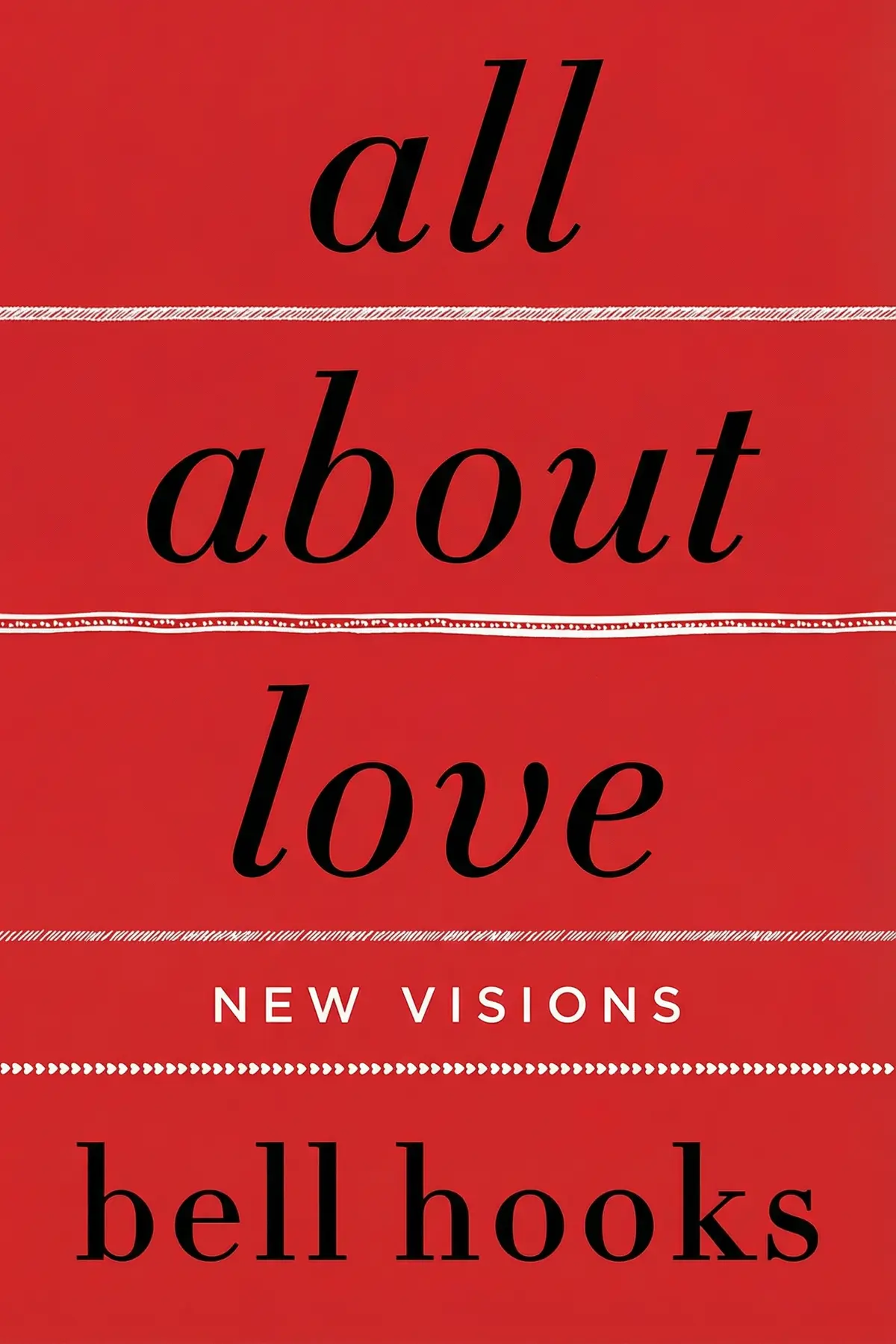
All About Love: New Visions
bell hooks
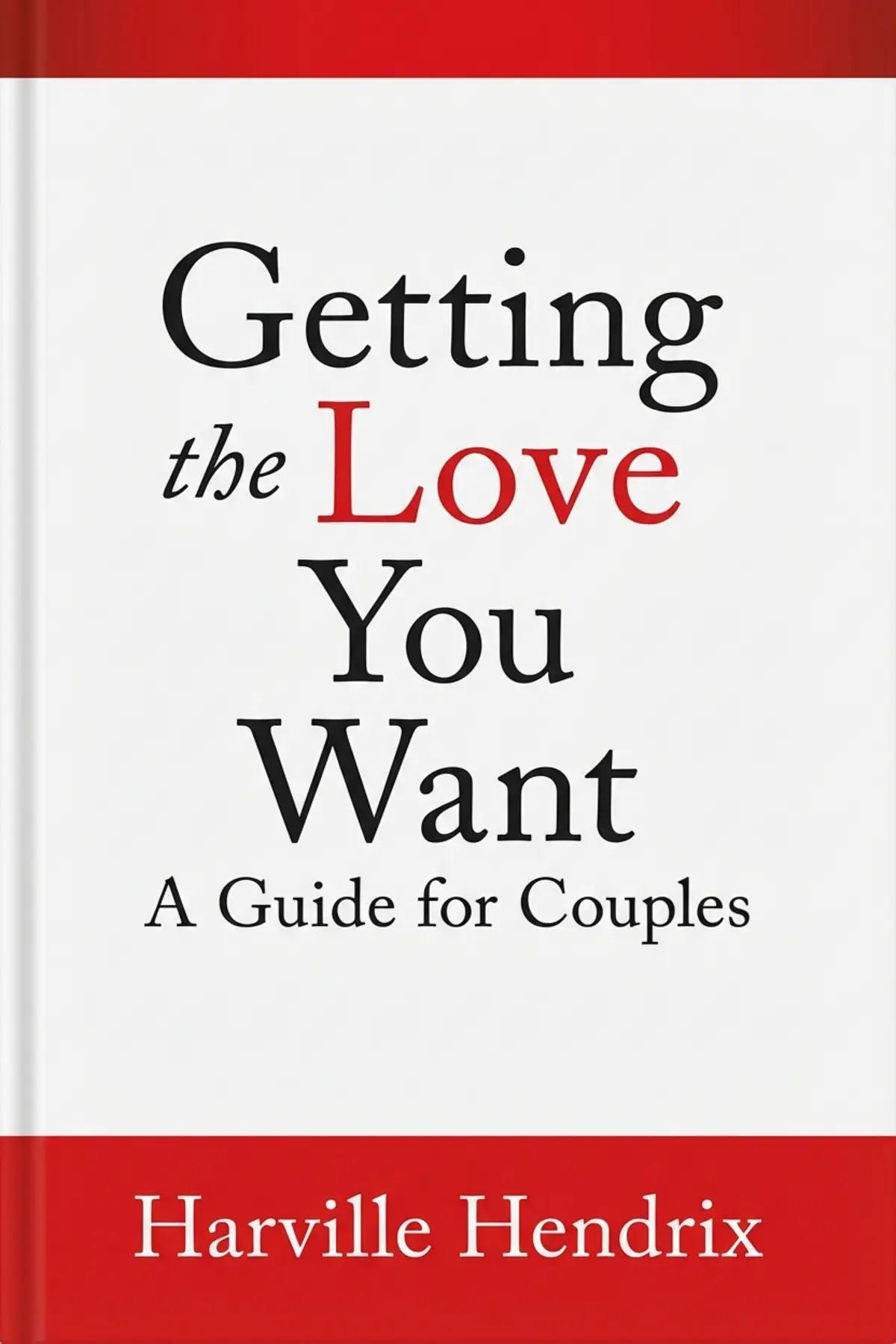
Explore how childhood blueprints shape adult relationships and learn the practical communication tools needed to transform romantic conflict into a path for deep healing and lasting emotional connection.
1 min 53 sec
Every great romance seems to begin with a touch of magic. Think back to those early days of a new relationship, often called the honeymoon period. There is that undeniable spark—a physical sensation of butterflies, a sense of euphoria during a first kiss, and the feeling that you have finally found the person who completes you. In this stage, everything feels effortless. You see only the best in your partner, and the world feels brighter simply because they are in it.
However, as most of us have experienced, this period of bliss eventually shifts. Whether it takes a few months or a few years, the initial excitement begins to fade, replaced by the realities of daily life and the emergence of conflict. Traits that once seemed quirky or charming might start to feel irritating. A partner’s silence might suddenly feel like coldness; their high energy might start to feel overwhelming. When this happens, couples often find themselves drifting apart, feeling as though they have lost the connection that once felt so unbreakable.
But what if this decline isn’t a sign of a failing relationship, but rather an invitation to do much deeper work? In this exploration of Harville Hendrix’s landmark theories, we will look at how our adult relationships are actually a continuation of our childhood journeys. We will explore how the wounds we carry from our earliest years influence the partners we choose and the ways we fight with them. By understanding the psychological forces at play beneath the surface, we can move from a state of unconscious reaction to a state of conscious love. This journey isn’t just about fixing a marriage; it’s about using the relationship as a tool for personal healing and spiritual growth. Let’s dive into how we can rediscover that lost intimacy and build a partnership that thrives over the long term.
1 min 57 sec
Discover how your subconscious mind uses a hidden map of your childhood caregivers to select your romantic partners, often without you even realizing it.
1 min 52 sec
Learn why the very qualities that once attracted you to your partner can eventually become the primary sources of irritation and conflict in your marriage.
1 min 57 sec
Understand how small, daily habits of avoidance can act as escape hatches that prevent you from building a truly committed and intimate connection.
1 min 54 sec
Find out how small, tailored acts of kindness can bypass your partner’s defenses and help restore the feeling of safety and love in your home.
1 min 47 sec
Master a three-step communication process that ensures both partners feel heard, validated, and understood, even during the most difficult conversations.
2 min 01 sec
Explore a safe way to express intense anger without damaging your bond, using techniques that turn conflict into a controlled release of emotion.
2 min 00 sec
Learn why being willing to change your personality for your partner is not a loss of self, but a profound act of love that leads to personal evolution.
1 min 33 sec
In the end, the journey toward a fulfilling relationship is not about finding the ‘perfect’ person who will never trigger us or disappoint us. Instead, it is about becoming the right person—a conscious partner who understands that conflict is simply growth trying to happen. We have seen how our subconscious minds lead us to partners who mirror our past, and how our primitive brains treat emotional pain like a life-or-death struggle. But we have also seen that we have the power to change these patterns through intentional dialogue, tailored kindness, and the closing of our exit routes.
A conscious marriage is one where both partners agree to be each other’s healers. It requires a willingness to look beneath the surface of every argument to find the unmet need crying out for attention. It asks us to be brave enough to stay when we want to run, and to listen when we want to defend. As you move forward, take a moment to look at your own life. Are there places where you are pulling away? Are there small acts of kindness you could offer today that would make your partner feel seen?
The ultimate goal of this work is to transform your relationship into a place of profound safety and joy. By doing so, you don’t just ‘get the love you want’—you give the love your partner needs, and in that exchange, both of you are made whole. Remember that love is not just a feeling that happens to us; it is a conscious choice we make every single day. By committing to this path of growth, you can turn your marriage into a sanctuary of healing and a source of lifelong fulfillment.
This summary explores the psychological underpinnings of romantic attraction and the inevitable power struggles that follow the honeymoon phase. It introduces the concept of the Imago—an unconscious image of our caregivers that dictates who we fall in love with and why we often choose partners who reflect both the positive and negative traits of our parents. By moving from an unconscious to a conscious marriage, couples can use their frustrations as a roadmap for growth. The guide provides actionable strategies like the Imago Dialogue and caring behaviors to help partners move past defensive reactions and build a relationship based on empathy, safety, and mutual support.
Harville Hendrix is a seasoned relationship counselor with over three decades of professional experience. He gained international recognition through his numerous appearances on Oprah, where he shared his innovative Imago Relationship Therapy program with millions of viewers. Beyond his clinical work, Hendrix is the author of several influential bestsellers, including Receiving Love and Keeping the Love You Find.
Listeners consider this book highly beneficial for partnerships, remarking that it has bolstered their bonds 10-fold and stands as a premier manual for enhancing communication. The text is skillfully composed, clear to digest, and delivers deep insights, with one listener noting the exploration of how childhood impacts adulthood. Listeners report substantial outcomes and believe the content is well worth the cost.
After hearing Oprah rave about this for years, I finally decided to see what the fuss was about. This isn't just a book; it’s a total overhaul of how you view intimacy. The core idea that we seek out partners who mirror our parents' negative traits was a hard pill to swallow, but it makes so much sense in hindsight. It shifted my perspective from blaming my spouse to understanding our mutual "childhood wounds." The exercises, particularly the Imago Dialogue involving Mirroring, Validating, and Empathy, helped us navigate fights that usually ended in cold silence. It’s a bit dense in the middle, but the results are undeniable. If you’re willing to do the work, it will improve your connection ten-fold.
Show moreHendrix offers a deeply psychological framework that feels far more substantial than your average airport self-help book. He draws on his decades of experience as a therapist to explain why we fall in love with specific people—it's the "old brain" trying to heal past traumas. While the prose can be a bit heavy on the psychoanalysis, the SMART goals for behavior change requests provide a practical bridge between abstract theory and daily life. I particularly appreciated the distinction between "fusers" and "isolators." It explained so many of our recurring arguments about space and closeness. My only minor gripe is that it feels a bit long-winded in the early chapters. Still, it’s a masterclass in modern relationship dynamics.
Show moreWow, I wish I had discovered these concepts a decade ago. It’s life-changing to realize that your partner isn't trying to annoy you; they’re just operating out of their own unconscious needs. This book helped me see my husband as a "wounded child" rather than an adversary, which immediately softened my heart. The transformation in our home has been significant. We stopped the "shame and blame" cycle and started focusing on building an atmosphere of trust. Not gonna lie, the exercises take a lot of time and effort, but the payoff is a level of intimacy I didn't think was possible after fifteen years of marriage. It is the best guide I've found.
Show moreEverything clicked when I started identifying the "fuser" and "isolator" dynamics in my home. I’m definitely the one craving constant reassurance, while my husband tends to push for more space. Understanding that these aren't personality flaws but responses to childhood wounds changed everything. We’ve started doing the "re-romanticizing" exercises, like the surprise caring acts, and it’s brought back a lot of the fun we had when we first met. The book is comprehensive and offers incredible insight into why we act "irrationally" in love. It’s a must-read for anyone who feels stuck in a cycle of the same old arguments. Highly recommended for any committed couple.
Show moreFinally, a relationship book that provides a roadmap instead of just platitudes. Hendrix doesn’t just tell you to "communicate better"—he gives you the exact scripts to use. The Imago Dialogue technique is revolutionary because it forces you to actually listen to your partner's perspective without immediately jumping to your own defense. I found the section on "closing the exits" to be incredibly convicting. It made me realize how often I used work or social media to avoid real intimacy. Truth is, it’s an uncomfortable read because it forces you to face your own deficiencies rather than pointing fingers. It's easily the best guide on improving communication I've come across.
Show moreI’ll admit, the whole "wounded child" concept felt a bit heavy at first. I’m not usually one for "inner child" talk, but the way Hendrix links childhood caretakers to adult attraction is fascinating. The book is well-written and generally easy to understand, though some of the exercises—like the one involving Groucho Marx glasses—felt a bit cheesy for my taste. However, the underlying logic is sound. We’ve started using the "Mirroring" technique during our weekly check-ins, and it’s helped de-escalate some major tensions. It’s worth the price for the communication tools alone, even if you don't buy into every single piece of the regressive psychological theory.
Show moreThe Imago Dialogue is arguably the most valuable takeaway from this entire text. It provides a structured way to handle conflict that actually creates safety. Look, relationships are hard, and this book doesn’t sugarcoat that. It suggests that by becoming your partner’s healer, you actually heal yourself. I loved the SMART goals for behavior change requests—it makes progress feel tangible rather than vague. Some parts feel dated, and the author’s background as a former Baptist pastor occasionally shows through, but the advice is universal. It’s a solid 4-star read that requires a lot of patience and emotional vulnerability to get through.
Show moreAs someone who has explored various marriage counseling methods, this is a cornerstone. Hendrix bridges the gap between deep-seated psychological patterns and everyday interactions. The concept of the "Imago"—the composite image of our early caretakers that we project onto our mates—is brilliant. It explains that spark of attraction and the subsequent "power struggle" phase so clearly. In my experience, the "fuser" and "isolator" dynamic is the most common hurdle for couples, and this book provides the best language for addressing it. It’s a bit of a dense read, and the pace is slow at the start, but it’s an essential resource for any serious couple or therapist.
Show moreThe first few chapters were a total slog, and I almost put it down before getting to the actual advice. Hendrix spends a lot of time on the history of his own career and some fairly repetitive anecdotes that could have been trimmed for a faster read. That said, once I hit the section on "re-romanticizing" the relationship, things got much more interesting. The idea of performing specific "caring acts" even when you don't feel like it sounds fake, but it actually works to shift the atmosphere. To be fair, you really need a partner who is 100% on board to make this work. If you're reading this solo, you'll only get half the benefit.
Show moreMaybe I’m just not a fan of regressive psychology, but this missed the mark for me. I found the heavy emphasis on childhood experiences to be quite limiting and even a bit repetitive. It felt like we were spending all our time digging up old ghosts from the past instead of focusing on the practical steps needed for our future. Frankly, I found the tone a bit too clinical and adversarial at times, stripping the joy out of the relationship to treat it like a lab experiment. I prefer Esther Perel’s approach or even Gottman’s data-driven methods. If you love deep-dive psychoanalysis, you might enjoy this, but for me, it was too much "past" and not enough "present."
Show morebell hooks
Katherine Woodward Thomas
AUDIO SUMMARY AVAILABLE
Get the key ideas from Getting The Love You Want by Harville Hendrix, plus 5,000+ more titles in English and Thai.







