
15 min 34 sec
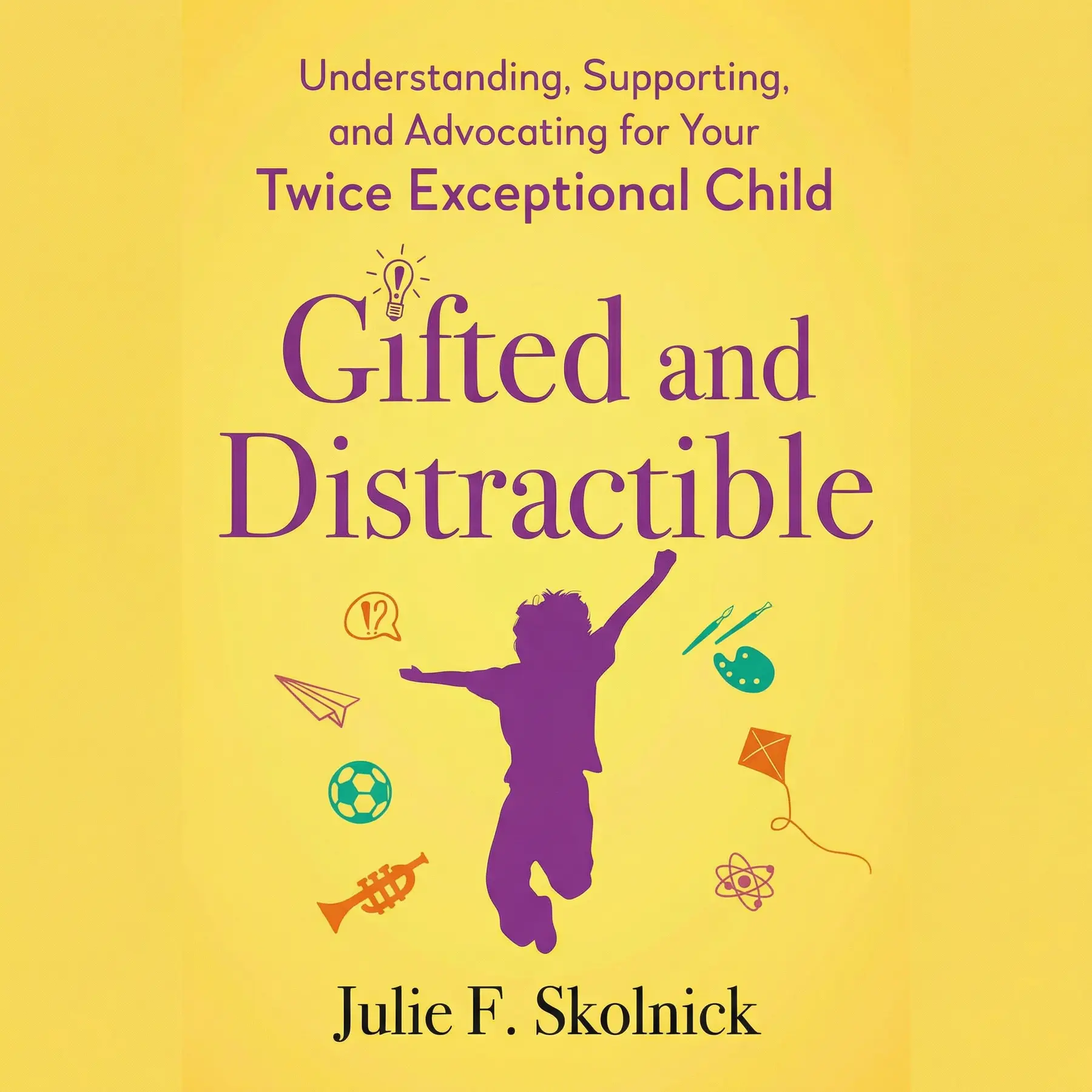
Gifted and Distractible: Understanding, Supporting, and Advocating for Your Twice Exceptional Child
Gifted and Distractible explores the unique world of twice-exceptional children. It provides parents and educators with practical tools to support high-potential kids who also navigate learning, sensory, and emotional challenges.
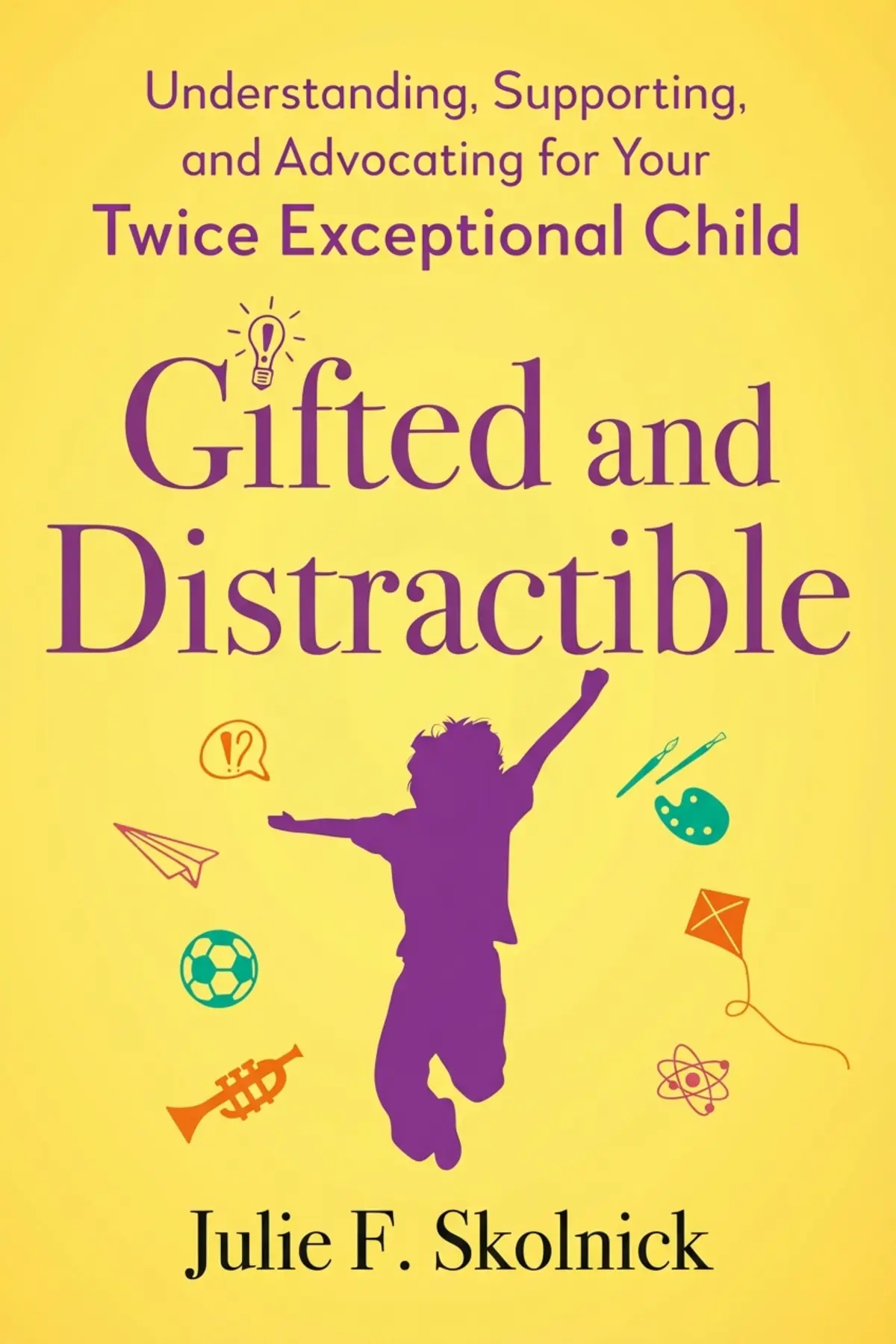
Table of Content
1. Introduction
1 min 36 sec
Parenting a child who seems to be a walking contradiction is a journey filled with both awe and exhaustion. You might see a child who can explain the intricacies of black holes or compose music, yet falls apart when asked to put on their socks or follow a simple three-step instruction. This is the reality of the twice-exceptional child, or what is commonly called 2e. These children are gifted—meaning they have high cognitive, creative, or academic potential—but they are also ‘distractible’ or face learning differences like ADHD, dyslexia, or sensory processing issues. The core challenge for parents and educators is that these two halves of the child’s identity often compete for attention, leading to frustration for the adults and a deep sense of being misunderstood for the child.
In this exploration of Julie Skolnick’s work, we are going to look at how to move past the surface-level behaviors that cause friction and start understanding the neurological engine driving them. We’ll establish a throughline of empathy and advocacy, showing that the goal isn’t just to make the child ‘comply’ with standard expectations, but to build an environment where their unique gifts can flourish alongside their challenges. We will examine the specific traits of 2e children, like asynchronous development and overexcitability, and then move into concrete parenting frameworks. Finally, we’ll look at how to take this knowledge into the classroom to become a powerful, collaborative advocate for your child’s education. By the end, the focus shifts from fixing a ‘broken’ child to nurturing a complex, brilliant individual.
2. Defining the Twice-Exceptional Profile
2 min 31 sec
Discover why highly intelligent children often struggle with basic tasks and how their brilliance can actually hide their learning disabilities.
3. The Power of Overexcitabilities
2 min 18 sec
Explore the five ways 2e children experience the world with intense sensitivity and how these traits are actually signs of high potential.
4. Establishing Cooperation through Know-Show-Control
2 min 25 sec
Learn a three-step framework to reduce power struggles and help your child build the autonomy they crave.
5. The P.R.A.I.S.E. Paradigm for a Thriving Home
2 min 46 sec
Discover a comprehensive six-part strategy to nurture your child’s self-esteem and manage daily stress.
6. Becoming a Collaborative School Advocate
2 min 17 sec
Master the A-R-T of communication to turn teachers into allies and ensure your child gets the support they need.
7. Conclusion
1 min 41 sec
The journey of raising a twice-exceptional child is rarely a straight line. It is a path marked by intense highs and deep frustrations, but it is also a path filled with unique beauty. The core message here is that understanding your child’s neurodiversity is the key to unlocking their potential. By moving away from a model of ‘correction’ and toward a model of ‘connection,’ you change the entire atmosphere of your home and your child’s future.
We have explored the unique profile of the 2e child, recognizing that their brilliance and their struggles are two sides of the same coin. We’ve looked at the importance of managing overexcitabilities with empathy and using frameworks like Know-Show-Control and the P.R.A.I.S.E. paradigm to foster a cooperative environment. And finally, we’ve seen how collaborative advocacy can transform a child’s school experience.
Your most important role is to be the person who truly ‘gets’ your child. When a 2e child feels understood and supported, their anxiety decreases and their confidence grows. They begin to see their own differences not as flaws, but as the source of their greatest strengths. As you move forward, remember to be patient—not just with your child, but with yourself. This is a learning process for everyone involved. Stay connected to your community, celebrate the small victories, and keep championing the incredible potential of your gifted and distractible child. They have a unique light to bring to the world, and with your guidance, they will find the way to let it shine.
About this book
What is this book about?
This guide focuses on the specific needs of children who are 'twice exceptional' or 2e—meaning they possess high intellectual or creative gifts alongside challenges like ADHD, autism, or anxiety. The book bridges the gap between these two seemingly contradictory traits, showing how a child’s brilliance can often mask their struggles, and how their struggles can hide their potential. The promise of this work is a total shift in perspective for parents and teachers. Instead of viewing a child’s behavior as a problem to be fixed, it offers a framework for seeing neurodiversity as a complex asset. Readers will discover actionable paradigms like 'Know-Show-Control' and 'P.R.A.I.S.E.' to foster cooperation and self-esteem at home. It also provides a clear roadmap for effective school advocacy, moving from adversarial encounters to collaborative partnerships with educators. Ultimately, it’s about helping a child feel understood and empowered to navigate the world with confidence.
Book Information
About the Author
Julie F. Skolnick
Julie Skolnick is a dedicated advocate and expert who guides parents, trains educators, and advises clinicians on the best ways to support twice-exceptional children. She is the founder of the 2 Days of 2e virtual conference, a significant event that unites global thought leaders and provides vital resources for families with 2e kids. Her work is centered on helping children who are both gifted and neurodivergent thrive by fostering better understanding among the adults in their lives.
Ratings & Reviews
Ratings at a glance
What people think
Listeners find this book to be a valuable tool for teachers, offering useful details and actionable techniques. They also value how readable the material is, and one listener mentions it is particularly great for parents of gifted and distractible children. Moreover, the work is praised for being simple to follow and very well-composed.
Top reviews
Ket
Finally, a manual that actually describes my household. For years, we’ve bounced between specialists who see the 'gifted' side or the 'distractible' side, but never the beautiful, chaotic intersection of both. Skolnick’s writing is exceptionally accessible, stripping away the dense medical jargon in favor of actionable advice. I particularly connected with the concept of the 'rage to learn,' which perfectly captures my son’s intellectual intensity. While some parenting books feel like a lecture, this one feels like a conversation with someone who has actually been in the trenches. The strategies for managing emotional overexcitabilities are already helping us navigate morning routines with fewer meltdowns. It’s not just a book; it’s a roadmap for advocacy. I wish I’d had this years ago when we were first struggling with school placements. Every 2e parent needs this on their nightstand for those days when they feel like they’re failing.
Show moreTong
As a middle school teacher and a mom, I found Skolnick’s breakdown of 'overexcitabilities' to be the most lucid explanation I’ve encountered yet. We often see these kids as 'difficult' or 'defiant' when they are actually just deeply sensitive to their environments. The way the author rebrands these traits as strengths while acknowledging the exhaustion they cause parents is incredibly validating. Frankly, the writing style is so fluid that I polished it off in two sittings, despite it being packed with data. The focus on 'shining a light' on the child's strengths rather than just drilling down on their deficits is a perspective shift every educator should embrace. It provides a much-needed bridge between the gifted curriculum and special education services. This is going to be my go-to recommendation for colleagues who are struggling to reach their most complex students.
Show moreParichat
This book felt like a warm hug for a burnt-out parent. Parenting a 2e child is a lonely experience because you’re often judged for your child’s brilliance and their 'behavioral issues' simultaneously. Skolnick gets it. She speaks from a place of personal experience and professional authority, making the 'Strategies' section feel incredibly grounded. I’ve already implemented the concept of a 'screen contract,' and while it’s a work in progress, having a framework has reduced the daily power struggles significantly. The truth is, most parenting advice simply doesn’t apply to kids with this level of intellectual intensity. This book validates that reality. It taught me how to advocate for my daughter’s sensory needs without feeling like I’m asking for 'special treatment.' It’s about equity, not just equality. I’m feeling much more empowered for our upcoming school year.
Show morePui
Not gonna lie, I started this as an audiobook but had to buy the physical copy halfway through. There are so many charts and specific strategy lists that I knew I’d want to highlight and return to as my son grows. The way Julie Skolnick explains the 'twice-exceptional' experience is both professional and deeply personal. It’s rare to find a resource that treats giftedness as a special need, but that’s exactly what it is when coupled with ADHD or sensory issues. The practical tools for advocating within the school system are particularly helpful for parents who feel intimidated by administrative jargon. I appreciated the focus on the child’s 'strengths-based' profile. It’s a perspective that changed how I view our daily challenges. If you are exhausted by trying to 'fix' your kid, read this and learn how to support them instead.
Show moreSaowalak
Wow, just wow. This is the first parenting book I’ve read that didn't make me feel like a total failure by chapter three. Most advice tells you to 'be consistent,' but consistency looks different when your child’s brain is wired like a Ferrari with bicycle brakes. Skolnick’s approach to 'Gifted and Distractible' kids is revolutionary because it starts with empathy. I loved the deep dive into perfectionism and how it often masks as 'laziness' or 'distraction.' The strategies provided are things I could actually start using the same day I read them, which is a rarity. It’s a well-written, compassionate guide that helps you see your child’s 'quirks' as part of a complex, brilliant whole. I’m finally starting to understand the 'why' behind my daughter’s behavior, and that understanding has changed everything for our family. Highly recommended for any 2e household.
Show moreChanida
Ever wonder why your genius-level kid can't remember to put their shoes on? This book dives deep into that exact frustration, explaining the asynchronous development that defines twice-exceptional children. I loved the practical breakdown of strategies in Part 2, especially the emphasis on de-pathologizing behaviors that are often just symptoms of a high-functioning, neurodivergent brain. To be fair, some of the advice regarding teachers felt a little simplistic; the chart suggesting teachers just need appreciation felt a bit dismissive of the systemic hurdles educators face daily. I also felt hesitant about the suggestion to 'stage' a phone call to show a child they are a priority—that feels like a recipe for a trust issue if they catch on. However, the core message of acceptance and modified expectations is invaluable. It’s a solid resource that I’ll definitely be referencing during our next IEP meeting.
Show moreWillow
The chapter on asynchronous development alone is worth the price of admission. It finally explains why my twelve-year-old can solve complex calculus problems but still has the emotional regulation of a kindergartner when his favorite shirt is in the wash. Skolnick writes with a clarity that is refreshing for a book dealing with neurobiology and education. I did find some of the 'staged' interactions a bit manipulative for my particular child, who has a high 'justice sensitivity' and would see right through it. But the broader advice on 'shining a light' and focusing on the relationship first is spot on. Look, parenting is hard, but parenting a kid who is 'gifted and distractible' is a whole different level of intensity. This book provides a functional toolkit that focuses on the child's whole self rather than just their grades or their outbursts.
Show moreGame
Skolnick does an incredible job of bridging the gap between clinical theory and the messy reality of 2e life. As someone who grew up as a 2e kid without the label, reading this was a bit of a healing experience for my inner child. The author’s tone is supportive and encouraging, never making you feel guilty for the times you've lost your cool. Personally, I found the section on 'Intellectual Overexcitability' to be the most enlightening, as it reframes 'annoying' constant questioning as a 'rage to learn.' I gave it four stars instead of five only because I wanted more specific examples for older teens; much of the advice feels geared toward the elementary and middle school crowd. Still, the foundational principles of understanding the 2e brain are universal. It’s a well-written, easy-to-digest guide that I’ll be passing along to my child's gifted coordinator next week.
Show moreThida
Julie Skolnick has created a vital toolkit for those of us navigating the IEP and 504 world. The book is remarkably easy to understand, even when diving into the nuances of neurodivergence. I found the strategies for emotional regulation to be particularly practicable for our daily routine. One minor gripe: I wish there was a bit more recognition of the professional expertise teachers bring to the table, as the book occasionally leans heavily on the parent-as-the-only-expert narrative. However, the core advice on modifying environments to suit a child’s unique 'wiring' is something every parent needs to hear. To be fair, the 'gifted' label can be a heavy burden for kids, and this book helps lighten that load by focusing on the human being behind the test scores. It’s a very valuable resource for any 2e family.
Show moreAhmed
Picked this up on a whim after hearing the Tilt Parenting podcast. While I appreciate the author's heart and her obvious expertise in the 2e community, some of the content felt like a rehash of things I’ve read in other neuro-affirming texts. I was hoping for more ground-breaking skills-based training, but found a lot of it focused on making environmental accommodations instead. My kid needs to learn how to function in a world that won't always bend for them, and I felt that perspective was missing. Also, some of the terminology used for the disability side of the experience felt slightly dated to me. It’s a decent introductory text if you’re new to the world of twice-exceptionality, but if you’ve been in this space for a while, you might find yourself skimming a lot. It's okay, just not the life-changer I was expecting.
Show moreReaders also enjoyed


AUDIO SUMMARY AVAILABLE
Listen to Gifted and Distractible in 15 minutes
Get the key ideas from Gifted and Distractible by Julie F. Skolnick, plus 5,000+ more titles in English and Thai.
- 5,000+ titles
- Listen as much as you want
- 7-day free trial
- Cancel anytime







