
16 min 12 sec
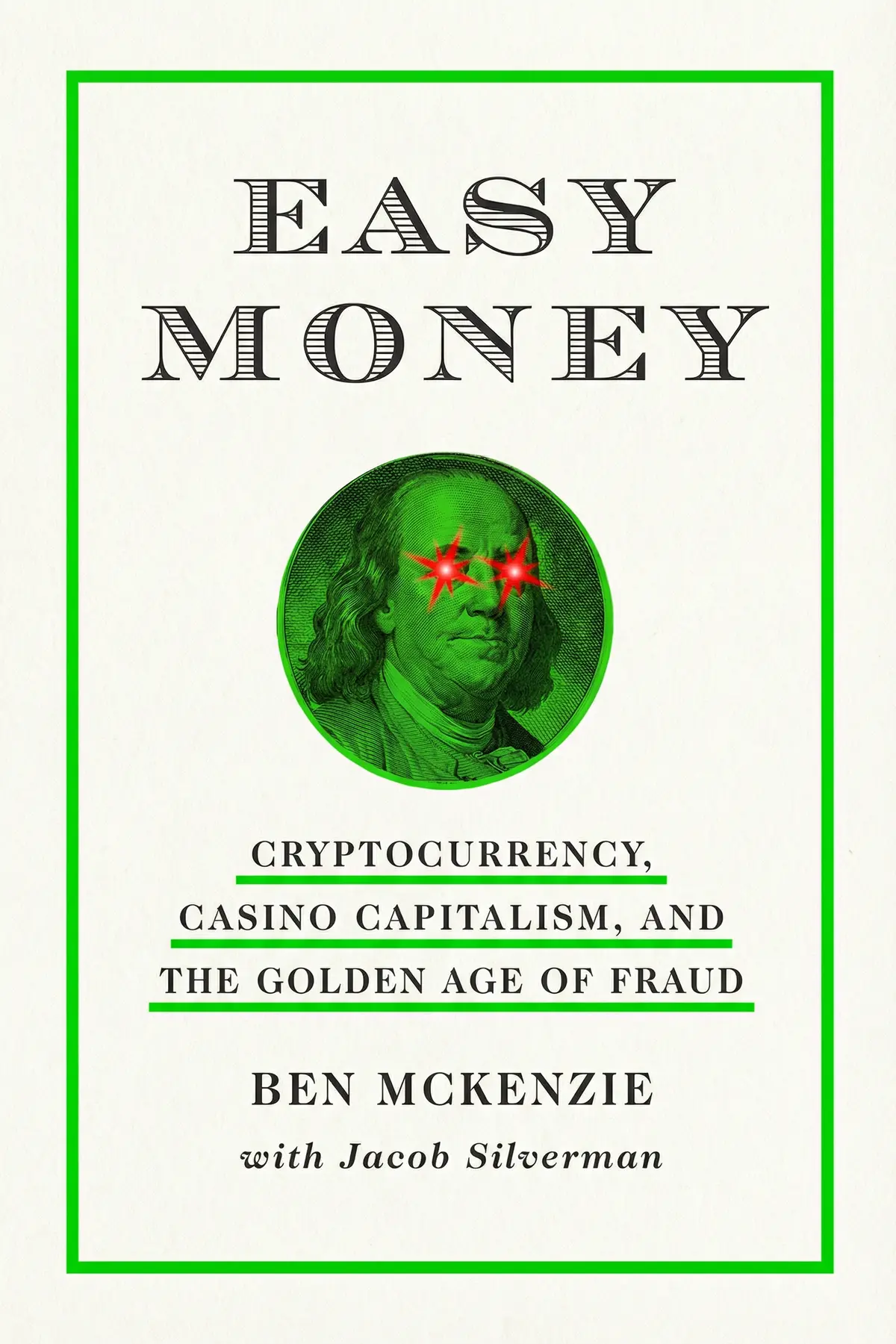
Gilded Rage: Elon Musk and the Radicalization of Silicon Valley
Gilded Rage explores the political transformation of Silicon Valley's elite. Jacob Silverman details how figures like Elon Musk shifted from tech innovation to right-wing populism, fundamentally altering the American democratic landscape.
Table of Content
1. Introduction
2 min 02 sec
In the lead-up to the 2024 United States presidential election, the nation found itself at a crossroads. For many citizens, the daily reality was defined by a crushing cost-of-living crisis and a sense of economic instability that the traditional political establishment seemed unable to address. While the incumbent party struggled to provide a cohesive vision for economic relief, the opposition leaned into a potent brand of populism, promising radical shifts in policy ranging from mass deportations to significant tax cuts for the nation’s wealthiest individuals. As the polls narrowed and the tension reached a fever pitch, it became clear that this election was about more than just two candidates; it was about a fundamental shift in where power resides in America.
When the results were finalized, it wasn’t just a political victory for the Republican ticket; it was a demonstration of the unprecedented influence now held by the technology industry. This was the moment when Big Tech officially moved from the sidelines of innovation into the driver’s seat of national governance. We saw the world’s most famous billionaire, Elon Musk, actively campaigning on the ground, utilizing his massive social media reach and financial resources to tilt the scales of public opinion. After the inauguration, his appointment to a new, non-traditional government role signaled that the era of tech-led institutional disruption had arrived.
But to view this as the actions of a single man would be to miss the larger story. The presence of other major tech figures like Mark Zuckerberg, Jeff Bezos, and Peter Thiel at the highest levels of political ceremony confirmed a broader trend. Silicon Valley, once seen as a bastion of progressive, liberal values, had undergone a radical rightward turn. This transformation didn’t happen overnight, and it wasn’t an accident. It was the result of a deliberate, long-term evolution of power, ideology, and discontent. In the following pages, we will explore the roots of this movement, the key players involved, and what this radicalization means for the future of democracy and the global economy.
2. The Thiel Influence and the 2016 Turning Point
2 min 02 sec
Discover how a single, contrarian bet by Peter Thiel during the 2016 election signaled the beginning of Silicon Valley’s radical political pivot.
3. The Transformation of Social Platforms into Political Engines
2 min 17 sec
Learn how the acquisition of a major social media platform became a tool for engineering political discourse and silencing opposition.
4. Local Governance and the Playbook for Recall
2 min 07 sec
Explore how tech billionaires are using their wealth to disrupt local politics and override democratic outcomes they find unfavorable.
5. The Utopian Vision and the Rejection of Institutions
2 min 10 sec
Investigate the tech elite’s obsession with building private utopias that bypass democratic governance and traditional laws.
6. The Rise of Dark MAGA and Policy Consolidation
2 min 08 sec
See how the ‘Dark MAGA’ movement and Project 2025 have created a bridge between tech libertarianism and populist power.
7. The Emergence of the American Oligarchy
2 min 16 sec
Analyze the consequences of tech’s political victory and what it means for the future of economic and social equality.
8. Conclusion
1 min 10 sec
The radicalization of Silicon Valley, as explored in Jacob Silverman’s Gilded Rage, marks a definitive end to the era of tech as a purely innovative and liberal force. What began as a series of contrarian political bets has evolved into a sophisticated, well-funded effort to dismantle democratic norms and replace them with a form of corporate oligarchy. We have seen how billionaires like Elon Musk and Peter Thiel have utilized their platforms and wealth to bypass traditional governance, silence dissent, and influence the highest levels of national policy.
The throughline of this journey is the tech elite’s belief that they are uniquely qualified to ‘debug’ society, often at the expense of democratic participation and institutional stability. This movement has found common cause with populist anger, creating a powerful alliance that seeks to deregulate the economy and consolidate power in the hands of a few. As we look toward the future, the central question is no longer whether tech will change our lives, but whether we can maintain a society where the public interest still holds weight against the unprecedented influence of the world’s richest men. The ‘Gilded Rage’ is a reminder that the price of technological progress must not be the sacrifice of our democratic foundations.
About this book
What is this book about?
Gilded Rage takes listeners into the heart of a massive ideological shift. For decades, the public perception of Silicon Valley was one of liberal idealism and a belief that technology could solve any problem through rational progress. However, this narrative has shifted dramatically. This work examines the rise of a new tech-driven oligarchy that has traded its progressive veneer for a brand of aggressive, populist libertarianism. The book follows the influence of key figures like Elon Musk, Peter Thiel, and David Sacks as they move from the fringes of political thought to the center of government power. It reveals how these billionaires use their vast wealth and digital platforms to challenge democratic norms, dismantle regulatory frameworks, and engineer a new social order. By the end of this journey, you will understand how the intersection of technology and populist anger has created a powerful force capable of reshaping global politics and economic reality.
Book Information
About the Author
Jacob Silverman
Jacob Silverman is a New York Times bestselling author and journalist whose reporting beat is the intersection of technology, politics, and power in Silicon Valley. He is the author of Terms of Service, co-author of Easy Money, and his work has appeared in the New York Times and the Los Angeles Times, among other publications.
Ratings & Reviews
Ratings at a glance
What people think
Listeners find this book highly intelligent, with one individual pointing out its meticulous research and another commending how it delves into the core of tech billionaires. The text also earns positive remarks for being very readable.
Top reviews
Kanokwan
Silverman has managed to peel back the polished veneer of the tech elite to reveal something far more volatile. This isn't just a book about wealth; it is a deep dive into the psychological shift of men who view themselves as the rightful heirs to global power. The concept of "Gilded Rage" perfectly captures the resentment these billionaires feel toward a public that doesn't offer them enough gratitude. While the narrative occasionally jumps between too many figures like Marc Andreessen and David Sacks, the core argument about the end of cheap money driving radicalization is incredibly persuasive. It’s an intelligent, if sobering, look at how the Silicon Valley dream of a connected utopia curdled into a quest for unconstrained control.
Show morePhimwan
Wow, this was a difficult but essential read that left me feeling both enlightened and deeply concerned about the future of our democracy. Silverman’s reporting on the "handmaidens to authoritarianism" is sharp, intelligent, and backed by a mountain of evidence. He moves from the collapse of FTX and Sam Bankman-Fried to the rise of crypto-lobbying with a speed that mirrors the chaotic energy of the industry itself. The truth is, the book paints a disturbing picture of a class that believes their supremacy is an ideological requirement. It’s a beautifully written, if terrifying, autopsy of the tech industry's soul that everyone should read before the next election cycle.
Show moreAnucha
The chapter on Rene Girard and the "sacrificial goat" mentality of the tech elite was worth the price of admission alone. Silverman masterfully explains how Peter Thiel and others misapply philosophical and biblical interpretations to justify their own desire for power. The book makes a compelling case that these "Titans of hype" aren't actually crazy; they just believe crazy things to enhance their own "dignatus" at the expense of everyone else. It’s an intelligent, deeply researched, and frankly alarming look at the men who want to be our "CEO-monarchs." I especially loved the focus on the end of ZIRP as the turning point for their collective meltdown.
Show moreNitaya
This book provides a terrifying look at how billionaires are trying to bypass democratic institutions entirely to build their own private fiefdoms. From the lobbying efforts of Palantir to the takeover of Twitter, Silverman connects the dots between disparate events to show a unified movement toward authoritarianism. The detail about the "Butterfly revolution" and the influence of far-right thinkers like Curtis Yarvin was particularly eye-opening for me. It’s a bit of a heavy read, and the tone is quite grim throughout, but that’s to be expected given the subject matter. If you want to understand why Silicon Valley turned its back on democracy, this is the book you need.
Show moreSkylar
After hearing so much about the "rightward tilt" of the Bay Area, I finally picked this up to understand the financial mechanics behind it. Silverman argues brilliantly that the shift wasn't just about culture wars, but about the end of the zero-interest rate era (ZIRP) and a desperate desire to evade regulation. The way he traces the influence of Peter Thiel and his "puppet" J.D. Vance is both fascinating and terrifying. Look, the book is quite dense and can be a bit depressing given the state of our democracy, but it’s essential for anyone who wants to see how money really moves the needle. A solid work on the weirdness of the last decade.
Show moreJonathan
Ever wonder how the guys who built our digital payments systems became the architects of a new kind of technocracy? This book pulls no punches in describing the "radicalization" of figures like David Sacks and Elon Musk. Silverman’s analysis of how these billionaires use their software to power the tools of a potential police state is the most chilling part of the narrative. Personally, I found the chapters on "California Forever" and the attempt to build unregulated charter cities to be the most revealing sections. It’s a lot to take in, and the sheer number of characters can be hard to follow, but the overarching story of greed and ego is unmistakable.
Show moreHannah
Jacob Silverman writes with a sharp, incisive clarity that makes even the most complex financial maneuvering feel like a high-stakes political thriller. He gets to the depths of tech billionaires in a way that few journalists can, refusing to be distracted by their hype and delusions. Not gonna lie, seeing the "Gilded Rage" of these men described as a reaction to their own waning influence was a highlight for me. However, some of his conclusions regarding market manipulation versus genuine innovation felt slightly reductive given the Valley’s actual history. Regardless, this is a timely and incredibly thorough investigation into the forces currently reshaping our daily lives.
Show moreRatthapong
While the subject matter is undeniably vital for understanding the 2024 political landscape, the actual prose felt a bit bloated and repetitive at times. Silverman does an excellent job documenting Elon Musk’s obsession with the "woke mind virus," but I found myself skimming through some of the later chapters that recycled the same themes of billionaire entitlement. To be fair, the research is exhaustive, and the connections between the PayPal Mafia and the current administration are laid out with startling clarity. It captures the technocratic zeitgeist in all its immature, tantrum-throwing nonsense, even if a tighter edit would have made the message hit harder.
Show morePun
Gotta say, the reporting here is incredibly thorough, though I occasionally felt the author's own emotional perspective overshadowed the more objective facts of the case. The book is long on anecdotes but sometimes feels a bit short on the kind of historical context that would explain why this shift happened now and not twenty years ago. To be fair, the sections on how tech money influenced the recent elections are fascinating, even if you don't agree with every one of Silverman's conclusions. It’s a decent overview of the current "techno-utopian" failure, though it might leave more seasoned tech critics wanting a more nuanced take.
Show moreAndrew
The book captures the zeitgeist of Silicon Valley's recent tantrums, but I found it relied too heavily on familiar anecdotes rather than deep systemic analysis. Frankly, if you’ve been following the news about Musk and Twitter for the last two years, a lot of this will feel like a retread of familiar headlines. I was hoping for more of a philosophical deep dive into why these titans are so obsessed with the ideas of Curtis Yarvin and monarchism. Instead, we get a lot of "ill-disguised distress" from the author that occasionally borders on the repetitive. It's a decent primer, but it doesn't quite reach the intellectual heights of the Girardian theory it briefly mentions.
Show moreReaders also enjoyed
AI 2041: Ten Visions for Our Future
Kai-Fu Lee
Abolish Rent: How Tenants Can End the Housing Crisis
Tracy Rosenthal

Abortion: Our Bodies, Their Lies, and the Truths We Use to
Jessica Valenti

Adults in The Room: My Battle With Europe’s Deep Establishment
Yanis Varoufakis
AUDIO SUMMARY AVAILABLE
Listen to Gilded Rage in 15 minutes
Get the key ideas from Gilded Rage by Jacob Silverman, plus 5,000+ more titles in English and Thai.
- 5,000+ titles
- Listen as much as you want
- 7-day free trial
- Cancel anytime







