

Modern Romance
Aziz Ansari
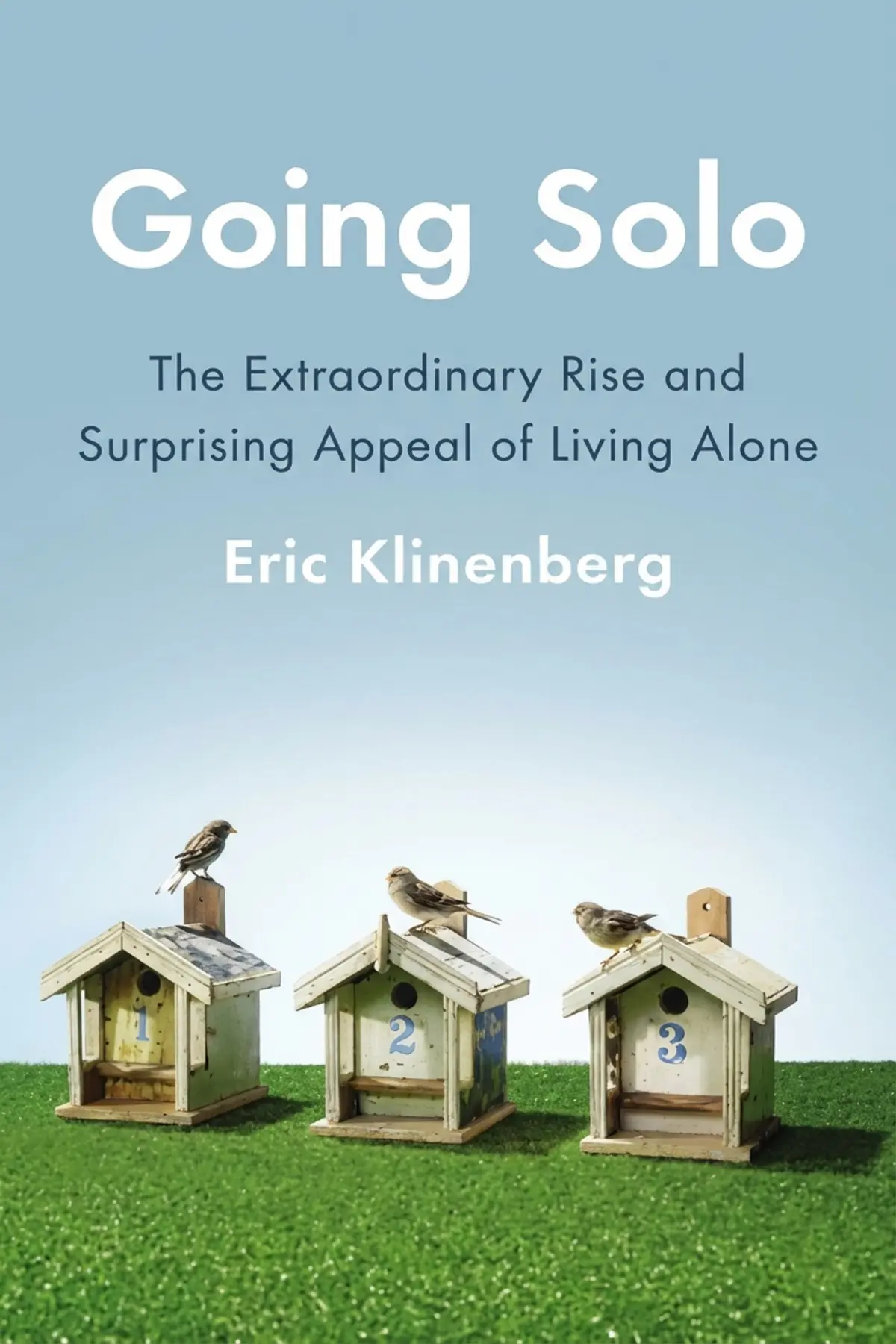
Going Solo examines the global rise of single-person households, revealing how historical shifts in gender, technology, and urbanization have transformed living alone from a social stigma into a sought-after lifestyle choice.
1 min 14 sec
For a long time, the image of someone living alone was framed in shades of pity or suspicion. If you were a woman living by yourself, you were often labeled a ‘spinster’ or a ‘cat lady.’ If you were a man, you were seen as a perennial bachelor, perhaps a bit too eccentric or unmoored for polite society. But if you look around today, that old script has been completely rewritten. Living alone is no longer a tragic exception; for many of us, it is a deliberate and celebrated choice. It is a stage of life that many will enter, whether in our twenties, after a divorce, or in our later years.
In this summary, we are going to explore why this shift happened and what it really means for our communities and our personal well-being. We’ll look at the cultural and economic engines that made singlehood possible, from the rise of professional women to the way our cities are built. We will also confront the myths about loneliness, discovering why ‘going solo’ can actually lead to a more vibrant social life than living with a partner. Along the way, we’ll see how different societies, like Sweden, are leading the way in supporting this new demographic. By the end, you’ll see that living alone isn’t about being disconnected—it’s about a new way of engaging with the world on your own terms.
2 min 12 sec
Explore how the post-1950s era sparked a revolution in living arrangements, fueled by women’s financial independence and the dawn of a hyper-connected digital age.
1 min 56 sec
See how big cities and bohemian neighborhoods like Greenwich Village provided the perfect environment for the very first communities of solo dwellers.
1 min 56 sec
Discover why solo living often fosters a stronger sense of self and why many elderly women are choosing independence over traditional caretaking roles.
2 min 13 sec
Uncover the hidden social challenges single men face and how specialized housing initiatives are fighting the tide of isolation.
1 min 56 sec
Learn how countries like Sweden are setting the standard for a world where solo living is supported by robust social services and innovative housing models.
1 min 23 sec
The rise of the single-person household is one of the most significant social trends of our time, yet our cultural conversations are often stuck in the past. As we have seen, the transition toward going solo was driven by profound changes: the economic empowerment of women, the urban shift toward neighborhoods that balance privacy with social access, and the digital tools that keep us connected even when we are physically alone. While there are certainly risks—particularly the risk of isolation for those without strong social skills or support systems—the benefits of solo living are undeniable for millions of people. It offers a unique path to self-discovery, professional focus, and a dignified old age.
However, the success of this lifestyle depends on more than just individual effort. It requires a shift in how we think about our cities, our housing, and our social safety nets. We need to move away from the idea that the only ‘valid’ way to live is within a nuclear family. By creating spaces that encourage interaction and providing services that protect the vulnerable, we can ensure that living alone is a choice that leads to fulfillment rather than loneliness. Whether you are currently living solo or just looking at the world around you, the takeaway is clear: being alone is a powerful opportunity to build a life on your own terms, and as a society, it’s time we built a world that reflects that reality.
For generations, living alone was seen as a failure of social integration—a sign of loneliness or exclusion. However, in Going Solo, sociologist Eric Klinenberg illustrates that we are currently witnessing a massive demographic revolution. Since the mid-twentieth century, the number of adults living by themselves has skyrocketed, particularly in urban centers and developed nations. This book explores the complex forces behind this shift, ranging from the liberation of women in the workforce to the way digital technology provides us with 'alone-together' connectivity. Klinenberg challenges the narrative of the isolated hermit, arguing instead that solo dwellers are often more socially active than those in nuclear families. He provides a nuanced look at the benefits of autonomy, the specific challenges faced by different genders, and the way our infrastructure—from housing to social services—must adapt to a world where 'going solo' is a standard part of the human experience. The promise of the book is a clearer understanding of how to thrive in an age of individualization without losing the essential bonds of community.
Eric Klinenberg is a prominent sociologist and a professor at New York University, where he also serves as the director of the Institute for Public Knowledge. Beyond his academic work, he is a frequent contributor to major publications including The New Yorker, Time magazine, and the New York Times. Klinenberg is well-known for his deep dives into social issues, having also authored Heatwave: A Social Autopsy of Disaster in Chicago.
Aziz Ansari
Listeners find the work exceptionally engaging and easy to read, noting its deep research and perceptive data points. They characterize it as a sociological landmark that looks past raw numbers to explore diverse societal topics, while one listener points out that it offers a fair portrayal of an important social trend. Listeners value the prose quality and consider the perspective fascinating, with one listener highlighting the reasonable price.
Klinenberg has crafted what I would consider a modern sociological classic. He takes a trend we all see—the rise of the 'singleton'—and peels back the layers to show the economic and cultural forces at play. Not gonna lie, I expected a dry academic text, but this was remarkably readable and even entertaining at times. The way he explores the paradox of people living alone while staying hyper-connected through digital media is particularly relevant today. It's not just about being single; it's about the autonomy that modern wealth allows us to purchase. The book provides a much-needed defense of solitude without ignoring the very real risks of social withdrawal. If you want to understand why our neighborhoods look the way they do now, you need to read this. It goes way beyond statistics to address the heart of our social issues.
Show moreWow, this book really changed my perspective on what it means to live by yourself. I’ve always viewed living alone as a temporary phase or a sign of social failure, but Klinenberg shows it’s a legitimate and often thriving way of life. The research is incredibly thorough, drawing on hundreds of interviews to create a rich tapestry of the 'singleton' experience. I found the sections on how solo dwellers are often more socially active than those in nuclear families to be particularly enlightening. It’s a dense read but remains engaging throughout, and the price point is very reasonable for the amount of insight you get. This isn't just a book about demographics; it's a book about human connection and how we’re redefining it for a new era. A must-read for anyone curious about our changing world!
Show moreEver wonder how living alone affects our civic duty? Klinenberg provides a surprisingly balanced look at the 'singleton' lifestyle, challenging the myth that living solo leads to total isolation. He draws a fascinating line from his earlier research on the Chicago heat wave to this broader trend of independent living. To be fair, some sections on younger professionals felt a bit repetitive, but the analysis of how singletons are actually more likely to engage with their communities than nuclear families was eye-opening. The research is thorough, and the writing style makes complex sociological concepts accessible to a general audience. It's a solid read for anyone trying to understand the shifting demographics of our modern cities and the desire for a room of one's own.
Show moreAfter hearing so much about the 'loneliness epidemic,' I picked this up to see if there was a deeper story. What I found was a nuanced argument that living alone isn't the same as being lonely. Klinenberg’s research into the 'cult of the individual' and how it shapes our housing needs is brilliant. I particularly enjoyed the sections comparing American urban planning to the more collective models found in Scandinavia. The truth is, our cities aren't built for the way we live now, and this book makes a compelling case for radical changes in housing policy. My only real criticism is that it can be very America-centric, and I wish there was more focus on how these trends play out in other parts of the world. Still, it’s an insightful and necessary piece of social commentary that remains highly readable.
Show moreFinally got around to reading this, and I’m glad I did. Klinenberg manages to make sociology feel like a conversation rather than a lecture. The chapter on 'Latchkey Kids' and how growing up with our own rooms prepared us for solo living was a real 'aha' moment for me. The book is very readable and moves at a good pace, balancing hard data with human stories. I appreciated that he didn't try to moralize the trend or claim that singletons are destroying the fabric of society. Instead, he shows how people are adapting to a world where they can afford to prioritize their own space. It’s a balanced and thoughtful exploration of what independence looks like in the 21st century. Highly recommended for anyone interested in modern social dynamics, and it's quite affordable for the value it provides.
Show moreAs someone who has lived alone for a decade, I found this book to be a bit of a mixed bag. On one hand, the author perfectly captures the freedom and the capacity for independence that drives younger people to seek their own space. On the other hand, the chapters on the elderly were profoundly depressing and offered very little hope or practical advice. It felt like two different books stitched together—one about the exciting urban singleton and another about the terrifying isolation of aging alone. Klinenberg is a talented writer, and his research is clearly extensive, but the tone shift is jarring. I appreciated the stats on Swedish social structures, yet I left the book feeling more anxious about my future than I did when I started. It is a bit too America-centric for my taste.
Show moreThe premise of 'Going Solo' is fascinating, but the author often struggles to distinguish between being 'single' and 'living alone.' These are two different lifestyle choices, yet they are frequently conflated in the early chapters. Personally, I found the section on the elderly much more compelling than the parts about twenty-somethings in New York. The discussion on how we fear losing independence as we age was poignant and well-researched. However, the writing style can be a bit flowery, especially when introducing interview subjects with descriptions that read like bad fiction. It’s a decent overview of a major social shift, but it lacks the precision I was hoping for in a serious sociological study. It’s worth a read for the statistics alone, though you might find yourself disagreeing with some of the broader generalizations regarding gender.
Show moreI really wanted to like this book more than I did, but it felt like a collection of stories rather than a rigorous study. Klinenberg spends so much time describing the physical appearance of his interviewees—like their hair color or smiles—that the actual data gets buried. Frankly, the 'revelation' that people are living alone more often isn't exactly news in 2024. While the statistics about Sweden were interesting, the rest of the book felt like it was stating the obvious over and over. It reads more like a long-form magazine article stretched into a book. If you're looking for hard-hitting policy solutions for the loneliness epidemic, you won't find much here besides a few nods to Nordic housing models. It is a somewhat dull, anecdotally laden telling of an important trend.
Show moreThis book takes hundreds of pages to arrive at conclusions that most people already intuitively understand. Look, we know that people value their independence and that living alone is more common in wealthy nations. Do we really need an entire volume to tell us that? The anecdotal evidence feels like filler, and the constant descriptions of the interviewees' outfits and features are incredibly distracting. I found myself skimming large sections because the substance just wasn't there. It’s an interesting topic, but the execution is lackluster and overly academic without providing the 'hard-hitting' insights promised by the jacket blurb. Time has largely passed this work by, especially with the way the world has changed since its initial publication in 2012.
Show moreHonestly, the most memorable part of this book was learning that 46% of Swedes live alone. The author repeats that figure so often it starts to feel like the only concrete piece of data in the whole text. The rest of the book relies way too heavily on anecdotes that don't always feel representative of the larger population. I found the tone to be a bit condescending at times, as if the reader couldn't possibly grasp the concept of individualism without several chapters of fluff. For a book that claims to be revelatory, it offers very little that you couldn't find in a weekend newspaper supplement. It’s a dated look at a complex issue that deserves a more rigorous and less anecdotal treatment. Shared social experiences of various individuals do not make for a compelling book in my opinion.
Show more
Tracy Rosenthal

Jessica Valenti


Johny Pitts

bell hooks

Fay Bound Alberti

Daniel Goleman
AUDIO SUMMARY AVAILABLE
Get the key ideas from Going Solo by Eric Klinenberg, plus 5,000+ more titles in English and Thai.







