
15 min 51 sec
Good Money Revolution: How to Make More Money to Do More Good
Discover how to transform your relationship with wealth by aligning your income with a higher cause. Learn a practical framework to earn more, save effectively, and fuel a life of impactful generosity.
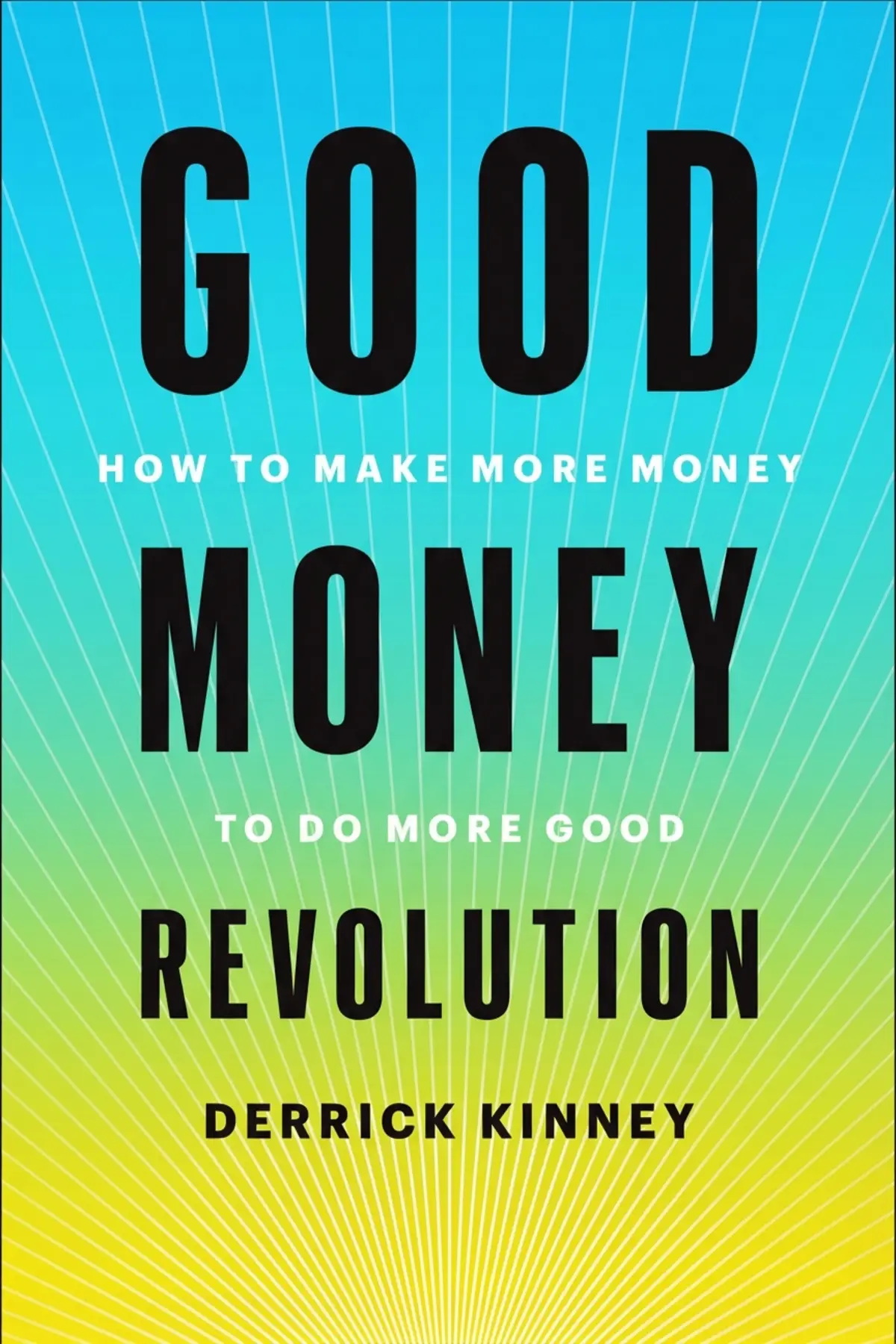
Table of Content
1. Introduction
2 min 01 sec
We have all heard the old adage that money is the root of all evil. It is a sentiment that echoes through our culture, whispered in times of financial struggle and shouted during scandals of corporate greed. When you are staring at a stack of unpaid bills, or watching your hard-earned savings vanish into the necessities of daily life, it is easy to view money as a source of stress, a necessary evil, or even a personal enemy. But what if that perspective is exactly what is holding you back from the life you were meant to live? What if the problem isn’t the money itself, but the way we have been taught to think about its purpose?
In this exploration of Derrick Kinney’s philosophy, we are going to turn that traditional narrative on its head. Imagine for a moment that money isn’t a scorecard for your ego or a cage for your time. Instead, imagine it as a tool—a high-powered fuel that can be used to drive incredible change in the world. When we shift our focus from what money can buy us to what money can do through us, everything changes. The pressure of the daily grind transforms into the momentum of a mission.
This is the core of the Good Money Revolution. It is a movement that suggests the best way to find happiness and success is not to settle for ‘enough,’ but to strive for more so that you can give more. Over the next several minutes, we will walk through a specific framework designed to get your financial house in order and your earning potential soaring. We will look at why generosity is actually the secret weapon of the most successful entrepreneurs, how to identify the specific causes that make your heart beat faster, and how to dismantle the mental barriers that keep you stuck in a cycle of scarcity.
Whether you are struggling to make ends meet or you are already comfortable but feeling uninspired, there is a way to make your bank account reflect your best self. By the end of this journey, you will see that earning more isn’t just about luxury—it’s about the profound impact you can have on your family, your community, and the world at large. Let’s dive into how you can start your own revolution today.
2. The Motivational Power of Altruism
2 min 32 sec
Uncover why traditional financial goals often lead to burnout and how a shift toward external impact can reignite your professional drive and personal happiness.
3. A Systematic Approach to Financial Impact
2 min 39 sec
Explore a structured seven-step process designed to align your daily financial habits with your long-term goals and your desire to help others.
4. Adopting the Entrepreneurial Mindset
2 min 20 sec
Learn how to significantly increase your income by reframing your role—whether you are an employee or a business owner—as a value-creator.
5. Breaking the Cycles of Financial Fear
2 min 21 sec
Identify the hidden psychological scripts from your past that may be sabotaging your current financial success and learn how to rewrite them.
6. The Infinite Return on Investment of Giving
2 min 16 sec
Understand how generosity creates a virtuous cycle that improves your physical health, boosts your career, and attracts others to your cause.
7. Conclusion
1 min 42 sec
As we wrap up our time with the Good Money Revolution, let’s reflect on the journey we have taken. We started by challenging the notion that money is inherently bad, recognizing instead that it is a powerful amplifier for the good already within you. We explored the Good Money Framework, a strategic path that takes you from identifying your heart’s true mission to structuring your finances in a way that makes that mission possible. We saw how thinking like an entrepreneur can unlock new levels of income and how shifting your mindset from scarcity to abundance can remove the invisible ceilings on your success.
The most important takeaway is this: your financial success and your desire to help others are not in competition; they are partners. The more you thrive, the more you can lift others up. And the more you focus on lifting others up, the more motivated and energized you will be to thrive. It is a beautiful, self-sustaining cycle that transforms the ‘burden’ of work into the ‘gift’ of contribution.
So, where do you go from here? The first step is to get practical and personal. Don’t wait until you have a perfect plan or a massive surplus. Today, find one small way to be generous. It could be a small donation, helping a neighbor, or volunteering your time. But as you do it, pay close attention to how it feels. Connect that feeling to your work. Ask yourself: ‘If I earned an extra hundred dollars this week, how much more of this good could I do?’ Let that feeling be the spark for your own revolution. By aligning your money with your soul, you aren’t just changing your bank balance; you are changing your life and the lives of those around you. Now, go out and start making good money.
About this book
What is this book about?
Good Money Revolution challenges the long-standing belief that the pursuit of wealth is inherently selfish or corrupt. Instead, it presents a compelling case for financial growth as a vehicle for global and local improvement. By shifting your focus from accumulation to contribution, you can unlock a new level of professional motivation and personal satisfaction. The book introduces the Good Money Framework, a structured approach to managing your finances that prioritizes what the author calls a Generosity Purpose. This isn't just about charity; it’s about a total mindset shift that includes increasing your earning potential, eliminating debt, and finding the specific causes that drive you to succeed. Through relatable stories and actionable steps, you'll see how making more money can actually make you a better, happier, and more fulfilled person.
Book Information
About the Author
Derrick Kinney
Derrick Kinney is the CEO of Good Money Framework and the host of the popular Good Money podcast. A prominent voice in the movement to use wealth for social good, Kinney draws on his extensive experience as a former financial advisor. He famously sold his multimillion-dollar advisory business to dedicate his career to teaching others how to align their financial success with their personal values through the Good Money Framework.
Ratings & Reviews
Ratings at a glance
What people think
Listeners describe this book as an uncomplicated listen filled with clear anecdotes, while one listener mentions it offers easy-to-follow techniques for growing wealth. Additionally, they value the uplifting themes, characterizing them as both moving and life-changing, and they also highlight the useful methods for financial gain. The work further earns praise for its clear prose, the high standard of its information, and its engaging narrative tone.
Top reviews
Giulia
Wow, what a paradigm shift for someone who previously viewed budgeting as a restrictive chore. Kinney’s 'Good Money Framework' isn't about cutting out your morning latte to save pennies; it's about expanding your horizons to fund things that actually matter. The story of Mary finding purpose through her Texas Rangers job and then donating the proceeds to a food bank was incredibly moving. It proves that generosity isn't just for the billionaire class. My favorite takeaway was the entrepreneurial mindset—treating your current job as a platform for value creation rather than just a place to collect a paycheck. This book is transformative if you actually do the exercises. I’m already rethinking my monthly tithing and savings goals. It’s practical, inspiring, and very well-written for a general audience.
Show moreJom
The chapter on Mary and the Texas Rangers genuinely brought a tear to my eye and changed how I look at my 'extra' work hours. It’s so easy to get caught up in the scarcity mindset, thinking we never have enough to share. Kinney flips that on its head. He shows that by focusing on our 'Generosity Purpose' first, we actually find the drive to earn more than we ever thought possible. The book is incredibly easy to digest, which I appreciate because I usually find finance books boring. It’s more of a life-design book than a dry accounting manual. Earning money with a clear, moral mission just feels different. I'm starting my first side hustle this month specifically to fund a scholarship at my old high school.
Show moreThida
Finally got around to reading this, and the 'Good Money Framework' is remarkably easy to implement even if you aren't a math person. I’ve always been a 'stingy' saver because I was afraid of running out, but this book helped me see that hoarding pennies isn't the same as building a legacy. The 50/30/20 budget rule mention was helpful, though I liked Kinney’s specific emphasis on the giving percentage. The writing is warm and feels like a conversation with a mentor rather than a lecture from a banker. It’s a powerful reminder that our financial success can be a win for everyone, not just ourselves. Truly an inspiring read for the modern age where everything feels so self-centered.
Show moreVarinee
Picked this up because I’ve always felt a bit of a tug-of-war between wanting to be successful and wanting to be a good person. Kinney really nails the psychological aspect of that conflict with his 'Generosity Purpose' idea. The writing is incredibly accessible, moving quickly through stories like Dave’s school project that illustrate why we should aim for more. I appreciated the 7-step framework, though some parts felt a little light on specific investment strategies. It's more of a mindset manual than a technical guide. If you’re stuck in a rut and need a push to increase your income without feeling like a corporate drone, this is perfect. It makes the idea of a side hustle feel less like a chore and more like a mission. The tone is very encouraging, which I needed this month.
Show moreHassan
After hearing about the 'Generosity Purpose' on a podcast, I decided to give this a shot to see if it could fix my stagnant career. The idea of connecting your cash to a cause is actually a brilliant motivator. I found myself looking at my spreadsheet with new eyes, not just seeing numbers, but seeing the potential to help a local animal shelter. Kinney’s writing style is punchy and direct, which makes the complex parts of the 7-step plan feel manageable. I did think the 'act like an entrepreneur' section was a bit idealistic for certain corporate environments where raises are strictly capped, but the sentiment remains solid. It’s a great read if you want to feel better about your financial goals. I’ve already recommended it to a few friends.
Show moreDuang
As someone who has struggled with the 'money is evil' mindset, this book provided the exact mental reframe I needed to move forward. Kinney argues that money is just a tool, and if you're a good person, you're the best person to be holding that tool. The 7-step plan is straightforward and serves as a great roadmap for anyone who feels lost in their finances. I particularly liked the focus on 'income satiation'—knowing when you have enough for yourself so you can start focusing on others. My only minor gripe is that some of the case studies felt a bit too 'perfectly resolved,' but they serve their purpose as illustrations. It’s a very positive, life-affirming book that makes you want to be more productive.
Show moreChanon
Ever wonder if the constant grind is actually serving a higher goal? Derrick Kinney attempts to answer that by linking our bank accounts to our values. The book is an easy read, filled with motivational anecdotes that keep you turning the pages. I particularly liked the section on identifying your 'desired income' number rather than just chasing 'more' indefinitely. However, I have to say that a lot of the actual financial tips—like paying off debt and starting a 401k—are things you've likely heard a dozen times before. It lacks a bit of 'how-to' when it comes to vetting the charities he suggests we support. Still, the core message about 'Good Money' being a tool for impact is a refreshing change from the typical 'get rich quick' greed.
Show moreKan
To be fair, the motivational tone is infectious, but I found the middle section on side hustles a bit repetitive. Kinney is clearly a gifted communicator, and he makes a compelling case for why good people should have more money. I enjoyed the stats on how giving actually improves your physical health and blood pressure—that was a neat scientific angle I hadn't considered. However, I would have liked more detail on the 'tracking' phase of his framework. It feels like he breezes through the actual management of wealth to get back to the inspiring stories. It’s a solid 3-star read: good for a weekend boost of energy, but maybe not the definitive financial bible some are claiming it to be.
Show morePrae
Frankly, the concept of 'Good Money' is something that should be taught in every high school. I picked this up hoping for a few tips on saving, but I walked away with a completely different outlook on my career. The author explains that when you have a 'why' (like Dave building his school), the 'how' of making money becomes much easier. It’s a quick, engaging read that doesn't get bogged down in technical jargon. While I think some of the debt management advice is a little oversimplified, the emotional core of the book is its strongest asset. If you feel unmotivated at work, this might be the spark you need. It’s about more than just wealth; it’s about significance.
Show morePear
Not what I expected, as the financial advice felt a bit too elementary for anyone who has read more than one personal finance book in their life. The central premise—that you should make more money so you can give it away—is noble, but the execution feels like a long pep talk. I was looking for more nuanced discussions on wealth building, but instead, I got very basic suggestions like 'start a side hustle.' While Kinney’s tone is empathetic and the stories are heartwarming, the book repeats its main point far too often. It’s probably a great starter for someone who has a negative relationship with money, but for those of us already budgeting and investing, there isn't much new ground here. I felt like the 'revolution' was more of a light nudge.
Show moreReaders also enjoyed
AUDIO SUMMARY AVAILABLE
Listen to Good Money Revolution in 15 minutes
Get the key ideas from Good Money Revolution by Derrick Kinney, plus 5,000+ more titles in English and Thai.
- 5,000+ titles
- Listen as much as you want
- 7-day free trial
- Cancel anytime







