
20 min 22 sec
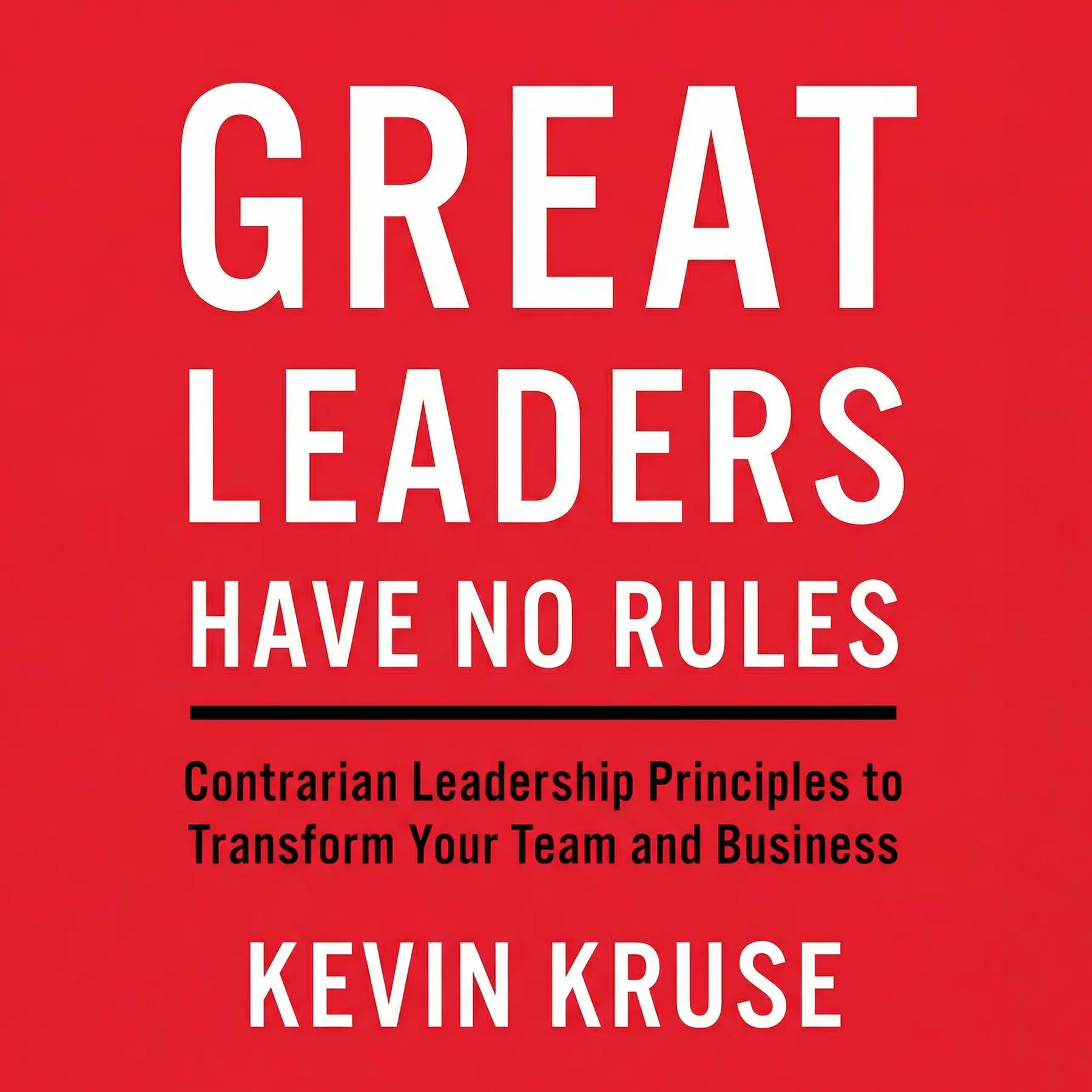
Great Leaders Have No Rules: Contrarian Leadership Principles to Transform Your Team and Business
By Kevin Kruse
Great Leaders Have No Rules challenges traditional management dogmas, advocating for a contrarian approach built on trust, radical transparency, and the elimination of restrictive workplace policies to drive team performance.
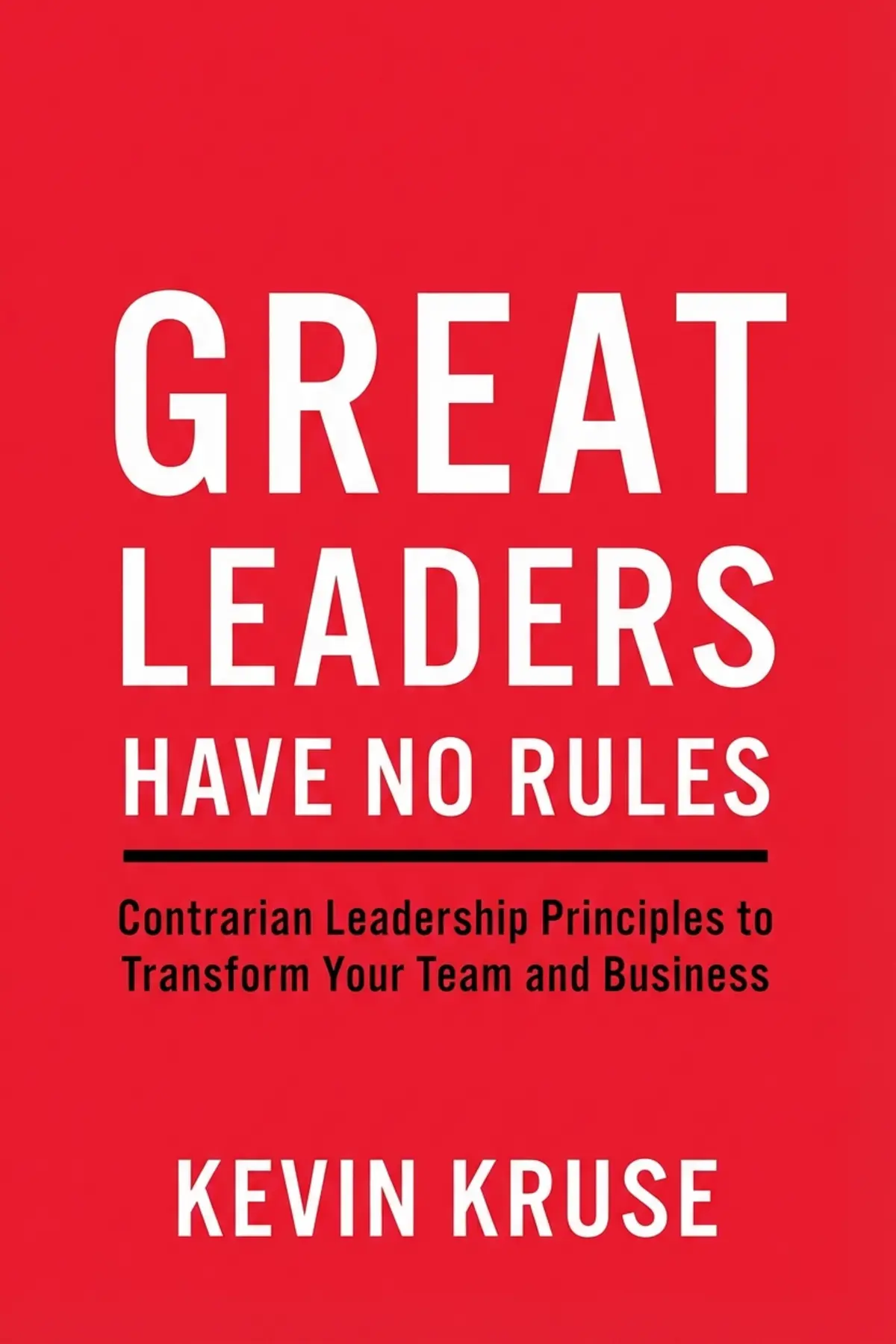
Table of Content
1. Introduction
1 min 40 sec
Think about the last time you felt truly empowered at work. Was it because of a thick handbook of policies, or was it because someone trusted you to make a call? Most of us have been taught that leadership is about structure, oversight, and maintaining a professional distance. We’re told to keep our doors open, treat everyone exactly the same, and follow the rulebook to the letter. But what if those very guidelines are the things holding your team back from greatness?
In Great Leaders Have No Rules, Kevin Kruse challenges the foundational myths of management. He suggests that the traditional way we lead—rooted in industrial-age thinking—is actually creating bottlenecks, stifling innovation, and burning out managers. This isn’t just about being a ‘nice’ boss; it’s about a radical shift in how we view power and productivity. The throughline here is simple but provocative: to lead effectively in the modern world, you must be willing to break the rules that were designed to keep people in line.
We are going to explore a contrarian framework that prioritizes results over activities and relationships over regulations. We will look at why your constant availability might be hurting your team’s growth, why ‘fairness’ doesn’t mean treating everyone as if they are identical, and why the most powerful thing a leader can do is admit when they don’t have all the answers. By the end of this journey, you’ll see how a shift toward transparency and vulnerability can turn a stagnant department into a high-octane engine of success. It’s time to stop managing by the book and start leading with intention. Let’s dive into how you can revolutionize your approach to transform both your business and your own daily life.
2. Closing the Open Door
2 min 12 sec
Discover why constant availability might be stalling your team’s development and how a closed door can actually foster more independence and higher productivity.
3. Standards Over Rules
2 min 11 sec
Learn how rigid company policies can undermine common sense and why setting high standards is a more effective way to drive accountability and trust.
4. The Likability Trap
2 min 08 sec
Being a popular boss might feel good, but the desire to be liked can actually lead to poor decision-making and a dysfunctional team culture.
5. The Power of Professional Love
2 min 10 sec
Explore why showing genuine care for your employees is one of the most practical and effective strategies for increasing loyalty and productivity.
6. Mastering the Minutes
2 min 06 sec
Ditch the to-do list and embrace time blocking to reduce stress and ensure your highest priorities actually get finished.
7. Fairness Over Equality
2 min 07 sec
Treating every employee exactly the same might feel fair, but it’s often a shortcut that hurts your top performers and protects underachievers.
8. Radical Transparency
2 min 05 sec
Learn why hoarding information is a relic of the past and how sharing everything from failures to finances can empower your team to act like owners.
9. Leading Through Vulnerability
2 min 05 sec
Admitting you don’t have all the answers might seem like a weakness, but it is actually the key to building deep trust and a culture of innovation.
10. Conclusion
1 min 38 sec
We’ve covered a lot of ground, from the fallacy of the open door to the transformative power of professional love and radical transparency. The core message of Great Leaders Have No Rules is that the most effective way to lead is often the exact opposite of what the traditional management manuals tell us. By letting go of the need for rigid control and constant availability, you actually gain something much more valuable: a team that is autonomous, engaged, and highly productive.
As you move forward, remember that leadership isn’t about the title you hold or the rules you enforce. It’s about the environment you create. It’s about having the courage to set high standards rather than restrictive rules, the wisdom to prioritize your time according to your values, and the heart to care for your people as individuals. It’s about being fair enough to treat people differently based on their contributions and being brave enough to admit when you’ve failed.
To start implementing these ideas today, look at your calendar. Clear out the clutter of unnecessary meetings and reclaim your peak performance hours for deep work. Then, consider a simple but powerful change: a ‘no smartphones’ policy in your meetings. Cognitive research shows that even having a phone in sight can diminish our mental performance and increase our error rate. By asking your team to put their phones away—and by modeling that behavior yourself—you are signaling that their focus and their presence are the most important things in the room. This small step toward mindfulness and boundary-setting is the beginning of a larger journey toward becoming a leader who doesn’t just manage, but truly inspires. Forget the old rules, and start leading with intention.
About this book
What is this book about?
This summary explores Kevin Kruse’s unconventional leadership philosophy, which suggests that the very rules designed to manage teams often end up sabotaging them. Instead of relying on rigid policies and open-door platitudes, Kruse argues that true leadership requires a focus on individual fairness, deep transparency, and the courage to be vulnerable. Listeners will learn why many traditional practices—like equal treatment for all employees or maintaining a constant 'open door'—can actually hinder productivity and decision-making. The book promises a path toward a more autonomous, high-performing workplace by replacing control with standards and connection. It offers a blueprint for leaders to regain their own time while empowering their teams to achieve exceptional outcomes.
Book Information
About the Author
Kevin Kruse
Kevin Kruse is a New York Times best-selling author recognized for his work on six books, including titles such as Employee Engagement 2.0 and 15 Secrets Successful People Know About Time Management. Beyond his writing, he is a serial entrepreneur and the voice behind the LEADx Leadership podcast. Through his online platform, LEADx Academy, Kruse has expanded his reach to provide leadership training to individuals in 192 countries.
Ratings & Reviews
Ratings at a glance
What people think
Listeners find the book highly practical and full of sound wisdom, admiring the straightforward writing and overall utility. They also value its take on leading, noting that it applies to more than just corporate executives and helps foster mutual trust within a company. Furthermore, the text receives praise for its readability, use of stories, and actionable advice.
Top reviews
Luke
Finally got around to reading this after seeing so many colleagues recommend it on social media recently. Kevin Kruse has a knack for taking traditional leadership tropes and flipping them on their head in a way that feels incredibly practical for everyday use. The chapter on 'Playing Favorites' was a total lightbulb moment for me because it explains how treating everyone the same is actually a form of unfairness. Each chapter ends with specific application tips for managers and even parents, which makes the advice feel much more grounded than your typical leadership manifesto. The writing is conversational and lacks the stuffy academic jargon that usually makes these types of books a chore to get through. If you are struggling with engagement or feel like your team is stuck in a rut of bureaucracy, this is exactly the kind of kick you need.
Show moreSoontorn
Ever wonder why some teams seem to thrive while others are bogged down by endless red tape and policy manuals? Kevin Kruse dives into this head-first by suggesting that the best leaders actually focus on outcomes rather than enforcing a strict set of rules. I loved the 'Be Likeable, Not Liked' chapter because it addresses the common trap of wanting to be everyone's friend at the expense of performance. The book is exceptionally well-organized, making it easy to flip through and find the specific advice you need for a given situation. Not gonna lie, some of the ideas made me feel a bit uncomfortable at first, but that’s usually a sign that a book is actually challenging your status quo. It’s an easy, engaging read that provides a wealth of insights for high achievers who want to reduce stress.
Show moreCaleb
Wow, what a refreshing take on what it actually means to lead a team in the 21st century! Kevin Kruse delivers a masterclass in modern management by throwing out the old playbook and focusing on what actually drives employee engagement and productivity. The 'Lead with Love' chapter might make some traditionalists cringe, but it is a powerful reminder that great teams are built on more than just spreadsheets. I found the book to be a page-turner, which is not something I usually say about business books, but the storytelling is just that engaging. It gave me the confidence to close my door and focus on high-impact work without feeling like I was failing my team. If you are a student of leadership or just someone trying to survive the daily grind, this book is a treasure trove of ideas.
Show moreFilm
As someone who transitioned into a management role from a technical background, I found the 'Lead with Love' and 'Show Weakness' sections incredibly grounding and helpful. In my experience, most leadership books are written for CEOs who have the power to change company structures, but Kruse writes for those of us on the ground floor. The book is structured so you can jump around to the chapters that interest you most, which I really appreciated. While I didn't agree with every single point—especially regarding some of the scheduling advice—it still forced me to rethink my daily habits. The 'Takeaways' at the end of each chapter are perfect for quick reference when you need a refresher on a specific concept. It’s an easy read that manages to provide a very nice overview of effective management practices without being overwhelming.
Show moreSom
The chapter on closing your open-door policy was worth the price of the book alone for me. Frankly, I had always felt guilty about needing focused time, but Kruse explains why being 'always available' actually hurts your team’s ability to solve problems independently. The author uses a great mix of personal failures and research-backed evidence to show how transparency and vulnerability can build deep trust. I liked that the chapters are short and punchy, allowing me to finish the whole thing over a long flight without getting bored. Some of the 'No Rules' stuff feels a bit idealistic, but the core message about treating employees like responsible adults is solid. It’s a practical guide that focuses on real-world outcomes rather than just management theory. Definitely worth keeping on your shelf for those days when you feel overwhelmed by drama.
Show morePun
Look, this book is a breath of fresh air compared to the usual leadership books that feel like they were written by robots for robots. Kruse’s writing style is free-flowing and humorous, which makes the contrarian advice about playing favorites or revealing everything much easier to digest. I particularly enjoyed the section on showing weakness because it humanizes the role of the boss in a way that builds genuine connections. While I wasn't entirely sold on the calendar-crowding advice—I still prefer a bit of white space in my day—the logic behind it was quite compelling. To be fair, the book doesn't go extremely deep into any single topic, but it serves as a fantastic overview of modern management practices. It is the kind of book you can read in a couple of days and start implementing the changes immediately.
Show moreAroha
Picked this up because I’ve been a fan of the author’s work for a while and wanted to see his philosophy in one volume. The 'Reveal Everything' chapter really resonated with me, especially the point about how only sharing good news is a fast way to lose trust. Kruse manages to bridge the gap between being a supportive boss and a high-performing leader without making it feel like a compromise. I do think a few of the chapters could have been rearranged for better flow, but that is a minor quibble. The inclusion of 'How would you apply this if...' sections for different roles like parents or salespeople is a stroke of genius. It makes the leadership principles feel universal rather than just restricted to a corporate boardroom. It’s a solid read that offers a lot of value for anyone looking to improve their influence.
Show moreTaw
After hearing about the 'No Rules' approach, I was skeptical about how it would work in a real-world environment where accountability is key. Personally, I think Kruse clarifies that it’s about hiring mature people and coaching them toward good choices rather than creating a vacuum of leadership. The book is filled with 'aha' moments that made me reflect on my own weaknesses, particularly my need to be liked by everyone. The author’s willingness to share his own mistakes makes the advice feel much more authentic and less like he is preaching from a mountaintop. It’s an easy read that hits on themes of transparency, time management, and building mutual trust. While I think some of the research could have been more robust, the practical takeaways at the end are incredibly useful. It’s a great introduction to leadership for the modern era.
Show moreBenjamin
Not what I expected from the title, but Kruse makes some interesting points about why strict regulations can actually hinder a team’s performance. To be fair, I felt the 'No Rules' concept was a bit of a stretch for industries that are highly regulated or have high safety risks. While the writing is punchy and moves fast, some of the advice felt a bit like it was geared toward tech startups rather than traditional corporate environments. I did appreciate the 'Close Your Open-Door Policy' chapter because it offered a refreshing take on why constant accessibility is a trap. It is definitely a thought-provoking read, but I would suggest taking the more extreme principles with a grain of salt. It’s a decent enough book for a weekend read if you want to challenge your current management style.
Show moreMattanee
Truth is, I found this book to be a bit too light on actual substance for my personal taste and professional needs. While the title promises something revolutionary, a lot of the 'contrarian' advice felt like common sense repackaged with edgy titles to grab attention. I struggled specifically with the chapter 'Leadership Is Not A Choice,' which felt somewhat poorly written compared to the rest of the book and lacked a cohesive argument. The storytelling is decent, but if you have read a lot of management literature already, you might find yourself skipping through the more repetitive sections. It's a very fast read, which is a plus, but I was hoping for more deep-dive research rather than just anecdotes. It might be a good starting point for a brand-new supervisor, but for veteran leaders, there just isn't enough meat here.
Show moreReaders also enjoyed

A Bigger Prize: How We Can Do Better Than the Competition
Margaret Heffernan
A Year with Peter Drucker: 52 Weeks of Coaching for Leadership Effectiveness
Joseph A. Maciariello

Acting with Power: Why We Are More Powerful Than We Believe
Deborah Gruenfeld
All In: How Great Leaders Build Unstoppable Teams
Mike Michalowicz
AUDIO SUMMARY AVAILABLE
Listen to Great Leaders Have No Rules in 15 minutes
Get the key ideas from Great Leaders Have No Rules by Kevin Kruse, plus 5,000+ more titles in English and Thai.
- 5,000+ titles
- Listen as much as you want
- 7-day free trial
- Cancel anytime







