
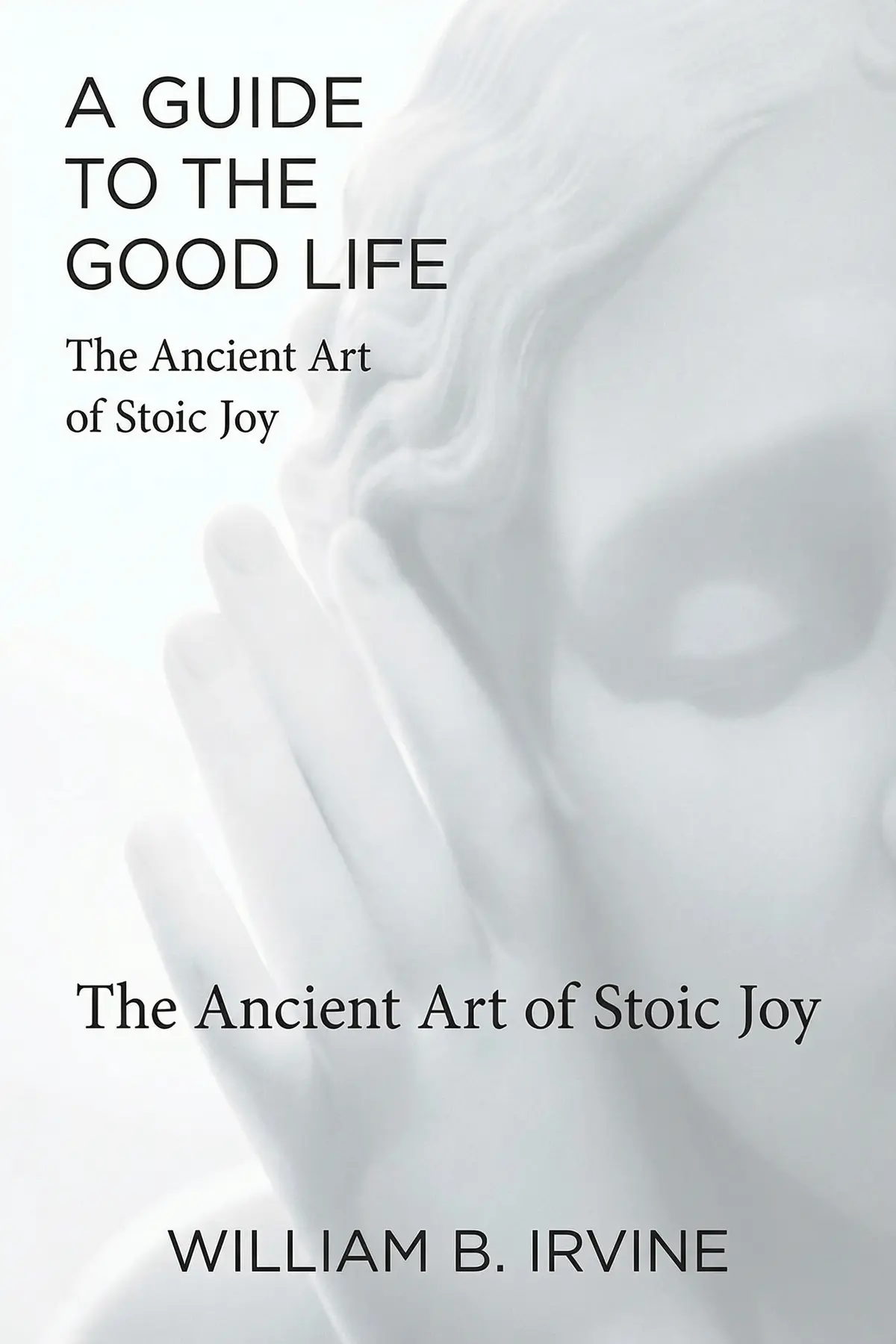
A Guide to the Good Life: The Ancient Art of Stoic Joy
William B. Irvine
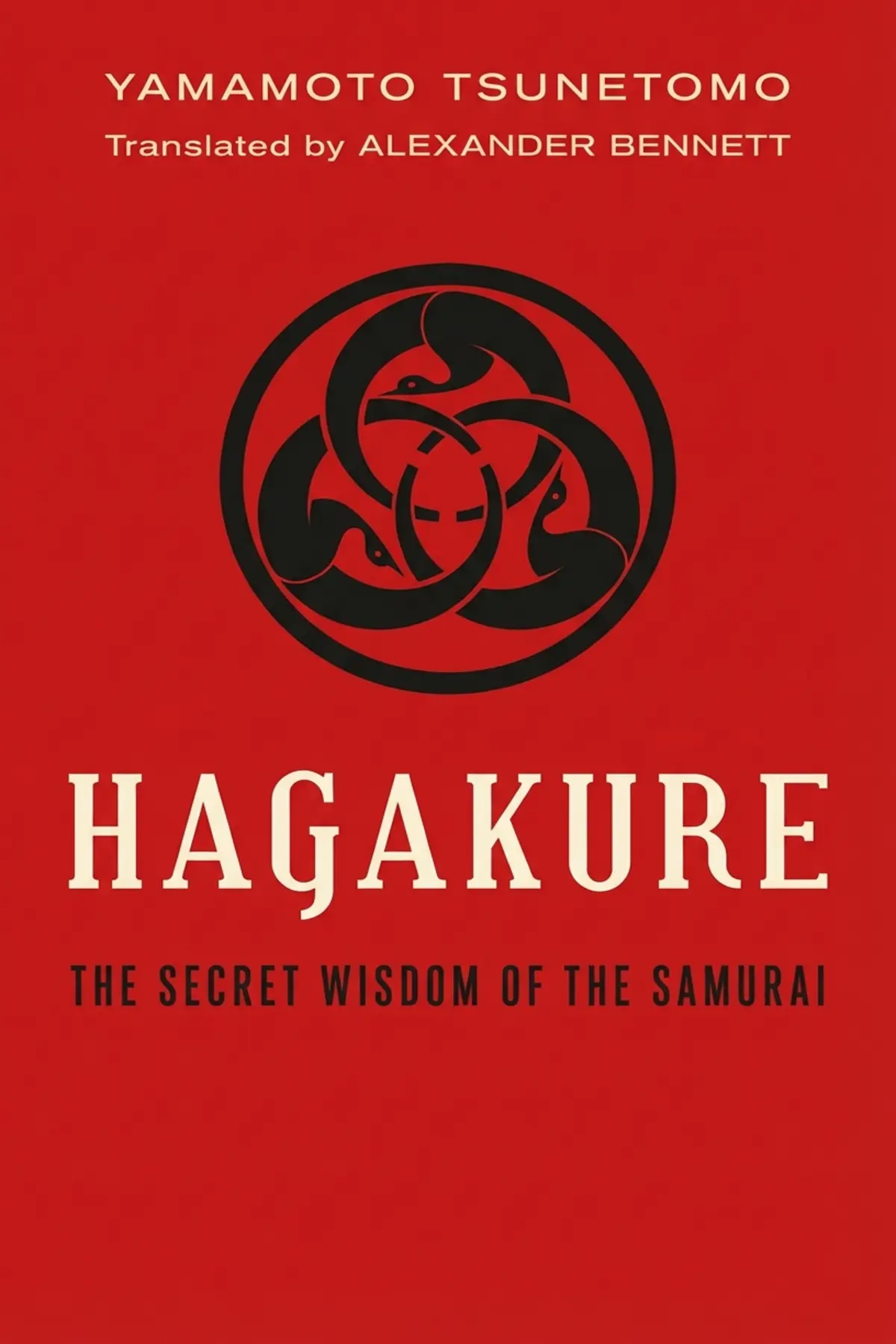
Hagakure is a profound exploration of the samurai code, offering timeless insights into honor, loyalty, and the pursuit of excellence. It guides readers through the discipline and philosophy required to live with purpose.
1 min 18 sec
The image of the samurai often evokes scenes of intense combat and flashing blades, but the true essence of their world was governed by a far more subtle and profound philosophy. This is the heart of Bushido, a code of conduct that transformed the life of a warrior into a spiritual journey of discipline and unwavering focus. In our current era, characterized by rapid shifts and an often overwhelming sense of chaos, the ancient wisdom found in the samurai tradition offers a grounding perspective on how to live with intention. This guide takes us through the core tenets of that tradition as recorded by Yamamoto Tsunetomo.
We are looking for a throughline of total commitment—a way of being where every action, no matter how small, is an expression of one’s character and duty. We will explore how a warrior prepares for the ultimate challenges of life by first mastering their internal landscape. From the radical acceptance of mortality to the refined nuances of social etiquette, these insights reveal a path toward personal excellence that transcends the battlefield. By the end, you will see how these historical principles of honor, loyalty, and self-mastery can be adapted to navigate the complexities of modern life with grace and resolve.
1 min 31 sec
Discover why the samurai’s daily meditation on their own demise was not a sign of despair, but a practical tool for achieving total presence and focus in every moment.
1 min 32 sec
Learn how the bond between a warrior and their leader went far beyond obedience, transforming every mundane task into an act of deep reverence and strategic care.
1 min 33 sec
Explore the essential trio of wisdom, compassion, and courage, and see how these virtues act as a compass for maintaining integrity during times of both peace and hardship.
1 min 25 sec
Understand why things like handwriting, speech, and physical appearance were considered vital indicators of a samurai’s spiritual and mental readiness.
1 min 35 sec
Discover the four types of performance that define a warrior’s efficiency and why the ultimate service involves the courage to correct a superior’s path.
1 min 44 sec
Learn how the journey of self-improvement spans an entire lifetime, from the specific education of youth to the complementary relationship between warriors and monks.
1 min 17 sec
The wisdom contained within these teachings serves as a powerful reminder that the quality of our lives is determined by the quality of our character. While we no longer live in the era of the samurai, the principles of honor, loyalty, and self-discipline remain as relevant as ever. The central throughline we have explored is that a life of purpose is built on the foundation of constant self-refinement and the acceptance of our own mortality. By letting go of the fear of the end, we gain the freedom to live fully in the present.
To apply these lessons today, we can start by looking at our own daily rituals. Are we acting with the ‘swift-swift’ efficiency of a master, or are we hesitating out of fear or complacency? Do our external actions and appearances reflect an inner sense of order? Most importantly, are we serving our communities and our goals with a spirit of selfless loyalty? The secret wisdom of the samurai is not about the sword, but about the spirit behind it. As you move forward, carry with you the resolve to face your challenges with courage, to listen with wisdom, and to act with a compassion that uplifts everyone around you. In doing so, you honor the timeless path of the warrior in your own unique way.
What does it mean to live with the heart of a warrior in a world that is constantly changing? Hagakure provides the answers by detailing the spiritual and practical foundations of Bushido, the celebrated samurai code. It is far more than a manual for combat; it is a manifesto for personal character and social integrity. The book promises to reveal how a constant awareness of mortality can lead to a more vibrant, focused, and fearless life. By examining the sacred relationship between a samurai and their leader, the text explores the depths of loyalty and the nuances of selfless service. Readers will discover how the essential virtues of wisdom, compassion, and courage are not just inherited traits but are cultivated through daily habits, social etiquette, and even the way one speaks or writes. Ultimately, this work provides a blueprint for total self-mastery. It teaches that the greatest victories are not won on a physical battlefield, but within the soul of the individual who commits to a life of unrelenting excellence and integrity.
Yamamoto Tsunetomo was a prominent 18th-century Japanese samurai known for his deep understanding of Bushido. After his lord’s death in 1700, he became a monk and lived in a hermitage, where his teachings were eventually compiled into Hagakure. His insights have left a permanent mark on Japanese culture and philosophical discourse. Dr. Alexander Bennett is a professor of Japanese history and culture at Kansai University and serves as the Director at the International Budo University’s Budo and Sports Research Institute. A leading scholar with two doctoral degrees, he has extensively researched and published works on the ethical traditions of the samurai.
Listeners consider this an exceptional resource for martial arts practitioners, highlighting the precision of the translation and the thoroughness of its footnotes. Furthermore, the prose is skillfully crafted, and listeners value the depth of understanding it provides regarding Japan’s history and traditions. The work is also praised for its level of expertise, with one listener mentioning it was authored by a high-level practitioner of the sword. Nevertheless, listeners express varying perspectives concerning the book’s overall engagement factor.
Picked this up on the recommendation of my kendo instructor, and it didn't disappoint. Alexander Bennett brings a level of expertise as a high-level practitioner that other translations lack. You can tell he truly understands the nuance of the sword. The text itself is a wild ride, jumping from deep spiritual insights to the most mundane details of samurai grooming. I found the sections on maintaining a mental edge against an opponent to be surprisingly applicable to modern competition. It's not just about fighting; it's about a specific, rigorous mindset that has mostly vanished. The footnotes are exhaustive and provide much-needed context for the more obscure cultural references. Highly recommended for martial artists.
Show moreBennett’s translation is clearly the gold standard for this text. Having read other versions, the difference is night and day. He manages to convey the intensity of the Hagakure without losing the reader in archaic jargon. The footnotes are truly impressive, explaining the intricate social hierarchies of the Hizen fief. This isn't just a book for people who want to feel like a samurai; it's a deep dive into a philosophy that prioritizes service over the self. It asks difficult questions about what it means to be faithful to a master. Even if you don't agree with every sentiment, the conviction in the writing is undeniable. A tremendous read for any serious scholar.
Show moreThe depth of research present in this edition is staggering. As a martial artist, I appreciated the focus on the mental state required for mastery. It isn't just about the physical technique; it's about the total erasure of the ego. The stories of the Nabeshima clan are fascinating, providing a vivid backdrop for Tsunetomo’s reflections. I especially liked the sections on the importance of one's appearance and hygiene—it shows that being a warrior was a 24/7 commitment to excellence. Some of the parables are cryptic, but that just encourages you to sit and reflect. This is a book I will likely return to many times over the years to find new meanings.
Show moreAbsolutely essential for any serious practitioner of Japanese sword arts. There's an intuitive charm to the writing that bypasses rational logic and hits you right in the gut. The concept that the Way of the Samurai is found in death is a heavy one, but Tsunetomo explains it as a path to total freedom and loyalty. Bennett’s version is the most accurate I’ve encountered, and his background adds a layer of credibility that is often missing from more 'pop-philosophy' versions of the Bushido code. It’s an intense, demanding read that forces you to examine your own values. Whether you're a historian or a kendoka, this belongs on your shelf. It’s a masterpiece of martial literature.
Show moreAs someone who has spent years studying Japanese history, this edition is a revelation. The translation is crisp and manages to capture Tsunetomo’s fanatical devotion without making it feel like a dry textbook. Some might find the disjointed, anecdotal structure frustrating, but I think it adds to the charm. One page discusses the proper way to trim fingernails—referencing the parable of Daimyo Katsushige hiding his clippings—and the next dives into the 'Form of Dying.' It’s an intimate, if occasionally unsettling, window into a feudal world. To be fair, the author's nostalgia for a time before his birth can be repetitive, yet it remains a foundational text for understanding Bushido.
Show moreEver wonder how a 17th-century bureaucrat-samurai viewed the world? Hagakure offers the weirdest, most compelling look into that psyche. I love the sheer randomness of the entries. You might get a profound lesson on the 'Way of Dying' followed immediately by a paragraph on how to wear a samurai hat correctly. It’s an eccentric mix of practical etiquette and extreme martial philosophy. While some parts feel like a grumpy old man complaining about 'kids these days,' the core message about being prepared to die at any moment for one's lord is haunting. It’s a quick read if you just want the highlights, but the historical context provided here makes it worth savoring.
Show moreFinally got around to reading this after seeing it quoted in so many martial arts manuals. I was surprised by how much of it is actually about social etiquette rather than just swordplay. The transition between discussing how to treat a servant and how to commit seppuku is head-spinning. Bennett's translation feels authentic and grounded, likely because he's a practitioner himself. I did find the lack of order a bit frustrating at times—it’s not exactly a book you read cover-to-cover in one sitting. However, for those interested in the psychological side of the Bushido code, it’s indispensable. It really highlights the struggle of a warrior class trying to find purpose in a time of peace.
Show moreTo be fair, while the insights into the 'Way of the Warrior' are fascinating, some of the advice is jarringly archaic. I struggled with Yamamoto’s stance on family; specifically, the line about how it is better not to bring up daughters because they are a blemish to the name. It’s hard to reconcile that kind of misogyny with the more profound Zen-influenced meditations on death and loyalty. The book is essentially a collection of random thoughts compiled over seven years, so there is zero flow. One second you're reading about proper decapitation techniques, and the next you're getting advice on how to yawn in public. It’s a great historical curiosity, but definitely a product of its time.
Show moreLook, the historical value is undeniable, but the actual reading experience is a bit of a mixed bag. On one hand, you get these incredibly sharp, poetic sentences about the transient nature of life. On the other, you have to wade through pages of specific clan gossip and very dated social advice that doesn't translate well to the modern day. The translation by Alexander Bennett is excellent and the footnotes help a lot, but I still found my interest flagging in the middle sections. It’s a great book to keep on a bedside table and read two or three entries at a time. Trying to digest it all at once is a bit much.
Show moreFrankly, I found the obsession with death and the constant nostalgia for a lost era a bit much. Yamamoto spent his life as a clerk, not a frontline soldier, yet he preaches about the battlefield with an intensity that feels almost performative. The advice ranges from the bizarrely specific, like hiding fingernail clippings, to the outright offensive regarding women. I understand it's a historical document, but the repetitive nature of the 'wisdom' became a slog after the first fifty pages. If you're looking for a coherent philosophical treatise, look elsewhere. This is more like a collection of 18th-century blog posts from a very intense, very traditionalist retiree.
Show moreWilliam B. Irvine
Nigel Warburton
John Rawls
Martin Heidegger
Friedrich Nietzsche
AUDIO SUMMARY AVAILABLE
Get the key ideas from Hagakure by Yamamoto Tsunetomo, plus 5,000+ more titles in English and Thai.







