The Age of AI: And Our Human Future
Henry Kissinger
Discover how a search startup transformed into a global powerhouse by prioritizing talent, fostering a culture of radical transparency, and replacing traditional business plans with flexible strategic foundations.
1 min 43 sec
Think about the last time you used the internet. Whether you were searching for an obscure fact, checking your email, or navigating to a new restaurant, there is a high probability that your experience was powered by a company that started in a suburban garage in 1998. Today, that company is a global behemoth, yet it somehow manages to retain the nimble, experimental energy of a brand-new startup. We are talking, of course, about Google. But the real question isn’t what they built; it’s how they built it.
Traditional corporate structures were designed for the industrial age, a time when stability and incremental changes were the goals. In that era, information was guarded like a state secret, and decisions were handed down from a distant executive suite. But as the founders of Google realized early on, those old rules don’t just fail in the twenty-first century—they are actively harmful to success. To survive in a world where technology evolves overnight, you need a different kind of management philosophy. You need a system that focuses on speed, scale, and, most importantly, the people who actually build the products.
In this exploration, we are going to dive deep into the specific principles that former CEO Eric Schmidt and former Head of Products Jonathan Rosenberg used to guide the company through its most explosive period of growth. We will look at why the most important job of any leader isn’t to be the smartest person in the room, but to create an environment where the smartest people want to work. We’ll uncover the secrets behind their unique hiring processes, their radical approach to transparency, and their belief that a great product will always trump a great marketing campaign. By the end of this journey, you’ll understand the core throughline that connects every Google success: the unwavering focus on empowering the creative mind.
1 min 45 sec
Traditional business models are being upended by a world where information is abundant and experimentation is cheap. Discover why product quality has finally overtaken marketing as the primary driver of success.
1 min 33 sec
Meet the new breed of employee that drives modern innovation. These individuals possess a rare blend of technical skill, business savvy, and a rebellious spirit that demands a new management style.
1 min 49 sec
Forget everything you know about traditional recruitment. Learn why committees beat individual managers and why the most important question is whether you could survive a long flight with a candidate.
1 min 49 sec
Traditional business plans are often too rigid for the fast-paced tech world. Discover how to build a strategic foundation based on technical insights and global scale.
1 min 42 sec
In a meritocracy, the best idea wins regardless of who proposed it. See how facilitating intense debate and seeking true agreement can lead to better outcomes than executive mandates.
1 min 45 sec
Information is the fuel of creativity. Learn how breaking down departmental silos and sharing everything with everyone can spark unexpected collaborations and solve the toughest problems.
1 min 48 sec
Innovation cannot be mandated, but it can be cultivated. Discover how high-stakes goals and the freedom to experiment lead to world-changing breakthroughs like Gmail.
1 min 46 sec
As we look back at the principles that define how Google works, a clear theme emerges: the traditional methods of command-and-control management are increasingly obsolete in a world driven by rapid technological change. The true engine of growth isn’t a brilliant business plan or a massive advertising budget; it is the collective intelligence and creative energy of your employees. By shifting your focus from managing tasks to empowering people, you can build an organization that doesn’t just survive change but thrives because of it.
The most important takeaway is the concept of the smart creative. These are the individuals who will build the future, but they will only do so in environments that respect their autonomy, value their input, and provide them with the information they need to succeed. As a leader, your job is to build a strategic foundation that gives these people a clear direction without tying their hands with rigid rules. You must foster a culture of transparency where the best ideas win, regardless of where they come from, and you must create the space for experimentation and even failure.
If you want to apply these lessons to your own work or organization, start with your hiring process. Stop looking for people who just fit a job description and start looking for people who pass the airport test—individuals who are curious, passionate, and better than you at what they do. Create a hiring committee to remove individual bias and ensure you are building a team of peers. Then, look for ways to open up your communication. Share your goals, your data, and your challenges with everyone on your team. You might be surprised at how quickly people step up to solve problems when they finally have the context and the permission to do so. In the end, Google’s greatest innovation wasn’t a search algorithm; it was a way of working that treats every employee as a partner in a shared mission to change the world.
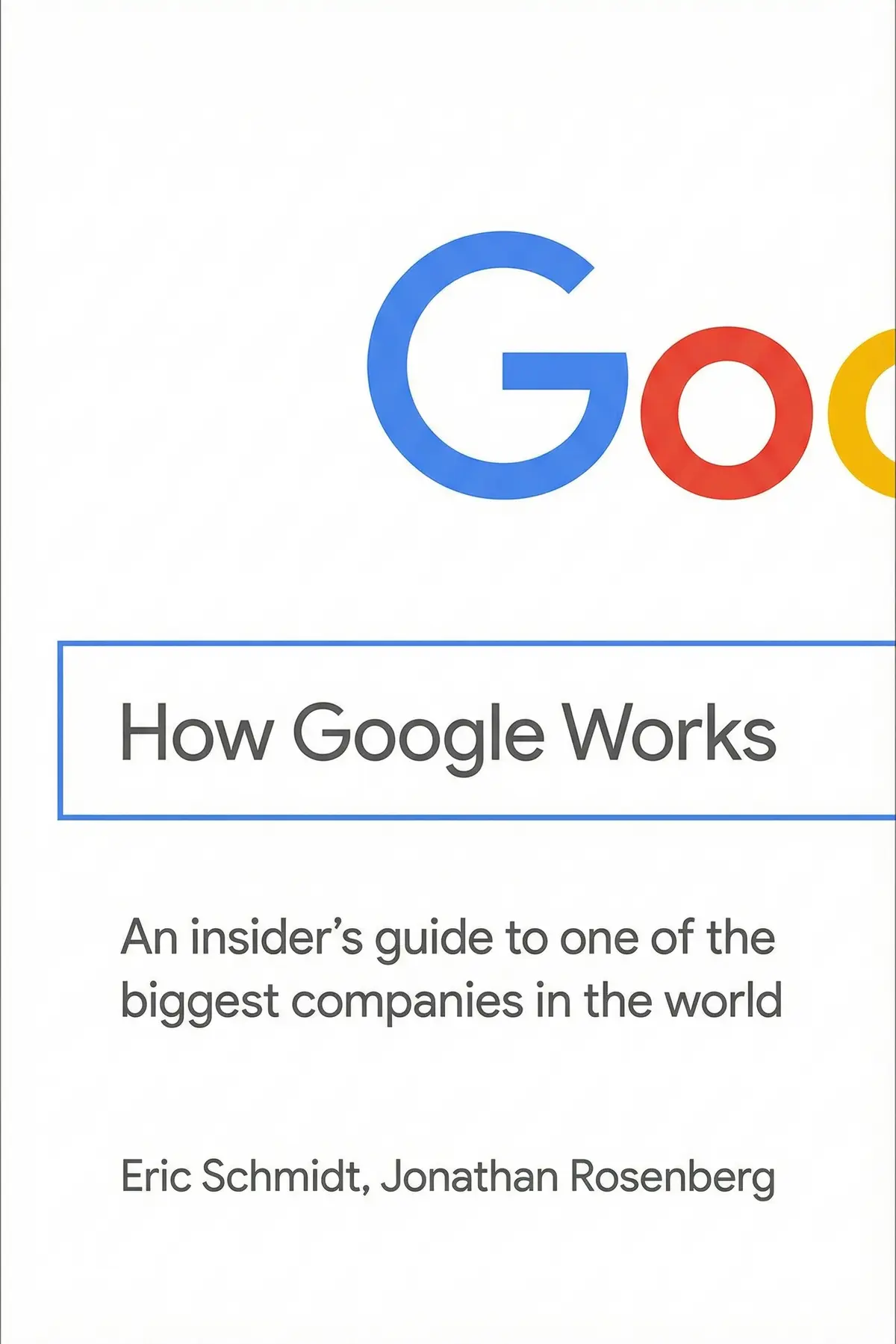
In a world where technology moves faster than traditional management can keep up, how does a company stay at the forefront of innovation? This summary explores the internal mechanics of one of the world’s most influential organizations. It moves beyond the hype of colorful offices and free lunches to reveal a rigorous management philosophy built on attracting and empowering a unique class of employees known as smart creatives. You will learn why the traditional MBA-style business plan is often a recipe for failure in the digital age and how a strategic foundation of technical insights provides a better roadmap for growth. The narrative details how leadership shifts from making top-down commands to facilitating high-stakes debates that lead to consensus. From reimagining the hiring process to implementing the famous 20 percent time rule that birthed products like Gmail, this guide offers a blueprint for building a resilient, innovative culture. Whether you are leading a small team or a massive corporation, these principles explain how to harness the chaotic energy of talented individuals to solve the world's most difficult technical problems.
Eric Schmidt served as the Chief Executive Officer of Google from 2001 to 2011, providing the adult supervision that helped the company scale from a startup to a global leader. Jonathan Rosenberg was the Head of Products at Google, where he oversaw the development and management of the company’s diverse product portfolio.
Listeners find the material captivating, with one individual noting that it is ideal for consumption during flights or extended commutes. Furthermore, the text offers deep perspectives on Google’s search engine and actionable professional guidance, serving as a useful tool for academic case studies in business schools. Listeners also value the stimulating content, with one person remarking on its deep reservoir of knowledge, alongside its easy-to-follow prose. The work earns praise for its forward-thinking methodology—one listener specifically pointed out how it illustrates the path to future prosperity—while listeners overall delight in the incredible anecdotes shared throughout.
This book serves as an incredible blueprint for anyone looking to understand the modern corporate landscape through the lens of a tech giant. Schmidt and Rosenberg offer what feels like a masterclass in business school case studies, emphasizing that technical insights must drive product development rather than just following market research. The authors argue that in our current era, the product is king and the consumer is god. It isn't enough to just shout about a service; you have to build something that fundamentally changes the user experience from the ground up. I was particularly struck by the 70/20/10 rule for resource allocation, which provides a practical framework for balancing core business needs with wild, innovative moonshots. Even if you aren't in the tech sector, the wisdom regarding how to foster a culture of excellence is universally applicable. It is a dense but rewarding read that shows exactly how greatness is manufactured through deliberate choices.
Show moreEver wonder how a company maintains its soul while scaling to such a massive size? Schmidt and Rosenberg pull back the curtain on Google’s internal mechanics, revealing a world where messiness is a virtue and hierarchy is secondary to ideas. The book is packed with innovative approaches to leadership, such as the idea that a manager’s job is to serve their 'smart creatives' rather than control them. I found the discussion on OKRs particularly enlightening because it offers a transparent way to measure progress without stifling creativity. Not gonna lie, I was inspired by the stories of how Gmail and Maps were born from technical breakthroughs rather than business plans. This isn't just a book about Google; it’s a manual for any leader who wants to build something that lasts. The insights on communication and transparency are worth the price of admission alone. It truly shows the potential for future success when you trust your team.
Show moreWow, the sheer amount of wisdom packed into these pages is staggering for any aspiring entrepreneur or business student. The authors successfully bridge the gap between high-level strategy and day-to-day operations, making it a perfect case study for how to build a high-impact culture. I was fascinated by the 'Art of the MVP' section which emphasizes showing rather than telling during product development. It’s refreshing to see a book that prioritizes technical distinction over marketing power. The stories about Larry Page’s early influence and the decision to stay out of mainland China provide a lot of context for Google's global standing. Look, even if you don't work in tech, the lessons on hiring and talent retention are pure gold. Every manager should read the section on why you should hire people who are smarter than you. It is an engaging, thought-provoking read that I’ll likely return to often. Truly a must-read for the modern era.
Show moreNot what I expected from a former CEO; it’s surprisingly accessible and filled with anecdotes that bring the Google philosophy to life. The book does a fantastic job of explaining how the 'smart creative' differs from the traditional knowledge worker of the 20th century. These are people who combine technical depth with business savvy and a creative spark, and the book explains exactly how to manage them. I loved the specific examples of how they handled internal communication during major shifts, like the NSA scandal or net-neutrality litigation. It feels like you are getting a front-row seat to some of the most important business decisions of the last decade. The focus on 'technical insights' over market research is a game-changer for how I think about product development. If you want to understand the engine behind the search results we all use every day, this is the book to buy. It’s both a history lesson and a roadmap.
Show morePicked this up for a cross-country flight and it was exactly the kind of engaging read I needed to stay productive. The writing style is surprisingly accessible for a book written by a former CEO and a high-level executive, making complex management theories feel manageable. I loved the specific anecdotes about the hiring process, especially the famous coin riddle that tests a candidate's logic and adaptability under pressure. It is clear that Google’s success isn't just luck; it is a result of a rigorous commitment to finding the right people and then getting out of their way. My only gripe is that the book feels slightly longer than necessary, as several chapters rehash the same points about culture. Still, if you want a look at the future of work, this provides plenty of food for thought. It is definitely more than just a pat on the back for the authors.
Show moreAfter hearing so much buzz about the 'Google Way,' I finally decided to see what Schmidt and Rosenberg actually had to contribute to the conversation. What I found was a thoughtful exploration of how to lead an organization that is driven by engineering and product excellence. The authors make a compelling argument that in the old world, you spent 70% of your time shouting about a service, but in the new world, that ratio must be inverted. I especially appreciated the practical tips, like keeping project details in your phone to stay connected with your team’s work. There is a wealth of wisdom here regarding how to scale a company without losing the agility of a startup. While the book can be a bit fawning at times, the underlying principles are robust and battle-tested. It is a valuable resource for anyone entering a leadership role in a fast-paced industry. The stories are great, even if they are one-sided.
Show moreFinally got around to reading this, and while it definitely has that 'authorized biography' polish, the core advice is incredibly solid. The authors emphasize that recruiting is everyone's job, and they provide the metrics to prove why that matters for long-term growth. I found the discussion on the 12-coin interview riddle to be a highlight, as it illustrates the kind of analytical thinking Google prizes. Personally, I think the book could have benefited from a bit more self-criticism regarding their later products, like Google+, but the focus remains on the mindset rather than the specific outcome. The accessible writing style makes it an easy read for a long commute or a weekend project. You get a real sense of what keeps 'Googlers' ticking and how they maintain their competitive edge. It’s a great reminder that technical innovation should always be the foundation of any new feature. Well worth the time.
Show moreTo be fair, much of the advice here relies on you already having a pool of world-class talent, but the logic remains sound regardless of your company size. The authors do a great job of breaking down how to foster an environment where 'divas' are accepted but 'knaves' are shown the door. I found the section on cleaning out your inbox and the importance of relationships in a fast-paced business to be surprisingly practical. While the book leans heavily into the 'Google is awesome' narrative, the actual strategies for scaling and innovation are well-explained and easy to follow. It’s the kind of book you want to keep on your desk for a quick reference when you're stuck on a leadership problem. The focus on the 'Art of the MVP' and 'technical distinction' is especially relevant in today’s crowded market. It’s an insightful read, even if it does feel a bit like a victory lap at times. Definitely recommended for the stories alone.
Show moreAs someone who follows the tech industry closely, I found this to be a bit of a mixed bag. The concept of the 'smart creative' is fascinating, yet the authors occasionally paint these employees as near-mythical beings who can do no wrong. While the advice on hiring and avoiding 'knaves' is solid, the tone often shifts into something that feels like a polished corporate brochure. I also noticed the deliberate substitution of generic pronouns, which felt a bit forced and self-conscious throughout the text. To be fair, the sections on Google’s early years and the internal struggle over projects like Google+ provide some much-needed substance. However, the constant repetition of the 'don't be evil' mantra started to feel like a prayer that had been recited a few too many times. It is a decent historical account, but take the idealized imagery with a significant grain of salt.
Show moreThe chapter on culture really missed the mark for me because it felt more like a corporate manifesto than a genuine guide for managers. Frankly, the authors spend so much time waving pom-poms for their own company that they gloss over the actual failures and internal friction that must exist. The 260-page length is excessive given that the core message could have been summarized in a long-form article. I was hoping for more technical depth on how Google works, but instead, I got surface-level generics about 'smart creatives' and product excellence. Any mention of struggle feels perfunctory, almost as if they are humble-bragging about how their weaknesses are actually strengths. For a book that preaches pithy communication, it is ironically wordy and repetitive. It’s a shame because there is some good advice buried in here, but you have to dig through layers of propaganda to find it. Not recommended if you want an objective critique.
Show more
Joseph A. Maciariello

Deborah Gruenfeld
Mike Michalowicz

Hamilton Helmer
AUDIO SUMMARY AVAILABLE
Get the key ideas from How Google Works by Eric Schmidt, plus 5,000+ more titles in English and Thai.