How Google Works
Eric Schmidt
An exploration of how artificial intelligence is reshaping the fundamental pillars of human civilization, from global security to the nature of truth, and how we must adapt our ethics for a new era.
1 min 51 sec
For centuries, the human experience has been defined by our unique capacity for reason. We’ve viewed ourselves as the sole architects of logic, the only beings capable of synthesizing complex information to make moral and strategic choices. But we are now entering a period of history that challenges that monopoly. We have arrived at a crossroads where non-human entities are beginning to exhibit behaviors that look remarkably like intelligence, creativity, and even intuition. This shift isn’t just about faster computers or better apps; it represents a fundamental change in the fabric of human civilization.
The Age of AI explores this profound transition. It asks us to look beyond the convenience of digital assistants and consider what happens when we delegate our decision-making to algorithms we don’t fully understand. As artificial intelligence integrates into our economies, our military strategies, and our very sense of self, it brings with it a host of questions that we are currently ill-equipped to answer. Who is responsible when a machine makes a mistake? How do we prevent technology from eroding our social cohesion? And most importantly, what does it mean to be human in a world where we are no longer the only ones doing the thinking?
In this exploration, we will trace the journey of AI from a theoretical concept in the mind of Alan Turing to the sophisticated neural networks that power today’s global platforms. We will see how AI is unlocking secrets in biology that have baffled scientists for decades, while also creating new vulnerabilities in the way we protect our nations. This journey isn’t just a technical overview; it’s a philosophical and political call to action. It’s an invitation to understand the throughline of this technology so we can guide it toward a future that enhances, rather than diminishes, our shared humanity.
2 min 30 sec
Discover how the quest for machine intelligence shifted from rigid rules to adaptive learning, changing the way computers interact with the messy complexity of human life.
2 min 31 sec
Learn how AI is solving some of biology’s greatest mysteries, accelerating the pace of discovery far beyond the limits of traditional human research.
2 min 27 sec
Artificial intelligence doesn’t just learn our facts; it can also absorb our prejudices, creating systems that reflect the darker sides of human society.
2 min 27 sec
Explore how algorithmic curation is changing our perception of truth and social connection, creating a world where reality is customized for every individual.
2 min 44 sec
Artificial intelligence is rewriting the rules of warfare, introducing new speeds and ambiguities that could unsettle global peace and stability.
2 min 31 sec
As machines begin to create art and analyze our emotions, we must redefine what makes our human experience unique and irreplaceable.
2 min 37 sec
History shows that every major information revolution brings upheaval. Discover how we can apply the lessons of the past to steer the future of AI toward the common good.
1 min 55 sec
The Age of AI is not a distant future; it is a reality that is currently reshaping our world. We have moved from a time when machines were simple tools to an era where they are active participants in our social, political, and even spiritual lives. Throughout this exploration, we’ve seen the incredible promise of this technology—how it can unlock the mysteries of life through protein folding, provide safety through sophisticated surveillance, and offer new forms of creativity. But we have also seen the risks: the amplification of bias, the erosion of shared truth, and the dangerous ambiguity of autonomous warfare.
The throughline of this entire transition is the need for human stewardship. We cannot afford to be passive observers of this revolution. Just as the thinkers of the Enlightenment had to redefine the relationship between the individual and the state, we must now redefine the relationship between humanity and the machines we have created. This means demanding transparency in how algorithms work, establishing international norms for digital defense, and ensuring that our education systems prepare us to coexist with a non-human intelligence.
As we close this summary, the most important takeaway is that the ‘intelligence’ in artificial intelligence is still a reflection of the data and values we provide. If we want a future where AI bolsters our humanity rather than diminishing it, we must lead with wisdom. We must ensure that even as machines become more capable, the responsibility for the moral and ethical direction of our world remains firmly in human hands. The Age of AI is an invitation to be more intentional about our values than ever before, using this incredible power to build a world that remains, at its heart, human.
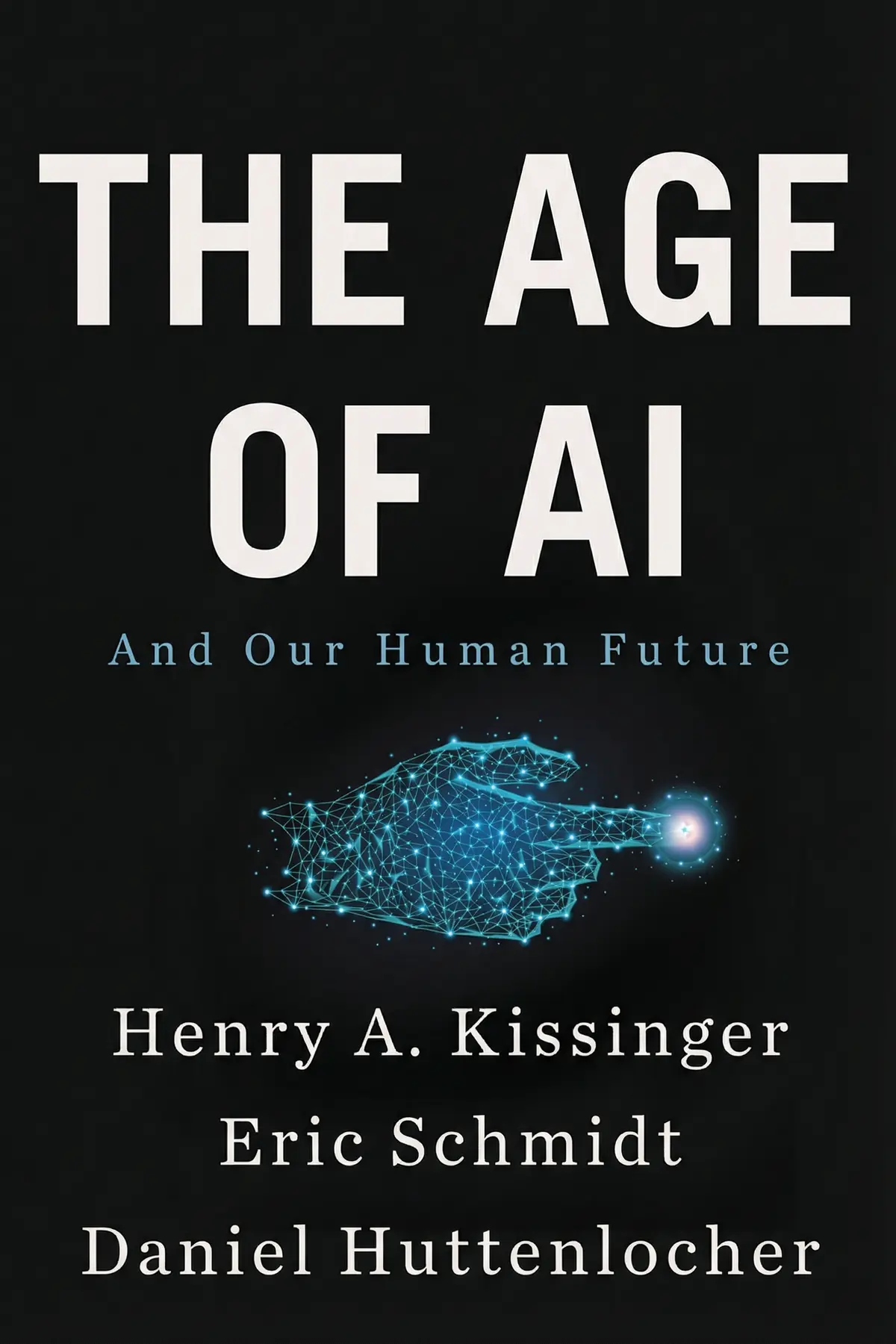
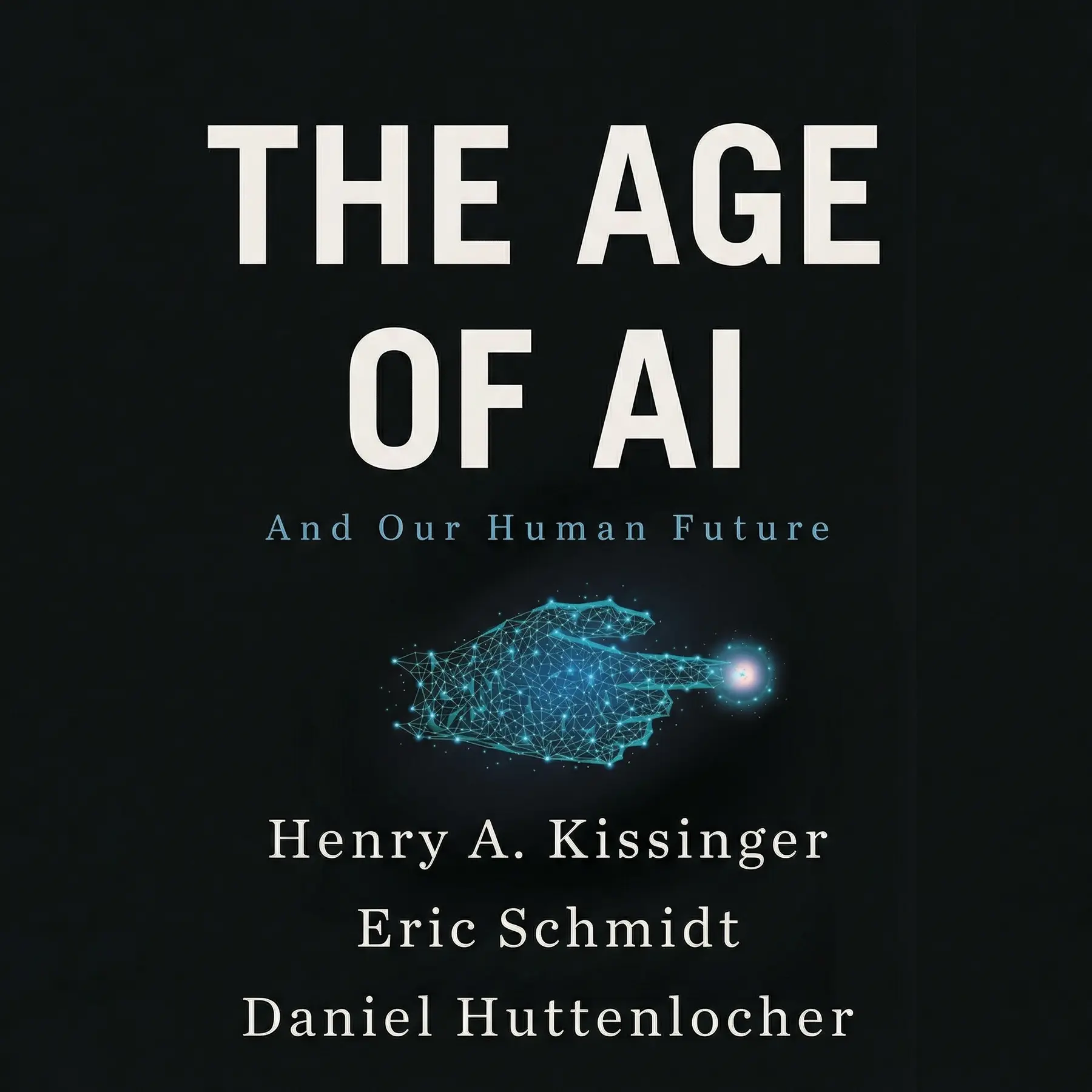
The Age of AI examines the monumental shift currently occurring as artificial intelligence moves from the realm of science fiction into the core of our daily existence. The book explores how this technology is not just a tool for efficiency, but a transformative force that alters how we perceive reality, how we conduct war, and how we understand our own unique role in the universe. The authors provide a roadmap for navigating this transition, focusing on the intersection of technology, philosophy, and politics. They explain the mechanisms behind machine learning, the geopolitical risks of autonomous weaponry, and the social implications of algorithmic curation. The promise of the book is to offer a framework for governing this power so that humanity remains the master of its own destiny, ensuring that the progress of machines does not come at the expense of human dignity and agency.
Henry Kissinger was a Nobel Peace Prize winner and former U.S. Secretary of State known for his influential work on international relations and diplomacy. Eric Schmidt is the former CEO of Google and an executive chairman who led the company’s expansion into AI and technology infrastructure. Daniel Huttenlocher is the inaugural dean of the MIT Schwarzman College of Computing and a distinguished computer scientist who has spearheaded AI research and education at Cornell Tech. Together, they bring a unique cross-disciplinary perspective to the digital age.
Listeners find this to be an essential read providing deep insights, with one listener observing that it poses more intelligent questions than firm answers. The book is considered thought-provoking, with one review emphasizing its captivating philosophical underpinnings, and listeners value the exploration of centuries of sociocultural and sociopolitical forces. However, the clarity and writing quality get mixed reactions; some find it well written while others describe it as sloppy. Additionally, the pacing is criticized for being repetitive, yet listeners still find the topic interesting, specifically noting the historical parallels.
Rarely do we see such a diverse trio tackle the existential questions of our time with such historical gravity. This collaboration successfully bridges the gap between the technical world of Silicon Valley and the traditional halls of diplomacy. I found the historical parallels between the Gutenberg revolution and our current AI explosion to be particularly enlightening and well-reasoned. The authors don't just ask technical questions; they ask philosophical ones about what it means to be human in an age where reason is augmented by machines. While some might find the pacing a bit slow, the depth of thought regarding Kant and the Enlightenment provides a necessary framework for understanding our future. It is a dense, provocative read that demands your full attention. To be fair, it is more about the 'why' than the 'how,' but that is exactly what our society needs right now.
Show moreThis book provides a much-needed bridge between the hard science of machine learning and the soft sciences of ethics and history. While some critics argue it’s too high-level, I think its strength lies in its accessibility and its ability to synthesize complex ideas for a general audience. The authors successfully argue that AI isn't just a tool, but a fundamental shift in how we perceive reality itself. I was captivated by the discussion of how AI-driven discovery, like the rapid development of COVID vaccines, is changing the landscape of human knowledge. The historical context, from the 20th-century physics revolution to the Enlightenment, provides a necessary sense of scale. It’s an ambitious project that mostly succeeds in asking the right questions about our survival as a species. Personally, I found it to be one of the more important reads of the year, even with its occasional repetitive tendencies.
Show moreFinally got around to this collaboration and I was pleasantly surprised by how readable it turned out to be for the layperson. The authors do a fantastic job of explaining how we transitioned from the Age of Reason into this new, uncertain era of algorithmic decision-making. I particularly appreciated the references to Immanuel Kant, which helped ground the abstract concepts of AI in a tangible philosophical tradition. The book is less about the "how-to" of technology and more about the sociocultural shifts we are currently experiencing. Some parts do feel a bit sloppy or rushed, especially in the middle chapters where the tone becomes somewhat repetitive. However, the overarching message about the need for a new human-centric ethics is vital. It is a thought-provoking piece that serves as an important starting point for a much larger conversation about our shared future.
Show moreThe chapter regarding international security and the potential for an AI-driven arms race is where this book truly shines. It brings a cold-warrior perspective to the digital age, highlighting the dangers of hypersonic weapons and the erosion of traditional deterrence. While the technical explanations are a bit basic, the sociopolitical analysis is top-notch and provides a sobering look at how AI might be used for state surveillance. I found the discussion on GANs and deepfakes to be particularly relevant, even if the authors don't offer many concrete solutions. Look, this isn't a manual for building software; it's a warning about the unintended consequences of our own ingenuity. It’s well-written for the most part, though it does get bogged down in repetitive philosophical jargon toward the end. Still, it’s an essential read for anyone interested in the intersection of technology and global power.
Show moreEver wonder how the advent of the printing press parallels our current struggle with algorithms and deepfakes? This book explores that very question with a level of sophistication you won't find on most tech blogs. It is a deeply thought-provoking exploration of how centuries of sociocultural forces have led us to this precipice. I enjoyed the way the authors linked the Turing Test to the broader questions of human identity and agency. The truth is, we are entering an era where our traditional notions of "reason" might no longer apply, and this book captures that anxiety perfectly. My only real gripe is that the pacing can be a bit sluggish in the middle sections. Some of the insights feel a bit vague, offering more "intelligent questions" than actual solutions. Despite that, the philosophical underpinnings make it a captivating read for anyone worried about the direction of our society.
Show moreIf you are looking for a technical deep dive into neural networks, look elsewhere, as this functions more like a high-level policy briefing. It reads suspiciously like a 200-page Gartner paper filled with vague warnings and calls for more committees. There are moments of genuine insight, specifically regarding how AI might reshape international security, but these are often buried under layers of repetitive prose. I was disappointed by the lack of distinction between current machine learning and the theoretical concept of AGI, which suggests a certain lack of technical grounding. To be fair, the book is quite accessible for those who are brand new to the topic. However, seasoned tech professionals will likely find themselves skimming through the frequent historical tangents. It’s a decent introductory text, but it fails to provide the firm answers or "world order" level analysis I was hoping for.
Show moreAs a long-time reader of Kissinger's work on international order, I found his foray into the digital realm to be intellectually lopsided. He seems far more comfortable discussing the 17th-century ideas of Leibniz and Spinoza than the modern realities of empirical data science. The book frequently retreats into historical analogies, like the impact of the printing press, rather than engaging with the actual mechanics of modern AI models. This creates a strange tension where the authors seem afraid of the very empiricism that makes AI successful. Frankly, the writing feels a bit monotonous at times, lacking a singular, strong voice to guide the reader through the dense philosophical weeds. It’s not a bad book, but it feels like it’s missing a core piece of the puzzle. I would have loved to see more concrete examples of how these theories apply to current geopolitical conflicts beyond the usual surveillance talk.
Show moreThe excessive use of punctuation in this book became a major distraction for me about halfway through. Every single sentence seemed to be interrupted by em dashes, making the prose feel disjointed and frankly, quite irritating to read. Beyond the stylistic flaws, the content felt incredibly monotonous, as if it were pieced together by a committee of researchers rather than the authors themselves. It offers a very high-level overview that repeats the same points about the printing press dozens of times without ever digging into the technical meat of machine learning. If you want a deep dive into how AI actually works, this is not the place to find it. I found it more effective as a sleep aid than as a source of groundbreaking information on the digital revolution. Truth is, I expected more from a trio of this caliber, but the result is a bit of a slog.
Show moreNot what I expected from such big names, especially considering the urgent nature of the topic. The book is surprisingly thin on new information and spends an inordinate amount of time rehashing the history of the Enlightenment. I felt like I was being reminded of the printing press every few pages, which grew tiresome very quickly. The prose itself is quite dry and lacks the engaging narrative found in books like "AI 2041." There is also a weird obsession with em dashes that makes the reading experience feel choppy and amateurish. I suspect the heavy lifting was done by research assistants, as the voice of the book is completely absent and feels like a collection of stringer reports. For a book that claims to be about our future, it spends far too much time looking in the rearview mirror without providing a clear roadmap.
Show moreTo be fair, the book feels like a collection of disjointed essays rather than a cohesive vision from three great minds. I struggled to stay engaged as the narrative jumped from Kantian ethics to the AlphaGo victory without a clear through-line. The tone is incredibly dry and academic, making it feel more like a chore than an enlightening experience. I also noticed the sloppy editing mentioned by others; the constant use of dashes really disrupts the flow of the arguments. It feels like a missed opportunity to truly define the "Age of AI" in a way that feels urgent or revolutionary. Instead, we get a lot of "it might happen" and "we should think about it" without any real conviction. If you want something that actually dives into the technical and ethical dilemmas of our time, you're better off watching "Person of Interest" or listening to a podcast.
Show moreAUDIO SUMMARY AVAILABLE
Get the key ideas from The Age of AI by Henry Kissinger, plus 5,000+ more titles in English and Thai.