How Google Works
Eric Schmidt
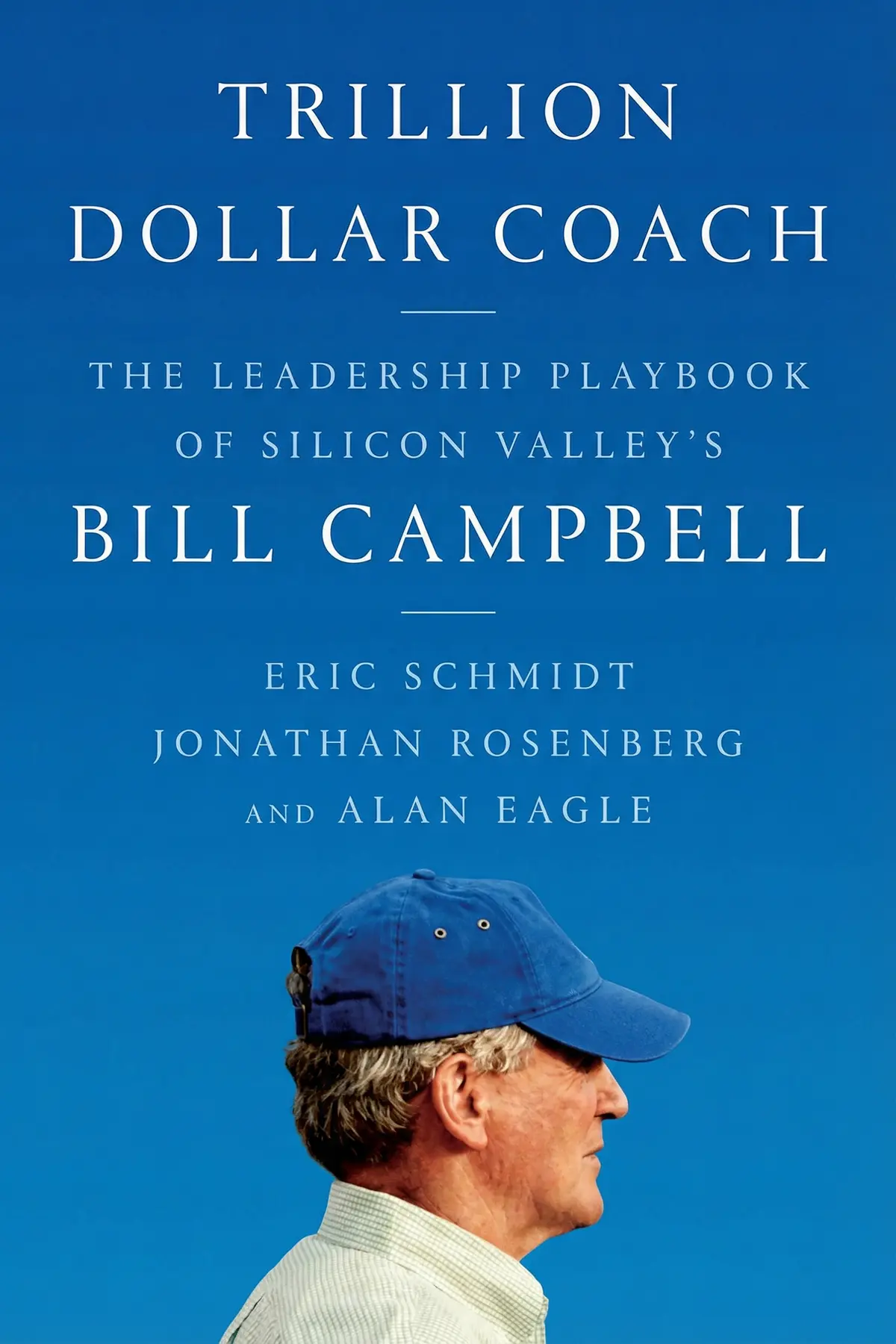
Trillion Dollar Coach reveals the management secrets of Bill Campbell, the legendary mentor who shaped Silicon Valley's greatest leaders, focusing on team dynamics, radical trust, and the human element of business.
1 min 51 sec
When we think of the architects of the modern digital world, our minds usually drift toward the visionaries in black turtlenecks or the technical geniuses who founded companies in suburban garages. We think of the code, the algorithms, and the massive fortunes. But behind the scenes of the world’s most powerful tech giants—specifically Apple and Google—stood a figure who didn’t write a single line of code. He was a man from a blue-collar Pennsylvania town, a former college football coach who spoke with a salty vocabulary and was known to greet CEOs with a bear hug and a kiss on the cheek. His name was Bill Campbell, and he became the secret weapon of Silicon Valley.
Bill Campbell’s influence was so vast that he has been called the Trillion Dollar Coach. He didn’t just advise on product roadmaps or financial strategies; he coached the human beings behind the machines. He was a mentor to Steve Jobs, Eric Schmidt, and Larry Page, helping them navigate the messy, often chaotic process of building world-changing organizations. His philosophy was rooted in the idea that to build a great company, you must first build a great team—and to build a great team, you must foster an environment of radical trust, honesty, and emotional connection.
In this summary, we are going to walk through the leadership playbook that Bill left behind. We will explore how his background on the football field informed his approach to the boardroom, why he believed that management is actually a creative endeavor, and how he convinced some of the most ego-driven leaders in history to put the team ahead of themselves. We’ll look at the balance between structure and freedom, the importance of bringing everyone to the table, and the foundational role of trust in any successful venture. By the end of this journey, you’ll understand that leadership isn’t just about making the right calls; it’s about creating a community where people feel supported enough to do the best work of their lives. Let’s dive into the life and lessons of Bill Campbell.
2 min 50 sec
How did a small-stature football captain from Pennsylvania become the most trusted advisor in the high-tech world of Silicon Valley? Explore the origins of Bill Campbell’s unique leadership style.
2 min 50 sec
Many tech startups believe they can thrive without traditional bosses, but Bill Campbell argued that even the most creative teams need structure to avoid paralysis.
2 min 29 sec
Can a business leader be both ‘tough as nails’ and deeply affectionate? Discover why Bill Campbell believed that showing emotion is a sign of strength, not weakness.
2 min 33 sec
Success in the modern economy requires more than just smart individuals; it requires ‘collective intelligence’ that can only be achieved through diversity.
2 min 31 sec
Without trust, every disagreement is a personal attack. Learn how Bill Campbell used ‘free-form listening’ to build the trust necessary for true innovation.
1 min 59 sec
The legacy of Bill Campbell isn’t found in a specific product or a patented piece of software, but in the people he shaped. He proved that even in an industry defined by cold logic and cutting-edge technology, the most important factor is always the human element. The ‘Trillion Dollar Coach’ didn’t achieve his success through sheer technical brilliance, but through his profound understanding of team dynamics and his unwavering commitment to the people he mentored.
As we’ve seen, Bill’s playbook was centered on a few core pillars. First, the team is the most important unit of any organization. As a leader, your job is to serve that team, to resolve their conflicts, and to keep them aligned with their core principles. Second, emotional intelligence isn’t a ‘soft’ skill; it’s a vital business asset. Bringing your heart to the boardroom allows for deeper connections and higher performance. Third, diversity and inclusion are essential for collective intelligence. You must fight to bring every voice to the table. And finally, everything rests on a foundation of trust. Trust is built through active, free-form listening and a genuine care for the individuals you lead.
There is a practical piece of advice we can take from Bill’s life right now: learn to separate the emotional venting from the problem-solving. Bill insisted that at the start of any meeting where a setback was being discussed, the team should get their emotional reactions out of the way first. Vent, express the frustration, and then move on to ‘problem-focused coping.’ This keeps the negative energy from bleeding into the constructive work.
Bill Campbell passed away in 2016, but his influence continues to ripple through every smartphone we use and every search result we see. He taught us that greatness is a team sport. Whether you are leading a small startup or a massive corporation, remember that your primary job isn’t to be the smartest person in the room—it’s to be the coach who helps everyone else reach their full potential. If you put the people first, the results will follow.
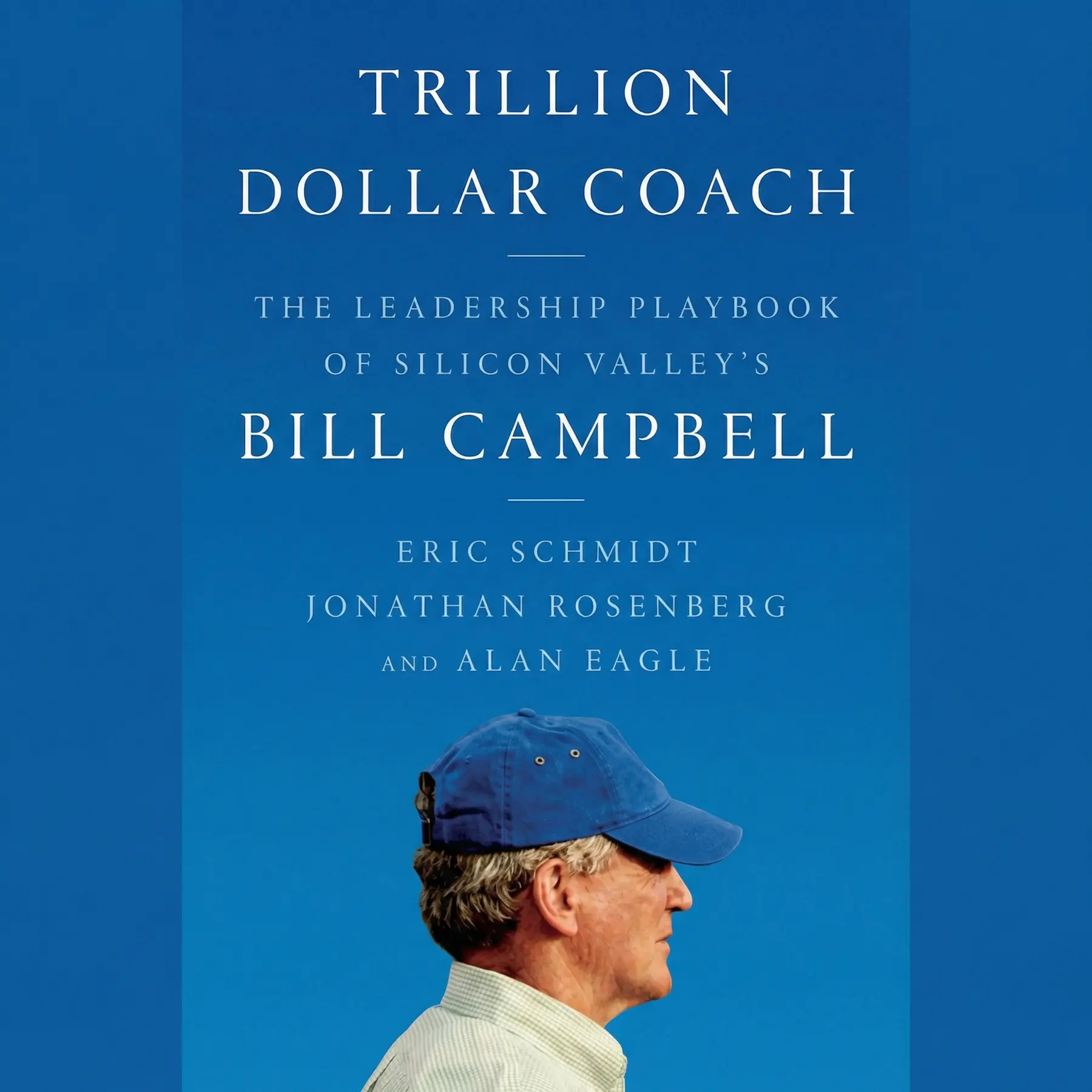
This summary explores the life and leadership philosophy of Bill Campbell, a former football coach who became the most influential mentor in Silicon Valley history. Despite not being a tech expert, Campbell played a pivotal role in the development of both Apple and Google, advising giants like Steve Jobs and Eric Schmidt. The book outlines Campbell's unique approach to management, which prioritizes the health of the team over individual performance. It explains why a leader's job is to facilitate group greatness, foster deep trust, and maintain a culture of emotional openness. Readers will discover the 'playbook' that Campbell used to help multi-billion dollar companies scale while keeping their humanity intact.
Eric Schmidt served as the CEO and chairman of Google and later as the executive chairman of Alphabet. Jonathan Rosenberg led Google's product team for nearly a decade and currently serves as an advisor to Alphabet. Alan Eagle is a long-time director at Google who oversees the company’s sales programs. Together, they previously co-authored the bestseller How Google Works.
Listeners view this work as essential reading for both personal and professional life, describing it as a premier manual for coaching and achievement. The text is meticulously researched and rich with anecdotes from Bill Campbell's life, as one listener highlights that strong culture and team building start with building relationships. Listeners value the actionable suggestions, with one providing examples of how to run meetings, and consider the material deeply perceptive, particularly for corporate executives.
Few business books manage to capture the soul of leadership like this one. Bill Campbell was clearly a force of nature, and the authors do a fantastic job translating his rough-around-the-edges style into actionable management principles. I was particularly struck by the emphasis on the 'team' being the most important unit of any organization. Most leadership guides focus solely on the individual leader, but Bill understood that a company's heart lies in its community. The sections on psychological safety and building trust through vulnerability resonated deeply with my current experience in a high-growth startup. While some might find the stories a bit like a eulogy, the underlying framework for coaching is undeniably powerful. I have already started implementing his checklist for one-on-one meetings with my direct reports. It is a rare look behind the curtain of Silicon Valley's most influential figures.
Show moreLook, if you want a roadmap for creating a high-performance culture, stop reading productivity blogs and just get this. The authors provide a masterclass in how to manage the 'aberrant genius' without letting their ego destroy the rest of the team. Bill’s philosophy of 'people first' isn’t just some corporate slogan here; it is a rigorous practice of support, respect, and trust. I loved the specific examples of how he handled difficult transitions and layoffs with dignity and transparency. This book teaches you that your primary job as a manager is to make your people more effective. The writing is punchy and direct, mirroring the coach himself. It's easily one of the most important books I’ve read for my career development. Anyone leading a team needs to understand the power of the coaching mindset described in these pages.
Show moreAfter hearing about the 'hidden secret' of Silicon Valley for years, I’m glad we finally have this record of Bill Campbell’s wisdom. The truth is, most tech companies fail not because of bad code, but because of dysfunctional teams. This book explains exactly how to bridge that gap by building psychological safety and fostering genuine relationships. The concept of making 'far analogies' to solve problems was a total lightbulb moment for me. I also loved the emphasis on keeping founders involved to preserve the vision and soul of a company. It is a superb blend of business history and practical leadership coaching. You can tell the authors really cared about getting his message right. It’s a book I plan to revisit annually to keep my management skills sharp.
Show moreEver wonder how the biggest names in tech stayed sane while building trillion-dollar empires? This book gives you the answer: they had a coach who cared more about their growth than his own credit. The insights into how Bill Campbell operated are fascinating and remarkably human. I particularly enjoyed the section on 'grit' and how he looked for people who could get knocked down and keep going. The book successfully argues that even the smartest 'smart creatives' need a coach to help them work together. It’s a refreshing change from most business books that focus on numbers and metrics. Here, the focus is squarely on people, trust, and the messy reality of human relationships. It is a powerful reminder that at the end of the day, we are all just people trying to do our best work.
Show morePicked this up because I wanted to overhaul how I handle my weekly one-on-ones and team dynamics. The framework provided for 1:1 meetings is excellent and provides a much-needed structure for those of us who tend to wing it. I appreciated the distinction between a mentor who gives advice and a coach who rolls up their sleeves to help you win. The book does lean heavily into the 'Bill was a hero' narrative, which can get a bit thick, but the core lessons are solid. Managing engineers as a non-engineer is another standout section that provided me with a fresh perspective. Even if the tone is a bit rose-colored, the fundamentals of 'blocking and tackling' in management are essential. It is a great refresher on the importance of human connection in a digital world.
Show moreAs someone who manages a diverse team, I found the focus on 'teams as communities' to be the most valuable takeaway. The authors explain how Bill would prioritize the health of the group over the whims of any single high-performer. This is a tough balance to strike, but the book provides some good mental models for doing so. I also appreciated the tactical advice on how to run a meeting, specifically the idea of starting with personal updates to build rapport. My only complaint is that it can feel a bit repetitive regarding Bill’s personality traits. We get it; he was blunt, he hugged people, and he was a football coach. Despite that, the practical checklists at the end of the chapters make it a worthwhile addition to any manager's library.
Show moreGot to say, I wasn't expecting to be as moved by a business book as I was by this tribute to Bill Campbell. It manages to be both a biography of a legend and a guide for modern leadership. The focus on 'support, respect, and trust' as the foundation of management is something I've started practicing with my own team. While some of the anecdotes are a bit vague, the overall philosophy is incredibly sound and necessary for today’s fast-paced work environment. I found the advice on letting people go with dignity to be particularly poignant and well-handled. The book could have been shorter, but the quality of the research and the caliber of the storytellers make it worth the time. It’s a solid 4-star read for anyone in a leadership position.
Show moreIs this a biography or a leadership manual? It feels like the authors couldn't quite decide, which makes the narrative flow a bit choppy at times. On one hand, you get these touching, almost reverent stories about Bill Campbell’s life and his ability to show 'love' in a boardroom. On the other hand, there are lists of management tips that feel slightly disjointed from the anecdotes. To be fair, some of the advice is quite basic, like paying people well as a sign of respect or using small talk to break tension in meetings. I found myself wishing for a more structured playbook rather than a collection of memories from his famous friends. It’s a decent read for the history of Google and Apple, but it lacks the depth of a traditional management textbook. It is a nice tribute, but maybe not the definitive guide I expected.
Show moreThe chapter on team dynamics was interesting, but the rest of the book felt a bit like an inside joke I wasn't part of. I struggle with the idea that simply 'loving' your employees is a revolutionary management technique worth a whole book. While the stories about Steve Jobs and Larry Page are fun, they don't always translate into something I can use in my own office. Personally, I found the writing style a bit dry and corporate, which is ironic considering how colorful Bill Campbell was described to be. There are some gems here about giving blunt feedback within an 'envelope of trust,' which is a useful concept. However, you have to dig through a lot of fluff and hero-worship to find the actual nuggets of wisdom. It’s an okay read, just don't expect a life-changing epiphany.
Show moreNot what I expected from a book with such a grand title and high-profile authors. Frankly, it felt more like a long-form obituary than a practical business guide. The authors repeatedly mention that Bill swore a lot but was loved, which becomes a repetitive trope that doesn't offer much value to the reader. I was looking for a concrete playbook, but instead, I found vague anecdotes about 'loving' your teammates and staying positive. The advice on compensation being a sign of respect is something most managers already know instinctively. It feels like you need to have been in the room with Bill to truly understand his magic. For the rest of us, the book is a bit thin on actual 'how-to' steps for coaching. If you want something actionable, I’d suggest looking elsewhere for leadership frameworks.
Show more
Joseph A. Maciariello
Deborah Gruenfeld
Mike Michalowicz
Hamilton Helmer

Margaret Heffernan
AUDIO SUMMARY AVAILABLE
Get the key ideas from Trillion Dollar Coach by Eric Schmidt, plus 5,000+ more titles in English and Thai.