
A Life Decoded: My Genome: My Life
J. Craig Venter
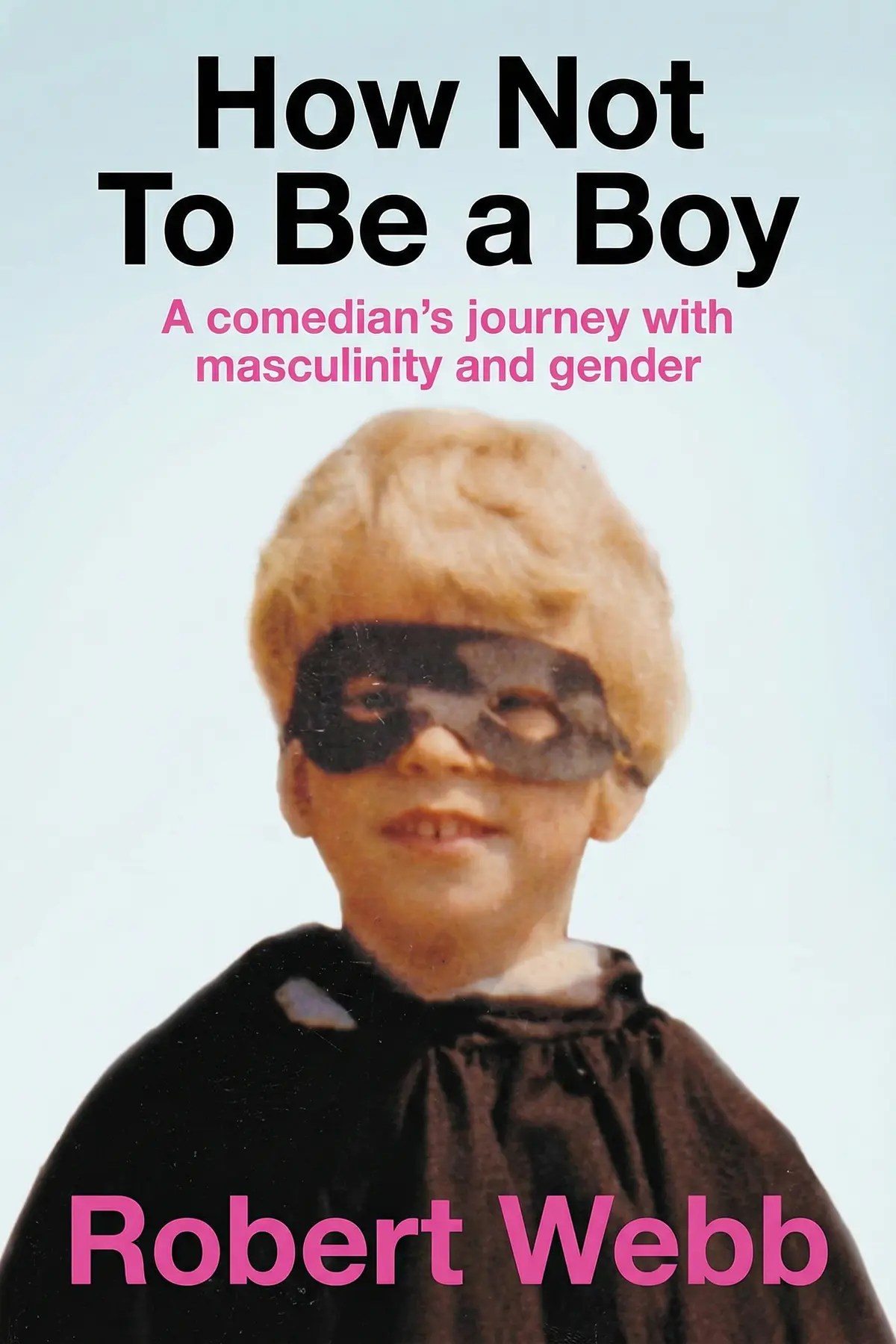
A deep dive into the restrictive blueprints of masculinity. Robert Webb explores how societal expectations stifle male emotional intelligence, examining his own life to challenge the rigid rules of being a man.
1 min 46 sec
Have you ever considered how much of your personality was chosen for you before you were even old enough to speak? For most men, the blueprint of ‘how to be a boy’ is delivered not in a manual, but through a thousand tiny cues from parents, teachers, and peers. We are told what to wear, how to play, and, perhaps most damagingly, what to feel. Robert Webb, a man many know for his comedic timing and wit, found himself navigating these very waters in the heart of rural England. He grew up in an environment where the expectations for a boy were narrow: be athletic, be tough, and whatever you do, do not show that you are thinking or feeling too much.
In this journey, we look behind the curtain of the persona Webb crafted for the public and see the internal struggle of a boy who didn’t quite fit the mold. The throughline of this exploration is a challenge to the idea that men are biologically programmed to be emotionally distant or aggressive. Instead, we see how these behaviors are often a response to a culture that punishes vulnerability. Webb’s story is a testament to the fact that staying intellectually curious and emotionally sensitive isn’t a sign of weakness; it’s a necessary part of becoming a whole human being.
As we move through these chapters, we will see how the pressure to conform starts in the earliest stages of childhood and follows men into their careers and relationships. We’ll examine the myth of the ‘male brain,’ the brutal enforcement of schoolyard dress codes, and the ways that a lack of communication skills can sabotage a man’s life. Through Webb’s reflections, we find an invitation to dismantle the rigid structures of the past and build a more honest version of masculinity.
2 min 08 sec
Explore why the supposed differences between male and female brains are more about social training than biology, and how early childhood expectations shape our paths.
2 min 19 sec
A simple pair of socks can become a battlefield for identity. Learn how bullying enforces a strict code of conduct and appearance for young boys.
2 min 06 sec
Are men really as uncomplicated as the stereotypes suggest? We look at the hidden depth and emotional capacity that exist beneath the ‘tough guy’ exterior.
2 min 08 sec
Discover why academic ambition is often seen as a threat to ‘manliness’ and how this bias can sabotage a young man’s future.
2 min 07 sec
Learn how the lack of social training in boys leads to a lifetime of conflict avoidance and missed connections.
2 min 17 sec
Uncover how the male struggle with communication can turn even well-meaning young men into emotionally distant and dishonest partners.
2 min 11 sec
Break the silence on male grief and physical closeness, and see how safe spaces can allow men to express their true selves.
2 min 29 sec
Explore how suppressed emotions can manifest as obsessive control and how the ‘tough love’ of fathers often masks a deep, unspoken sadness.
2 min 01 sec
As we reach the end of this journey through Robert Webb’s life and reflections, the overarching message is clear: the current model of masculinity is a restrictive cage that serves neither men nor the people who love them. We have seen how the myth of the ‘male brain’ and the enforcement of rigid social codes begin in the nursery and the playground, creating adults who are often ill-equipped to handle the complexities of human emotion. By punishing boys for their sensitivity and rewarding them for their stoicism, we create a world of missed connections and hidden pain.
However, there is hope in the act of deconstruction. By looking honestly at our pasts—as Webb has done—we can begin to identify the parts of our ‘male’ personality that were forced upon us. We can choose to be intellectual, to be nurturing, and to be honest about our vulnerabilities. We can move past the need for obsessive control or total avoidance and learn the art of the difficult conversation. The goal isn’t to stop being men; it’s to stop being the specific, limited version of ‘boy’ that society demands.
One practical way to apply these insights today is to be more aware of the physical presence you occupy as a man. In social situations, especially when flirting, it’s important to remember the power dynamics at play. Because men are often socialized to be assertive and are frequently physically larger, what feels like ‘insistent’ flirting to a man can feel genuinely threatening to a woman. Try to view the interaction from their perspective. Imagine someone much larger and stronger than you refusing to take ‘no’ for an answer. This shift in perspective is a small but vital step toward developing the empathy and social intelligence that the ‘boy code’ tries to suppress. By embracing this kind of awareness, we don’t just become better men—we become better, more connected human beings.
What does it actually mean to be a man in the modern world? In this exploration, we follow the life of comedian Robert Webb as he deconstructs the scripts he was given as a young boy in rural England. From the playground to the soundstage, Webb examines the subtle and overt ways that boys are taught to suppress their feelings, prioritize toughness over intellect, and avoid the kind of vulnerability that leads to genuine connection. This summary provides a nuanced look at the high cost of traditional masculinity. It promises to reveal why common behaviors—like avoiding conflict, struggling with intimacy, or performing a certain brand of 'coolness'—are often learned defenses rather than biological traits. By revisiting moments of grief, confusion, and career success, Webb offers a roadmap for moving past these outdated expectations. The goal is not just to point out what is wrong, but to envision a future where men can be whole, communicative, and emotionally honest individuals.
Robert Webb is a highly acclaimed British comedian, actor, and writer. He rose to international fame as one half of the Mitchell and Webb duo, starring in the multi-award-winning sketch show That Mitchell and Webb Look. He is perhaps best known for his iconic role as Jeremy 'Jez' Usborne in the long-running Channel 4 sitcom Peep Show, a performance that cemented his status as a leading figure in contemporary comedy.
Listeners find this memoir to be both entertaining and sincere, with one review highlighting it as essential reading for all genders. The work earns praise for how it addresses toxic masculinity, and listeners enjoy the humor woven throughout.
Robert Webb has managed something rare here by writing a celebrity memoir that actually says something profound. Instead of the usual 'then I got famous' routine, he dives deep into the absurdity of the gender rules we force on kids. I found myself laughing out loud at his descriptions of awkward teen years and then immediately feeling a lump in my throat when he talks about his mother's death. The way he dissects "The Trick"—the societal pressure that keeps men from being vulnerable—is both accessible and deeply convicting. Some might find the comedian-heavy prose a bit much, but to me, it felt like sitting in a pub with a very smart, very tired friend. It’s a necessary look at how toxic masculinity stunts our emotional growth and keeps us from connecting with those we love most.
Show moreFew books have made me rethink my own childhood quite like this one. Webb dismantles the "rules for being a man" with surgical precision and a lot of self-deprecating wit. Growing up in rural Lincolnshire sounds like it was a minefield of "man up" expectations that he never quite fit into. I particularly loved the Star Wars references woven throughout; they added a layer of relatable geekiness to the trauma. Personally, I think every man should read this to understand why we keep our feelings bottled up until they explode. It’s a beautifully written, raw account of grief and the masks we wear to survive. This isn't just for fans of Webb's comedy; it's for anyone who's ever felt like they weren't doing 'gender' right.
Show moreWow, I wasn't expecting to cry over a Peep Show star’s life story, but here we are. I listened to the audiobook narrated by Robert himself, and I can’t recommend it enough because his delivery adds so much nuance to the humor. The way he describes his mother is so tender, and his reflection on how her death shaped his view of the world is heartbreaking. He captures the specific loneliness of being a boy who doesn’t fit the mould of "toughness." Frankly, I think it’s one of the most honest accounts of male emotion I’ve ever come across. It’s funny, brutal, and ultimately quite hopeful about the kind of men we can choose to be. A must-read for both men and women who want to understand the modern male psyche.
Show moreFinally got around to reading this and it lived up to the hype. Webb explores the idea that masculinity is essentially a performance we’re all forced into from birth, and he does it with such wit. The sections about his school days and the pressure to be "one of the lads" resonated deeply with my own experiences. It’s refreshing to see a high-profile man speak so candidly about therapy and the importance of emotional literacy. Look, it’s not always a comfortable read—especially when he talks about his treatment of women in his younger years—but that’s exactly why it works. It’s an authentic attempt to bridge the gap between who we are and who society tells us to be. Truly excellent and surprisingly moving.
Show moreEvery parent of a son needs to have this on their shelf. Webb’s insights into how we socialize boys to reject their emotions are spot on and, frankly, quite terrifying. The story of his daughter wanting to dress as Spider-Man but fearing the "Trick" was such a poignant way to bring the theory into the real world. It’s a beautifully written book that balances the lightheartedness of a comedy career with the heavy lifting of dismantling the patriarchy. I loved his honesty about his own flaws; he doesn't paint himself as a hero, just a guy trying to do better. This book is a conversation starter and a heart-breaker all at once. I’ll be recommending this to everyone I know who cares about raising healthy humans.
Show morePicked this up on a whim after seeing a Peep Show clip and was surprised by how heavy it got. Webb is quite candid about his struggle with alcoholism and his often-strained relationship with his father, which I found much more interesting than the Footlights stuff. Truth be told, the book sometimes feels like it’s struggling with an identity crisis between being a funny autobiography and a serious treatise on feminist theory. The sudden shifts into academic-style lecturing on gender roles can be a bit jarring when you're just enjoying the narrative flow. However, his honesty about being a "crap boyfriend" and learning to be a better father is refreshing. It’s not perfect, but it is incredibly brave and surprisingly entertaining for such a weighty subject.
Show moreAs someone who usually avoids 'woke' celebrity manifestos, I found this surprisingly grounded and relatable. Webb doesn’t just point fingers at the patriarchy; he looks inward at his own failings and his complicated love for his father. The chapters on his mother’s terminal illness were devastatingly well-written, capturing that specific teenage numbness. My only real gripe is that he occasionally slides into a preachy tone that feels a bit like a Guardian op-ed, which might turn some readers off. Still, his point about how we "police" masculinity is hard to argue with once you see it through his eyes. It’s a funny, sad, and deeply human book that manages to be educational without being too dry or academic.
Show moreIs this a memoir or a sociology textbook? Actually, it's a bit of both, and while the transition between the two can be clunky, the overall message is vital. Webb’s account of his time at Cambridge and the Footlights is entertaining, but the real meat of the book lies in his reflections on his working-class roots. He manages to be "Tremendously Fair" to his father while still acknowledging the damage caused by his violence and drinking. I appreciated the rawness of his struggle with his own identity and his desire to break the cycle for his daughters. It’s a very 'woke' book, sure, but it comes from a place of genuine lived experience. A few parts dragged, but it's well worth the time for the perspective it offers.
Show moreThe structure of this book felt a bit disjointed to me, even if the writing itself was sharp. I went in expecting more of a guidebook on dismantling stereotypes based on the chapter titles like "Boys Love Sport," but it’s really just a standard memoir with some gender theory sprinkled on top. At times, it felt like Webb was trying to have his cake and eat it too—wanting to be the funny comedian while also being a serious social commentator. While his vulnerability regarding his alcoholism and bisexuality is commendable, I found the pacing to be quite uneven. It’s a decent read for fans of his work, but don't expect a revolutionary feminist text. It’s more of a personal exorcism of his own past than a universal guide.
Show moreCall me a cynic, but I just couldn't connect with the tone of this at all. I gave up around the halfway mark because the writing felt overly snarky and self-important, as if he was trying too hard to prove how 'enlightened' he's become. There’s a lot of self-pity wrapped in comedy that didn't land for me, and I found the lectures on feminism to be incredibly patronizing. It felt like he was blaming every mistake in his life on the "Trick" rather than taking actual personal responsibility. Maybe it's just me, but I didn't find the "poor me, I went to Cambridge" vibe very relatable or insightful. I’ve read better books on toxic masculinity that didn't feel this whiney or defensive.
Show moreJ. Craig Venter

Ishmael Beah

James Herriot


Barack Obama
Masaji Ishikawa
Ben Macintyre
AUDIO SUMMARY AVAILABLE
Get the key ideas from How Not To Be a Boy by Robert Webb, plus 5,000+ more titles in English and Thai.







