
20 min 16 sec
How Not to Worry: The Remarkable Truth of How a Small Change Can Help You Stress Less and Enjoy Life More
By Paul McGee
Discover how to break the cycle of anxiety by understanding your brain's evolutionary triggers and applying a practical roadmap to reclaim your peace of mind and mental clarity.
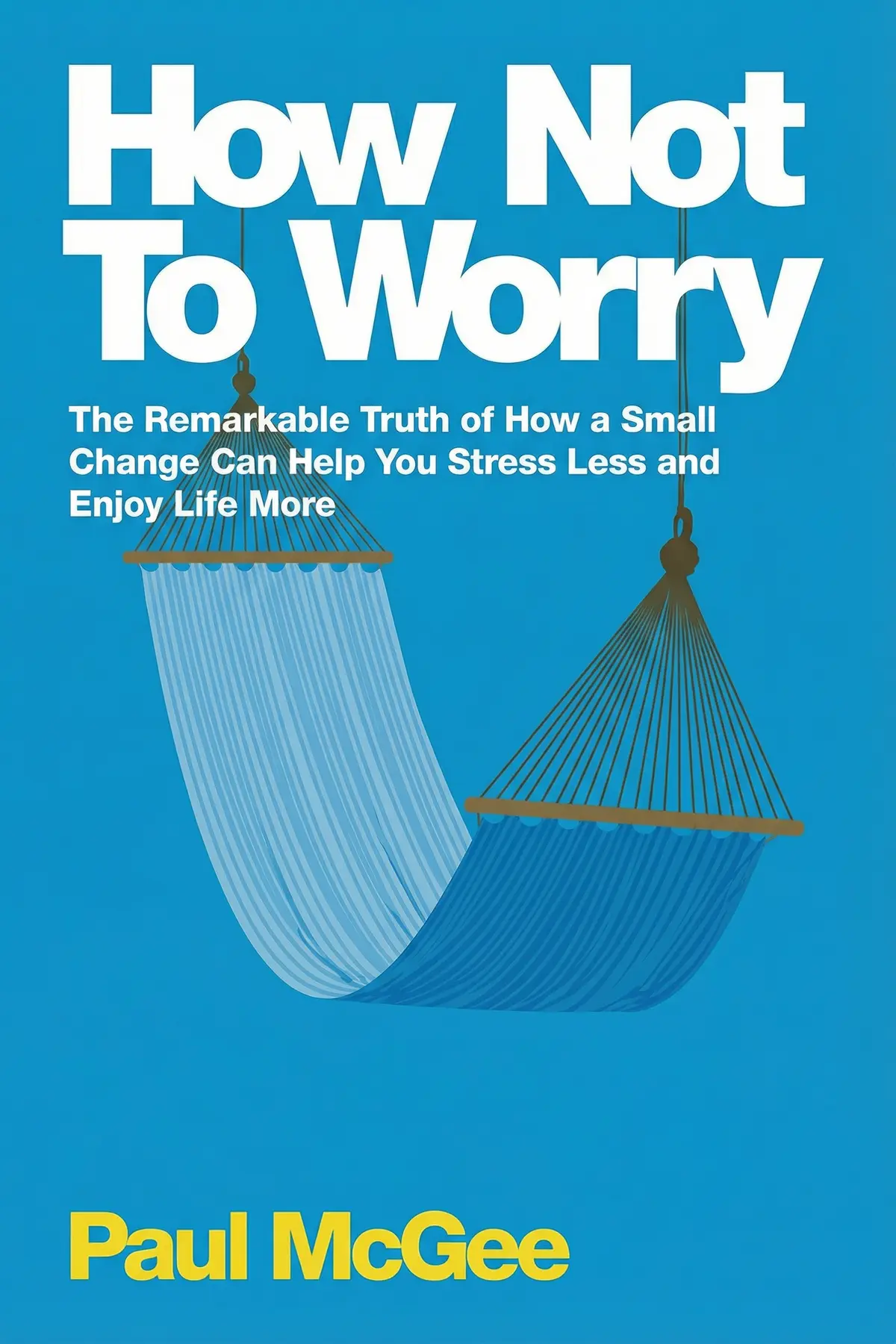
Table of Content
1. Introduction
1 min 37 sec
Have you ever found yourself staring at the ceiling at three in the morning, your mind racing through a checklist of everything that could possibly go wrong? It’s a universal experience. We worry about our jobs, our health, our bank accounts, and what people think of us. On the surface, it feels like we’re being productive, as if the act of fretting is somehow helping us prepare for the worst. But the reality is quite different. Worrying doesn’t just steal our sleep; it saps our energy, clouds our judgment, and ultimately does very little to change the outcome of our lives.
In our journey today, we are going to explore a roadmap to escaping this mental trap. We’ll look at why our brains are actually designed to worry and how that ancient programming is clashing with our modern world. Most importantly, we’ll see that worry isn’t a life sentence. It’s a cycle that can be broken with a few small, deliberate shifts in how we process information.
We will be looking at the ideas presented by Paul McGee, a renowned life coach and speaker who has spent years helping people move from a state of paralyzed anxiety to one of proactive action. His approach isn’t about ignoring life’s problems; it’s about developing the rational tools to deal with them effectively. Throughout this summary, we’ll move from understanding the biology of stress to categorizing our fears and, finally, taking the specific actions that return control to our hands. By the end, you’ll have a clearer sense of which worries are worth your time and which ones are simply ghosts of the past or figments of a fearful imagination. Let’s begin by looking at the physical and mental architecture of worry itself.
2. The Worry Feedback Loop
2 min 23 sec
Uncover how a single thought can trigger a physical chain reaction, and why breaking the cycle early is the secret to protecting your long-term health.
3. The Roots of Our Anxiety
2 min 05 sec
Learn why your past and the fear of the unknown work together to keep you on high alert, and how awareness can help you regain control.
4. A Tale of Three Brains
2 min 28 sec
Explore the internal struggle between your primitive instincts and your rational mind, and learn how to put the right part of your brain in charge.
5. Categorizing the Source of Stress
1 min 57 sec
Stop the mindless spiral by sorting your anxieties into three specific categories, allowing you to address each one with the right mental strategy.
6. Is Your Worry Helpful or Hysterical?
1 min 54 sec
Not all worries are created equal. Discover how to sort your fears into three distinct types and why some anxiety might actually be a tool for success.
7. The Power of Your Influence
2 min 04 sec
Stop wasting energy on things you can’t change. Learn how to scale your influence and focus on the areas where you can actually make a difference.
8. Harnessing the Imagination
1 min 57 sec
Your mind can be a torture chamber or a sanctuary. Learn the ‘Madonna Trick’ and other mental exercises to turn your imagination into an ally.
9. The Courage to Be Imperfect
2 min 05 sec
Break free from the chains of self-criticism and people-pleasing, and discover why asking for help is a sign of strength, not weakness.
10. Conclusion
1 min 46 sec
As we reach the end of our journey through the landscape of worry, it’s important to remember the central throughline: worry is a habit, a biological response, and a cycle, but it is not your identity. You have the power to step out of the loop. We’ve seen how the primitive brain can lead us astray by treating modern inconveniences as life-or-death threats, and we’ve discovered that the rational brain is our most powerful ally in restoring balance.
By categorizing your stress into situational, anticipatory, and residual types, you’ve gained a map to navigate your internal world. By distinguishing between historical, hysterical, and helpful worries, you now have a filter to separate the noise from the signal. And by focusing your energy only where you have true influence, you can stop the exhausting pursuit of controlling the uncontrollable.
One final, practical piece of advice to take with you is the importance of physical movement. When you are stuck in a mental loop, sometimes the fastest way out is through your body. Exercise releases endorphins, the body’s natural stress-fighters, which can physically reset your system and clear your head. Whether it’s a walk in the park or a session at the gym, moving your body helps signal to your primitive brain that you are taking action, which naturally lowers your anxiety.
Don’t expect to become perfectly worry-free overnight. Instead, aim for those small changes that Paul McGee champions. Catch yourself the next time you start to spiral. Ask ‘where is this coming from?’ and ‘can I influence this?’ As you apply these tools, you’ll find that the heavy cloud of worry begins to lift, leaving you with more room to breathe, more energy to act, and a much greater capacity to enjoy the life you are living right now. You have the roadmap; now, it’s time to take the first step toward a more peaceful future.
About this book
What is this book about?
Worry is often viewed as an inevitable part of modern life, but it is actually a manageable feedback loop rooted in our biological history. This summary explores the mechanics of why we fret, tracing the path from simple concern to debilitating stress and anxiety. It breaks down the internal conflict between our primitive survival instincts and our rational, modern minds, revealing why a board meeting can feel as threatening as a physical predator. The promise of this work is a structural shift in how you handle daily pressures. By learning to categorize worries into situational, anticipatory, or residual types, you can stop the emotional spiral before it takes over. You will learn how to distinguish between rational concerns that require action and irrational fears that deserve to be dismissed. Through techniques like influence scaling and role-playing, this guide provides a clear, actionable strategy to reduce stress, improve your health, and finally start enjoying the present moment.
Book Information
About the Author
Paul McGee
Paul McGee is one of the UK’s leading motivational speakers. He has written seven books and lectured on topics ranging from workplace dynamics to stress management and confidence in 35 countries. McGee is also the founder of Shut Up, Move On (SUMO), a life-coaching program which draws on cognitive behavioral therapy.
Ratings & Reviews
Ratings at a glance
What people think
Listeners find that this guide offers a functional strategy for navigating anxiety, although some listeners believe the suggestions can feel redundant or offer few fresh perspectives for those well-versed in the genre. Many enjoy the writer's accessible tone and witty delivery, including one listener who mentioned they were "laughing out loud" at the familiar stories. Furthermore, listeners appreciate the "Hammock Time" reflection sections and journaling prompts that foster active involvement with the content. They also highlight the usefulness of the author’s systems for sorting anxieties, as they bring greater clarity and insight into individual stress triggers.
Top reviews
Rungtip
Paul McGee's dry, sarcastic wit makes a heavy topic like anxiety feel surprisingly manageable and even a little bit funny. I found myself laughing out loud at his anecdotes, which is rare for a self-help book! The way he breaks down 'residual worry' from past traumas really clicked for me in a way other books haven't. It’s refreshing to read something that doesn't promise a magical cure but instead gives you a practical roadmap to handle the messy reality of life. The 'Hammock Time' reflections are a brilliant touch for anyone who usually just skims through advice without actually applying it. Truly a major pat on the back for the stressed-out reader.
Show moreErn
This book provides the kind of clarity that's hard to find in the messy world of overthinking. I loved the idea of having a 'council of advisors' to help gain perspective on a situation; it's a simple mental trick but it really works for gaining influence over your own mind. McGee's writing style is incredibly easy to digest, which is perfect when your brain is already feeling overwhelmed by worry. Not gonna lie, I was skeptical about another 'how to' book, but the focus on taking action and influencing outcomes really resonated with me. It’s an empowering read that shifts the focus from being a victim of your thoughts to being the manager of them.
Show morePacharapol
Wow, I didn't expect to see myself so clearly in these pages. McGee perfectly captures that constant low-level anxiety that comes from trying to please everyone and hide your flaws. The chapter on not letting your self-worth be dictated by others was a major wake-up call for me. I’ve read a lot on this topic, but the humor and the specific 'Hammock Time' exercises made this one stick. It’s practical, it’s funny, and it’s deeply humane. If you’re an inveterate worrier like me, do yourself a favor and pick this up. It focuses on how worrying makes us human while giving us the tools to not let it run our lives.
Show moreGiulia
Categorizing my anxieties into situational or anticipatory buckets was a total game-changer for me. Before reading this, everything just felt like one big cloud of dread, but McGee’s framework helped me identify which triggers were actually within my influence. The book is packed with practical steps, especially the advice on writing worries down to gain clarity. Gotta say, the dry British humor kept me engaged when the subject matter started to feel heavy. It isn't perfect, and some sections definitely drag on longer than they need to, but the actionable advice on progress over perfection makes it well worth the time. It really helps you analyze why you're anxious.
Show moreBig
Picked this up during a particularly stressful month at work, and it really helped ground me. McGee has this way of writing that makes you feel less like a 'hopeless case' and more like a normal human being dealing with normal human problems. The 'Hammock Time' sections at the end of the chapters were great for active engagement; I actually used my journal for once! While some of the advice is definitely stuff you've heard before, the way it's packaged makes it feel more accessible and less like a chore. It’s a practical roadmap that focuses on outcomes rather than just wallowing in the 'why' of it all. Highly recommended for chronic over-analyzers.
Show moreRoongsak
Finally got around to finishing this, and the prompts for reflection were what kept me going through the middle slump. As someone who struggles with perfectionism, the reminder to measure progress from where I started—rather than the distance to the finish line—was exactly what I needed to hear. The author uses a lot of personal stories about his daughter and his own life, which makes the advice feel much more relatable and less academic. Look, it’s not a medical text, but for day-to-day stress management, it’s a very solid guide. I’ve already recommended it to a friend who overanalyzes everything to the point of paralysis.
Show moreWissanu
The structure of this book is actually its strongest point, providing a decent roadmap for those feeling lost in their own heads. I appreciated the way McGee categorizes worries into situational, anticipatory, and residual buckets because it forced me to be honest about where my stress was actually coming from. Personally, I found the 'Hammock Time' reflection questions helpful for slowing down, though I had to skip some of the sillier examples that felt a bit too elementary. It’s a solid entry-level guide. It won’t solve your life’s deepest traumas, but it might give you a slightly better perspective on the small stuff. Just don't expect a revolutionary scientific breakthrough.
Show moreSavannah
Not what I expected from a top-tier self-help book, but it wasn't a total waste either. The conversational tone is hit or miss; sometimes it feels like chatting with a wise friend, and other times it feels a bit condescending. I did get a few good journaling prompts out of it, and the concept of 'false evidence appearing real' is a useful acronym to keep in the back of my mind. However, the author’s sarcasm occasionally masks a lack of depth in the actual solutions provided. It's a light, breezy read that serves as a gentle pat on the back rather than a rigorous psychological tool for those with severe anxiety.
Show moreMichael
Look, I really wanted to like this book given how much I struggle with overthinking. While the conversational writing style makes it an easy afternoon read, the advice felt incredibly repetitive after the first fifty pages. To be fair, some of the personal anecdotes are amusing, but the central thesis of 'stop worrying and start thinking' feels like a gross simplification of clinical anxiety. If you’ve never read a single self-help book in your life, you might find some value here. However, for anyone already familiar with basic cognitive reframing, there is very little new ground broken. It’s a bit like being told to 'just breathe' by someone who doesn't understand why you're gasping for air in the first place.
Show moreManop
After hearing several people recommend Paul McGee, I expected more than just a collection of common-sense platitudes. The truth is, the book relies heavily on a few central phrases that get repeated until they lose all meaning. I appreciated the dry humor, and I didn't mind the reflection sections, but the core message is essentially just 'don't focus on what you can't control.' Frankly, that's easier said than done. It felt more like a transcript of a motivational speech than a deep dive into psychological triggers. It might work for some, but I found myself skimming most of the later chapters because the message hadn't evolved since the introduction.
Show moreReaders also enjoyed
A High-Performing Mind: Strengthen Your Mind and Live Your Best Life
Andrew D. Thompson
Alcoholics Anonymous
Alcoholics Anonymous World Services
Abundance: The Inner Path to Wealth
Deepak Chopra
A Liberated Mind: How to Pivot Toward What Matters
Steven C. Hayes
AUDIO SUMMARY AVAILABLE
Listen to How Not to Worry in 15 minutes
Get the key ideas from How Not to Worry by Paul McGee, plus 5,000+ more titles in English and Thai.
- 5,000+ titles
- Listen as much as you want
- 7-day free trial
- Cancel anytime







