
17 min 42 sec
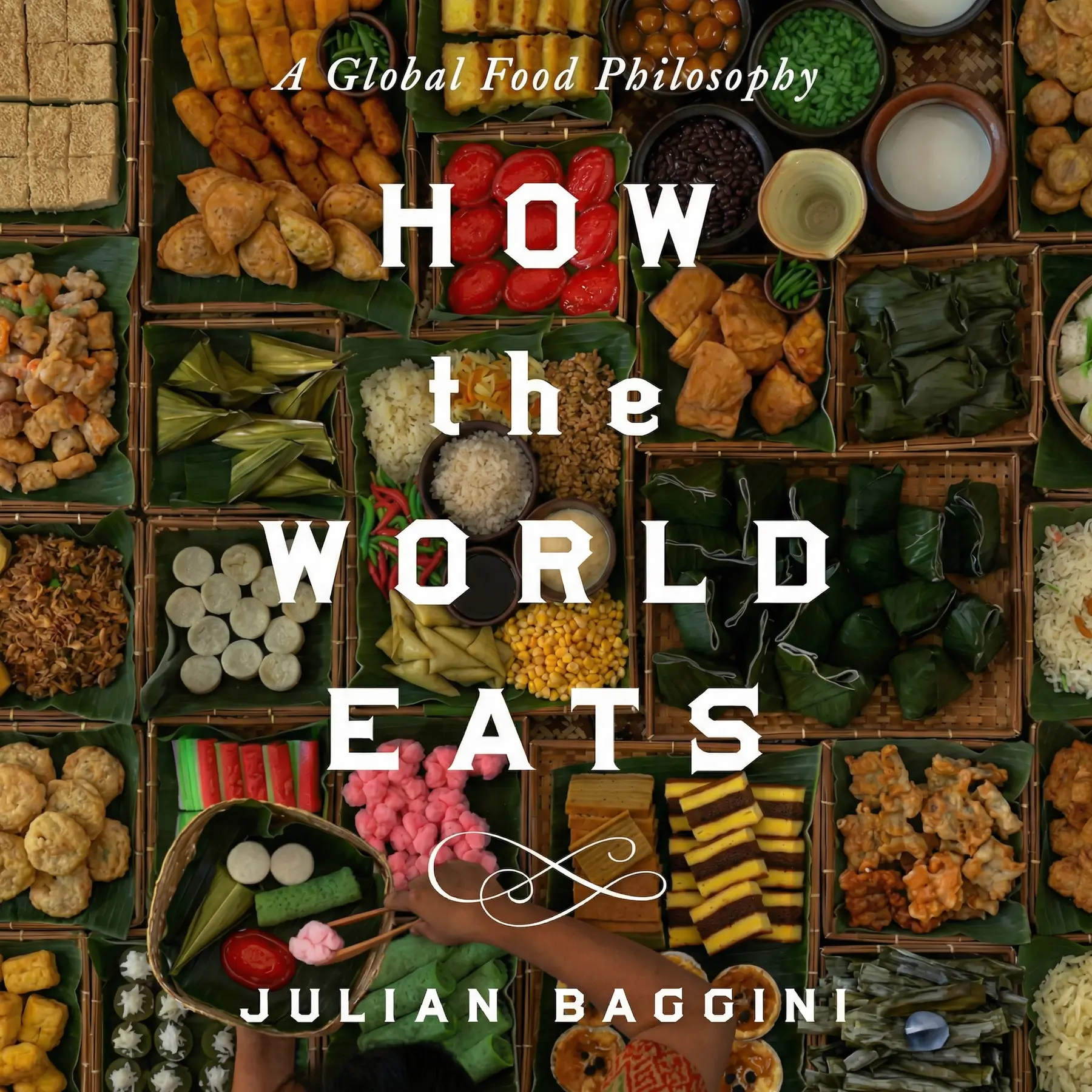
How the World Eats: A Global Food Philosophy
A philosophical and practical exploration of the global food system, examining how our culinary choices intersect with ethics, technology, and tradition to shape our world and our bodies.
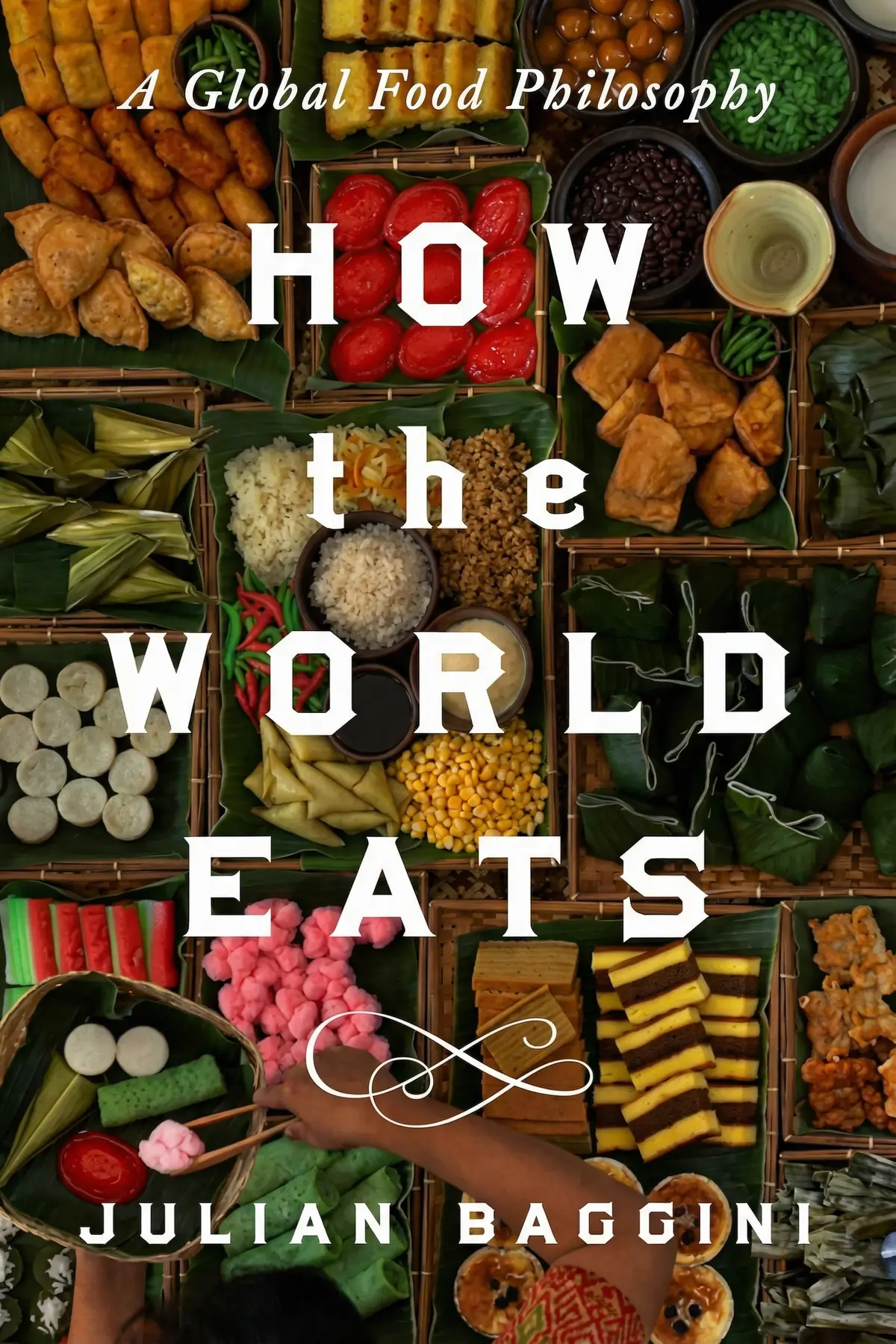
Table of Content
1. Introduction
1 min 42 sec
Every time you sit down to a meal, you are participating in a vast, invisible network that spans the entire globe. Most of us rarely stop to consider the journey our food has taken or the philosophical choices that determined why a specific item ended up in our pantry. We might check the expiration date or the calorie count, but the underlying system remains a mystery. This relationship we have with food is one of the most fundamental aspects of being human, yet it is also one of the most fraught with complexity and contradiction.
Take a moment to imagine your typical breakfast. Perhaps it’s a bowl of cereal or a piece of toast. Behind that simple dish is a web of patented genetics, massive industrial operations, international shipping routes, and delicate supply chains. This system links your kitchen table to distant continents and diverse ecosystems. It is a miracle of modern logistics, but it is also a system under immense strain. We are currently living through a paradox: we produce more than enough food to nourish every person on Earth, yet millions still go hungry. At the same time, health issues related to overconsumption are rising, and the environmental cost of our farming practices is reaching a breaking point.
In this exploration, we are going to look beyond the surface of our plates. We will examine how different cultures approach the act of eating, why our modern obsession with efficiency might be a double-edged sword, and how we can find a way back to a more ethical, sustainable way of nourishing ourselves. The goal is to move beyond simple labels of good or bad and instead build a global food philosophy that works for everyone.
2. The Wisdom of Ancient Foragers
2 min 10 sec
Could the world’s oldest food system hold the secret to modern health and environmental balance?
3. The Price of Efficiency
1 min 57 sec
How a small nation became a global food powerhouse and what it tells us about sustainability.
4. The Inequality of Global Commodities
2 min 03 sec
Your favorite treat might be hiding a story of deep economic disparity and environmental loss.
5. The Corporate Appetite
2 min 04 sec
When profit margins dictate the menu, who is really choosing what we eat?
6. The Livestock Divide
2 min 02 sec
Behind the debate over meat lies a complex reality of traditional ranching and industrial scale.
7. The Genetic Crossroads
2 min 03 sec
Understanding why our fears about food technology might be focused on the wrong things.
8. A Blueprint for Better Eating
2 min 03 sec
How seven core principles could transform our broken relationship with what we consume.
9. Conclusion
1 min 38 sec
The way we eat is a reflection of the world we want to live in. As we have seen, our global food system is a complex tapestry of ancient traditions, modern miracles, and deep-seated injustices. From the communal spirit of the Hadza to the high-tech greenhouses of the Netherlands, we have explored the many different ways humans have solved the problem of hunger. Yet, we have also seen the cracks in the system—the environmental damage, the corporate pressure to overconsume, and the structural inequalities that leave farmers in poverty while we enjoy cheap chocolate.
But the story doesn’t have to end there. The challenges we face are significant, but they are not insurmountable. The path forward lies in a fundamental shift in perspective. By adopting a global food philosophy based on principles like holism and compassion, we can begin to mend our broken relationship with the plate. This isn’t just a task for farmers or politicians; it is a task for all of us. Every time we choose what to buy and what to eat, we are casting a vote for the kind of system we want to support.
As you move forward, consider the throughline of your own food journey. Think about the hidden stories behind your favorite meals and how you can bridge the gap between your values and your habits. Whether it’s reducing meat consumption, supporting local farmers, or advocating for better regulation, every small action counts. We have the knowledge and the tools to create a food system that is sustainable, just, and truly nourishing. It’s time we started putting that philosophy into practice, one meal at a time.
About this book
What is this book about?
Exploring the hidden mechanics of global nourishment, this summary dives into the complex journey of food from field to fork. It contrasts ancient hunter-gatherer wisdom with the high-tech efficiency of modern mega-farms and the sprawling influence of corporate food regimes. We examine the moral dilemmas of meat consumption, the controversy surrounding genetic modification, and the systemic inequalities of the chocolate trade. The book promises to reveal how our current food system often prioritizes profit over nutrition and how we might realign our eating habits with our values. By understanding the throughline of sustainability and ethics, listeners will gain a new perspective on every meal. It provides a blueprint for a better future based on principles like holism and compassion, offering a path toward a global food philosophy that honors both the planet and the plate. This journey takes us across the globe, from the savannas of Tanzania to the high-tech greenhouses of the Netherlands, challenging our assumptions about what is natural and what is necessary.
Book Information
About the Author
Julian Baggini
Julian Baggini is a British philosopher, writer, and journalist known for making philosophy accessible to a broad audience. He has written several acclaimed books, including the best-selling The Pig That Wants to Be Eaten and How the World Thinks. His work often combines philosophical inquiry with cultural exploration, tackling topics like identity, ethics, and the role of philosophy in everyday life.
Ratings & Reviews
Ratings at a glance
What people think
Listeners express differing views on the narrative speed, as some feel the philosophical focus is occasionally repetitive or light on recent scientific findings. Despite this, many value the broad interdisciplinary framework and the international context Julian Baggini brings to the ethics of food systems. They also appreciate the "seven principles" for developing a sustainable food philosophy, with one listener stating the book "succeeds far more than I ever thought possible" in categorizing intricate details. The author’s style is frequently described as both clear and evocative. Additionally, listeners point out that the various case studies—spanning from ancient hunter-gatherer cultures to advanced agricultural technology—offer a rare high-level overview of global supply chains.
Top reviews
Tak
Baggini’s exploration of the global food system is exactly what we need in an era of polarized dietary debates. Instead of telling you exactly what to put on your plate, he pulls back the curtain on the macro-structures that dictate our choices. I particularly appreciated the discussion on 'sustainable intensification'—it moves past the simplistic 'organic vs. industrial' binary. The writing is incredibly accessible for a philosophy book, though some might find the pace a bit deliberate. It’s a rare work that manages to be both deeply academic and genuinely practical for the average consumer. Highly recommended if you want to understand the invisible machinery behind your morning cereal. The focus on interdisciplinary connections makes it stand out from typical nutrition guides.
Show moreWachira
Wow. This is the most comprehensive look at the ethics of eating I’ve encountered in years. Baggini manages to weave together history, biology, and ethics into a narrative that feels both urgent and measured. I was particularly moved by the discussion of how we treat livestock—not as a call for everyone to go vegan, but as a demand for more humane, smaller-scale systems. The book doesn't offer easy answers, which is precisely why it’s so authentic. It acknowledges that the world is messy and that our solutions must be just as diverse as the cultures they serve. If you want to move beyond the 'is this healthy?' mindset and ask 'is this right?', read this. It’s a masterpiece of global perspective.
Show moreErn
Finally got around to reading this, and it’s a total 10/10 for me. Baggini has this incredible knack for taking massive, intimidating topics and breaking them down into digestible, principled ideas. He challenges the romanticized view of 'ancient' diets while still honoring the wisdom found in societies like the Hadza. It’s a book that asks us to be better citizens, not just better consumers, and that’s a distinction we desperately need. Whether he's discussing the nitrogen runoff in Europe or the communal sharing of meat in Tanzania, the prose remains engaging and insightful. This is essential reading for anyone who cares about the intersection of justice, health, and the environment. It succeeds far more than I thought possible for a philosophy book.
Show moreHassan
Ever wonder why the world produces enough food yet millions still go hungry? Baggini tackles this paradox through his seven principles, offering a framework that feels both ancient and cutting-edge. The section on the Hadza people was a highlight for me, illustrating a level of sustainability that feels almost alien to our modern, plastic-wrapped reality. To be fair, the middle chapters on corporate supply chains drag a little, and the philosophy can feel repetitive if you’re already well-versed in food ethics. However, the overarching message about pluralism and local context is vital. It’s a thoughtful, interdisciplinary read that challenges you to think bigger than your own kitchen. I appreciated the nuance regarding livestock and the middle path he suggests.
Show moreTippawan
After hearing so much buzz about this, I finally dove into Baggini’s 'global food philosophy' and found it surprisingly refreshing. Unlike Michael Pollan, who often focuses on the individual eater, Baggini zooms out to look at patents, chemicals, and global trade policy. This macro perspective is where the book really shines, particularly in the chapters on the chocolate industry’s systemic injustices. The truth is, most of us are totally detached from the ethical costs of our convenience. My only real gripe is that the 'seven principles' feel a bit like a wishlist that ignores the crushing reality of corporate profit motives. Still, it’s a necessary intellectual exercise for anyone serious about the future of our planet. It’s broad, ambitious, and deeply reflective.
Show moreAmy
The chapter on the Netherlands alone makes this book worth your time. Seeing how a tiny nation became an agricultural powerhouse while grappling with massive environmental fallout provided a perfect case study for the book's themes. Baggini is excellent at presenting these complex, contradictory narratives without forcing a one-size-fits-all solution on the reader. I appreciated that he didn't just demonize technology but looked at how CRISPR and GMOs might actually serve the public good if regulated correctly. It’s a dense read, and you might need a dictionary for some of the philosophical jargon, but the effort pays off. It really makes you reconsider the 'natural' label on your groceries. A solid, interdisciplinary look at how we feed the world.
Show moreMia
Look, this isn't a beach read, but it is a vital one for understanding the 21st-century world. Baggini’s analysis of the 'corporate food regime' explains so much about why our supermarkets look the way they do and why branding often trumps nutrition. I found the section on 'foodcentrism' particularly enlightening; it’s high time we stopped treating food as just another interchangeable commodity. Some of the sections on genetic modification felt a bit repetitive, and I think he could have trimmed 50 pages without losing much. However, the intellectual rigor he brings to the table is undeniable. It’s a thought-provoking deep dive that will stay with me for a long time. Definitely worth the mental energy required to finish it.
Show moreLayla
Picked this up because I’m obsessed with regenerative farming, but I walked away with very mixed feelings. While Baggini is a brilliant writer, some of his conclusions—especially regarding glyphosate and the potential for a vegan future—rubbed me the wrong way. He seems to dismiss the nuanced health concerns of long-term chemical exposure far too easily for my liking. Frankly, the book feels like it was written by someone who spends more time in a library than in a pasture. There’s good stuff here about global equity and the Dutch farming model, but the disconnect from actual soil-level farming is noticeable. It’s an okay primer, but take the scientific hand-waving with a grain of salt. It’s more theory than practice.
Show morePrim
As someone who has worked in food security for a decade, I found Baggini’s broad scope both impressive and frustratingly thin in parts. He covers so much ground—from Patagonia ranching to West African cacao—that he occasionally loses the narrative thread. I agree with his premise that our food system defaults to economic efficiency over human values, but his proposed solutions feel somewhat utopian. Corporations aren't going to adopt 'compassion' just because it's a good philosophical principle. To be fair, his writing is clear and he avoids the preachy tone common in this genre. It’s a solid introduction for beginners, but experts might find the lack of new scientific data a bit disappointing. It’s a decent entry point but lacks implementation teeth.
Show moreBun
Not what I expected, and honestly, a bit of a slog to get through. Baggini spends way too much time on abstract philosophical definitions and not enough on the 'how' of fixing our broken systems. Many of his 'common sense' insights felt like things I’d already read in a dozen long-form journalism articles. The book lacks a certain grit; it feels sanitized and detached from the actual desperation of the people at the bottom of the food chain. If you enjoy academic navel-gazing, you might love this, but if you’re looking for a data-driven investigation or a practical roadmap, look elsewhere. I found myself checking how many pages were left more often than I’d like to admit. It just didn't click for me.
Show moreReaders also enjoyed
A Guide to the Good Life: The Ancient Art of Stoic Joy
William B. Irvine
A Little History of Philosophy
Nigel Warburton
A Theory of Justice
John Rawls

AUDIO SUMMARY AVAILABLE
Listen to How the World Eats in 15 minutes
Get the key ideas from How the World Eats by Julian Baggini, plus 5,000+ more titles in English and Thai.
- 5,000+ titles
- Listen as much as you want
- 7-day free trial
- Cancel anytime







