

A Long Way Gone: Memoirs of a Boy Soldier
Ishmael Beah
A satirical yet deeply personal exploration of modern Black identity, offering a humorous guide to navigating racial stereotypes, elite education, and the corporate world through the lens of one man's unique upbringing.
1 min 48 sec
Imagine for a moment the character of Token from the long-running animated series South Park. His name isn’t just a label; it’s a self-aware admission of a trope that has existed in media for decades. He is the solitary figure included to check a box, often subjected to the wildest assumptions and stereotypes by his peers. While South Park uses this for satire, for many people, being the ‘token’ isn’t a gag—it’s a daily reality. This experience of being the only person of color in a room, a school, or a neighborhood creates a unique psychological landscape where identity feels like both a personal journey and a public performance.
In the following pages, we are going to explore this landscape through the life of Baratunde Thurston. This isn’t a dry academic study of race; it’s a vibrant, funny, and sometimes biting look at what it’s like to grow up with one foot in a primarily white neighborhood and the other firmly planted in Black community traditions. We will trace a path from the challenges of having an ‘unusual’ name to the high-stakes social navigation of Ivy League universities and corporate offices.
Through this throughline, we’ll see how the concept of ‘Blackness’ is often unfairly framed as a single, unchanging way of being. Instead, we’ll discover a reality that is far more diverse and complex. We will look at how a mother’s love for the outdoors can challenge racial stereotypes, why a lunchroom table can become a site of political tension, and why humor is often the most powerful tool available for dismantling prejudice. By the end of this journey, you’ll gain more than just a glimpse into one man’s life; you’ll gain a new lens through which to view the world of race relations in America today.
2 min 18 sec
Discover how a simple name can become a lifelong source of social friction and a reflection of the gap between different cultures.
2 min 09 sec
Meet a mother who defied every common stereotype, proving that the Black experience is as varied as any other.
1 min 53 sec
Explore the surreal experience of being a ‘fish out of water’ in the world of elite private education.
1 min 48 sec
Go inside the world of community-led groups designed to build strong, culturally aware young men.
1 min 48 sec
Understand why the simple act of sitting together can be perceived as a threat in a majority-white environment.
1 min 56 sec
Explore the delicate balance of cross-racial friendships and the importance of physical and social boundaries.
1 min 54 sec
Trace the journey through the hallowed halls of Harvard and the cold realities of life in Boston.
1 min 53 sec
Navigate the unspoken rules and hidden obstacles of being Black in the professional world.
1 min 50 sec
As we reach the end of this exploration into the life and insights of Baratunde Thurston, a clear throughline emerges: being Black in America is not a singular, fixed destination. It is a continuous journey of negotiation, performance, and reclamation. From the early stumbles of a teacher trying to pronounce an African name to the complex social gymnastics of the corporate boardroom, the experience is marked by a need to navigate a world that often relies on outdated stereotypes and narrow definitions.
What this journey really means is that identity is a deeply personal craft. It is built through the influence of a mother who defies categorization, the discipline of community-led heritage groups, and the resilience found in the halls of higher education. We have seen how humor can be more than just a way to get a laugh; it can be a survival strategy and a powerful tool for education. By laughing at the absurdity of racial tropes, we strip them of their power and open up a space for more authentic human connections.
The actionable takeaway from this narrative is the importance of embracing complexity. For those within the Black community, it’s a reminder that there is no ‘wrong’ way to be Black—whether you’re a vegan who loves the outdoors or a corporate professional navigating elite spaces. For those outside the community, it’s a call to look past the labels and the expectations of ‘the token’ and see the individual underneath. The path forward involves moving beyond the comfort of easy categories and into the more challenging, but far more rewarding, work of understanding each person’s unique story. By leaning into humor and honesty, we can start to dismantle the walls of prejudice and build a more nuanced, inclusive world together.
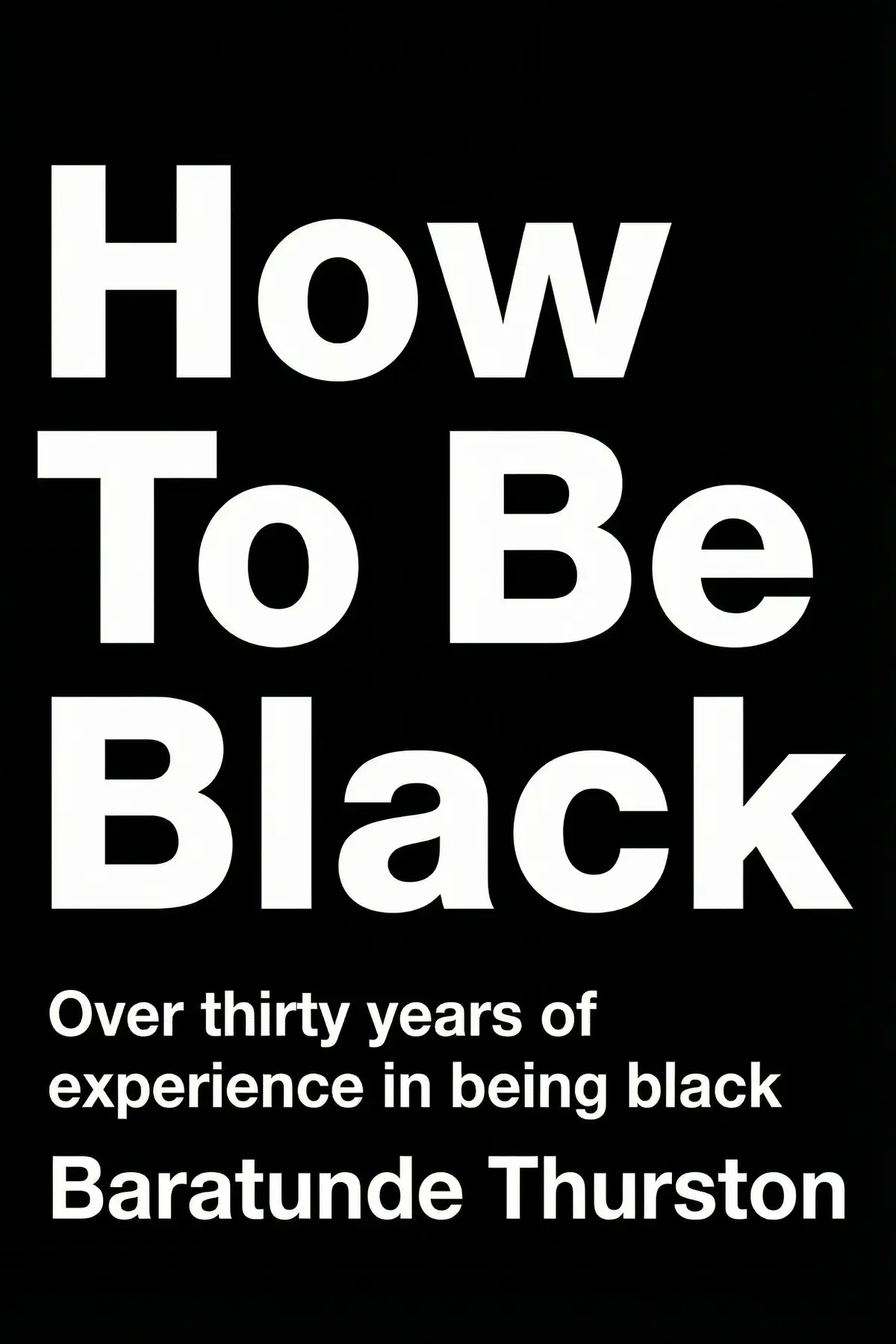
How To Be Black serves as both a memoir and a witty instructional manual for understanding the complexities of the Black experience in the United States. It follows the life of Baratunde Thurston, from his childhood in Washington, D.C., to the halls of Harvard and eventually the corporate boardroom. Along the way, it dismantles the idea of a monolithic Black culture, replacing it with a nuanced look at what it means to be an individual within a racialized society. The book promises to pull back the curtain on the social gymnastics required to navigate predominantly white spaces while maintaining a sense of cultural authenticity. It tackles everything from the politics of hair and the awkwardness of being the 'token' friend to the internal pressures of representing an entire race. By blending sharp humor with poignant personal anecdotes, the work offers a fresh perspective on race relations, identity formation, and the absurdity of the stereotypes that continue to shape American life.
Baratunde Thurston is a graduate of Harvard University and a multifaceted creative professional. He is recognized as a communications expert, a comedian, and a highly sought-after public speaker. His impressive writing career includes a tenure at the satirical news organization The Onion. Currently, he shares his insights through his blog, Cultivated Wit, and maintains an active presence on social media through his Twitter handle, @baratunde.
Listeners find the book incredibly funny, mixing soft irony and blatant sarcasm while valuing its approachable tone and deep social reflections. Furthermore, they describe the work as highly engaging, with one listener noting how it provides comic relief for all races. Additionally, the book earns praise for its informative content and interesting life story, with one listener highlighting its unique approach to race relations.
Baratunde Thurston is the master of the pivot, moving effortlessly between a harrowing childhood in 1980s D.C. and the ivory towers of Harvard. His writing is razor-sharp and frequently hysterical, yet it carries a weight that forces you to reconsider your own biases. I loved the chapters on his mother's 'tofu-eating hippie' influence; it paints such a vivid, non-monolithic picture of blackness that we rarely see in mainstream media. While some of the satire is biting, it never feels mean-spirited. Instead, it invites the reader into a conversation that is long overdue. This isn't just a manual; it’s a brilliant deconstruction of identity that manages to be both educational and entertaining. It left me feeling remarkably optimistic about the future of race relations.
Show moreThere is something incredibly powerful about the way Thurston discusses his mother. She comes across as such a force of nature, raising him with a global perspective amidst the chaos of the D.C. crack epidemic. Frankly, I could have read an entire book just about her and his childhood. The way he balances that heavy history with light-hearted social commentary is a feat of literary gymnastics. He reminds us that being Black isn't a monolith, and that there is no 'wrong' way to exist in your own skin. It’s optimistic, audacious, and filled with a warmth that makes the more difficult chapters easier to digest. Highly recommended for anyone who has ever felt like an outlier in their own community.
Show moreFinally got around to reading this gem, and it’s one of the most refreshing takes on race I’ve encountered. Thurston doesn't just lecture; he invites you to laugh at the stupidity of stereotypes while acknowledging the pain they cause. The advice he gives at the end—to simply be yourself—is a universal call to action that resonates regardless of your background. I loved the diverse voices on the Black Panel; it really drove home the point that there is no singular 'Black experience.' The prose is energetic and the humor is top-notch. If you’re looking for a book that is both thought-provoking and genuinely fun to read, this is the one. It is a total triumph of personal storytelling.
Show moreEver wonder how to navigate being the 'token' friend without losing your mind? Thurston’s satirical 'how-to' guides are genuinely funny, using sarcasm to highlight the absurdity of modern race relations in America. I found myself laughing out loud at the advice for black employees, though the underlying truth of those situations is actually quite sobering. The inclusion of the 'Black Panel' was a clever touch, providing a range of perspectives that keep the book from feeling like a singular manifesto. To be fair, the humor feels a bit forced in the final chapters—like he’s trying too hard to land every single punchline—but the overall message of authenticity is solid. It’s a breezy read with a very sharp, educational edge.
Show morePicked this up on a whim after seeing it mentioned in a 'Best of' list, and I’m glad I did. Thurston has a conversational writing style that makes you feel like you’re grabbing a beer with him. It’s witty and biting, especially when he’s mocking the ridiculous expectations society places on Black people in corporate spaces. While I didn’t find every single joke 'laugh-out-loud' funny, the gentle irony throughout kept me engaged. The book does a great job of providing comic relief while still delivering a punchy message about identity. My only gripe is that some of the political references feel a bit dated now, but the core themes of self-acceptance and challenging stereotypes are unfortunately still very relevant today.
Show moreSnarky, smart, and completely necessary. Thurston manages to take the 'How-To' format and flip it on its head to reveal the daily performances required of marginalized people in America. I especially appreciated his insights into the 'Black Friend' dynamic—it’s something I’ve seen play out a thousand times but never saw articulated so clearly. The writing is punchy, with short sentences that hit hard. Truth is, some of the satire is so thick it becomes a bit confusing, leaving me wondering where the joke ended and his actual opinion began. However, the sheer audacity of his approach makes this a standout read. It’s an entertaining way to broaden your perspective without feeling like you're reading a dry, academic textbook.
Show moreAs someone who has navigated predominantly white spaces for years, this book felt like a massive exhale. Thurston’s description of his time at Sidwell Friends resonated deeply with me. He captures that specific anxiety of being a 'representative' for your entire race with such precision and wit. In my experience, the chapter on the Black President was a bit much, but the rest of the book more than makes up for it. It’s a bold piece of work that uses humor as a scalpel to dissect American culture. Even though it was written several years ago, the social observations remain incredibly sharp. This is a great choice for anyone looking for an accessible, funny entry point into race relations.
Show moreThe structure of this book is a bit of a mixed bag for me. On one hand, the memoir sections are absolutely fascinating, detailing a life that spans from the drug wars of D.C. to the elite halls of Sidwell Friends and Harvard. Thurston is a gifted storyteller when he’s being sincere. On the other hand, the satirical 'manual' portions and the Black Panel transcripts felt like they disrupted the flow of his personal narrative. Not gonna lie, I found myself skimming the panel answers because they felt repetitive after a while. It’s definitely an educational read for those looking to understand the nuances of the Black experience, but the uneven pacing and impersonal tone in the comedy sections make it a slightly frustrating read.
Show moreTo be fair, I think my expectations were a bit too high for this one. I was expecting a straight memoir, but what I got was a hybrid of autobiography and SNL-style sketches. Some of the sketches work brilliantly, while others—like the section on being a black employee—felt a bit recycled. Personally, the book shines brightest when Thurston is being vulnerable about his father or his education at elite schools. When he shifts into 'comedian mode,' the tone can feel a little too cynical and detached for my taste. It’s still a worthwhile read for the social commentary alone, but I wish the editing had been a bit tighter to keep the momentum going through the middle sections.
Show moreI really wanted to like this more than I did, but the humor just didn't land for me. Look, I appreciate the attempt to use satire to tackle heavy subjects like systemic racism, but many passages felt arrogant or simply over the top. The five-page bit about being the next Black president was particularly tedious and seemed to go on forever without a clear point. Also, as someone not fully steeped in every American cultural trope, some references—like the extended watermelon joke—flew right over my head because the author doesn't bother to explain the context. It felt like a memoir that was afraid to be too serious, resulting in a book that’s neither a great biography nor a consistently funny comedy. It was quite a disappointing experience.
Show moreIshmael Beah

James Herriot

Barack Obama
Masaji Ishikawa
Ben Macintyre

Fay Bound Alberti
AUDIO SUMMARY AVAILABLE
Get the key ideas from How To Be Black by Baratunde Thurston, plus 5,000+ more titles in English and Thai.







