
59 Seconds: Change Your Life in Under a Minute
Richard Wiseman
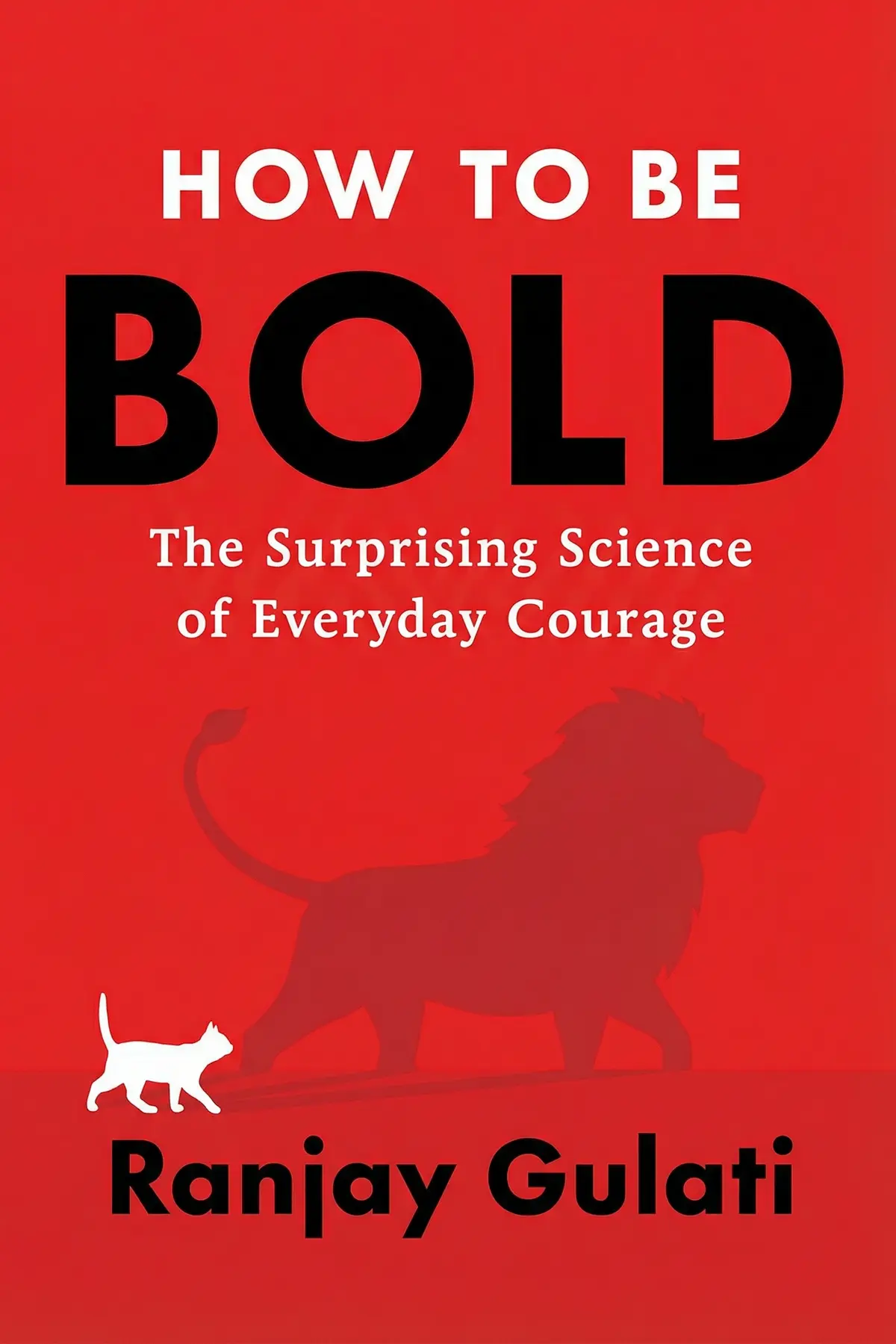
Explore the science of everyday bravery and learn how to transform fear into a catalyst for leadership. This guide provides actionable strategies for building resilient, innovative organizational cultures through the power of bold action.
1 min 50 sec
In the quiet moments before a difficult conversation or the high-pressure seconds before a major presentation, most of us feel the same thing: a sudden tightening in the chest and an urge to retreat. We often assume that the people who excel in these moments are simply built differently—that they possess a natural immunity to the fear that keeps the rest of us on the sidelines. However, the reality of bravery is far more accessible than we realize. Boldness isn’t a rare gift bestowed upon a few; it is a psychological muscle that anyone can strengthen with the right approach.
We are currently living through what experts describe as an uncertainty crisis. Whether it is the rapid shift in global technology, the volatility of the economy, or the shifting social norms of the modern workplace, we are constantly being asked to navigate terrain for which we have no map. Our biological systems, designed for a much simpler world, often interpret this uncertainty as a direct threat. This triggers a survival response that prioritizes safety over growth, leading us to hesitate just when we need to be most decisive. To live and lead effectively today, we must learn to override these ancient instincts.
Through this exploration, we will discover that courage is not the absence of those nervous jitters, but rather the ability to move forward while they are still present. We will look at how personal habits, social connections, and organizational culture all play a role in making boldness possible. By the end of this journey, the goal is to see courage not as a grand, once-in-a-lifetime event, but as a series of small, daily choices that define our character and our impact on the world. This is the throughline: by understanding the science behind our hesitation, we can turn our fear into the fuel for a more bold and meaningful life.
2 min 34 sec
Uncover why our brains are hardwired to prioritize safety over progress and how shifting your perspective on fear can unlock hidden potential.
2 min 54 sec
Discover the specific mental practices and rituals that help high performers stay grounded and decisive even when the stakes are high.
2 min 30 sec
Learn why the strongest individuals rely on a network of support to take risks and how connection serves as an antidote to paralysis.
2 min 48 sec
Explore the ‘Three Cs’ that leaders must master to build companies where innovation and bravery thrive instead of fear and silence.
2 min 36 sec
Learn how to reinterpret the physical and emotional sensations of fear as indicators of where your next breakthrough lies.
1 min 40 sec
As we conclude this exploration of Ranjay Gulati’s insights, the central message remains clear: boldness is a deliberate choice that any of us can make. We have seen that the biological impulse to stay safe in the face of uncertainty is natural, but it doesn’t have to be the final word. By understanding our physiological responses, we can learn to manage our fear rather than being managed by it. We have also seen that bravery is not a solitary endeavor; it is sustained by the connections we build and the cultures we create.
Whether you are a leader looking to transform your organization or an individual striving to live with more integrity, the path forward is the same. It begins with the recognition that courage is a skill developed through practice. Start with small acts—speak up in one meeting, try one new approach, or have one difficult but necessary conversation. Build your ‘clan’ of supporters and ground yourself in a purpose that is larger than your personal comfort.
In an age defined by rapid change and constant unpredictability, being bold is no longer a luxury—it is a necessity. The world needs people who are willing to step into the unknown, who are willing to fail and get back up, and who are willing to stand for their values even when it is difficult. By applying these principles, you can turn the ‘uncertainty crisis’ into an opportunity for profound growth. Remember, boldness isn’t about the absence of fear; it is about the conviction that what you are doing is worth the risk. Go forth with that clarity, and you will find that the capacity for courage was within you all along.
Many of us believe that courage is an innate trait reserved for the extraordinary, yet the reality is far more practical. This book examines the 'uncertainty crisis' of the modern world and reveals that boldness is actually a skill that can be developed through habit and environment. It moves away from the idea of the fearless hero, focusing instead on how individuals can manage their biological responses to stress and how leaders can foster psychological safety. By understanding the intersection of purpose, connection, and emotional energy, readers are shown how to turn hesitation into decisive action. The promise is a transformation from a state of self-protection to one of innovative risk-taking, allowing for more authentic leadership and resilient organizations. It provides a framework for navigating the pressures of the corporate world by grounding oneself in core values and collective support.
Ranjay Gulati is the Paul R. Lawrence MBA Class of 1942 Professor of Business Administration at Harvard Business School. A leading authority on leadership and organizational transformation, his work explores how individuals and companies can unlock their full potential through purpose and courage. He is the author of Deep Purpose, a global bestseller on aligning personal values with organizational mission, and has been recognized by Thinkers50 and The Economist as one of the world’s most influential management scholars.
Listeners view this work as an influential manual for brave leadership that broadens their perspective on bravery and explains how to develop personal courage muscles. They value the actionable techniques and useful advice, with one listener pointing out that the content is grounded in science. The storytelling style is highly regarded, with one listener noting the integration of real-life stories, and listeners describe it as an entertaining read.
The stories coming out of Ukraine in this book gave me chills and provided a rare level of authenticity you don't usually see in business literature. Gulati shows that boldness isn't about being fearless; it’s about having a purpose so deep that you act in spite of that fear. I was especially moved by the foreword from the Dalai Lama, which sets a spiritual yet practical tone for the rest of the work. Truth is, we often think of courage as a solo act of heroism, but this book proves it’s a collective effort nurtured through culture. The writing is engaging and the narrative style keeps you moving through the heavier theoretical sections quite easily. This isn't just a manual for CEOs; it's a guide for anyone trying to navigate a world that feels increasingly uncertain and frightening.
Show moreWow, Gulati really changes the conversation by treating courage as a science that can be studied and replicated in any organization. As an investor, I’m always looking for leadership teams that show this kind of conviction, and this book provides the best framework I’ve seen for identifying it. The distinction between 'Deep Purpose' and this 'Bold' action is clear and complementary. The stories are diverse, ranging from the hospitality industry to wartime leadership, which keeps the narrative fresh and engaging throughout. Personally, I found the sections on empathy to be the most surprising, as we often associate boldness with being tough or unyielding. This book proves that true courage is much more nuanced and human than we typically give it credit for. A must-read for the modern era.
Show moreAfter hearing Ranjay Gulati speak on a podcast, I knew I had to pick up this book, and it did not disappoint. It provides an incredibly relevant perspective on how to lead when the world feels like it's constantly shifting under your feet. The emphasis on acting through fear rather than waiting for confidence to arrive is a game-changer for anyone in a high-stakes environment. I loved the connection to Amy Edmondson’s work on psychological safety; it really helps ground the idea of boldness in actual team dynamics. The book is both an emotional journey and an analytical breakdown of what makes great leaders tick. It’s the kind of book you’ll want to keep on your desk and refer back to whenever you’re facing a tough decision. Simply excellent work.
Show moreEver wonder why some leaders stay cool while everything is falling apart around them? Gulati’s deep dive into the 9C’s framework—covering things like Calm, Clan, and Comprehension—provides a solid roadmap for building what he calls 'courage muscles.' The research is clearly extensive, drawing on everything from Aristotle to modern corporate giants like the Tata Group. I particularly liked the section on psychological safety and how bold action requires a foundation of trust within a team. My only gripe is that some of the case studies go on for a few pages too long when the point was already made. Still, the Courage Playbook at the end is a brilliant addition for anyone who wants a concise summary of the core concepts. It’s a thoughtful, well-constructed argument for leading with both empathy and conviction.
Show moreFinally got around to finishing this, and I have to say the 'Courage Playbook' at the back is worth the price of admission alone. Gulati does a great job of explaining how boldness can be cultivated through practice, much like any other professional skill we value. The visual of the red cover—signaling urgency and momentum—is a perfect match for the energy contained in these pages. I appreciated the balance between intellectual theory and the visceral, real-world examples from military and business leaders alike. In my experience, most leadership books ignore the emotional toll of making big decisions, but Gulati addresses it head-on with his sections on coping and calm. It’s a little long-winded in places, but the core message is incredibly powerful for anyone looking to make a change. Definitely a solid addition to any manager's bookshelf.
Show moreLook, the 9C’s framework is where the real value lies in this book, even if the academic tone is a bit dry at times. Ranjay Gulati has managed to bridge the gap between ancient virtue ethics and modern management practice in a way that feels surprisingly fresh. I particularly enjoyed the comparison between different leadership styles and how they foster—or stifle—innovation through their approach to risk. While the book is quite detailed, the structure allows you to jump around to the chapters that resonate most with your current challenges. It’s a very practical set of levers for anyone trying to lead a transformation in a large, legacy-driven organization. I would recommend this to anyone who feels stuck in a culture of 'playing it safe' and needs a roadmap to get out.
Show moreThis book offers a fascinating look at courage as a skill rather than a trait, but I found the translation to daily life somewhat difficult. While the stories are incredibly inspiring, many of them feel like extreme outliers that don't quite fit a standard office environment. I appreciate the academic rigor Gulati brings to the table, yet the text occasionally feels like a slog through dense leadership theory. To be fair, the distinction between individual bravery and organizational culture is handled well toward the end. If you are a high-level executive, you might find this revolutionary. For those of us in mid-management, it takes a lot of effort to find the 'how-to' hidden within the heavy anecdotes. It’s an interesting read, just not the quick self-help guide the title might suggest to some. Personally, I would have liked more focus on smaller, everyday acts of boldness.
Show moreAs someone who manages a small team, I found the concepts of collective courage and psychological safety to be the most relevant parts of this book. However, the sheer volume of detailed examples occasionally overwhelmed the actual advice being given. I would have preferred a bit more focus on the 'how' rather than the 'why' in several of the central chapters. Gotta say, the 9C’s framework is a bit of an acronym-overload at first, even if the logic behind each point is sound. It’s a decent read if you have the time to sit down and really digest it, but it’s not something you can breeze through in a weekend. I enjoyed the bits about building a courageous culture, but I'm still trying to figure out how to apply the Marine Corps' tactics to a local marketing agency.
Show moreFrankly, I struggled with the density of this book and found it hard to stay engaged through the middle chapters. I picked this up hoping for a practical guide on personal boldness, but it felt much more like a textbook on high-level corporate strategy. The examples are undoubtedly impressive, yet they often feel too distant from the average person's lived reality to be truly useful. Not gonna lie, I found myself skimming several sections just to get to the summary points at the end of the chapters. It’s clearly well-researched, and the author is obviously an expert, but the 'fun read' promised by some other reviewers wasn't my experience at all. If you enjoy academic deep dives into leadership philosophy, you’ll love it. If you want a punchy, actionable self-improvement book, you might want to look elsewhere.
Show moreNot what I expected based on the title. I was looking for a motivational boost, but instead, I got a very long lecture on organizational theory and historical case studies. The writing style is quite formal, which made it a bit of a chore to get through after a long day at work. To be fair, the research is top-notch and the author is clearly brilliant, but it just didn't click for me on a personal level. Many of the anecdotes felt like extreme examples that don't translate well to someone working in a regular 9-to-5 job. If you’re a CEO or a business school student, you’ll probably find this essential. For the average reader looking for personal growth tips, it’s probably a bit too 'corporate' for my liking.
Show moreRichard Wiseman

William B. Irvine
Andrew D. Thompson

Deepak Chopra
AUDIO SUMMARY AVAILABLE
Get the key ideas from How to Be Bold by Ranjay Gulati, plus 5,000+ more titles in English and Thai.







