
16 min 13 sec
How to Do Nothing: Resisting the Attention Economy
By Jenny Odell
Discover why modern life’s obsession with productivity is robbing us of our humanity and how reclaiming our attention through the art of doing nothing can transform our relationship with the world.
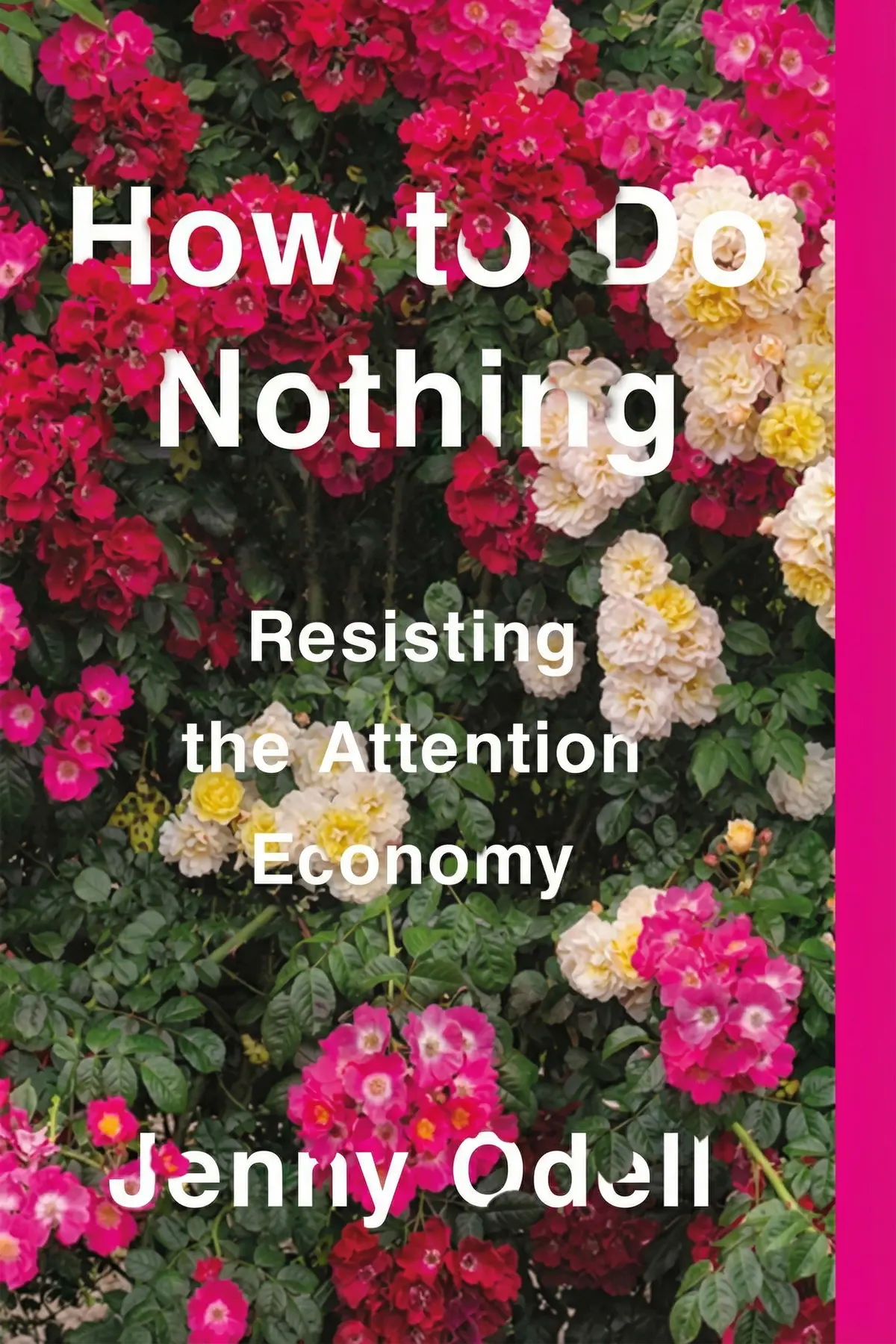
Table of Content
1. Introduction
1 min 55 sec
We live in an era where the old saying “time is money” has been taken to an exhausting extreme. Every waking moment feels like a resource that must be optimized, monetized, or shared. Whether we are checking our emails at dinner or scrolling through social media feeds in bed, we have been conditioned to believe that if we aren’t producing something, we are wasting our lives. This constant pressure has created a culture of chronic busyness, where the idea of simply sitting still and observing the world feels like a radical act—or a guilty pleasure we can’t afford.
In this exploration of Jenny Odell’s work, we are invited to reconsider the value of our attention. Odell argues that the “attention economy”—the system designed to keep us constantly engaged and clicking—is not just making us tired; it’s making us shallow. It detaches us from our physical environment and from the nuanced, complex realities of the people around us.
The central idea here is that “doing nothing” is not about retreating into a void or being lazy. Instead, it is about shifting our focus. It is an act of resistance against a system that wants to turn our every thought into a data point. By learning to direct our attention toward things that aren’t “useful” in a commercial sense, we can rediscover a much deeper, more meaningful experience of being alive. This summary will guide you through the philosophical and practical steps of reclaiming your focus, helping you see that the most productive thing you can do for your soul might be to stop being productive for a while.
We’ll look at how the lines between our jobs and our private lives have blurred, why social media forces us to act like corporate brands, and how a simple walk in a rose garden can offer a template for a more fulfilling existence. It’s time to step back from the digital noise and find the richness that only reveals itself when we choose to pay attention.
2. The Collapse of Work-Life Boundaries
2 min 18 sec
Explore how the modern gig economy has dissolved the traditional eight-hour workday, turning every hour into a potential source of income and making true leisure feel like a waste of resources.
3. Social Media and the Personal Brand
2 min 11 sec
Unpack the phenomenon of ‘context collapse’ and learn how digital platforms encourage us to smooth over our complexities to maintain a consistent, marketable online identity.
4. The Power of the Useless Tree
2 min 02 sec
Discover how being ‘unproductive’ can be a survival strategy, using ancient parables to illustrate how resisting the demand for utility can protect our inner lives.
5. Architecture for Your Attention
2 min 12 sec
Learn how physical and mental frameworks can help us move from passive hearing to active, deep listening, revealing the hidden beauty in the everyday.
6. Breaking the Filter of Perception
2 min 02 sec
Understand the psychological limits of our focus and how embracing silence can unlock a more vivid and comprehensive awareness of our surroundings.
7. Attention as an Act of Empathy
1 min 57 sec
See how choosing where we place our focus can turn mundane frustrations into opportunities for human connection and compassion.
8. Conclusion
1 min 36 sec
The journey through the art of doing nothing brings us back to a simple but profound truth: our attention is our most precious resource. In a world that is constantly trying to buy, sell, and direct our focus, the most revolutionary thing we can do is take it back. We’ve seen how the modern economy has tried to erase the boundaries of our lives, turning our leisure into work and our personalities into brands. We’ve explored how resisting the urge to be “useful” can protect our inner growth, much like a twisted old tree that survives by being unappealing to the sawmill.
Reclaiming your attention isn’t about escaping the world or becoming a hermit. It’s about being more present in the world you already inhabit. It’s about choosing to listen deeply, to observe the subtle beauty of your environment, and to recognize the humanity in the people you pass on the street. When we stop following the algorithmic path laid out for us, we find that life is much richer, messier, and more meaningful than any digital feed could ever suggest.
As you move forward, try to find your own version of the “useless tree.” Find a space—a garden, a park, or even a quiet corner of your home—where you can practice the art of being still. Remember that your value is not defined by your productivity or your online presence. By choosing where you place your attention, you are choosing what kind of world you want to live in. Start small, look closely, and give yourself the permission to do absolutely nothing. You might find that in that stillness, you finally discover everything you’ve been looking for.
About this book
What is this book about?
How to Do Nothing is a philosophical and practical exploration of what it means to live in an 'attention economy.' Jenny Odell argues that our current digital landscape treats our time as a commodity to be harvested, leading to burnout and a shallow existence. By drawing on art history, environmentalism, and philosophy, the book reveals how 'doing nothing' is not an act of laziness, but a powerful form of resistance. The book promises to help you break free from the trap of constant engagement. It offers a path toward a deeper, more intentional way of seeing. Through various examples—from ancient Chinese parables to modern sound art—Odell teaches readers how to redirect their focus away from the algorithmic pull of social media and back toward the physical world and the communities they inhabit. Ultimately, it is a manifesto for a more empathetic and grounded life.
Book Information
About the Author
Jenny Odell
Jenny Odell is an artist and writer based in Oakland, California. She teaches at Stanford University and has been an artist-in-residence at Facebook, the Internet Archive, the San Francisco Planning Department, and the San Francisco garbage dump. Her art has been exhibited in galleries around the world.
Ratings & Reviews
Ratings at a glance
What people think
Listeners find the book insightful, with one listener highlighting its thorough examination of the attention economy, and they value its stimulating content and important message. Feedback regarding the writing and depth of information is varied; while some find it well-crafted and informative, others describe it as mediocre and short on actionable tips. Listeners also find the material hard to understand and consider it ultimately meaningless.
Top reviews
Pakpoom
Jenny Odell has written something truly essential for our hyper-connected, yet strangely lonely era. This book is a vital manifesto for anyone feeling alienated by the constant demands of the digital attention economy. She takes social media companies to task for colonizing our thoughts and turning our personal identities into mere brands for consumption. For Odell, 'nothing' isn't an absence; it is a pregnant presence that allows us to reclaim our actual lives. The way she links birdwatching and local ecology to resistance against late-stage capitalism is nothing short of brilliant. While the writing can be quite dense, the effort required to engage with her ideas is exactly the point. I felt a profound sense of relief reading her thoughts on the right to not express oneself constantly. It’s a challenging, beautiful, and deeply political work that changed how I view my own time.
Show moreLeila
What a profound meditation on the way late-stage capitalism has commodified our very awareness and sense of self! Odell manages to avoid the typical 'phones are bad' tropes and instead digs into the historical and structural reasons for our burnout. Her writing is situated in the social and ecological worlds she inhabits, making the philosophy feel grounded and urgent. I was particularly moved by her discussion of the 1934 San Francisco longshoreman's strike as a form of refusal. She argues that 'doing nothing' is actually a radical act of political resistance against a system that demands total participation. This book models a form of attention that is both intimate and structural, which is a rare feat in modern non-fiction. I did not agree with every single argument, but I found the archive of ideas she presented to be exquisite. This is a text I will return to whenever I feel the digital world closing in.
Show moreEthan
Finally got around to reading this and I felt seen in a way that is rare for contemporary non-fiction books. The pressure to have an opinion on every trending topic is a form of labor that we've all just accepted. Odell’s defense of the right to not express oneself was the highlight of the entire experience for me personally. She provides an amazing archive of philosophies and creative works that offer a genuine sense of promise and possibility. The book isn't just about 'unplugging' to be a better worker; it's about reclaiming our humanity from a machine. Her writing is both personal and political, holding the micro and the macro in a very delicate, earnest balance. I appreciate that she considers race and class when discussing the privilege of being able to disconnect from the grid. This is easily one of the most important things I have read in years.
Show moreTom
Picked this up thinking it was a standard digital detox guide, but it turned out to be much more philosophical. Instead of giving us a checklist of habits, Odell offers a flowing reflection on the importance of separating our worth from our productivity. Her observations about the monetization of time are astute and often quite sobering for a heavy social media user. I particularly loved the section on 'Old Survivor,' the ancient redwood tree that only escaped the saw because it was deemed useless. That metaphor for human existence in a capitalist framework really stuck with me for days after. To be fair, some of the art history tangents felt a little long-winded and difficult to grasp without a degree. However, the core argument about reclaiming our attention for our local communities is powerful. It’s a steadying read that encourages you to finally look at the world right in front of you.
Show moreWit
Ever wonder why we feel the constant pressure to be productive even when we are supposed to be resting? Odell explores this anxiety with a smart, flowing reflection on why we need to reconnect with our physical environments. She channels her energy into the idea of 'standing apart' rather than 'dropping out' of society entirely. I found her focus on the 'third space' between the digital and the physical to be a very helpful framework. While some of the descriptions of performance art were a bit much to take in, her sincerity is undeniable. Not gonna lie, I actually ended up downloading a nature identification app after reading her chapters on local flora. It’s not a perfect book, but it offers a much-needed antidote to the 'hustle' culture that dominates our current lives. It feels like a serene walk with a very smart friend who really wants you to see a specific tree.
Show moreGrace
As someone who spends way too much time scrolling, I found Odell’s focus on our direct physical environments to be incredibly grounding. She challenges us to rethink the idea of 'usefulness' in a world that only values things that can be monetized. Her writing can be dense, but there is a rhythmic quality to it that eventually draws you into her perspective. I liked the examples of artists who use their work to teach us other ways of existing in time. While the academic tone can be a bit much, the underlying message about protecting our attention is undeniably important. Truth is, we are all being manipulated by algorithms, and this book provides some historical context to that terrifying reality. It didn't give me a simple solution, but it gave me a better set of questions to ask myself. It’s a thoughtful and necessary critique of how we live now.
Show moreSurasit
To be fair, the title 'How to Do Nothing' is a bit of a misnomer if you are looking for a practical manual. This isn't a self-help book in the traditional sense, but rather a collection of academic essays on art and environment. Odell is clearly very intelligent, but she can be a bit of a loony hippie friend who talks your ear off. One moment she is discussing 1930s labor strikes and the next she is obsessing over rare birds in a public park. While I appreciate the sentiment of resisting the 'think-piece economy,' the book itself feels like one giant, over-extended think-piece. I agree with her points on the toxicity of social media, yet the writing style felt nearly inaccessible at times. It is a decent read for the overeducated leftist crowd, but might frustrate anyone seeking direct advice. I enjoyed the stroll, even if I got lost in the weeds occasionally.
Show moreWatcharaporn
Frankly, I have mixed feelings about this one because the insights are brilliant but the writing is often quite dry. Odell makes some incredible points about how social media forces us to boil our identities down into 280-character hot takes. I loved the idea that silence and solitude are not empty spaces, but are actually 'pregnant with possibility' for new growth. However, the author’s background as an artist and academic makes the text feel a bit inaccessible for a general audience. There were times when the academic jargon felt like a barrier to the very 'connectivity' she was trying to encourage. It’s a very thoughtful and steadying book, but you have to be in the right headspace to tackle it. I wanted more practical steps on how to fuel a societal shift toward doing nothing. It’s a solid three-star read that probably could have been a much tighter essay.
Show morePridi
Honestly, the tone of this book felt incredibly condescending and detached from the reality of most working people. Odell has some interesting points about the attention economy, but she delivers them from the lofty heights of liberal academia. The prose is often thick and meandering, reading more like a grant proposal than a helpful guide for the average person. I found myself rolling my eyes at her lectures on 'bioregionalism' while wondering how she actually pays her bills in Oakland. Why use ten academic buzzwords when a simple sentence would suffice to explain a basic concept? It’s hard to reconcile a message about slowing down when the book itself feels like such an exhausting chore to finish. I probably should have just sat in silence and watched birds instead of forcing myself through these chapters. There is a good message buried here, but the delivery is just too smug.
Show moreCharlotte
Look, this book has the feeling of taking a leisurely stroll with an overeducated friend who doesn't realize how exhausting they are. I truly wanted to like this because the attention economy is a massive problem that we all need to address. Unfortunately, the author spends so much time meandering through personal journeys and a checklist of philosophers that the thesis gets lost. The language is often so high-brow and academic that it feels like it was written for a very specific social circle. I found the sections on bioregionalism to be particularly hard to get through without losing focus entirely. It feels ironic that a book about attention is so difficult to pay attention to because of its dense prose. My generation grew up being bored, so the idea of 'nothing' isn't exactly a revolutionary discovery for us. It’s a real shame because the core message is vital, but the delivery is just too pretentious.
Show moreReaders also enjoyed
AUDIO SUMMARY AVAILABLE
Listen to How to Do Nothing in 15 minutes
Get the key ideas from How to Do Nothing by Jenny Odell, plus 5,000+ more titles in English and Thai.
- 5,000+ titles
- Listen as much as you want
- 7-day free trial
- Cancel anytime







