
19 min 21 sec
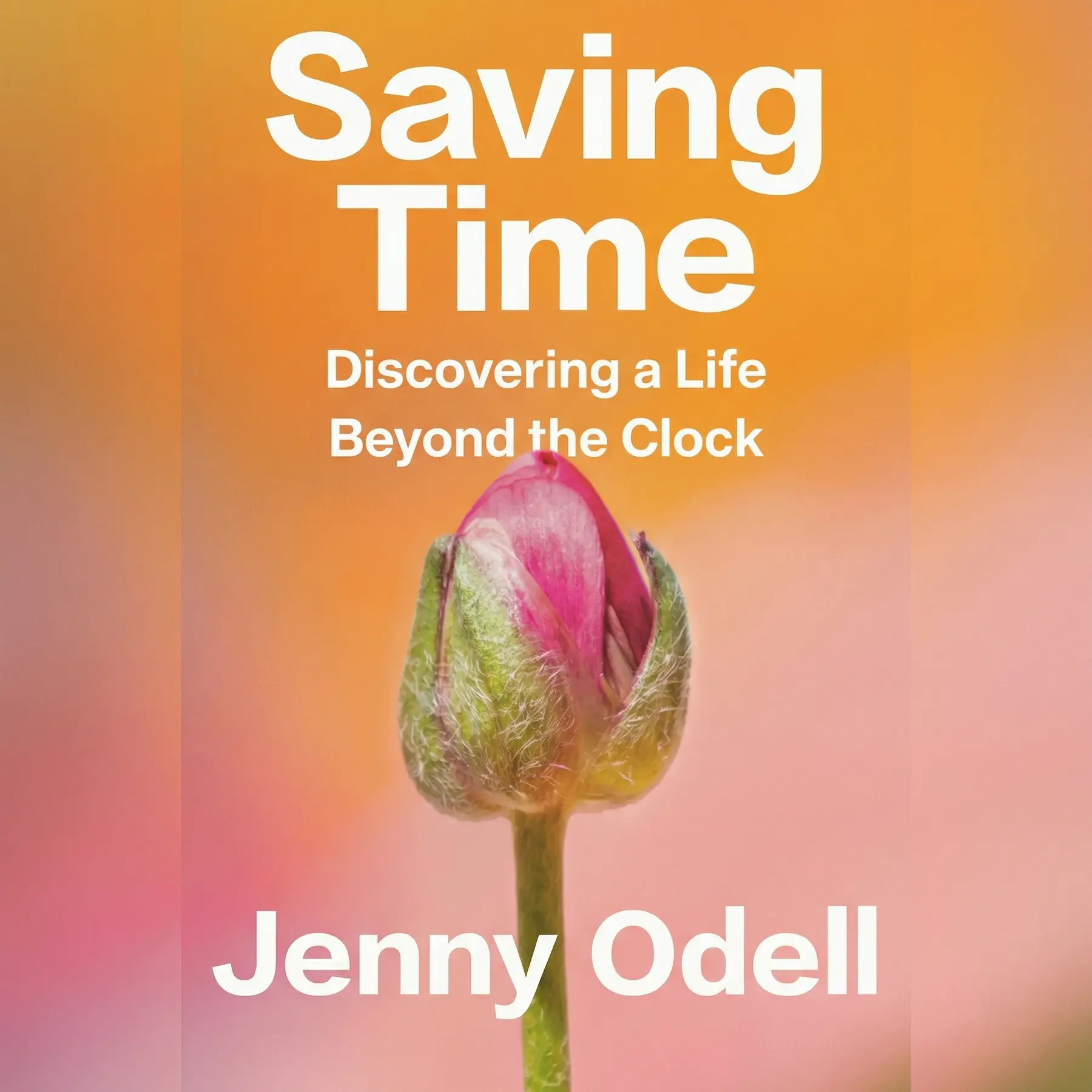
Saving Time: Discovering a Life Beyond the Clock
By Jenny Odell
A profound exploration into how our modern obsession with efficiency distorts our experience of life, offering a philosophical and historical path toward reclaiming a deeper, more meaningful connection to the present.
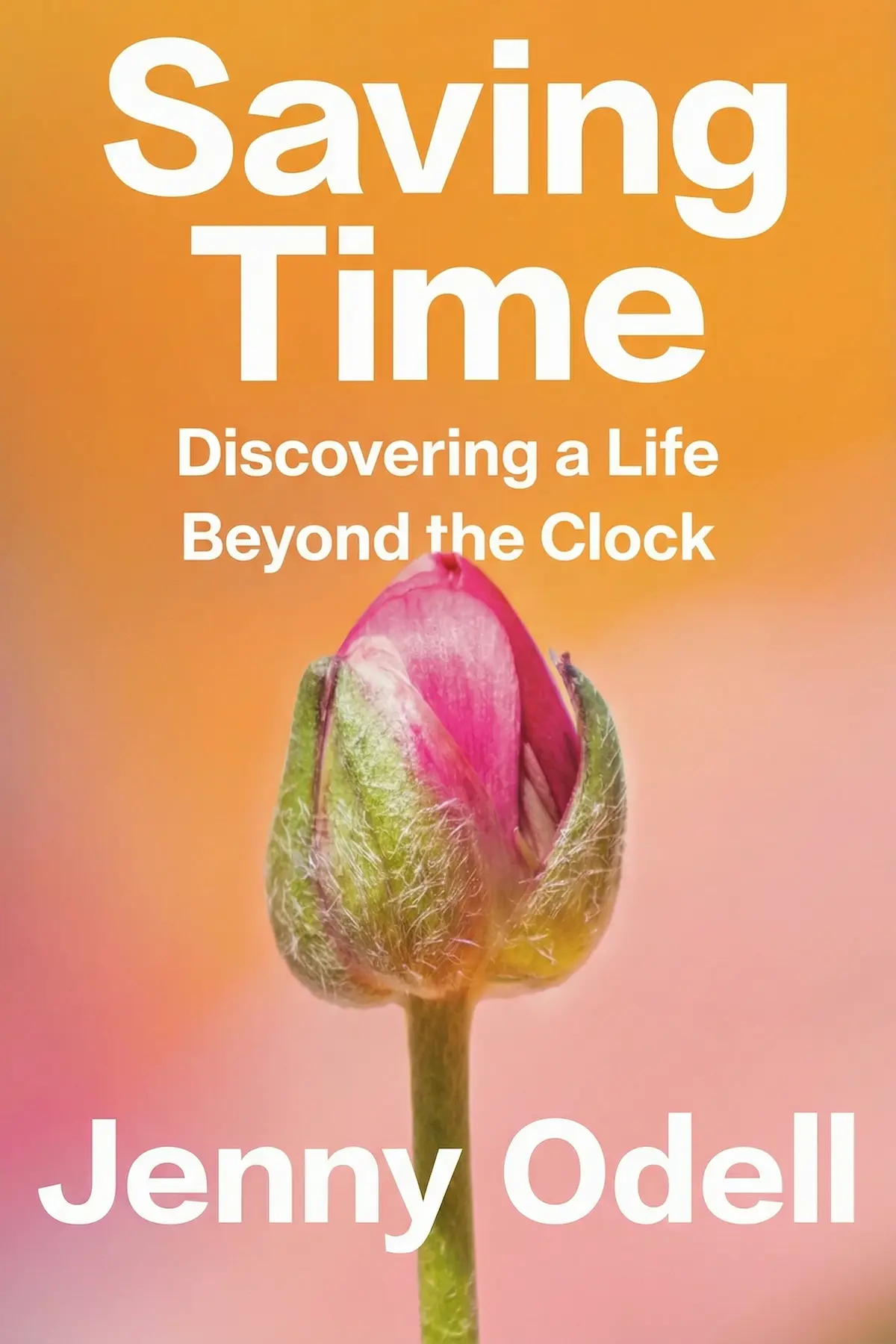
Table of Content
1. Introduction
2 min 31 sec
Picture yourself walking through a quiet, vast library, searching for an answer to that nagging feeling of being perpetually behind. You are looking for a way to stop the clock from running away, a way to finally feel like you have enough hours in the day to simply breathe. You come across two very different aisles. The first is overflowing with brightly colored manuals on efficiency, hacks for your morning routine, and strategies to squeeze every drop of productivity out of your schedule. The second aisle is different; it’s filled with dusty volumes on the history of civilization, deep philosophical inquiries into the nature of existence, and scientific journals about the rhythms of the natural world.
Most of us, driven by the frantic pace of modern life, would instinctively turn down the first aisle. We’ve been conditioned to believe that the solution to our exhaustion is better management—that if we just find the right app or the right calendar system, we can finally “save” enough time to be happy. But what if that search is precisely what’s making us feel so depleted? In this exploration of the ideas found in Jenny Odell’s work, we are going to suggest that the real answers aren’t in the productivity section at all. They are hidden in that second aisle, in the complex and often overlooked history of how we came to view time as a resource to be spent and saved in the first place.
To truly understand our relationship with the clock, we have to look past the seconds and minutes and see the power structures, the economic shifts, and the philosophical misunderstandings that have shaped our modern reality. This isn’t a guide on how to get more done in a day. Instead, it’s an invitation to change your entire perception of what time is. We will look at how the concept of the clock was built, how the idea of “time as money” has shaped our labor, and why the promise of equal time for everyone is often a hollow one. By the end, we’ll see that reclaiming our lives isn’t about saving time, but about learning how to inhabit it more fully. This is a journey toward a life that exists beyond the mechanical ticking of the clock, toward a sense of time that is deep, shared, and truly alive.
2. The Invention of Standardized Time
3 min 06 sec
Discover how human societies moved from following the natural rhythms of the sun to living by the strict, mechanical pulse of synchronized clocks and global time zones.
3. The Economic Weight of the Clock
3 min 02 sec
Explore the evolution of ‘time as money’ and how the workplace has transformed every second of our lives into a commodity to be measured and monitored.
4. The Illusion of Equal Time
2 min 46 sec
Uncover the hidden power dynamics that dictate who gets to control their schedule and why the idea of ‘everyone having the same 24 hours’ is a myth.
5. Shifting from Measurement to Meaning
2 min 53 sec
Revisit how major life events, like a global pandemic, can shatter our traditional views of time and open the door to a more fluid, rhythmic way of being.
6. Living in the Moment of Opportunity
3 min 02 sec
Learn the ancient secret of Kairos—the time of crisis and opportunity—to break free from the trap of linear productivity and finally feel truly alive.
7. Conclusion
2 min 01 sec
As we reach the end of this journey through the history, economics, and philosophy of time, we are left with a fundamental realization: the pressure we feel to constantly “save time” is not an inherent part of human nature, but a product of the world we’ve built. We live in a society that often values us only for our output, pushing us toward a version of productivity that is ultimately unsustainable and dehumanizing. But we don’t have to stay trapped in that cycle. Reclaiming our time requires action on three different levels.
First, on a structural level, we must advocate for a world where time is shared and protected more fairly, where no one’s life is treated as a disposable resource. Second, on a community level, we should remember that we are not alone in our anxieties. By sharing our fears about the future and our frustrations with the present, we can build a collective resilience that the ticking clock cannot break. And finally, on a personal level, we can change how we perceive our own days. We can choose to step out of the linear race and start noticing the rhythms of the world around us—the change of seasons, the needs of our neighbors, and the quiet moments of the present.
Ultimately, the goal of a well-lived life isn’t to accumulate more years or to check more items off a list. It is to be more vibrant and attentive in the moments we are given. When we stop trying to save time, we might finally find that we have enough of it to truly live. The clock will keep ticking, but it doesn’t have to be your master. You have the power to inhabit your own duration, to find the *Kairos* in your own life, and to move beyond the clock into a deeper, more meaningful existence.
About this book
What is this book about?
Saving Time challenges the modern glorification of hustle culture and the pervasive idea that every minute must be optimized for profit or progress. Jenny Odell takes us on a journey through the history of how time was standardized, from monastic bell towers to the colonial expansion of global time zones, revealing how our current perception of the clock is a relatively recent and socialized invention. The book promises to shift your perspective from viewing time as a scarce commodity to be managed, to seeing it as a landscape to be lived in. By examining the inequality of time distribution across different social groups and the existential pressure of the climate crisis, the text provides a framework for understanding why we feel so perpetually rushed. Ultimately, it offers a vision of life where we prioritize presence and collective well-being over the rigid demands of the traditional workday, moving from a linear march toward an uncertain future to a more vibrant, attentive way of existing in the world today.
Book Information
About the Author
Jenny Odell
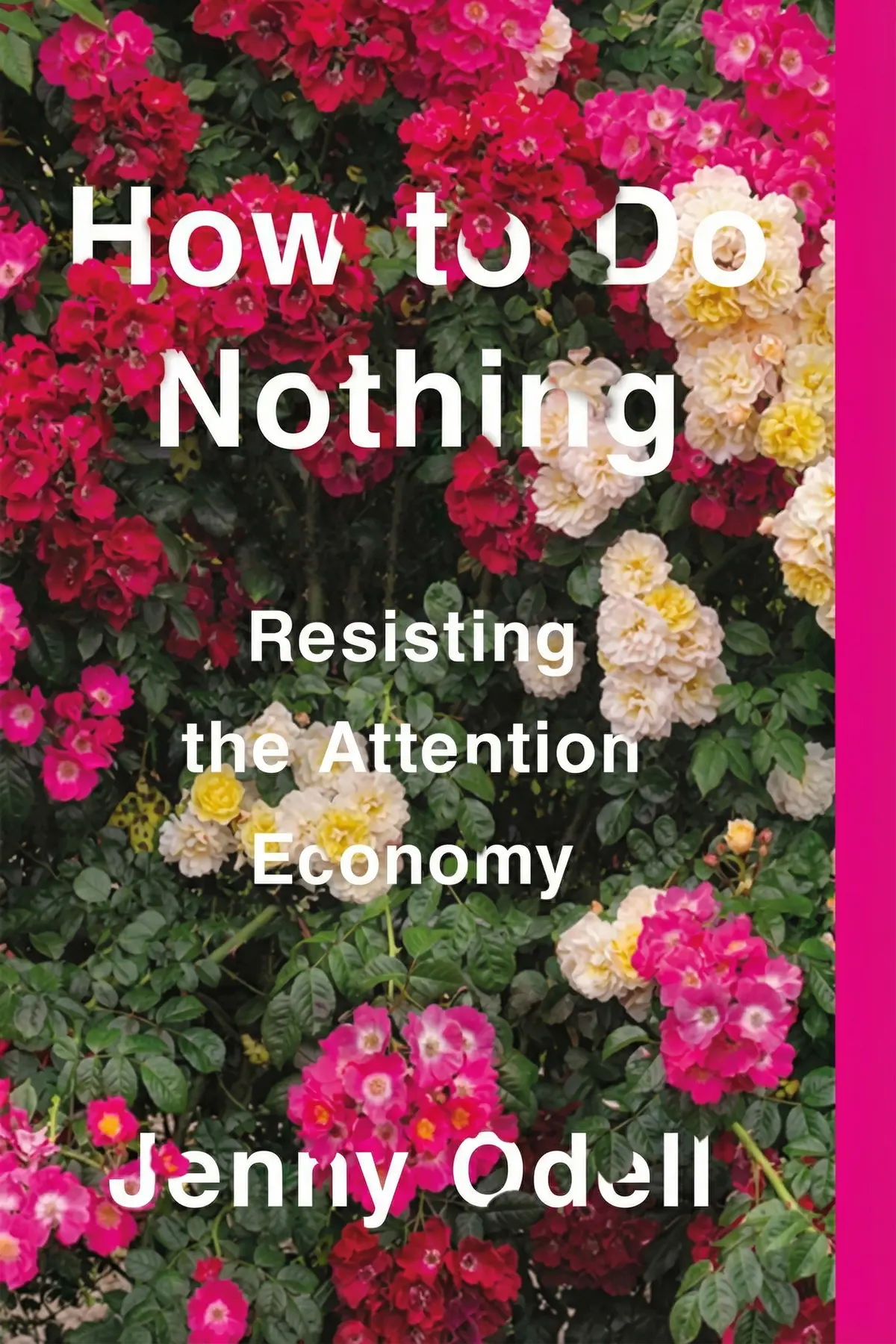
Jenny Odell is an acclaimed author, artist, and educator whose work examines our relationship with technology and the environment. Her writing has appeared in major publications like the New York Times, the Paris Review, and McSweeney’s. She is widely known for her previous bestseller, How to Do Nothing, which explored the importance of resisting the attention economy.
Ratings & Reviews
Ratings at a glance
What people think
Listeners find the work highly evocative, with one listener highlighting it as a fantastic meditation on time. There are varied opinions among listeners concerning the book's readability and how engaging the material is.
Top reviews
Sombat
Ever wonder why we are all so obsessed with productivity even as the planet feels like it’s ending? Odell provides a fantastic meditation on how our rigid clock-time is a tool of colonial domination rather than a natural law. I found the sections on 'moss time' and 'geological time' deeply moving and strangely comforting in an era of constant climate anxiety. Truth be told, it’s not an easy read and the academic depth might alienate some, but the payoff is a radical reimagining of the future. She successfully argues that time isn't just money; it's a shared social fabric we can actually re-weave if we try. This is a vital, hopeful assault on modern nihilism.
Show moreKomsan
Wow. This is probably the most important thing I’ve read this year regarding my own mental well-being and climate dread. Odell doesn't just diagnose the problem of late-stage capitalism; she offers a different way to inhabit the world. By looking at 'moss time' and the rhythms of the natural world, she reminds us that the future isn't deterministic. I love the idea of 'gardening' time rather than hoarding it like a resource. Personally, I didn't find the structure messy; it felt more like the very rhizomatic growth she describes throughout the chapters. It’s a dense, beautiful, and deeply sincere work of art that demands your full attention.
Show moreGrace
Picked this up expecting a self-help guide on time management, but what I got was a dense intellectual exercise on the nature of existence. Odell deconstructs the 'work and refreshment' cycle of capitalism with surgical precision. I loved the way she connected the Protestant work ethic to our current burnout culture. To be fair, the book is quite sprawling and could have benefited from a much tighter edit to keep the momentum going. Still, the core message about stepping down from the ambition ladder is something I’ll be thinking about for a long time. It’s a challenging read that rewards patience with genuine shifts in perspective.
Show morePornpimon
Finally got around to this, and it’s basically my exact aesthetic in book form. Who else is going to reference a Tim Robinson sketch and the climate crisis in the same breath? The way she explores alternative perceptions of time in marginalized communities is exactly the kind of radical hope we need right now. I’ll admit the structure is a bit elliptical and some of the points feel a little tired if you’ve been on 'Left Twitter' lately. But as a panoramic look at how we might reclaim our lives from the clock, it’s undeniably powerful. It’s a book that asks you to be more alive in the present moment.
Show moreFang
As someone who struggles with the constant pressure to optimize every waking second, this was the balm I needed. Odell’s critique of the 'experience economy' hit me right where it hurts. We’ve turned even our leisure into a form of work, and this book is a loud, poetic 'no' to that trend. The connections she draws between colonial history and modern time management are eye-opening and deeply researched. Look, it’s a heavy lift and you’ll probably need your notes app open the whole time. But if you want to understand why you feel so tired and how we might start to fix it, buy this book. It’s a masterpiece of modern social critique.
Show moreGift
To be blunt, this is not an easy book to get through, but it is worth the effort. It’s a collage of quotes that occasionally makes your brain feel like it’s short-circuiting from the sheer volume of information. Reading it feels like scrolling through the library of a very anxious, very brilliant philosopher who is trying to save the world. While there is no traditional narrative, the sea of references creates a vivid picture of our broken relationship with the clock. I wanted a book that challenged me, and this delivered, even if the lack of a cohesive thesis made the experience feel like a chore at times. It’s a dense, necessary dive into why we are so burned out.
Show moreSofia
After hearing so much buzz about this follow-up, I found myself stuck in a bit of a love-hate relationship with the text. There is no denying that Odell is brilliant, but the book suffers from a serious lack of a central thesis. You’re essentially swimming through a sea of references to art, philosophy, and ecology without a life jacket. Some parts, like the discussion of 'crip time' and the history of plantation accounting, are absolutely mind-blowing. However, other sections feel like a rambling stream of consciousness that goes nowhere slowly. It’s thought-provoking, sure, but the readability is a major hurdle for anyone not already steeped in leftist theory.
Show moreWatcharin
The chapter on the history of the clock was fascinating, but the rest of the book felt like a series of disparate thoughts. As someone who enjoyed her previous work, I was disappointed by how unfocused this felt. The writing is beautiful at times, yet the 'temporal weirdness' she describes often bleeds too much into the narrative structure itself. You end up with a lot of interesting quotes from better books without a strong enough thread to pull them all together. It’s a good time capsule for the pandemic era, but maybe not the definitive work on time I was hoping for. It’s an okay read if you have the patience for academic wandering.
Show moreSuthinee
This book felt more like a curated Twitter thread than a cohesive piece of non-fiction. While I appreciated the anti-capitalist sentiment, the structure is essentially a collage of other people's brilliance without much original synthesis to hold it together. Odell relies so heavily on quotes that it becomes an exhausting, too-rich experience that left my mind feeling cluttered. Frankly, the constant privilege-checking and 'please don't cancel me' tone felt defensive and distracting from the actual message about time. I loved her first book, but this one lacks that same grounding and clarity. It’s a 400-page bibliography disguised as a manifesto.
Show moreJiraporn
Not what I expected after the relative accessibility of 'How to Do Nothing.' This book is an absolute mess of intellectual fodder that feels performative rather than insightful. Odell seems paralyzed by a fear of being misunderstood, leading to constant, clunky interruptions to check her own privilege. The anecdote about the dead bird and the 'stinging sight' was where she truly lost me. It’s okay to feel things without a five-page disclaimer about your social standing! I agree with her politics, but the delivery is so fragmented and exhausted that it’s hard to stay engaged. Just read the bibliography and skip the actual commentary.
Show moreFeatured in
Readers also enjoyed
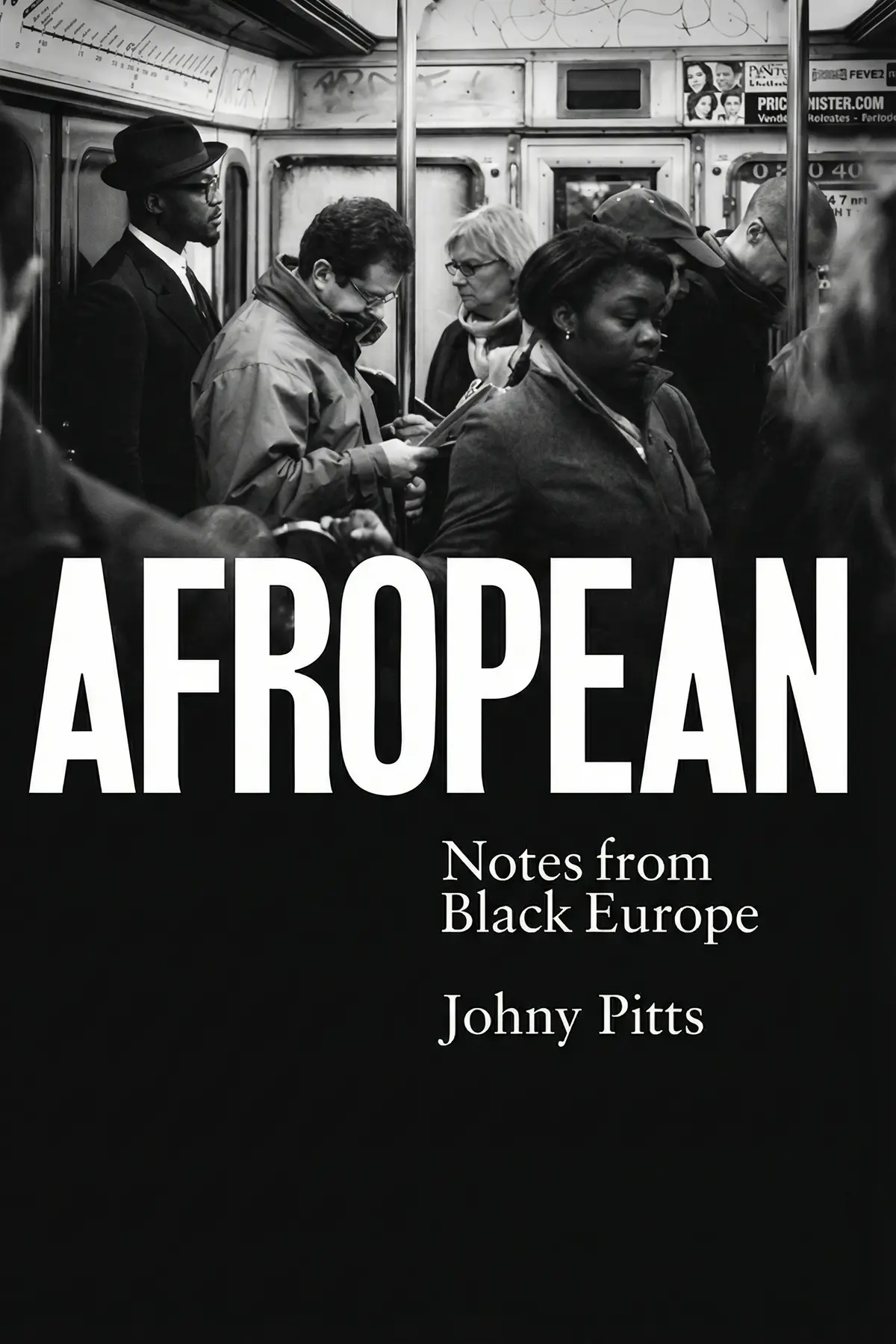
Afropean: Notes From Black Europe
Johny Pitts
All About Love: New Visions
bell hooks
A Guide to the Good Life: The Ancient Art of Stoic Joy
William B. Irvine
A Biography of Loneliness: The History of an Emotion
Fay Bound Alberti
A Little History of Philosophy
Nigel Warburton
A Force for Good: The Dalai Lama's Vision for Our World
Daniel Goleman
AUDIO SUMMARY AVAILABLE
Listen to Saving Time in 15 minutes
Get the key ideas from Saving Time by Jenny Odell, plus 5,000+ more titles in English and Thai.
- 5,000+ titles
- Listen as much as you want
- 7-day free trial
- Cancel anytime







