
16 min 02 sec
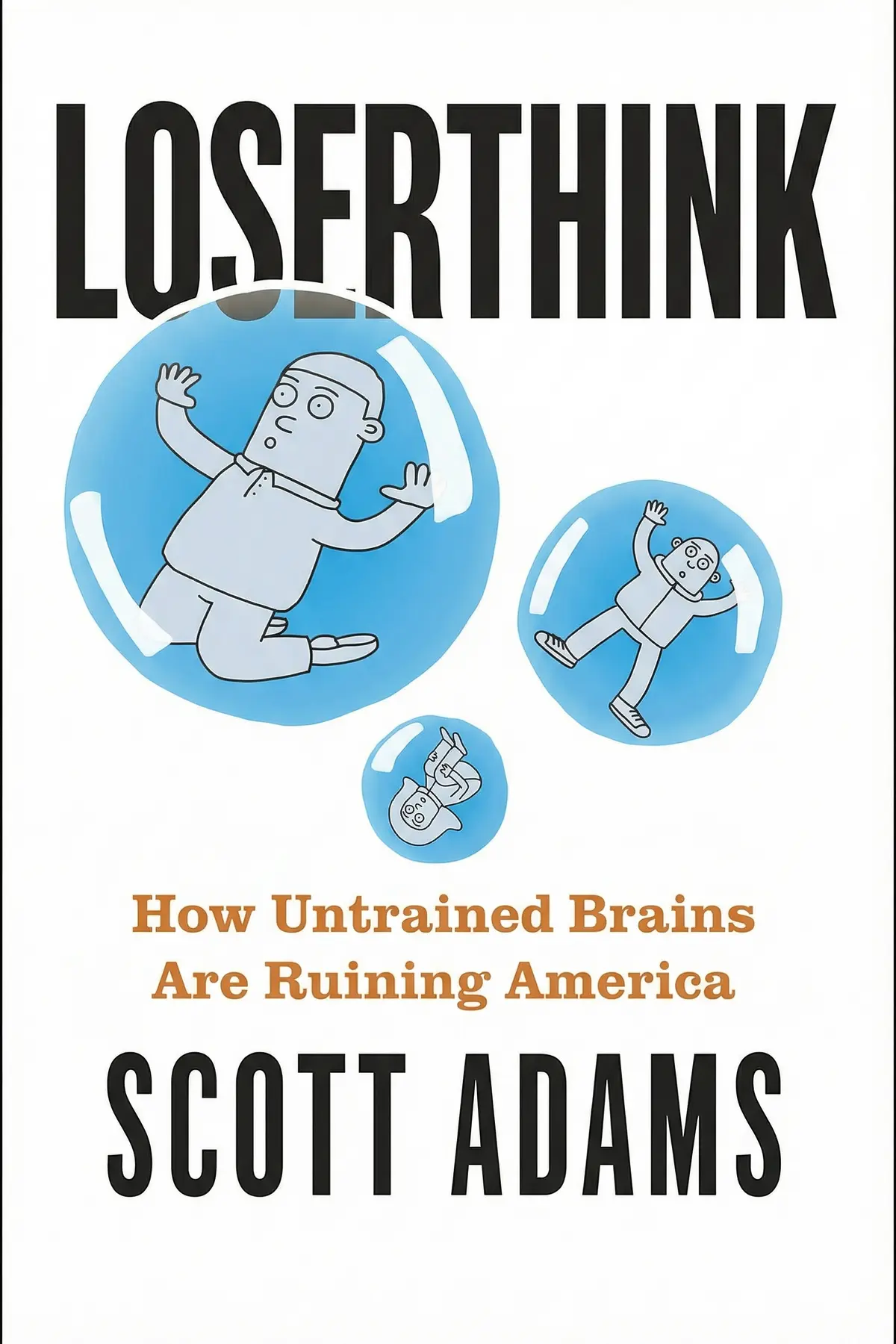
How to Fail at Almost Everything and Still Win Big: Kind of the Story of My Life
By Scott Adams
Scott Adams reveals how to transform frequent failure into massive success by prioritizing daily systems over rigid goals, stacking diverse skills, and managing personal energy like a biological machine.
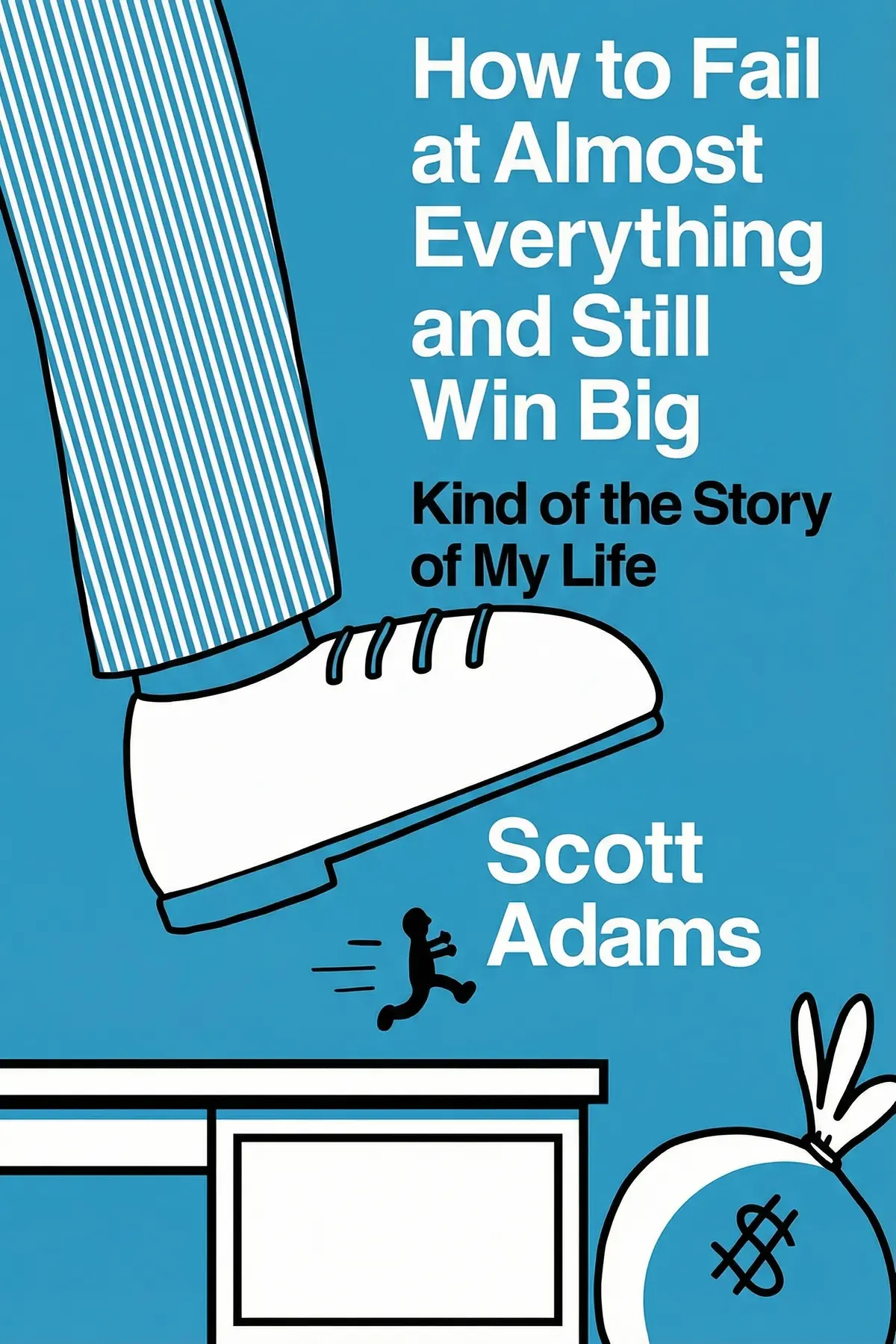
Table of Content
1. Introduction
1 min 46 sec
We live in a culture that is obsessed with the ‘grand prize.’ From a young age, we are told to pick a target, focus all our energy on it, and not stop until we cross the finish line. We’re taught that failure is a shameful detour or a sign that we aren’t cut out for greatness. But what if that perspective is exactly what’s holding you back? What if the most successful people in the world aren’t the ones who set the best goals, but the ones who failed the most intelligently?
In the following pages, we are going to dive into the world of Scott Adams, the creator of the iconic Dilbert comic strip. Adams is a man who admits to failing at almost everything he tried for years. He was fired from corporate jobs, saw his business ventures collapse, and watched his inventions go nowhere. Yet, today he is one of the most successful cartoonists in history. His secret wasn’t a hidden stroke of luck or a sudden burst of genius. Instead, it was a fundamental shift in how he viewed his daily life and his long-term trajectory.
He stopped looking for the ‘one big win’ and started looking at himself as a ‘soft robot’—a biological machine that can be programmed for success through better inputs and smarter habits. This journey will take us through the philosophy of systems versus goals, the power of becoming a multi-talented generalist, and the essential role of physical energy in professional achievement. We will explore why being ‘pretty good’ at five different things is often better than being world-class at one. We will see how failure is actually just a form of tuition you pay for your future success. By the time we finish, you’ll have a completely new toolkit for navigating your career and your life, one that embraces the messy reality of the human experience while keeping you moving toward the big win.
2. Choosing Systems Over Goals
2 min 09 sec
Discover why setting specific targets might be making you feel like a loser and how adopting daily processes can provide consistent wins.
3. The Strategy of the Generalist
2 min 10 sec
Learn how combining multiple ‘good enough’ skills can create a unique competitive advantage that specialists can’t match.
4. Viewing Failure as a Resource
1 min 51 sec
Explore why your past mistakes and crashed projects are actually the building blocks for your future breakthroughs.
5. Managing Your Internal Energy
2 min 02 sec
Discover why maximizing your personal energy is more important than managing your time and how to ‘program’ yourself for success.
6. The Biological Foundation of Success
2 min 08 sec
Learn how the ‘food-is-mood’ hypothesis and simple exercise habits can fundamentally change your professional performance.
7. Social Influence and Useful Delusions
2 min 07 sec
Understand how the people around you shape your reality and how to use ‘affirmations’ to prime your brain for opportunity.
8. Conclusion
1 min 49 sec
As we reach the end of our journey through the unconventional wisdom of Scott Adams, the core message should be clear: success is not about being perfect, and it’s certainly not about never failing. In fact, the road to achieving your biggest wins is almost always paved with the remains of your previous attempts. The difference between those who eventually win big and those who stay stuck isn’t a lack of mistakes; it’s the ability to build a life that can survive and even profit from those mistakes.
By moving away from the rigid trap of goal-setting and embracing the flexibility of daily systems, you liberate yourself from the constant feeling of failure. You start to see yourself as a work in progress, a ‘soft robot’ that can be fine-tuned through better energy management, a diverse skill stack, and a supportive social circle. You realize that you don’t need to be a world-class expert in one thing when you can be a uniquely valuable combination of many things. You understand that your physical health is the engine that drives your career, and that managing your energy is the highest-leverage task you have.
If there is one actionable step you take away today, let it be this: pick one area of your life where you are currently chasing a stressful goal and turn it into a system. If you’re struggling to ‘reach a sales target,’ change your system to ‘making five new connections every morning.’ If you’re trying to ‘get fit,’ change your system to ‘putting on your gym shoes at 5 PM every day.’ Focus on the process, respect your biological needs, and keep your mind open to the lessons that only failure can teach. If you keep your systems running long enough, the wins will eventually take care of themselves. Thank you for listening, and here’s to your next successful failure.
About this book
What is this book about?
Have you ever felt like a failure because you didn't reach a specific milestone? In this summary, we explore a counterintuitive approach to achievement that prioritizes the process over the prize. Scott Adams, the mind behind the Dilbert comic strip, shares his unconventional wisdom on why traditional goal-setting is often a trap and how building personal systems can lead to a more sustainable and successful life. This guide promises to change how you view your career and health. You will learn the importance of becoming a generalist rather than a specialist, the secret to identifying your unique talents by looking at your childhood interests, and how to manage your body’s energy levels to maximize productivity. By reframing failure as a necessary collection of data and skills, you'll discover how to navigate a path to success that doesn't depend on luck alone, but on a strategy of constant improvement.
Book Information
About the Author
Scott Adams
Scott Adams is the world-renowned creator of the Dilbert comic strip, a satirical look at white-collar office life that has appeared in countless newspapers and publications across the globe. Beyond his career as a cartoonist, Adams is an accomplished author of several books, including the New York Times bestseller Win Bigly. His work often blends humor with practical observations on business, psychology, and personal development, drawing from his own varied career history in the corporate world.
Ratings & Reviews
Ratings at a glance
What people think
Listeners find that the book offers significant wisdom and is well worth the investment. They enjoy the prose, with one listener in particular pointing out the author's clever sense of humor.
Top reviews
Sarawut
Scott Adams has a way of cutting through the usual self-help fluff with his signature biting wit. I found the central thesis—that systems are superior to goals—to be a total game-changer for my productivity. Instead of chasing a finish line that leaves you feeling like a failure until you cross it, you build a process that makes you feel successful every time you show up. It’s brilliant. The book isn't all corporate satire, though; he gets surprisingly personal about his struggles with spasmodic dysphonia and how he managed his voice illness. Some of the talk about affirmations and 'the secret' style mental tricks felt a bit woo-woo for a guy who claims to love logic, but I can't argue with his results. If you can handle his ego and some slightly controversial takes on selfishness, there is a goldmine of practical advice here. This isn't just for Dilbert fans; it's for anyone who wants to rethink how they approach their career and health.
Show moreSumalee
This is probably the most practical book on success I’ve encountered, even if the author is a bit of an eccentric character. Adams doesn't offer a step-by-step plan, but rather a set of filters to view the world through. I found his take on 'affirmations' fascinating; even if it is just a psychological trick to keep your mind focused on a goal, who cares if it works? The book is filled with these little nuggets of wisdom that challenge conventional thinking. He argues that passion is bullshit and that success actually creates passion, which is the exact opposite of what every commencement speaker tells you. To be fair, he does wander off into some weird rants about diet and exercise that didn't quite land for me. I’m not sure I’m ready to give up cheese based on a cartoonist’s recommendation. But if you ignore the fringe stuff, the stuff on skill-stacking and simplified systems is pure gold.
Show morePrae
Finally got around to reading this and the value for money is incredible, purely for the shift in mindset it provides. I loved the 'popcorn and socks' analogy for finding patterns in life; it’s a perfect example of his ability to explain complex ideas through humor. Adams doesn't claim to have the truth, just a set of observations that worked for him. The idea that you should always be looking for your next job the moment you start your current one is a great piece of advice that more people need to hear. There are some weird nuggets in here, like his thoughts on humans being holograms or his strange opinions on hypnosis, but they add to the 'mad scientist' vibe of the book. It’s refreshingly different from the usual sanitized business memoirs. If you can handle a bit of arrogance and some unconventional theories, you’ll find a lot of 'big win' potential in these pages. A must-read for entrepreneurs.
Show moreEye
Ever wonder why some people just seem to stumble into success while others grind for years with nothing to show for it? Adams argues it’s about positioning yourself so that luck can find you, which is a refreshing take on the standard 'hard work' narrative. He dives into his own failures—and there were many—to show how each one provided a new skill for his 'stack.' I loved the idea that you don't have to be the best in the world at one thing; you just need to be pretty good at a few things that work well together. The writing style is punchy and conversational, making it a very quick read. I did find the sections on diet and his fear of the fat in cheese a bit odd, especially since he tells you not to take advice from a cartoonist right before giving it. Still, the core message about personal energy being your most important metric is something I’ve already started implementing.
Show moreNong
After hearing about the 'systems vs goals' concept for years, I finally went to the source and I wasn't disappointed. Adams writes with a transparency that is rare in the self-help genre, admitting that he isn't a scientist or a doctor, just a guy who observed what worked. His story about overcoming a career-threatening voice illness was particularly moving and showed a level of persistence that contradicts his 'lazy' persona. I think the most valuable takeaway is the concept of managing your personal energy rather than your time. If you’re energized, you’ll get more done in an hour than a drained person does in a day. Some readers might be put off by his defense of selfishness, but he makes a compelling case that taking care of yourself first allows you to be a better contributor to society later. It’s a pragmatic, slightly cynical, yet ultimately hopeful book. I’d recommend it to anyone feeling stuck in a corporate rut.
Show moreIff
To be fair, you have to take Adams with a grain of salt, but his perspective on capitalism is one of the most honest I've read. He acknowledges the system's flaws while highlighting how it ultimately channels human selfishness into something productive. That kind of bluntness is what makes the book worth reading. He isn't trying to be your friend or a moral guide; he's just sharing the patterns he noticed while failing his way to the top. The 'systems' approach is something I've started using in my own fitness routine, focusing on the daily habit rather than a target weight, and it’s been much less stressful. I did find the chapters on diet to be a bit of a slog, as they felt disconnected from the main theme of the book. Also, his writing style is very much like his comics—minimalist and focused on the core absurdity of life. It’s a quick, entertaining read.
Show moreOn
Gotta say, the chapter on diet and exercise was a bit of a curveball that nearly lost me. I wasn't looking for a lecture on why I should be a vegetarian or avoid certain fats. However, if you can skim past the unsolicited medical advice, the rest of the book is stellar. The concept of 'skill stacking'—where you combine a few mediocre skills to become uniquely valuable—is probably the best career advice I’ve ever received. It’s much more realistic than the 'be the best or nothing' attitude. Adams's wit is on full display here, and his cynicism about corporate culture is as sharp as ever. I appreciated his honesty about how much 'luck' played a role in Dilbert's success, even if he worked hard to be in the right place at the right time. It's a solid four-star book that would have been a five-star one if he'd stayed on topic a bit more.
Show moreJackson
As someone who hates traditional goal-setting, this was a breath of fresh air. Adams confirms what I’ve always felt: that goals are for losers because you’re in a state of continuous failure until you reach them. Systems, however, make you feel good every day. I also liked his admission that everyone is a 'basket case on the inside.' It’s a humbling reminder that even the most successful people are just winging it most of the time. The book is a bit disjointed, jumping from career advice to his personal voice illness to affirmations, but his voice is so engaging that I didn't mind the tangents too much. His take on selfishness being a net benefit to society is controversial, but logically sound in the context he provides. It’s not a perfect book, and some of the 'magic' talk is a bit much, but the core insights are powerful enough to outweigh the eccentricities. Great for a quick flight read.
Show moreUraiwan
Picked this up expecting more Dilbert-style corporate satire, but it’s mostly a memoir-slash-guidebook that veers into some strange territory. I really appreciated the early chapters where he deconstructs the absurdity of the business world, as that’s where his voice shines brightest. However, the book loses momentum when he starts preaching about his specific diet and the 'magic' of affirmations. He spends a lot of time talking about how he kept missing out on promotions due to being a white man, which felt a bit like old grievances surfacing rather than a lesson on failing. It’s a bit of a mixed bag. On one hand, the advice on 'systems over goals' is genuinely life-altering and worth the admission price. On the other hand, you have to sift through a lot of eccentric opinions on capitalism and health to get to the gems. It's a three-star read for me—good, but proceed with a healthy dose of skepticism.
Show moreChatri
The first third of the book feels like one long complaint about the 'diversity ceiling' at his old corporate jobs, which was a bit of a turn-off. I wanted to learn about his systems, not hear about why he didn't get a promotion in 1985. Once he gets past that, the book improves significantly. He discusses the 'The Secret' style magic talk of affirmations with a 'maybe it’s real, maybe it’s not' attitude that is surprisingly honest. It’s clear that Adams has a very high opinion of his own logic, yet he admits that humans are basically 'moist robots' who are easily programmed. The contradiction is part of the charm, I suppose. I found the section on his voice therapy interesting but a bit long-winded for a book that’s supposed to be about general success. In the end, it’s a decent read with a few standout ideas buried under a lot of personal anecdotes and questionable health advice. It's okay, but don't expect a masterpiece.
Show moreReaders also enjoyed
A Guide to the Good Life: The Ancient Art of Stoic Joy
William B. Irvine
A High-Performing Mind: Strengthen Your Mind and Live Your Best Life
Andrew D. Thompson
Abundance: The Inner Path to Wealth
Deepak Chopra
60 Seconds & You’re Hired!
Robin Ryan
AUDIO SUMMARY AVAILABLE
Listen to How to Fail at Almost Everything and Still Win Big in 15 minutes
Get the key ideas from How to Fail at Almost Everything and Still Win Big by Scott Adams, plus 5,000+ more titles in English and Thai.
- 5,000+ titles
- Listen as much as you want
- 7-day free trial
- Cancel anytime







