
16 min 21 sec
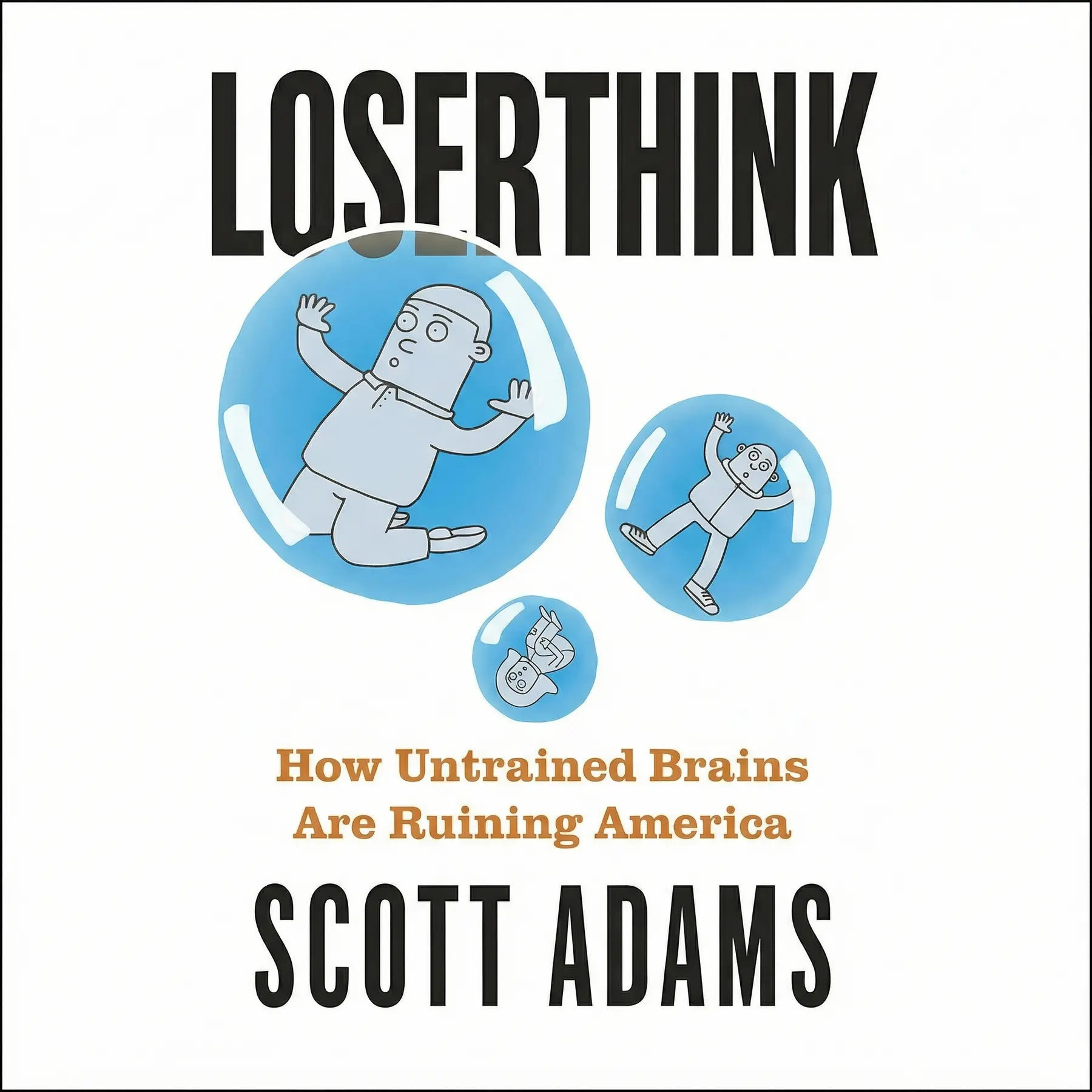
Loserthink: How Untrained Brains Are Ruining America
By Scott Adams
Loserthink explores the mental traps and flawed logic that hinder our success in a digital world. Scott Adams provides a framework for escaping cognitive biases by thinking across multiple disciplines.
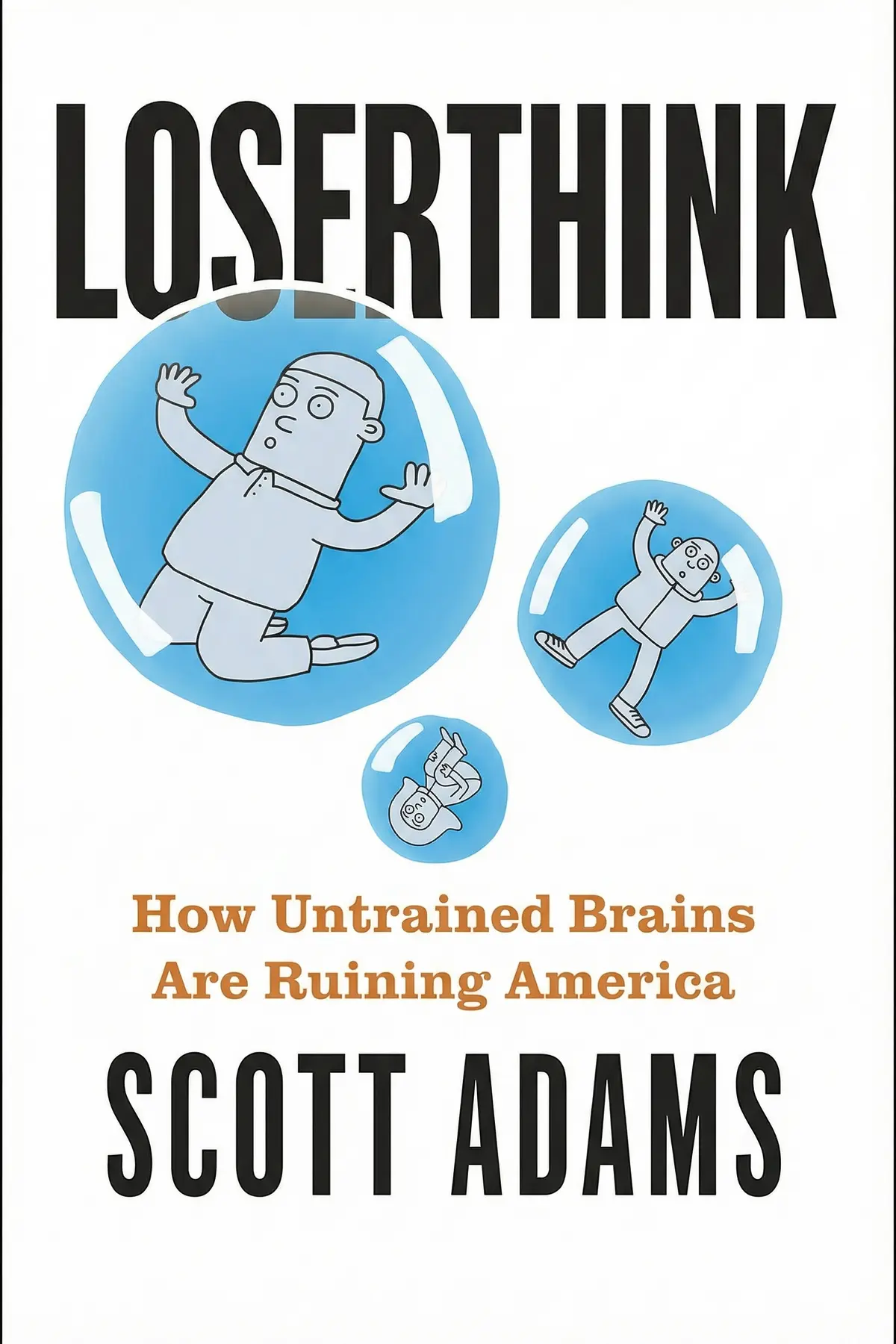
Table of Content
1. Introduction
1 min 32 sec
Imagine waking up every day and realizing that your own brain is working against you. It isn’t that you lack intelligence or experience; it’s that you have been trained, through years of exposure to social media and polarized news, to think in ways that are fundamentally unproductive. This is what the author calls loserthink. It is a mental trap that keeps us stuck in cycles of outrage, ineffective decision-making, and general frustration with the world around us.
In our modern landscape, we are constantly bombarded with ideas that are designed to manipulate our emotions rather than inform our logic. We have the entire world’s information at our fingertips through our smartphones, yet many of us feel more confused and divided than ever before. The problem isn’t a lack of information; it’s a lack of the right mental framework to process that information. We are often trapped within the walls of our own specialized mindsets, unable to see the broader picture.
Throughout this discussion, we are going to explore how to break down those walls. We’ll look at why high intelligence isn’t a shield against bad logic and how people from all walks of life—from CEOs to scientists—can fall into the same cognitive holes. The goal here is to help you broaden your perspective by borrowing the best thinking techniques from various disciplines. By the time we finish, you’ll have a new set of tools to navigate the complexities of the digital age, allowing you to move through life with more clarity, less stress, and a much sharper sense of reality. Let’s dive into how you can start recognizing these mental patterns and begin the process of unlearning the habits that are holding you back.
2. Harnessing the Ego as a Strategic Instrument
3 min 08 sec
Your self-image doesn’t have to be a fixed identity; instead, learn why treating your ego like a adjustable dial can dramatically improve your social and professional performance.
3. The Fallacy of Historical Precedent
1 min 07 sec
Discover why relying too heavily on past events to predict the future is a cognitive trap, and how a biased understanding of history can skew your current perspective.
4. Overcoming Paralysis Through Incremental Progress
2 min 48 sec
When a goal feels too big to start, the secret to momentum lies in a technique used by hypnotists to bypass the brain’s natural resistance to change.
5. The Trap of Mind Reading and the Forty-Eight-Hour Rule
2 min 46 sec
Are you guilty of assuming you know what others are thinking? Learn how to avoid unnecessary conflict by resisting the urge to assign motives to people’s words.
6. Breaking Free from Manufactured Doom
2 min 58 sec
The world often feels like it’s falling apart, but that perspective is frequently the result of biased media. Here is why the future might be much brighter than your feed suggests.
7. Conclusion
2 min 02 sec
As we wrap up our journey through the landscape of productive thinking, it’s important to remember that avoiding loserthink isn’t a one-time event. It is a continuous practice of self-awareness and mental flexibility. We live in a world that is designed to pull us into narrow, biased ways of seeing reality. Whether it’s through the strategic use of our ego, a more critical view of history, or the discipline of taking microsteps, we have the power to break free from these cognitive prisons.
One of the most powerful takeaways is the importance of setting your own priorities. A common mental trap is failing to realize that your own well-being is the foundation for everything else you want to achieve. The author suggests that your primary focus should always be on maintaining your health and managing your stress. When you are physically and mentally sound, you have the clarity and energy needed to help your family, your community, and your career. If you are stuck in a situation that is constantly draining you—like a toxic job or a stressful social circle—the most rational thing you can do is find a way to exit that situation as quickly as possible. You cannot think clearly if you are constantly in survival mode.
By diversifying your mental toolkit and refusing to be drawn into the manufactured outrage of the digital age, you can start to see the world as it really is, rather than how others want you to perceive it. Remember to look for the nuances, wait for the facts to emerge, and always be willing to pivot when the evidence changes.
The path to success isn’t about having all the right answers from the start; it’s about having the right process for finding them. As you move forward, keep a watchful eye on your own thoughts. When you catch yourself falling into an old pattern of bias or procrastination, simply take a microstep in a new direction. With practice, these small changes will lead to a more rational, successful, and fulfilling life. Thank you for joining us on this deep dive into the mechanics of the human mind.
About this book
What is this book about?
Have you ever wondered why even highly intelligent people often make nonsensical decisions or get trapped in circular arguments? In this exploration of modern psychology and logic, the author introduces the concept of loserthink—a set of unproductive mental habits and cognitive biases that cloud our judgment. We are living in an era defined by social media echo chambers and constant information overload, making it easier than ever to fall into these mental prisons. This summary promises to equip you with the mental tools necessary to recognize these traps in yourself and others. By borrowing perspectives from various fields—like hypnotism, business, and even cartooning—you can learn to view problems through a clearer lens. You will discover how to manage your ego as a strategic asset, why your understanding of history might be holding you back, and how to approach massive life changes through the power of incremental progress. Ultimately, it provides a roadmap for more rational, objective, and successful thinking in every area of life.
Book Information
About the Author
Scott Adams
Scott Adams is the creator of the iconic Dilbert comic strip, which has provided a satirical look at office culture for decades. Beyond his work as a cartoonist, he is a trained hypnotist and a successful entrepreneur, having co-founded the online platform WhenHub. Adams is also a prolific nonfiction author, with several best-selling books to his name, including The Dilbert Principle, Win Bigly, and How to Fail at Almost Everything and Still Win Big.
Ratings & Reviews
Ratings at a glance
What people think
Listeners consider this work an essential read that offers significant wisdom regarding the human psyche and presents alternative viewpoints on cognitive habits. The prose is skillfully written, and listeners enjoy the entertaining delivery, with one listener mentioning how the content assists in identifying defects in their personal logic. Listeners view the book as exceptionally practical and deserving of several readings, while one review points out its empathetic tone.
Top reviews
Chatchai
Ever wonder why you get stuck in the same mental ruts day after day? Scott Adams provides a masterclass in identifying the cognitive traps that keep us from seeing reality clearly. I found his breakdown of different professional filters—like how an engineer sees the world versus an artist—to be incredibly illuminating for my own career growth. Truth is, most of us are walking around with 'loserthink' without even realizing it. The book is written in a breezy, conversational style that makes it an easy weekend read, yet the lessons stick with you long after you put it down. While he does reference his own success quite a bit, the compassionate way he explains human error makes it feel more like a mentorship than a lecture. It really helped me uncover some glaring flaws in my own decision-making processes. This is a must-read for anyone looking to sharpen their mental toolkit and understand the human mind better.
Show moreSelin
Wow, this was a surprisingly deep dive into how our own brains betray us. I wasn’t sure what to expect given the polarizing title, but the content is actually quite empathetic and helpful. Adams focuses on mental models from various disciplines—psychology, economics, and history—to show us where our logic breaks down. The chapter on not judging a group by its worst five percent should be required reading for anyone with an internet connection. Frankly, it’s one of the most useful books I’ve picked up this year for understanding the 'why' behind our cultural madness. It helped me realize how often I rely on anecdotes rather than actual data. Even with the occasional political leanings, the overall message of intellectual humility is powerful. This is a book I’ll likely return to when I feel myself getting too certain about my own worldview.
Show moreGrace
Scott Adams has a way of stripping down complex psychology into something you can actually use while drinking your morning coffee. This isn't your typical academic textbook filled with dry citations and dense jargon; it's more like a guide for surviving social media. I particularly appreciated the advice on avoiding 'halfpinions'—those arguments where people only look at the costs or the benefits without seeing the whole picture. Some parts of the book felt a little repetitive, as if he was trying to meet a word count requirement. To be fair, you have to look past the political commentary if that’s not your thing. If you can do that, you’ll find some genuinely valuable insights into how our minds are easily manipulated by propaganda and ego. It’s an entertaining read that offers a unique perspective on modern discourse that I haven't found elsewhere.
Show moreVipawan
As someone who struggles with overthinking other people's motives, the chapters on 'mind reading' were a total wake-up call. We all think we know what someone else is thinking, but Adams correctly points out that this is a total hallucination. The book offers practical thinking strategies to avoid these traps, framed in a way that is both entertaining and easy to digest. I did find some of his examples, like the bits about moving for employment, to be a little detached from how most people actually live. He writes like a pure rationalist, which sometimes misses the affective need for relationship and community. However, his advice on using your ego as a tool rather than an identity is pure gold. It’s a well-crafted guide for anyone wanting to escape the constant noise of social media outrage. A solid, useful addition to the self-help genre.
Show moreChloe
The section on engineering mindsets vs. artistic mindsets changed how I approach my daily problem-solving at the office. Adams argues that we are often trapped in one way of thinking, but the most successful people can swap 'hats' depending on the situation. I found this perspective incredibly refreshing. The book isn't perfect; the style is very 'Twitter-esque' with short, punchy sentences that can feel a bit choppy over long periods. Also, the political examples might annoy readers who are tired of the current news cycle. But the core advice on avoiding coincidences and confirmation bias is incredibly timely. It’s a fast read that provides plenty of food for thought for anyone interested in human behavior. I especially liked the 'magic question' for de-escalating arguments. It’s a practical tool that I’ve already tried out with some success in my personal life.
Show moreOn
Finally got around to finishing this, and while the core message is vital, the delivery is occasionally clunky. The book covers a lot of ground—from economics to history—but it never stays in one place long enough to provide real depth. It’s very much a 'social media' style book, designed for quick consumption rather than deep contemplation. Personally, I think the title 'Loserthink' is a bit aggressive, but the content is worth a good, solid scan for the golden nuggets hidden inside.
Show moreAubrey
Frankly, we live in an era where everyone is trapped in an echo chamber, and this book offers a decent ladder out. It’s an entertaining look at the mental prisons we build for ourselves through poor logic and emotional reactions. I appreciated how Adams breaks down complex ideas like Occam’s Razor and shows how they are often misused in everyday arguments. The writing is snappy and keeps you moving, which I appreciate in a non-fiction book that could have easily been dry. I did roll my eyes at a few of the personal anecdotes, as they felt a little self-congratulatory. However, the overall utility of the book outweighs the author's ego. It provides a compassionate way to look at why other people think the way they do, which is rare these days. It’s a valuable resource for anyone wanting to improve their mental clarity and decision-making.
Show moreTun
Picked this up after seeing some of the author’s Twitter rants, and it is honestly a bit of a mixed bag. On one hand, the sections on logical fallacies and the danger of 'mind reading' are incredibly relevant in today's polarized climate. On the other hand, the writing is so simplistic that it occasionally feels like it was written for a middle-school audience. Not gonna lie, the constant self-plugging of his other products and successes got a bit grating after the third chapter. He takes a handful of really great concepts that probably could have been a long-form essay and stretches them into a 200-page book. It’s decent 'brain chewing gum' for when you have a few minutes to kill, but don’t expect a deep academic study. It's a useful enough primer for beginners, though seasoned readers of psychology might find it a bit shallow.
Show moreSirinat
After hearing the author discuss these concepts on a podcast, I was excited to dive into the full text. The book is definitely an easy read, perfect for the 'in-between' moments of a busy day. Some of the advice is genuinely transformative, especially the bits about not letting the past influence your current utility. But the truth is, the book lacks the rigor I was hoping for. It’s filled with 'halfpinions' and a lot of anecdotal evidence that doesn't always hold up to scrutiny. Adams has a very optimistic view of the future that doesn't account for things like addiction or community ties. It’s a decent starter book for building wisdom, but it feels a bit like 'brain chewing gum'—flavorful at first, but it loses its substance quickly.
Show moreSamira
Look, I wanted to like this, but the constant self-promotion felt like I was reading a 200-page advertisement for Dilbert. The author spends way too much time talking about his own predictions and successes instead of sticking to the actual science of thinking. Many of the 'strategies' are just common sense packaged as revolutionary new ideas. Truth is, it feels like a collection of blog posts stitched together without much concern for structure. This one is heading straight for the burn pile.
Show moreReaders also enjoyed

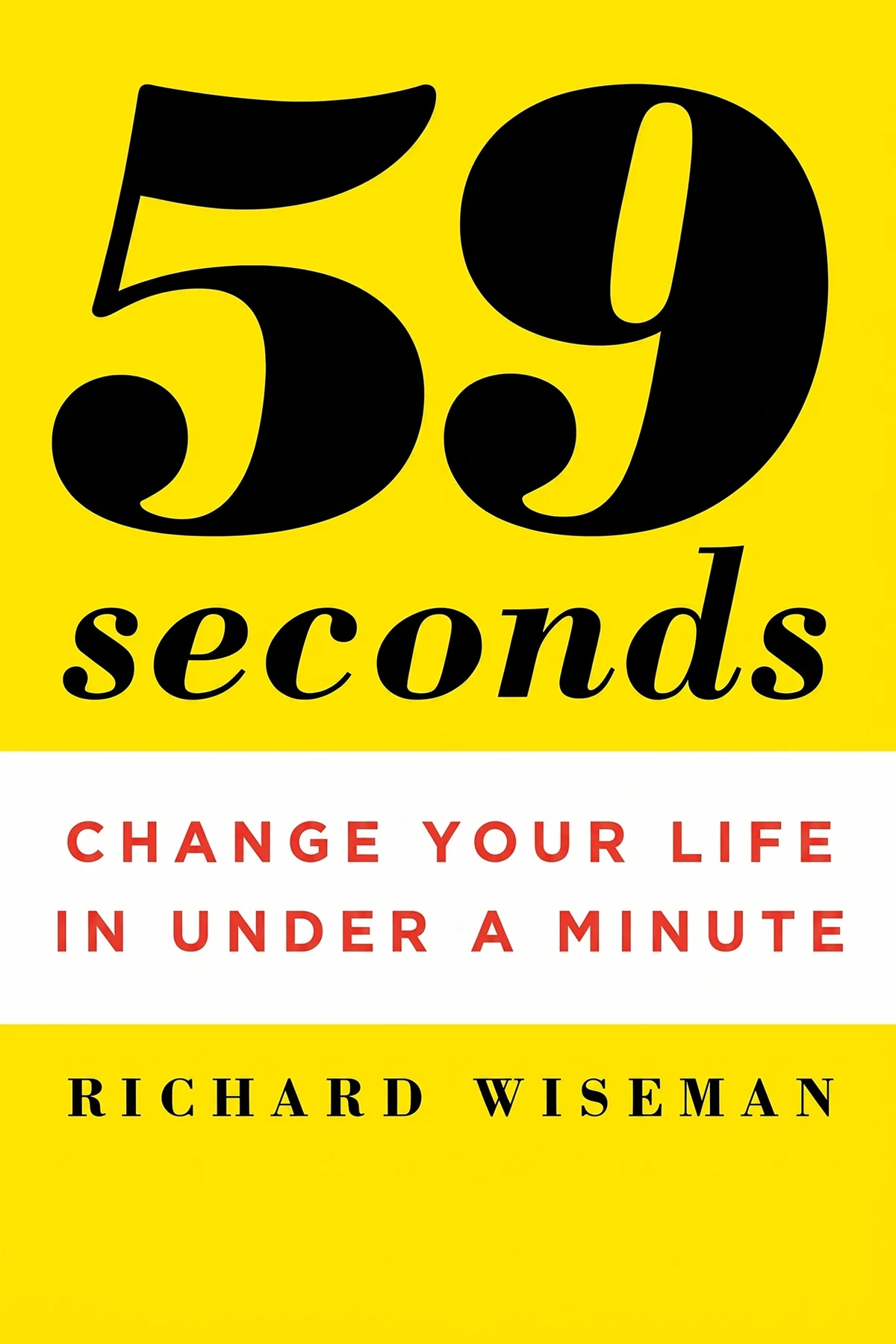
59 Seconds: Change Your Life in Under a Minute
Richard Wiseman


A Liberated Mind: How to Pivot Toward What Matters
Steven C. Hayes
Acting with Power: Why We Are More Powerful Than We Believe
Deborah Gruenfeld
Age of Propaganda: The Everyday Use and Abuse of Persuasion
Anthony Pratkanis
AUDIO SUMMARY AVAILABLE
Listen to Loserthink in 15 minutes
Get the key ideas from Loserthink by Scott Adams, plus 5,000+ more titles in English and Thai.
- 5,000+ titles
- Listen as much as you want
- 7-day free trial
- Cancel anytime







