
14 min 34 sec
How to Fly a Horse: The Secret History of Creation, Invention and Discovery
By Kevin Ashton
Discover why the myth of the lone genius is false. This guide reveals that creativity is a universal, iterative process fueled by persistence, ordinary thinking, and building upon the work of others.
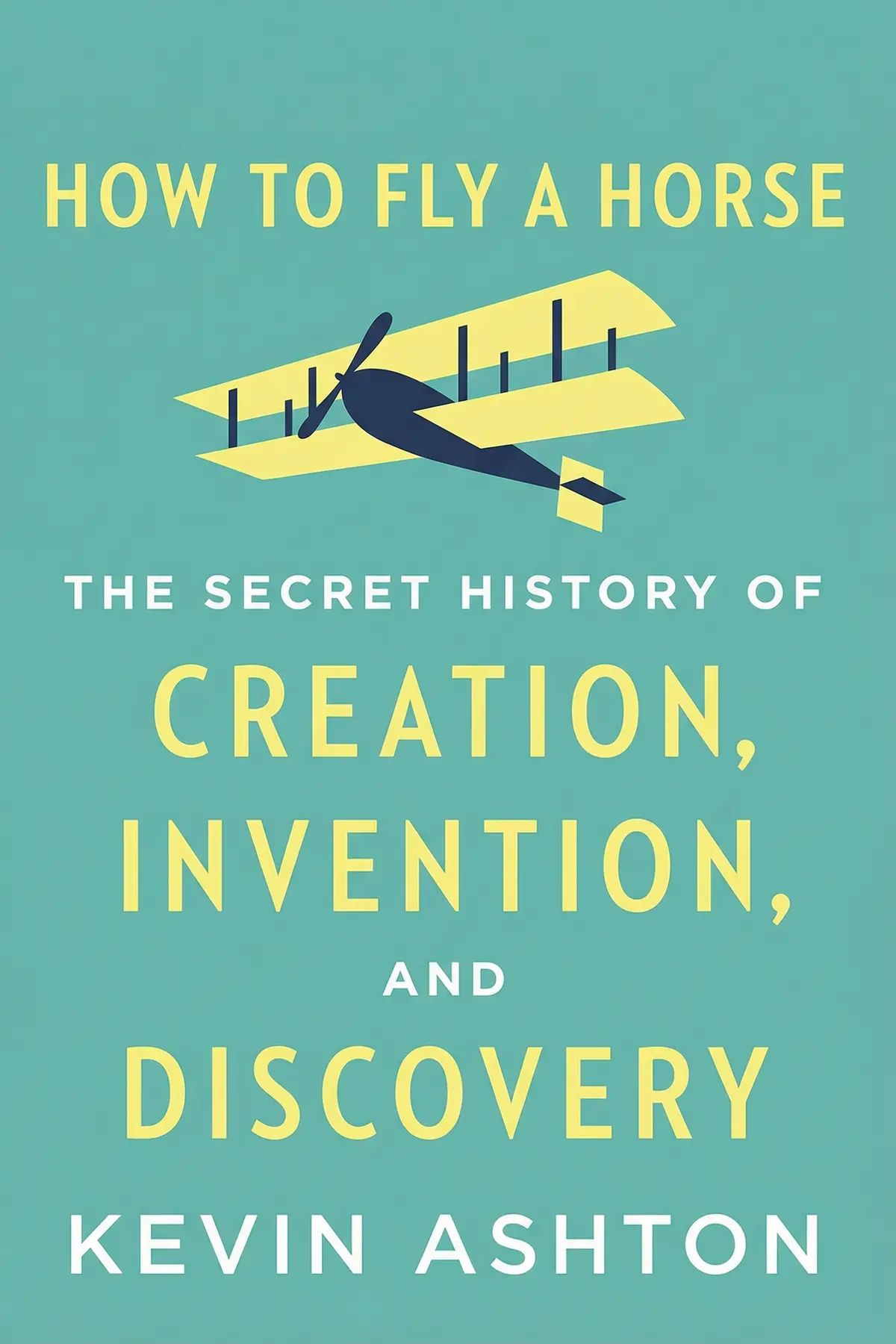
Table of Content
1. Introduction
1 min 45 sec
When we look at a masterpiece in a museum or hold a revolutionary piece of technology in our hands, our first instinct is often to marvel at the ‘genius’ behind it. We tell ourselves stories about legendary figures who possessed a spark of divine inspiration that the rest of us simply lack. We imagine Mozart receiving entire symphonies from the heavens or inventors being struck by lightning-bolt insights that changed the world overnight. But what if those stories are actually holding us back? What if the idea of the ‘lone genius’ is one of the most damaging myths of the modern era?
In this exploration of the secret history of creation, we are going to pull back the curtain on how things are actually made. We will move past the romanticized legends and look at the gritty reality of the creative process. You will see that innovation isn’t about being special; it’s about being persistent. It isn’t about a single moment of clarity; it’s about a million moments of trial and error.
The throughline of our journey today is simple: creativity is a fundamental human trait, a natural urge that lives within all of us. By understanding that every great invention is built on a foundation of previous failures and forgotten contributors, we can demystify the act of making. We’ll look at how a young boy in the nineteenth century solved a botanical mystery that stumped experts, how the most famous smartphone in history was actually built through tiny, annoying questions, and why the most important word in any creative team is ‘show.’ By the end of this summary, you’ll realize that you don’t need a special brain to innovate—you just need the willingness to start thinking, working, and failing.
2. The Myth of the Creative Genius
2 min 22 sec
Think genius is a rare gift? Discover why the ‘Eureka’ moment is often a misunderstanding of how the human brain actually solves complex problems through ordinary thought.
3. Innovation as a Continuous Chain
2 min 12 sec
No idea is truly original. Learn how every breakthrough relies on a vast, hidden history of previous contributors and how one discovery inevitably leads to the next.
4. The Power of Small, Iterative Steps
2 min 15 sec
Great inventions don’t happen in giant leaps. Explore how the iPhone was born from a series of tiny questions and why ‘not seeing’ is your biggest creative hurdle.
5. Work, Failure, and the Necessity of Routine
2 min 16 sec
Forget waiting for the muse. Discover why the world’s most creative people rely on boring routines and why failing is the most valuable data you can collect.
6. The Dynamics of Creative Collaboration
2 min 24 sec
Why do small teams beat large corporations? Learn the ‘Show Me’ rule that turns disagreements into breakthroughs and why isolation can be a creative’s best friend.
7. Conclusion
1 min 20 sec
As we wrap up our journey through the history of creation, the most important takeaway is a change in perspective. You should no longer look at the world of invention and art as a walled garden reserved for the ‘geniuses’ of history. Instead, see it as a vast, open landscape that is waiting for your contribution.
We’ve seen that the creative process isn’t a mystery; it is a labor-intensive, iterative, and deeply human activity. It is about taking the tools and knowledge handed down by previous generations and applying them to the problems of today. It is about having the discipline of a Stravinsky to show up every day and the resilience of a Stephen King to throw away what doesn’t work.
Here is your actionable closing thought: Never assume an idea is too ‘wacky’ or ‘out there’ to be valuable. Many of the most significant breakthroughs in history were initially laughed at or dismissed as impossible. If you have an idea that feels strange, treat it as a signal that you might be looking at something everyone else has missed. Don’t wait for permission and don’t wait for a ‘Eureka’ moment. Just start. Pick a problem, take a small step toward solving it, and when you fail, use that failure to take the next step. The secret to flying a horse, or doing anything else that seems impossible, is simply to never stop trying to figure out how.
About this book
What is this book about?
Have you ever felt that creativity is a rare gift reserved for the likes of Mozart or Steve Jobs? This exploration into the history of invention suggests otherwise. It argues that what we call genius is actually the result of a very normal, human process of problem-solving that anyone can master. By deconstructing the romanticized myths of 'Eureka' moments, the book shows that every great breakthrough is actually the final link in a long chain of small, incremental improvements. You will learn how world-changing discoveries often come from ordinary people who simply refused to give up when faced with failure. The book provides a roadmap for unleashing your own creative potential by focusing on hard work, resisting the fear of rejection, and fostering environments where new ideas are demonstrated rather than just discussed. It is a call to action for anyone who wants to contribute something new to the world, proving that the secret to innovation isn't magic—it’s labor.
Book Information
About the Author
Kevin Ashton
Kevin Ashton is a visionary technologist and the co-founder of the Auto-ID Center at the Massachusetts Institute of Technology. He is widely recognized for originating the term “Internet of Things” to describe a global network of connected objects. Beyond his academic contributions, Ashton has successfully led various technology start-ups and conducted unique social experiments, establishing himself as a prominent voice on the intersections of innovation and modern society.
Ratings & Reviews
Ratings at a glance
What people think
Listeners find the book an enjoyable and immersive experience, filled with valuable insights that help clarify fresh ideas. They value the impressive sampling of creative history and its ability to inspire, with one listener noting how it encourages people to go out and create. The storytelling quality is well-regarded; one listener describes it as a pleasant gathering of historical anecdotes. However, opinions are divided regarding the book's pacing and writing approach.
Top reviews
Samuel
Finally got around to reading Ashton's take on innovation, and it was a breath of fresh air. Instead of the usual "you're born with it" nonsense, the book treats creativity as a gritty, daily labor that anyone can master if they have the stamina. I was particularly struck by the story of Edmond Albius, the enslaved boy who revolutionized vanilla pollination. It serves as a powerful reminder that genius often flourishes in the most unexpected places despite massive obstacles. While the writing occasionally veers into the melodramatic, the underlying message is incredibly empowering for anyone stuck in a rut. You won’t find a step-by-step manual here, but you will find the motivation to stop waiting for a lightning bolt of inspiration. It’s a beautifully curated collection of historical triumphs that makes the impossible feel attainable through sheer persistence.
Show moreNit
As someone who always felt like I lacked the "creative gene," reading this felt like a massive weight being lifted off my shoulders. Ashton argues that creating is a fundamental human trait, like walking or talking, and that we’ve been lied to about the nature of genius. The way he breaks down the myth of the lone inventor is brilliant and much needed in our current celebrity-obsessed culture. Not gonna lie, I got a little emotional reading about the collective efforts of billions of people that brought us into the modern age. It’s an incredibly optimistic book that encourages you to just start doing the work instead of waiting for the perfect idea to strike. The chapter on organizational rituals was also eye-opening for my own professional life. This is the kind of book you want to buy for your friends who are afraid to chase their dreams.
Show moreYanin
Rarely do I find a non-fiction book that is this entertaining while still providing a deep dive into the history of human progress. From vanilla pollination to the intricacies of computer chips, Ashton shows us that the world is built on billions of tiny, creative acts. The book is an empowering revelation that reminds us that our primary niche as a species is "the niche of the new." I loved how he tackled the myth of Mozart and showed the grueling work that actually went into those compositions. It’s a beautiful, well-researched piece of writing that makes you want to go out and build something immediately. While it might be a bit optimistic for some, I think we need more books that celebrate the collective potential of the human race. It’s an essential addition to any library focused on innovation and the history of ideas.
Show moreNuk
The core thesis here is simple but effective: creativity is the result of hard work, not a high IQ or some mystical "eureka" moment. Ashton methodically dismantles the myths surrounding figures like Mozart, proving that even the greats were just people who worked harder than everyone else. I appreciated the deep dive into research showing that IQ and creative output are largely uncorrelated. To be fair, the book can feel a bit repetitive by the middle chapters as he hammers home the same point using different anecdotes. The comparison to Woody Allen’s prolific work schedule was a highlight for me because it grounds the abstract concept of "art" in reality. If you can ignore some of the more flowery prose, there is a wealth of practical wisdom buried in these pages. It’s a solid read for anyone trying to understand the actual mechanics of how new things are made.
Show moreEleni
Kevin Ashton delivers a compelling argument against the cult of the "creative genius" by focusing on the mundane reality of trial and error. His account of the Wright brothers and the "Skunk Works" team at Lockheed Martin illustrates how small, dedicated groups can outperform massive bureaucracies. I found the discussion about how organizations naturally resist new ideas to be particularly poignant and relatable for anyone working in a corporate environment. One minor gripe is that he occasionally dismisses the value of planning a bit too aggressively, which might not sit well with everyone. Still, the stories are so well-researched and engaging that it’s easy to overlook the occasional hyperbole. It’s a great companion piece to books like "Linchpin" or "On Writing" because it emphasizes the "doing" over the "dreaming." This is definitely a book I’ll be returning to when I need a kick in the pants.
Show moreBank
Picked this up on a whim after seeing the TED talk, and it’s a nice collection of historical stories that keep you moving through the pages. The author has a knack for finding "secret histories" that illustrate how modern life was built by the many, not just the few. I loved the section on the creation of Coca-Cola and how it tied back to the broader theme of incremental improvement. In my experience, some of the digressions felt a bit random and didn't always support the main point as strongly as they could have. However, the overall message that we should all "create anyway" despite the inevitable rejection is a powerful one. It’s a very quick read due to the engaging prose, though it lacks the academic rigour some might be looking for. Perfect for a weekend read if you’re looking for a boost in confidence.
Show moreChanpen
The chapter on workplace rituals and how they stifle or encourage innovation was worth the price of the book alone. Ashton explains that the transactions between individuals in a group are what truly determine the creative output of an organization. It’s a refreshing take that moves away from the "hero" narrative and looks at the systems we inhabit every day. I did feel that his disdain for meetings and planning was a little over the top, as some projects literally cannot function without them. Still, his point about "satisficers" versus those with the drive to weather negative feedback was incredibly insightful. The book encourages you to be the person who pushes through the "no" to get to the "yes." It’s a motivating, if slightly flawed, exploration of why we make things and why we should keep doing it.
Show moreSing
Truth is, I used to believe in the "lightbulb" moment until this book methodically took that belief apart piece by piece. The story of the painter who iterated thousands of times before reaching a masterpiece really stuck with me because it highlights the necessity of failure. Ashton's writing is energetic and fast-paced, which makes the historical data feel much more accessible than your average textbook. I appreciated how he addressed the fact that most people reject new ideas initially, helping me understand why my own suggestions are sometimes met with resistance. There were a few moments where the narrative felt a bit disjointed, jumping from South Park to the discovery of DNA in a way that felt slightly jarring. Overall, it’s a very persuasive argument for the power of persistence over talent. It’s a must-read for anyone who feels stuck in their creative process.
Show moreNina
Ever wonder why some business books feel like a twenty-minute presentation stretched into three hundred pages? This book has some truly fascinating historical accounts, such as the discovery of DNA and the treatment of Rosalind Franklin, but the pacing is uneven. I found myself skimming through the latter half because the "effort equals creativity" argument started to feel like a broken record. Frankly, it’s a bit of a jumble that tries to be a history book and a motivational guide at the same time without fully committing to either. The section on South Park’s production was fun, yet it felt slightly disconnected from the more serious historical analysis found in earlier chapters. It’s not a bad book, but it definitely could have been trimmed down to be more impactful. If you enjoy Gladwell-style storytelling, you’ll probably like it, but don't expect a revolutionary roadmap.
Show moreVilaiporn
Look, I wanted to like this more, but it often felt like a series of repetitive anecdotes masquerading as deep sociological insight. The author repeatedly claims that anyone can be creative, but he completely ignores how factors like class and race impact a person's ability to actually manifest that creativity. Telling someone that "lack of time is just an excuse" feels incredibly tone-deaf when you consider the economic realities most people face daily. His mention of Rosalind Franklin felt like a hollow attempt at inclusivity, especially since he then minimizes her struggle by saying she'd just be happy to know her work helped people. The writing is also quite melodramatic, using literary cliches that made it hard for me to take the research seriously. It’s basically pop psychology that prioritizes "vibe" over a nuanced understanding of the creative process. If you’ve read any other popular business books lately, you’ve heard these arguments before.
Show moreReaders also enjoyed
AUDIO SUMMARY AVAILABLE
Listen to How to Fly a Horse in 15 minutes
Get the key ideas from How to Fly a Horse by Kevin Ashton, plus 5,000+ more titles in English and Thai.
- 5,000+ titles
- Listen as much as you want
- 7-day free trial
- Cancel anytime







