

A Bigger Prize: How We Can Do Better Than the Competition
Margaret Heffernan
Explore the nuanced strategies required to manage high-performing professionals. This guide reveals how emotional intelligence, active listening, and collaborative visioning can transform a group of individual experts into a cohesive, high-impact team.
1 min 54 sec
Imagine standing in front of a room filled with people who are, by any objective measure, geniuses. They are experts in their fields, they have years of specialized training, and quite frankly, they aren’t always convinced that they need a manager at all. This is the central dilemma of modern leadership in the professional world. When your team is composed of high-achievers and ‘smart’ people, the old-fashioned ‘command and control’ style of management doesn’t just fail—it backfires.
In these environments, leadership is less about giving orders and more about orchestrating talent. It’s about understanding the unique psychology of the high-performer. These individuals value autonomy, they crave intellectual stimulation, and they have a very low tolerance for anything they perceive as inefficient or insincere. To lead them effectively, you have to transition from being a technical expert to being a ‘smart leader.’
This isn’t just about a change in title; it’s a fundamental shift in how you communicate, how you make decisions, and how you view your own role within the organization. Over the course of this summary, we will explore the specific behaviors that distinguish successful leaders of experts from those who struggle to keep their teams together. We’ll look at real-world scenarios—from high-stakes law firms to international consultancies—to see how tools like assertive communication, active listening, and strategic delegation can turn a group of siloed experts into a powerful, unified force.
The throughline here is simple: leading smart people requires you to be human, humble, and highly strategic. It’s about creating an environment where your team feels heard and challenged, while you maintain the steady hand needed to guide the ship. By the end of this journey, you’ll have a roadmap for navigating the complexities of modern professional leadership, ensuring that your sharpest minds are also your most engaged and loyal assets.
2 min 08 sec
Discover how to maintain your boundaries and authority without resorting to aggression, even when dealing with demanding or manipulative colleagues.
2 min 10 sec
Uncover why simply hearing your team isn’t enough and how active listening techniques can solve complex organizational problems.
2 min 00 sec
Learn how to escape the ‘competence trap’ where your own skills prevent your team from reaching their full potential.
1 min 51 sec
Explore how to balance the need for expert input with the necessity of making timely, effective choices in a high-stakes environment.
2 min 13 sec
Understand how to adapt your leadership style to thrive in a globalized, multicultural workplace where ‘common sense’ is often culturally dependent.
1 min 58 sec
Learn why the most successful leaders never stop being students and how they leverage the knowledge of both seniors and juniors.
1 min 45 sec
Discover why smart people resist dictated goals and how to involve them in crafting a future they will be excited to build.
1 min 50 sec
In the world of high-performance professional services, the definition of a ‘boss’ has changed. It is no longer enough to be the person with the most experience or the biggest office. To lead smart people, you must become a facilitator of excellence. We have seen how this requires a delicate balance of diverse skills. You must be assertive enough to protect your team’s boundaries and your own, yet humble enough to listen—truly listen—to the perspectives of others.
You must be willing to let go of the reins and delegate, trusting that your team’s growth is the only way to ensure your own long-term success. You must navigate the complex waters of global culture, recognizing that respect is earned differently in different parts of the world. And perhaps most importantly, you must be a perpetual student, seeking out mentors who can challenge you and juniors who can teach you the things you don’t yet know.
One final piece of advice to carry with you is the importance of praise. Smart people are often their own harshest critics, and in high-pressure environments, the focus is almost always on what went wrong. A smart leader consciously tips the scales. Try to maintain a ratio of five positive acknowledgments for every one piece of critical feedback. This isn’t about empty flattery; it’s about recognizing specific instances of excellence. When you make a habit of noticing when things go right, you create a culture of appreciation that fuels even higher levels of performance.
Leading smart people is a journey of continuous adaptation. It’s about moving from a mindset of ‘I know’ to a mindset of ‘We can.’ By applying these principles, you won’t just be managing a group of individuals; you’ll be leading a powerhouse of collective intelligence, ready to tackle the most complex challenges of the modern age.
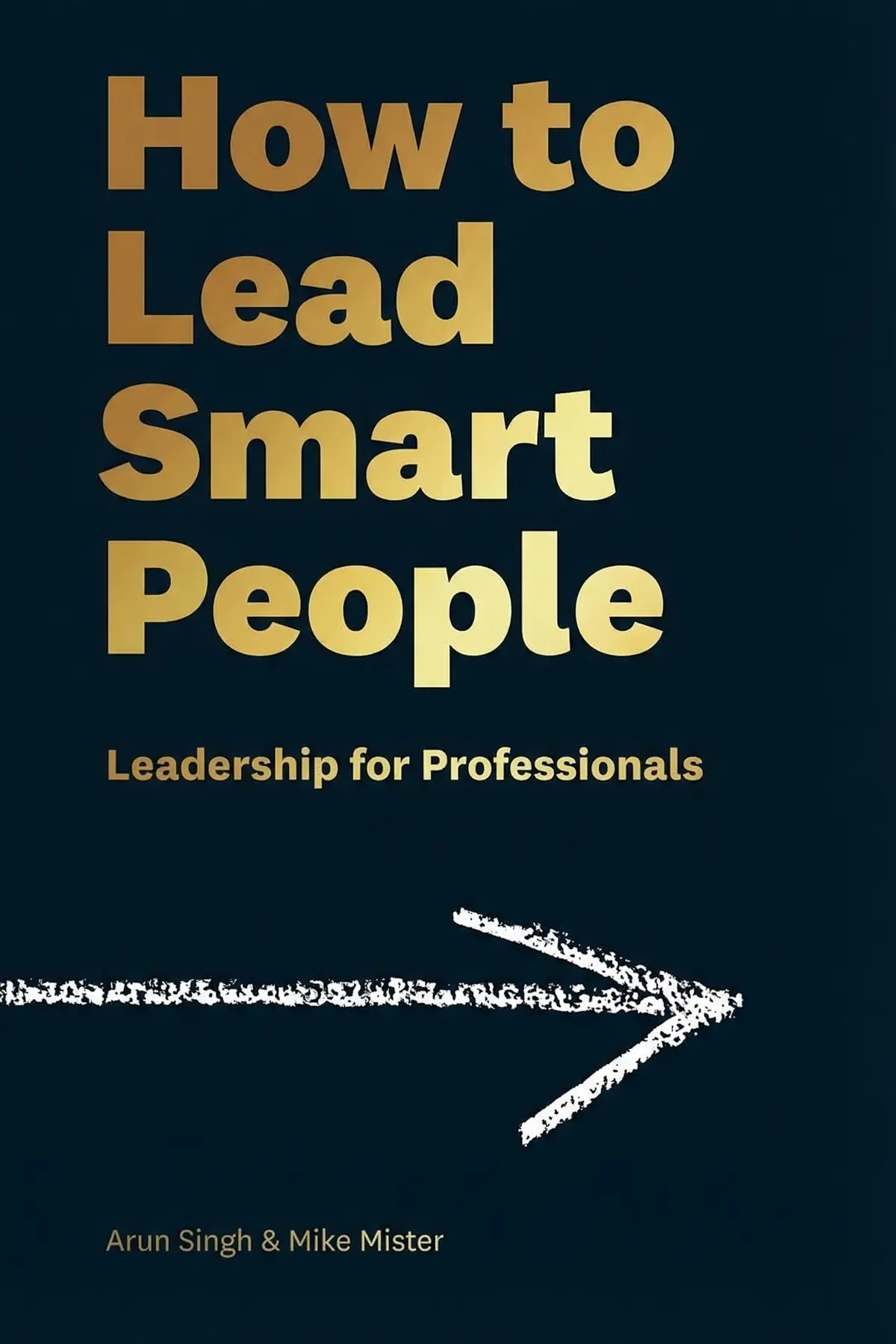
Leading experts, intellectuals, and high-performers presents a unique set of challenges that traditional management styles often fail to address. How to Lead Smart People explores the specific dynamics of the professional services world and beyond, where your subordinates might be just as knowledgeable—or even more so—than you are. The book promises to bridge the gap between technical expertise and leadership mastery by providing a toolkit of soft skills designed for high-stakes environments. Through a series of relatable archetypes and case studies, the authors illustrate how to navigate the ego, the need for autonomy, and the complexities of global business. You will learn how to maintain authority without being aggressive, how to build trust through conscious listening, and how to delegate tasks in a way that fuels professional growth rather than resentment. The core promise is simple: by shifting your focus from being the smartest person in the room to being the person who makes the room smarter, you can unlock unprecedented levels of loyalty and productivity from your most talented employees.
Arun Singh is a prominent figure in international corporate law, having served as a partner at KPMG Law. He is an experienced educator who has taught at prestigious business schools in both the United Kingdom and China, and has provided strategic advice to the UK government on trade and investment matters. Mike Mister serves as a partner at The Møller Institute at Churchill College, University of Cambridge. He previously held the role of global director for Executive Development at EY Global, bringing extensive experience in leadership development within major professional service firms.
Listeners find that this book offers a systematic and hands-on methodology, highlighting its effectiveness as a brief handbook for leading specialist groups. Although some listeners feel the suggestions sometimes border on the obvious, the majority view it as an important resource for developing core competencies at the individual, group, and corporate tiers. Furthermore, they prize the text's logical arrangement and "easily digestible" answers to typical management obstacles. They also point out its benefit for specific career growth, with one listener observing that the subject-based format enables people to concentrate on particular leadership objectives during designated timeframes.
Finally got around to reading this guide, and it is exactly what I needed for managing my team of senior developers. One specific quote about smart people needing a say in both the destination and the travel mode really resonated with my current situation. Singh and Mister provide a practical framework that emphasizes listening and inclusive decision-making over the old-school command and control style. I love how the chapters are short enough to read during a coffee break yet packed with actionable takeaways. It focuses heavily on the professional services environment, which makes the advice feel tailored and relevant rather than generic. This is a must-have for anyone who has suddenly found themselves leading people who are technically more skilled than they are. The section on building trust alone is worth the price of the book.
Show moreWow, this hits the nail on the head regarding the unique challenges of expert-led environments where everyone thinks they know best. The focus on 'Leading Me' first is a brilliant touch, because you cannot hope to manage a room of geniuses if you haven't mastered yourself. I felt seen when reading about the struggles of assertive communication and the balance of being inclusive without losing your authority. This book is a masterclass in adaptability, showing you how to shift your mental game to meet the needs of a diverse team. Every section provides clear, actionable steps that can be applied to real-world scenarios immediately after finishing a chapter. It is refreshing to find a leadership book that values brevity and practicality over academic jargon and endless filler. For anyone struggling to lead a group of self-reliant professionals, this guide is an essential addition to your library.
Show moreAs a manager in a technical field, I found this book to be an incredibly useful desk reference for daily challenges. The authors have masterfully organized the content into three distinct tiers: managing oneself, the team, and the broader organization. While some critics argue the advice is rudimentary, the truth is that these foundational skills are often the first to slip under pressure. I particularly appreciated the sections on delegation and conflict, as they offer bite-sized strategies that are easy to implement immediately. However, the physical printing leaves something to be desired because the font is notably small and cramped on the page. Despite the visual strain, it serves as a solid refresher for anyone leading highly intelligent, autonomous professionals.
Show moreThe chapter on impostor syndrome was a surprising highlight for me, as it addressed a topic often ignored in standard management texts. I have been using the book as a modular tool, picking one specific topic each week to focus on with my direct reports. This targeted approach works well because the book covers a vast amount of ground without getting bogged down in unnecessary theory. Personally, I found the 'Leading the Team' section to be the most impactful, particularly the advice on coaching and feedback loops. It acts more like a reference manual than a narrative, which is perfect for my busy schedule and preference for bulleted lists. Some of the solutions might seem obvious to a veteran leader, but for someone transitioning into management, this structure is gold. It provides a sense of security and a clear roadmap for professional development.
Show moreManaging high-performers requires a different kind of ego management, and this book provides the necessary tools to handle those delicate dynamics. The truth is, leading smart people is often about getting out of their way while providing enough structure to keep things moving. I appreciated the emphasis on authenticity and resilience, as these 'soft' skills are what actually drive long-term success in expert teams. The writing style is direct and no-nonsense, which matches the pragmatic tone of the solutions being offered by the authors. Some might find the anecdotes a bit thin, but I think they serve their purpose by illustrating the point without wasting time. It is a very structural book that encourages self-reflection before you even attempt to influence the rest of the organization. I will likely keep this on my desk to revisit the sections on conflict management and strategic networking.
Show moreLook, leadership isn't always about reinventing the wheel, and this book serves as an excellent reminder of the fundamentals we often ignore. While it may not be a groundbreaking philosophical treatise, it is an extremely practical guide for the day-to-day realities of management. The three-part structure allows you to jump around based on your immediate needs, making it a versatile tool for professional growth. I found the advice on storytelling and visioning particularly helpful for my latest project launch within the organization. There are moments where the advice feels a bit basic, but the clear organization makes those lessons easy to digest and remember. It won't change your entire worldview, but it will certainly make you a more competent and aware leader of smart individuals. A solid four stars for utility and clarity.
Show moreAfter hearing about Singh and Mister's approach to professional services, I decided to give this a try for my own team. The focus on leading without being overly controlling or restrictive is the exact balance I have been trying to strike lately. It offers a very structural approach to complex problems, which I find much more useful than the vague fluff in most leadership books. I did notice the font size issue mentioned by others, which is a bit of a literal headache if you're reading for long periods. However, the content regarding coaching and necessary conversations is top-notch and provides a great deal of clarity for difficult situations. It's a reliable reference guide that helps you refine your personal style while also looking at the bigger strategic picture. Not every chapter will be a hit, but the ones that land are incredibly valuable for any professional leader.
Show moreIs this book ground-breaking or revolutionary in the saturated market of management literature? Frankly, it is not, as much of the content feels like common sense rephrased for a corporate audience. The structure is incredibly rigid, moving from a brief anecdote to a simplified solution in every single chapter without much deviation. I struggled to connect with some of the broader organizational strategies because they felt distant from my current hands-on role. To be fair, having a structured guide to refer back to when a team dynamic gets messy is somewhat helpful. If you are looking for deep, philosophical explorations of power and influence, you should probably look for a different title. It functions well as a basic manual but lacks the nuance required for complex, modern leadership scenarios.
Show morePicked this up during a career transition, and while it contains some nuggets of wisdom, it feels more like a workbook than a book. The lack of a strong concluding chapter makes the ending feel abrupt and unfinished, leaving the reader hanging without a final synthesis. I bought the physical copy for my shelf, but the tiny font makes it difficult to flip through quickly as a reference. Much of the advice leans heavily on common sense, though I admit that 'common sense' is often quite rare in corporate settings. It is a brief and useful documentation of leadership principles, but it doesn't offer the innovative strategies I was hoping for. The focus is strictly on the company environment, which might limit its appeal to those in non-traditional or creative fields. It’s a decent enough starting point for a new lead.
Show moreTo be fair, I expected much more than a collection of rehashed ideas and bland, predictable statements about emotional intelligence. The book seems to operate under the assumption that the reader has never stepped foot into a leadership role before. Each chapter follows a repetitive pattern that becomes quite tedious after the first fifty pages, offering little in the way of original thought. While the authors attempt to cover a wide range of topics, the result is a surface-level overview that lacks any real depth. I found the 'easily digestible' solutions to be far too simplistic for the complex interpersonal problems that actually occur in a modern office. It is disappointing because the premise of leading intelligent people is so vital, yet this execution falls remarkably flat. You would be better off reading a few high-quality leadership blogs instead of spending money on this.
Show moreMargaret Heffernan
Joseph A. Maciariello


Deborah Gruenfeld
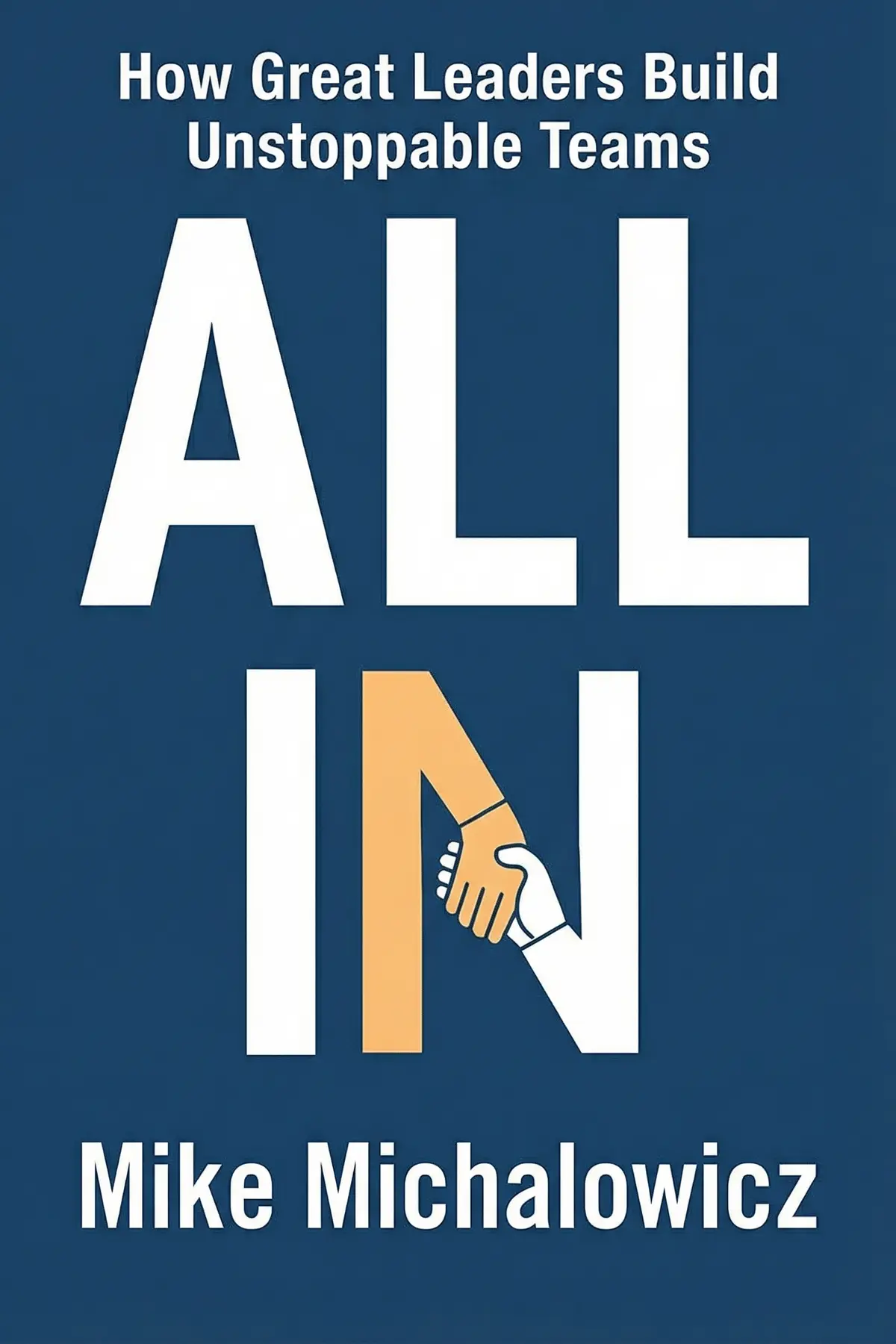
Mike Michalowicz
AUDIO SUMMARY AVAILABLE
Get the key ideas from How to Lead Smart People by Arun Singh, plus 5,000+ more titles in English and Thai.







