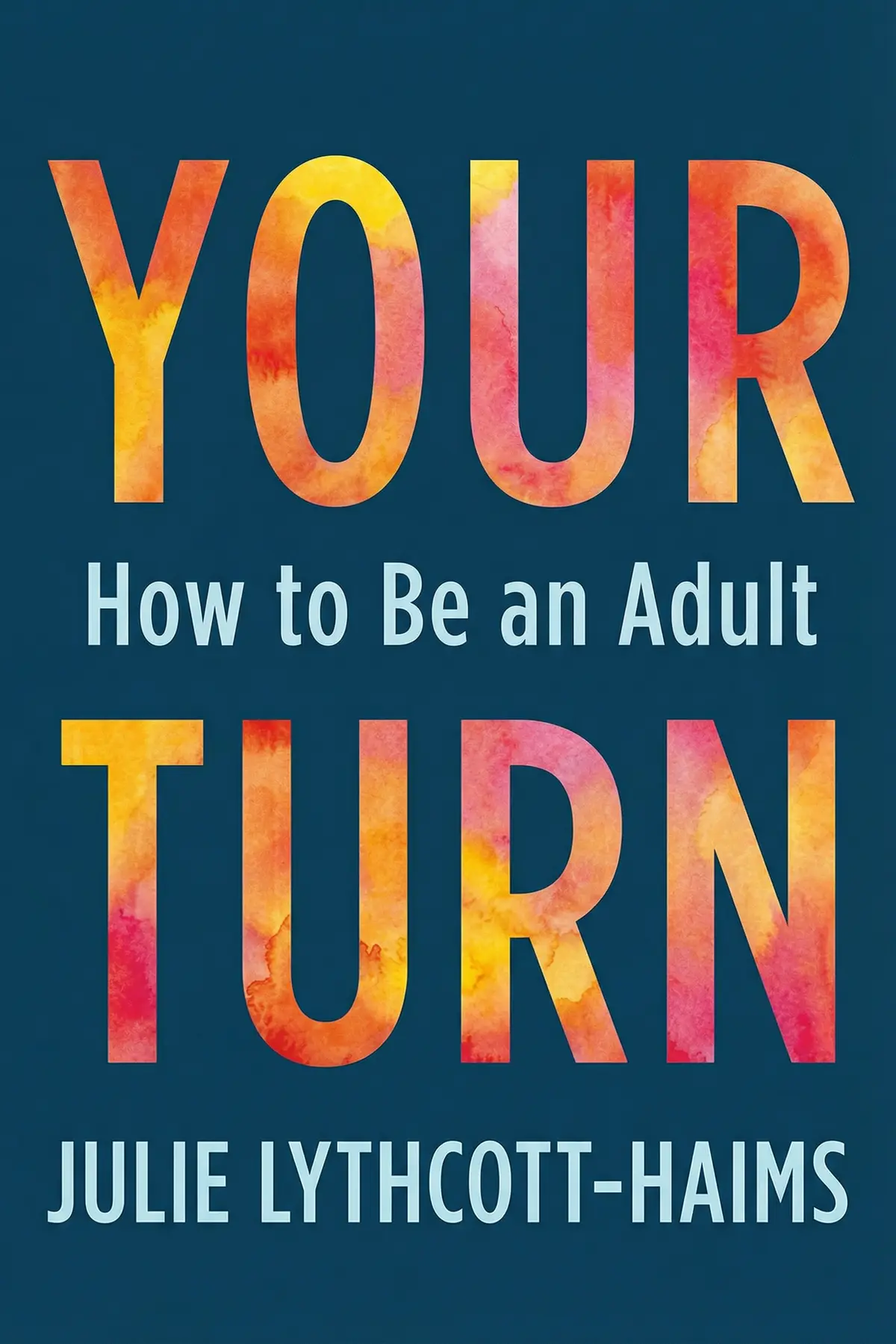
Your Turn: How to Be an Adult
Julie Lythcott-Haims
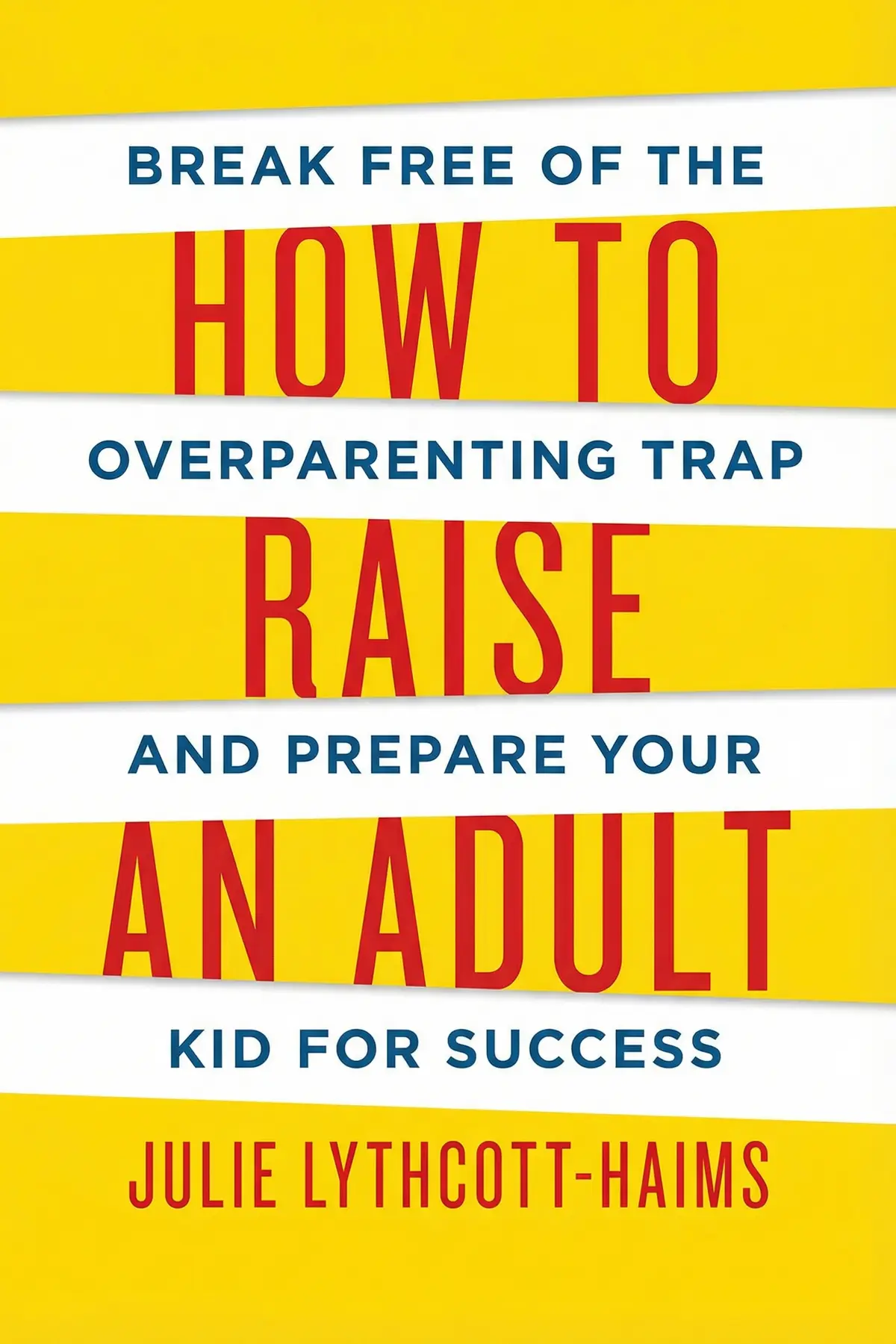
Discover how to move past the damaging habits of overparenting. This guide explains why hovering prevents children from developing independence and offers a practical roadmap for raising resilient, self-sufficient, and successful adults.
1 min 39 sec
Every parent wants the absolute best for their children. From the moment they are born, we feel a deep, almost overwhelming responsibility to shield them from harm and pave a smooth road toward their future success. We want them to be happy, safe, and high-achieving. However, in our modern era, this natural protective instinct has morphed into something much more intense—and ultimately, more damaging. We have entered the age of the helicopter parent, a style of caretaking characterized by constant hovering, micro-management, and an inability to let children experience the natural friction of life.
In this exploration of Julie Lythcott-Haims’s insights, we are going to look at why this hyper-involvement is actually a trap. While it feels like we are helping, we are often doing the opposite: we are raising a generation of young people who are academically accomplished on paper but emotionally and practically ill-equipped for the realities of adulthood. The throughline of this summary is the transition from ‘parenting for protection’ to ‘parenting for preparation.’
We will examine how cultural shifts over the last few decades have fueled a climate of fear and competition, forcing parents into a role that resembles a personal concierge or a legal advocate rather than a guide. More importantly, we’ll see how this affects a child’s brain and spirit—from rising rates of anxiety to a lack of basic life skills. By the end, you’ll understand that raising a successful adult doesn’t mean doing everything for them; it means having the courage to step back so they can finally step up.
2 min 39 sec
Explore how historical events and modern anxieties transformed parenting from a process of building independence into a mission of constant surveillance and risk avoidance.
2 min 38 sec
Understand the hidden emotional toll that overparenting takes on young adults, leading to increased anxiety and a fragile sense of self-worth.
2 min 27 sec
Discover why the ‘perfect’ resume doesn’t translate to workplace readiness and how parental involvement can actually hinder a young person’s career.
2 min 28 sec
Learn the four main styles of parenting and why the ‘Authoritative’ model is the gold standard for raising functional, happy adults.
2 min 36 sec
See why unstructured time and household responsibilities are not just ‘extra’ activities, but critical components of healthy cognitive and character development.
2 min 28 sec
Learn how to listen to your child’s intuition and help them find a future that aligns with their true self, rather than societal expectations of prestige.
2 min 43 sec
Discover why your own well-being and independence are the best gifts you can give your children, and how to resist the pressure to overparent.
1 min 36 sec
The message of Julie Lythcott-Haims is both a warning and a liberating call to action. We have reached a point where our well-intentioned efforts to help our children are actually standing in the way of their maturity. By hovering, micro-managing, and obsessing over prestige, we are creating a ‘failure to launch’ dynamic that leaves young people fragile and directionless. But the solution is within our reach. It requires a fundamental shift in our mindset: we must move from being the ‘concierge’ to being the ‘authoritative guide.’
To raise an adult, we have to let them experience the world. This means letting them walk to the store alone, letting them negotiate their own disputes, and letting them feel the weight of their own responsibilities. It means valuing chores and play as much as we value grades. Most importantly, it means having the courage to let them fail. Failure is not a catastrophe; it is the most effective teacher they will ever have. It builds the grit and self-efficacy that no tutor or resume-padding activity can provide.
As you move forward, start with small steps. This week, find one thing you usually do for your child that they are capable of doing for themselves, and let them take it over. Whether it’s making their own lunch, managing their own alarm clock, or filling out a form, give them that piece of their life back. Remember that the goal of parenting is to eventually be unnecessary. When we have the strength to step back, we finally give our children the room they need to grow into the capable, resilient, and independent adults they were always meant to become.
How to Raise an Adult explores the modern epidemic of helicopter parenting and its long-term negative effects on children’s mental health and career prospects. Former Stanford dean Julie Lythcott-Haims argues that by constantly intervening, parents are inadvertently robbing their children of the chance to build essential life skills and self-reliance. The book provides a compelling promise: by stepping back and adopting a more authoritative yet supportive style, parents can foster a healthier environment where children learn to navigate challenges on their own. It offers strategies for teaching accountability, embracing failure as a learning tool, and helping young people find their own unique path to fulfillment rather than a pre-scripted version of success.
Julie Lythcott-Haims is a former Dean of Freshmen and Undergraduate Advising at Stanford University. Her extensive experience working with college students informed her perspective on the impacts of helicopter parenting. In addition to her work as an educator and speaker, she is an accomplished poet and playwright.
Julie Lythcott-Haims
Listeners consider this work a beneficial resource for every parent and educator, delivering useful insights and actionable strategies for child-rearing. The guide provides exceptional advice on truly supporting children, and one listener points out how it integrates Love and Logic concepts. The prose is skillfully written, with listeners praising the book's tempo; one individual even labels it as revolutionary for the modern age. While many listeners find the narratives engaging, perspectives on the stories remain mixed.
As a high school teacher for over a decade, I can confirm that Lythcott-Haims is spot-on regarding the overparenting epidemic. I’ve watched students lose their spark because their parents manage every single deadline and interaction. This book isn't just a critique; it’s a necessary manual for stepping back so our kids can actually step up. The author uses her experience as a Stanford dean to show how "concierge parenting" cripples adult development. To be fair, some of the school examples are definitely geared toward the upper-middle class, but the core message is universal. We need to stop equating our children’s achievements with our own worth as parents. It’s well-written, paced perfectly, and offers a revolutionary shift in perspective that I plan to share with my school’s parent association.
Show moreWow, this was a wake-up call that I didn't even know I needed. As a mom of two young boys, I find myself constantly wanting to smooth out every bump in their road. Lythcott-Haims uses compelling stories from her time at Stanford to show why that’s actually a huge mistake. The anecdotes about parents showing up to job interviews or calling deans to complain about grades are both hilarious and terrifying. It reminds me a lot of the Love and Logic principles but with a modern, academic twist. I did feel the book was a bit repetitive toward the middle, yet the message about allowing mistakes stayed with me. It’s helped me realize that my job is to make myself redundant, not to be their lifelong personal assistant.
Show moreThis book should be required reading for every parent entering the middle school years. We live in a culture that prizes "perfection" over growth, and this book is a necessary antidote to that poison. Lythcott-Haims writes with a clear, authoritative voice that balances professional expertise with her own struggles as a mother. I found the pacing to be excellent, moving from the "why" of the problem to the "how" of the solution seamlessly. The chapter on chores and life skills really hit home for me. Frankly, it’s revolutionary to hear someone say that a B-grade earned by a student is better than an A-grade earned by a parent. It has completely changed how I approach my daughter’s extracurricular activities and school projects.
Show moreEver wonder if you’re doing too much for your kids? This book provides the answer and a way forward. It’s a compelling look at how our obsession with safety and success is actually making our children more anxious and less capable. The author’s background as a dean gives her a unique vantage point on the long-term effects of helicopter parenting. I loved the emphasis on chores and real-world responsibilities. It feels like a revolutionary call to return to a more balanced, "free-range" style of raising children. Not gonna lie, some of the examples of parent behavior made me cringe with recognition. This is a must-read for any parent who wants to raise a self-reliant adult in an over-anxious world.
Show moreFinally got around to reading this after seeing it recommended in several parenting groups. Section 3 is easily the most valuable part because it provides concrete checklists for what kids should be able to do at various ages. Truth is, many of us are guilty of "helicoptering" without even realizing it, like when we jump in to resolve a conflict with a teacher. While I appreciated the practical advice, the author's Silicon Valley bubble is quite apparent throughout the text. Calling schools like Rice or Vanderbilt "alternatives" feels a bit out of touch for those of us in the Midwest. Despite that elitist lean, the underlying philosophy about building resilience and self-efficacy is incredibly sound. It’s a worthwhile read if you can look past the Palo Alto polish.
Show moreAfter hearing the TED talk, I expected this to be a quick summary, but the book offers much more depth. It provides excellent parenting advice that challenges the "check-listed childhood" many of us have fallen into. The stories about student deans dealing with over-involved parents are eye-opening and serve as a great cautionary tale. I particularly liked how it incorporates elements of fostering independence, similar to the Love and Logic approach. My only gripe is that the author’s perspective is very much rooted in high-achieving, wealthy circles. Not every parent is worried about whether their kid gets into an Ivy League school; some of us just want them to hold down a job. Still, the practical tips on teaching life skills are gold.
Show moreThe chapter on life skills alone makes this book worth the purchase price. We often forget that "adulting" requires a set of skills that must be practiced, not just suddenly acquired at eighteen. This book helps you map out that transition from manager to consultant in your child's life. I appreciated the specific lists of tasks kids should master at different developmental stages. While some of the Stanford stories felt a bit repetitive after a while, they definitely drive the point home. It’s an informative, easy-to-read guide that encourages us to prioritize character over the college resume. If you’re feeling burnt out by the parenting arms race, pick this up.
Show morePersonally, I found the Stanford anecdotes fascinating, though I recognize they represent a very specific slice of society. Lythcott-Haims has a way of making you feel both convicted and empowered at the same time. The writing is well-crafted and the tone is generally encouraging rather than condescending. I did notice some redundancy in the middle sections where the same points about "over-parenting" were hammered home repeatedly. To be fair, maybe we need that repetition to break our bad habits. It’s not a perfect book, but the practical tips for fostering resilience are things I’ve already started implementing. It’s a solid four-star guide for anyone who wants their kids to be capable, independent human beings.
Show moreDoes every parenting book need to be 300 pages long? While I agree with the core premise—that we shouldn't be doing our kids' homework or college essays—most of this felt like common sense. If you aren't already a helicopter parent, you're basically just reading a long list of "don'ts" that you already avoid. The author spends a lot of time preaching to the choir, using pithy quotes instead of hard data to back up her claims. Look, the writing is decent and the pacing is fine, but it could have been a 20-page pamphlet or a long-form article. I also found the focus on elite university culture a bit alienating for the average family. It's a three-star read because the advice is solid, but the delivery is redundant.
Show moreI really wanted to like this, but the classism was just too much for me to ignore. The author tries to tell parents to relax about elite schools, then lists Rice and Carleton as "choices"—those are still incredibly selective, expensive institutions! It’s clear this was written for a very specific demographic in places like Palo Alto or Manhattan. Furthermore, her praise for Teach for America felt incredibly dated and ignored the valid criticisms that educators have raised for years. The advice to "step back" is fine, but it’s much easier to let your kid fail when you have a massive financial safety net. For the average middle-class family, the stakes of a failed semester or a missed opportunity feel much higher than she acknowledges.
Show moreAUDIO SUMMARY AVAILABLE
Get the key ideas from How to Raise an Adult by Julie Lythcott-Haims, plus 5,000+ more titles in English and Thai.