
8 min 49 sec
How to Read Lacan
By Slavoj Žižek
Explore the intersection of psychoanalysis and philosophy as Slavoj Žižek interprets the work of Jacques Lacan. This summary examines the unconscious mind, the mechanics of belief, and how we outsource our emotions.
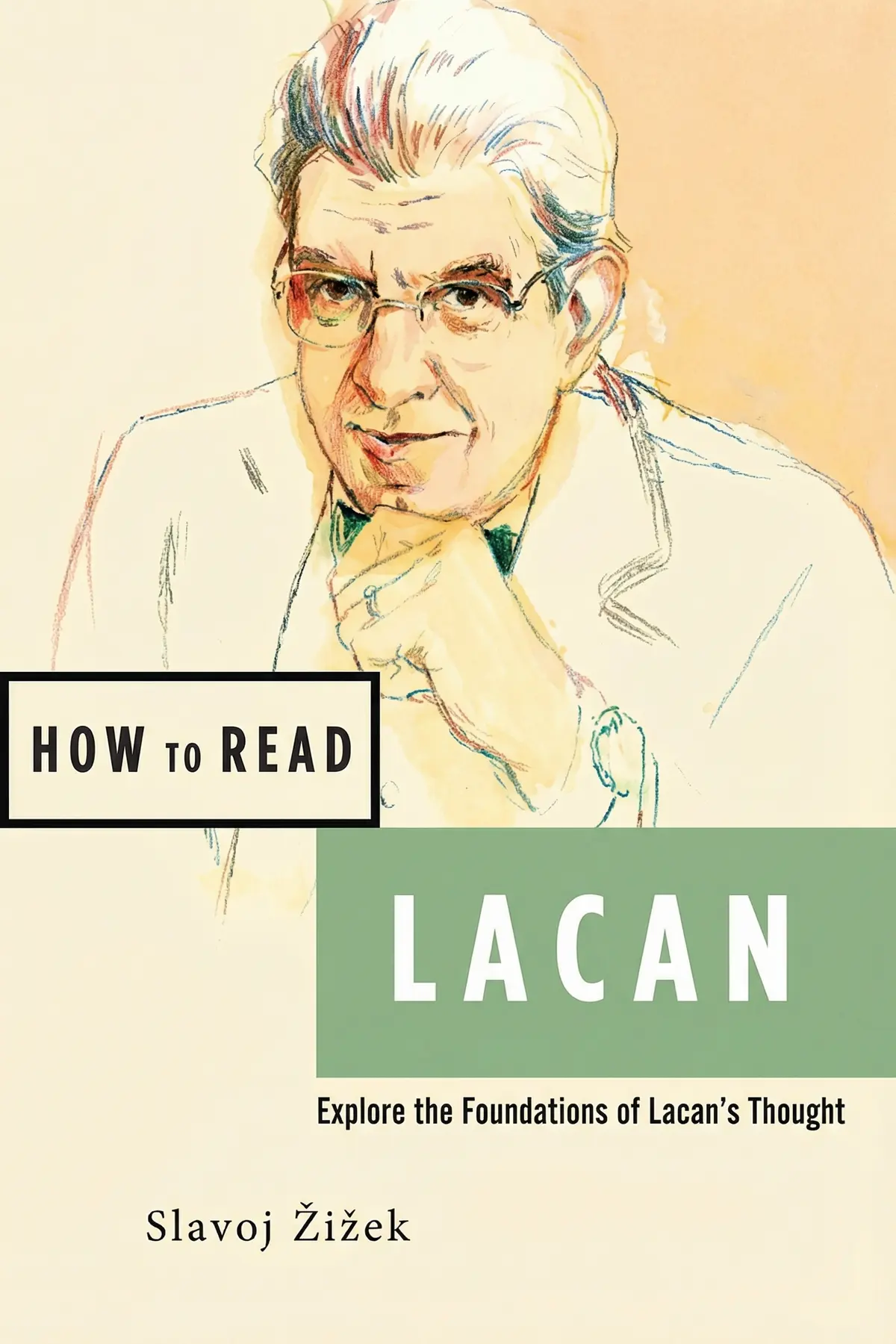
Table of Content
1. Introduction
1 min 22 sec
Have you ever stopped to wonder if the choices you make are truly your own, or if there are unseen forces pulling the strings of your psyche? Most of us like to think of our minds as clear, rational spaces where we decide what to believe and how to act. However, the world of psychoanalysis suggests a much more complex reality. In this exploration, we dive into Slavoj Žižek’s philosophical interpretation of Jacques Lacan, the influential French psychoanalyst who redefined how we think about the unconscious.
Lacan’s work is famously dense, but through Žižek’s lens, it becomes a sharp tool for understanding the modern world. We aren’t just looking at dreams or repressed memories; we are looking at the very fabric of our social reality. The throughline here is the tension between our conscious beliefs and the unconscious structures that actually govern our behavior. By the end of this journey, you’ll see how our interactions with society, our rituals, and even our entertainment are often performances for a symbolic presence Lacan calls the Other. We will uncover how we navigate the anxiety of truth through denial and how we often delegate our deepest feelings to external proxies. It’s an invitation to peer behind the curtain of the self and see the hidden mechanics of human existence.
2. The Hidden Mechanics of Belief and the Paradox of Freedom
3 min 01 sec
Uncover how our unconscious minds handle truths we aren’t ready to face and why the absence of rules can sometimes feel more restrictive than a direct command.
3. Interpassivity and the Proxy of the Big Other
3 min 21 sec
Explore why we often let external objects or rituals feel our emotions for us and how this ‘outsourcing’ of belief defines our modern social experience.
4. Conclusion
1 min 05 sec
As we wrap up this look into the collaboration of Žižek and Lacan, the central lesson is that our internal world is far more social than we think. We often assume that our true selves are buried deep inside, but Lacan suggests that our truth is actually found out there, in our actions and the symbolic systems we inhabit. We’ve seen how our unconscious mind navigates belief through denial, how we get trapped in the paradox of ‘forced choices,’ and how we use interpassivity to delegate our emotions to everything from TV shows to digital lists.
The real challenge is to recognize when we are merely performing for the ‘Big Other’ and when we are truly engaged. By understanding these hidden mechanics, we can start to see the invisible threads that guide our behavior. The next time you find yourself following a ritual or reacting to a social cue, ask yourself: is this me, or am I letting the symbolic order do the feeling for me? This awareness is the first step toward a more authentic engagement with the world around you.
About this book
What is this book about?
How to Read Lacan explores the intricate and often difficult theories of Jacques Lacan, as interpreted by the provocative philosopher Slavoj Žižek. The book moves beyond traditional psychoanalysis to show how Lacan’s ideas apply to our everyday social and cultural lives. It investigates the hidden forces that drive human behavior, looking closely at how our conscious declarations often mask unconscious realities. The promise of this work is a deeper understanding of why we hold certain beliefs and how we participate in cultural rituals without truly internalizing them. By introducing concepts like the Big Other and interpassivity, the text provides a framework for analyzing everything from religious belief and family dynamics to modern television and digital habits. It invites readers to look at the symbolic order that governs human existence and to recognize the paradoxes of freedom and prohibition in the modern world.
Book Information
About the Author
Slavoj Žižek
Slavoj Žižek is a renowned Slovenian philosopher and cultural critic known for his interpretations of political and cinematic subjects. He has authored numerous books, including The Sublime Object of Ideology and Living in the End Times. Žižek's ideas and lectures have made him a leading figure in contemporary philosophy.
Ratings & Reviews
Ratings at a glance
What people think
Listeners find the volume to be intellectually stimulating, specifically praising it as a high-quality primer for Lacan’s theory of subjectivity. Feedback on the text’s readability is inconsistent; some consider it easy to follow, but others report it being unreadable on Kindle.
Top reviews
Somsak
As a total newcomer to psychoanalytic theory, this was exactly the bridge I needed. Slavoj Žižek has this incredible knack for taking the most abstract, brain-melting concepts and anchoring them in things we actually know, like the movie Alien or Hitchcock's filmography. He moves from the 'big Other' to the 'small Other' with such fluidity that you almost forget how dense the source material is supposed to be. It is less of a dry manual and more of a series of illuminating sparks that light up Lacan’s theory of subjectivity. While some purists might grumble that it's filtered through the author’s own political bias, that’s exactly what makes it readable. Truth is, I actually understand what the 'mirror stage' implies now without having to drown in a sea of French jargon. It’s a slim volume, but it packs more intellectual punch than books three times its size. Highly recommended if you want to stop being intimidated by the name Lacan.
Show moreSumalee
This text offers a profound look at the theory of subjectivity that feels startlingly relevant today. Žižek successfully rescues Freud and Lacan from the 'irrational drives' bucket and places them squarely in the realm of language and social structure. The chapter structure is helpful, starting with a snippet of Lacan’s own prose before Žižek dives in to translate it into 'human.' I found the discussion on the 'unconscious of God' particularly gripping, as it forces you to rethink the entire concept of belief. It’s not just about what you think; it’s about how your desire is organized by the big Other. This isn't just philosophy; it’s a toolkit for deconstructing the world around us. Even the parts that seemed like 'para-psychoanalytic babble' at first eventually clicked into place. If you’re willing to be confused for a few pages, the payoff is immense. It’s a total humbler.
Show morePierre
To be fair, you have to accept from the start that this is Zizek's show, or you'll just end up frustrated. Once you lean into his style, the book is absolute gold. He explains the 'effective symbolic fiction' better than anyone else. The way he describes how a judge's words have power beyond his physical person is a masterclass in social theory. It totally changed how I view legal institutions and daily social interactions. It’s a testament to the vitality of Lacanian thought that it can be applied to everything from Ridley Scott to the Bush administration without losing its edge. I found the questioning spirit of the book both humbling and incredibly refreshing. It’s a rare book that makes you feel smarter and more confused at the same time. This isn't just a reading guide; it’s an invitation to see the world as a construction of desire and language. Five stars for the sheer intellectual energy.
Show moreSuthida
Picked this up thinking it would be a standard textbook, but it's much more of a wild ride through Žižek’s own specific lens. Look, let’s be real: this is titled 'How to Read Lacan,' but it really functions as 'How Zizek Reads Lacan.' He uses these bizarre, hilarious examples—like the ideological design of European toilets—to explain the deepest structures of our reality. The way he picks apart our underlying assumptions with a maniacal grin is both entertaining and slightly terrifying. It’s a terrific summary, even if he repeats a few anecdotes from his other works like The Parallax View. I did find some of the transitions between Shakespeare and Stalin a bit dizzying. However, his explanation of how the unconscious is structured like a language is the clearest I’ve ever encountered. If you want a dry, academic breakdown, look elsewhere. If you want to see a brilliant mind apply psychoanalysis to the real world, this is it.
Show moreLuke
Finally got around to this little booklet after seeing Žižek's face all over my YouTube recommendations. It’s a fascinating, if somewhat chaotic, introduction to the French master of psychoanalysis. Žižek argues that the goal of treatment isn't personal fulfillment but confronting the deadlocks of desire, which is a pretty sobering thought compared to modern self-help. I loved the way he breaks down 'symbolic fiction' using the example of a judge. It makes you realize how much of our social reality is just a collective performance. My only gripe is that the book feels like it’s constantly pivoting away from Lacan’s actual writings to talk about Ridley Scott movies. It's a great way to engage a general audience, but I sometimes felt like I was missing the technical foundation. Nevertheless, it's a vibrant read that challenges you to look beneath the surface of everyday life. It’s short, punchy, and definitely worth the afternoon it takes to read.
Show moreSirirat
After hearing so much about the 'Marxist bad boy' of philosophy, I wanted to see if his reputation for clarity held up. The verdict? Mostly yes. Žižek has an uncanny ability to take Lacan’s obscure formulas and turn them into vivid, comprehensible stories. The anecdote about the factory worker stealing wheelbarrows is a perfect illustration of how the unconscious works. He makes a strong case for why Lacan belongs in the humanities rather than just in a clinical setting. However, the book is very much a product of its time. The references to the Nuremberg trials and 21st-century politics are interesting but sometimes distract from the core theoretical points. It’s a bit of a 'Zizek-filtered' version of reality, which is fun but probably biased. Still, as an entry point into the theory of subjectivity, it’s far better than any dry academic textbook I’ve tried. Just be prepared for some tangents.
Show morePridi
Read this in two sittings and came away with my brain feeling properly scrambled in the best way possible. It isn't a traditional 'how-to,' but rather a demonstration of Lacanian logic in action. Žižek moves between film theory, political analysis, and psychoanalysis with a speed that is both exhilarating and exhausting. I particularly enjoyed the sections on intersubjectivity and the 'wall of language.' He makes you realize that what we call 'reality' is often just a way to avoid the deadlocks of our own desires. While I wish there was more focus on Lacan’s later mathematical work, I understand that wouldn't fit the 'introduction' vibe. The book is short enough to be digestible but deep enough to keep you thinking for weeks. It’s definitely more of a 'How to Think like Zizek about Lacan' book, but since Zizek is so entertaining, I’m not complaining. Great for students and casual philosophy fans alike.
Show moreTang
Ever wonder why people say Lacan is impenetrable? This book mostly confirms it, even with Žižek trying to play the role of the friendly guide. I tried reading this on my Kindle, and frankly, the formatting was a complete mess, which made an already difficult text feel even more unreadable at times. The content itself is hit or miss. When he sticks to the theory of subjectivity, it’s brilliant. But then he wanders off into these long-winded rants about the Bush administration or the CIA that feel a bit dated now. It’s a booklet of thoughts rather than a coherent roadmap. You get the sense that Zizek is just using Lacan as a puppet to voice his own takes on cinema and culture. To be fair, the wheelbarrow analogy for the unconscious was a 'lightbulb' moment for me. Still, I finished the book feeling like I knew a lot about Zizek and only a tiny bit more about Lacan.
Show moreElise
The chapter on the 'Unconsciousness of God' was the highlight for me, yet the rest of the book felt a bit disjointed. I appreciate what Žižek is trying to do by making Lacan accessible through pop culture, but it feels a bit lazy at points. He relies heavily on examples he’s used in almost every other book he’s written. If you've read The Parallax View, you've already seen about 40% of this content. Also, the Kindle version is buggy—words were cut off and the formatting made the block quotes hard to distinguish from the main text. It’s a decent primer on the big Other and the nature of fantasy, but it’s far from a comprehensive study. I’d say it’s a good 'hook' to get you interested, but you’ll definitely need to read a seminar paper afterward to actually know what's going on. It’s a light snack, not a full meal.
Show moreOscar
Not what I expected at all, and frankly, quite disappointing if you're looking for a literal 'how-to' guide. I came to this book wanting to understand the Écrits, but instead, I got a lecture on the movie Eyes Wide Shut and the politics of toilet plumbing. Žižek is clearly brilliant, but his arrogance drips off every page. He spends more time justifying his own idiosyncratic readings than actually explaining Lacan’s system. It felt like he was talking through his hat half the time. To this reader, the book felt more like a collection of recycled blog posts than a serious introductory text. If you’ve never read Zizek before, you might find it 'ground-breaking,' but if you’re familiar with his work, it’s just more of the same examples. There’s no recipe here, just a lot of intellectual gymnastics. It left me more frustrated than enlightened. Save your money and just try reading the primary sources.
Show moreReaders also enjoyed
A Guide to the Good Life: The Ancient Art of Stoic Joy
William B. Irvine
A Little History of Philosophy
Nigel Warburton
A Theory of Justice
John Rawls
Becoming Beauvoir: A Life
Kate Kirkpatrick
Being and Nothingness: A Phenomenological Essay on Ontology
Jean-Paul Sartre
AUDIO SUMMARY AVAILABLE
Listen to How to Read Lacan in 15 minutes
Get the key ideas from How to Read Lacan by Slavoj Žižek, plus 5,000+ more titles in English and Thai.
- 5,000+ titles
- Listen as much as you want
- 7-day free trial
- Cancel anytime







