
19 min 01 sec
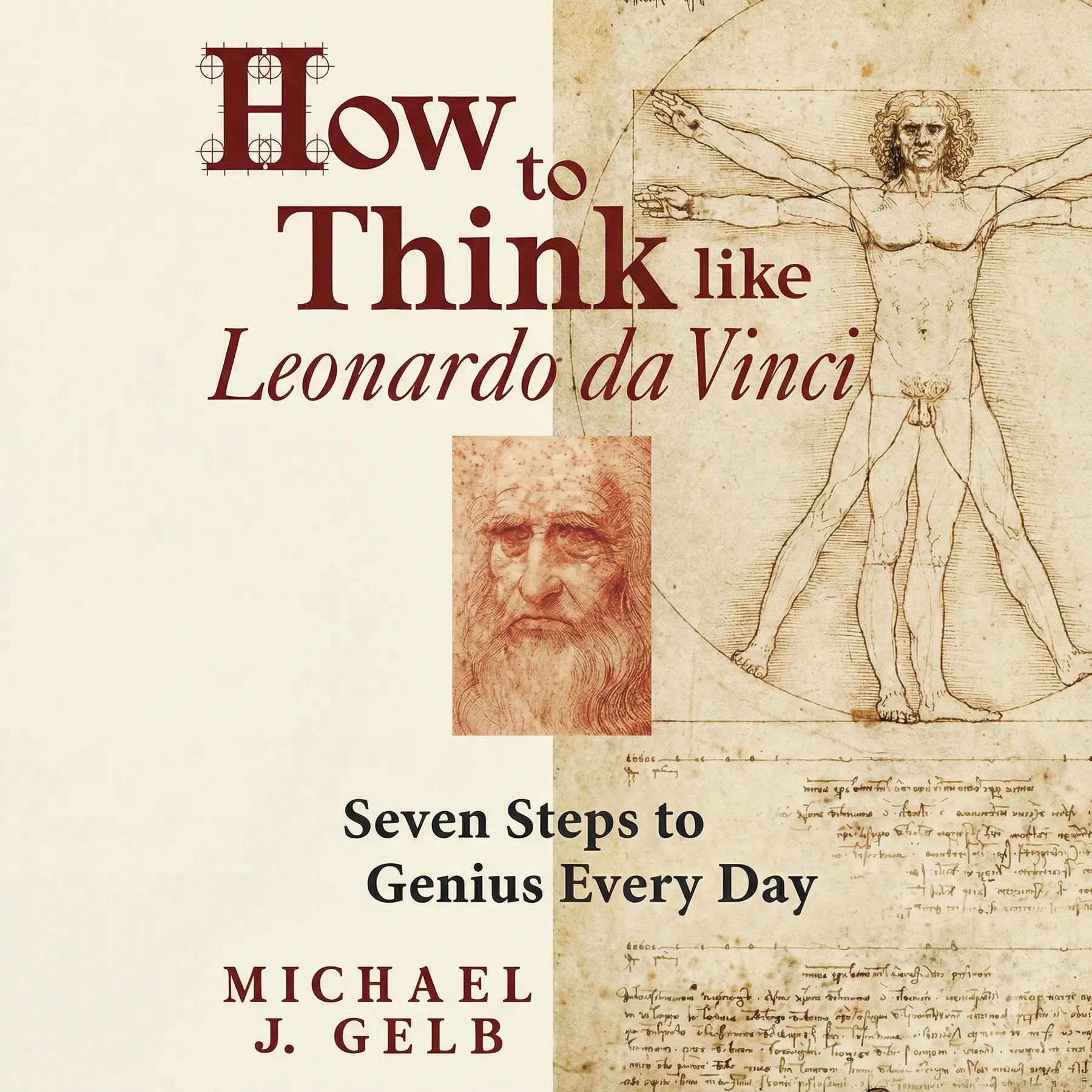
How to Think Like Leonardo da Vinci: Seven Steps to Genius Every Day
Unlock your creative potential by applying seven core principles derived from Leonardo da Vinci’s life. This summary explores how to blend logic, sensory awareness, and curiosity to achieve personal and professional brilliance.
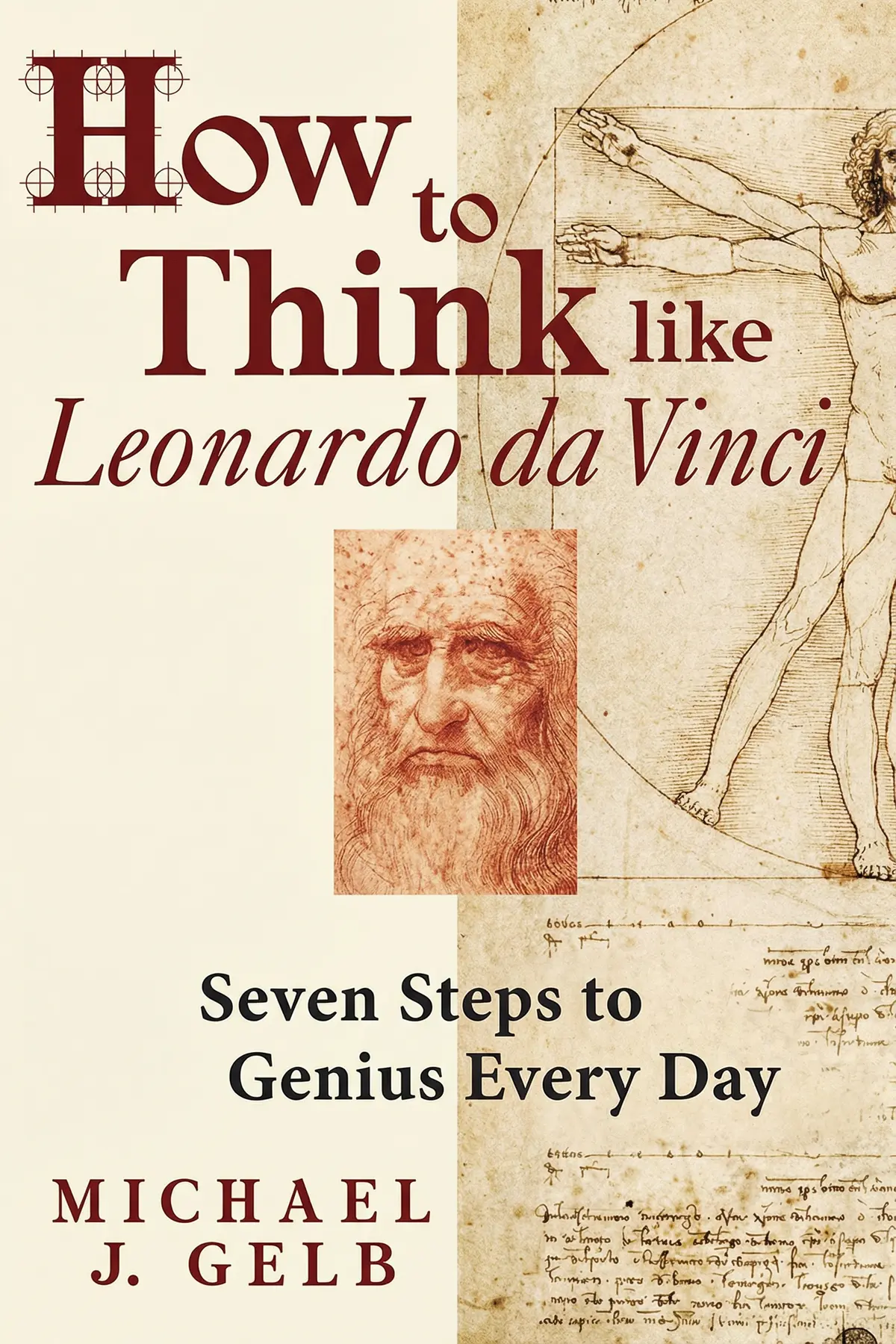
Table of Content
1. Introduction
1 min 38 sec
When we think of genius, the name Leonardo da Vinci almost inevitably rises to the top of the list. He was the ultimate Renaissance man—a painter, an engineer, a scientist, and a visionary who seemed to live several centuries ahead of his time. We often look at figures like Leonardo and assume they were born with a rare, unattainable spark of divinity. But what if that wasn’t the whole story? What if his brilliance was actually the result of a specific set of habits and a particular way of engaging with the world that any of us could learn to adopt?
This is the throughline of our exploration today. We aren’t just looking at the life of a long-dead artist; we are uncovering a framework for modern thinking. Leonardo believed that the human mind has nearly limitless potential, but it requires cultivation. He didn’t see the world as a collection of separate boxes like ‘math’ or ‘art.’ Instead, he saw a grand, interconnected tapestry. By following his lead, we can learn to sharpen our senses, embrace the discomfort of the unknown, and bridge the gap between our logical and creative selves.
Over the next several chapters, we will walk through seven core principles that defined Leonardo’s approach to life. These range from the way he asked questions to the way he took care of his physical body. Whether you are looking to solve a complex problem at work, reignite a creative passion, or simply experience the world with more depth and clarity, these lessons offer a timeless guide. Let’s begin by looking at the very engine of Leonardo’s mind: his relentless, burning curiosity.
2. The Power of Relentless Inquiry
2 min 19 sec
Discover how a simple notebook and a commitment to asking endless questions can transform your daily observations into a wellspring of innovation and creative insight.
3. Learning Through Direct Experience
2 min 14 sec
Explore why testing your beliefs and learning from your own mistakes is far more valuable than simply following the instructions of others or relying on theory.
4. Refining the Gateways of Perception
2 min 06 sec
Learn how to sharpen your five senses to experience life more vividly and gather the high-quality data your brain needs for creative breakthroughs.
5. Thriving Within Ambiguity and Paradox
2 min 27 sec
Discover the art of Sfumato, a technique for embracing the ‘smoky’ areas of life where there are no clear answers or certainties.
6. Balancing Logic and Imagination
2 min 29 sec
Learn how to bridge the gap between your analytical ‘left brain’ and your creative ‘right brain’ to achieve a more powerful, integrated intelligence.
7. The Body as an Instrument of Mind
2 min 14 sec
Discover why physical fitness and body awareness are not just about health, but are essential foundations for high-level mental performance.
8. Recognizing the Interconnectedness of All Things
2 min 05 sec
Master the final principle of Connessione to see the hidden relationships in the world and solve problems using a systems-thinking approach.
9. Conclusion
1 min 29 sec
As we reach the end of this journey through the seven principles of Leonardo da Vinci, the most important takeaway is that genius is not a fixed trait, but a way of being. It is a commitment to keeping your mind open, your senses sharp, and your curiosity alive. By adopting the habits of Curiosità and Dimostrazione, you transform yourself into a lifelong learner who isn’t afraid to ask ‘why’ or to test the boundaries of what is possible. Through Sensazione and Sfumato, you refine your perception and learn to walk confidently through the mists of uncertainty. And by embracing Arte e Scienza, Corporalita, and Connessione, you integrate your mind, body, and world into a powerful, unified whole.
The throughline of Leonardo’s life was his refusal to accept limits. He didn’t just study the world; he participated in it with every fiber of his being. You don’t have to be a master painter or a world-class engineer to apply these lessons. You can start today by simply carrying a notebook, taking a moment to truly look at the world around you, or finding one unexpected connection between two different parts of your day. The path to genius isn’t a single giant leap; it’s a series of small, intentional steps. By thinking like Leonardo, you aren’t just improving your skills—you are reclaiming the boundless potential of your own mind. Now, go forth and see the world through his eyes.
About this book
What is this book about?
How to Think Like Leonardo da Vinci is an exploration of the mindset and habits that fueled one of history’s greatest geniuses. Author Michael J. Gelb breaks down Leonardo’s approach into seven actionable principles that anyone can use to sharpen their intellect and expand their creative horizons. From the relentless pursuit of knowledge to the cultivation of physical grace, the book offers a holistic framework for personal development. Readers are promised a roadmap for reawakening their natural intelligence. By integrating art and science, and learning to thrive in uncertainty, the book provides practical exercises to enhance memory, observation, and problem-solving skills. It serves as both a historical tribute and a modern manual for those seeking to lead a more innovative and fulfilling life.
Book Information
About the Author
Michael J. Gelb
Michael J. Gelb is an author, speaker, and leadership coach, known for his expertise in personal development and creative thinking. With a background in psychology and expertise in leadership development, Gelb has authored multiple bestsellers, including Innovate Like Edison and The Art of Connection, which focus on unlocking human potential and fostering creative thinking. His work combines practical exercises with insights drawn from history, science, and art, inspiring individuals and organizations to think more creatively and achieve their fullest potential.
Ratings & Reviews
Ratings at a glance
What people think
Listeners believe the book delivers quality observations on creativity through its specific drills and methods, providing both actionable tips and a complete survey of the subject matter. The historical background is deeply investigated, and listeners value the included activities aimed at physical wellness. Additionally, the instructional method is very reachable; one listener points out that it is clear enough for a five-year-old, and listeners generally find the work revelatory, encouraging them to view their surroundings from new perspectives.
Top reviews
Sombat
Ever wonder how the greatest mind in history actually organized his thoughts? Gelb’s exploration of the seven principles, particularly 'Curiosità,' felt like a roadmap for my own stalled creativity. I particularly enjoyed the section on mind mapping, which helped me visualize connections I previously ignored. While some might find the tone a bit lofty, the practical exercises for sharpening the five senses are genuinely transformative if you actually do them. It’s less about becoming a painter and more about waking up to the world around you. I’ve started carrying a notebook everywhere just like Leonardo did, and it’s eye-opening. The book strikes a perfect balance between historical inspiration and daily utility.
Show morePrayoon
Wow. I didn't expect a book about a Renaissance painter to be so focused on sensory refinement and physical vitality. The idea that our senses are the 'midwives' of intelligence is a powerful metaphor that changed how I interact with my environment. I’ve started practicing the listening exercises, paying attention to the silence between sounds, and it has remarkably lowered my stress levels. Gelb makes Leonardo feel accessible, like a mentor rather than a distant museum figure. This is more than a biography; it's a manual for living a more observant, vibrant life. It is highly recommended for any curious soul looking for a fresh perspective on intelligence.
Show moreMadison
The chapter on 'Sfumato' alone made the purchase worth it for me, as it perfectly captures the tension of the creative process. Gelb does a masterful job of synthesizing Leonardo’s notebooks into actionable steps that anyone can follow, regardless of their artistic talent. I’ve found that my ability to hold creative tension has improved significantly since I started applying these principles to my design work. The book is simple enough for a teenager to grasp but deep enough to keep an adult thinking for months. It’s a thorough, eye-opening exploration of what it means to truly use your brain to its full potential. A must-read for fans of the Renaissance.
Show moreAnucha
Picked this up because I felt stuck in a career rut, and the emphasis on 'Corporalità' really caught me off guard. Most productivity books ignore the physical body, but Gelb argues that a sharp mind requires a flexible, fit vessel. The exercises for developing ambidexterity and balance are fun, even if they feel a bit silly at first. Frankly, I didn't need the pseudo-Italian terminology to find the advice useful, but the core message resonates deeply. It's a solid guide for anyone wanting to break out of linear thinking patterns. Not every exercise is a winner, but the ones that land are gold for personal growth.
Show moreChanida
As someone who thrives on structure, the breakdown of the Seven Da Vincian Principles provided a much-needed framework for my personal development. I especially appreciated the 'Sfumato' concept—the ability to embrace ambiguity and stay open to paradoxes in a world that demands instant answers. The book does a fantastic job of balancing the 'Arte' and 'Scienza' aspects of our brains, which we often neglect after leaving school. My only gripe is that some of the writing feels a bit self-congratulatory on the author's part. Nevertheless, the 'Mind Mapping' techniques have already changed how I approach project planning at work. It makes complex thinking feel much more accessible.
Show moreManee
After hearing so much buzz about Gelb’s methods, I finally dove into the 'Mind Mapping' chapter and found it incredibly helpful. The book is well-researched, and the historical context provided for each principle makes the advice feel grounded in reality rather than just 'woo-woo' self-help. I liked how the author encourages us to learn from our mistakes through 'Dimostrazione,' which is a lesson we all need to hear repeatedly. While some of the word lists and exercises felt a bit simplistic, they are effective tools for opening up new ways of looking at old problems. It’s a great resource for educators and students alike, regardless of the flowery language.
Show moreClara
Finally got around to reading this classic, and it has genuinely helped me nurture my creative self from a different perspective. The focus on 'Connessione'—the idea that everything is connected to everything else—really hit home for me. I love how the book doesn't just focus on the mind but also includes aerobic exercise and diet as part of the genius equation. It didn't turn me into a world-class inventor overnight, obviously, but it heightened my awareness of everyday experiences in a way I didn't expect. This is a book I’ll keep on my shelf to revisit whenever I feel my curiosity starting to wane. It's a very practical take on genius.
Show moreWacharapol
To be fair, the historical sketches of Leonardo’s life are the best part of this volume, providing a nice bit of color. However, when we get to the actual 'how-to' portion, the exercises become onerous and incredibly time-consuming. I found myself growing bored with the minutiae of the self-assessments, which felt vague and difficult to score accurately. The seven principles are a good conceptual framework, but the prescription for how to achieve them is often impractical for someone with a full-time job. It’s an interesting read for the theory, but I struggled to implement the actual curriculum in my daily life. It’s just too much filler for a few good points.
Show moreSupaporn
Look, the idea of cultivating curiosity is great, but the execution here feels a bit like a workbook for children at times. I skipped the first part to get to the 'meat' of the book, but I found page after page of advice that felt a bit too basic for a professional audience. Do we really need a book to tell us to make word lists and learn from our mistakes? Some of the history is interesting, but the self-indulgent tone of the writing made it hard for me to stay engaged. It’s not a bad book, but it certainly isn't the intellectual masterpiece the cover blurbs suggest. It’s okay if you need a gentle nudge.
Show moreSangduan
This book is a prime example of an author falling in love with his own prose more than the actual historical figure. Gelb spends far too much time using bastardized Italian phrases to sound sophisticated when plain English would have sufficed. Furthermore, the claim that Leonardo anticipated modern physics 200 years early is pure anachronistic nonsense that ignores the actual history of science and calculus. I was looking for a deep dive into the Renaissance, but instead, I got a self-indulgent workbook filled with simplistic advice. It feels like it was written for a fifth-grade level rather than for serious adults seeking intellectual growth. Save your money and buy a real biography.
Show moreReaders also enjoyed
Abundance: The Inner Path to Wealth
Deepak Chopra
A Room of One’s Own
Virginia Woolf
59 Seconds: Change Your Life in Under a Minute
Richard Wiseman
AUDIO SUMMARY AVAILABLE
Listen to How to Think Like Leonardo da Vinci in 15 minutes
Get the key ideas from How to Think Like Leonardo da Vinci by Michael J. Gelb, plus 5,000+ more titles in English and Thai.
- 5,000+ titles
- Listen as much as you want
- 7-day free trial
- Cancel anytime







