
1491: New Revelations of the Americas Before Columbus
Charles C. Mann
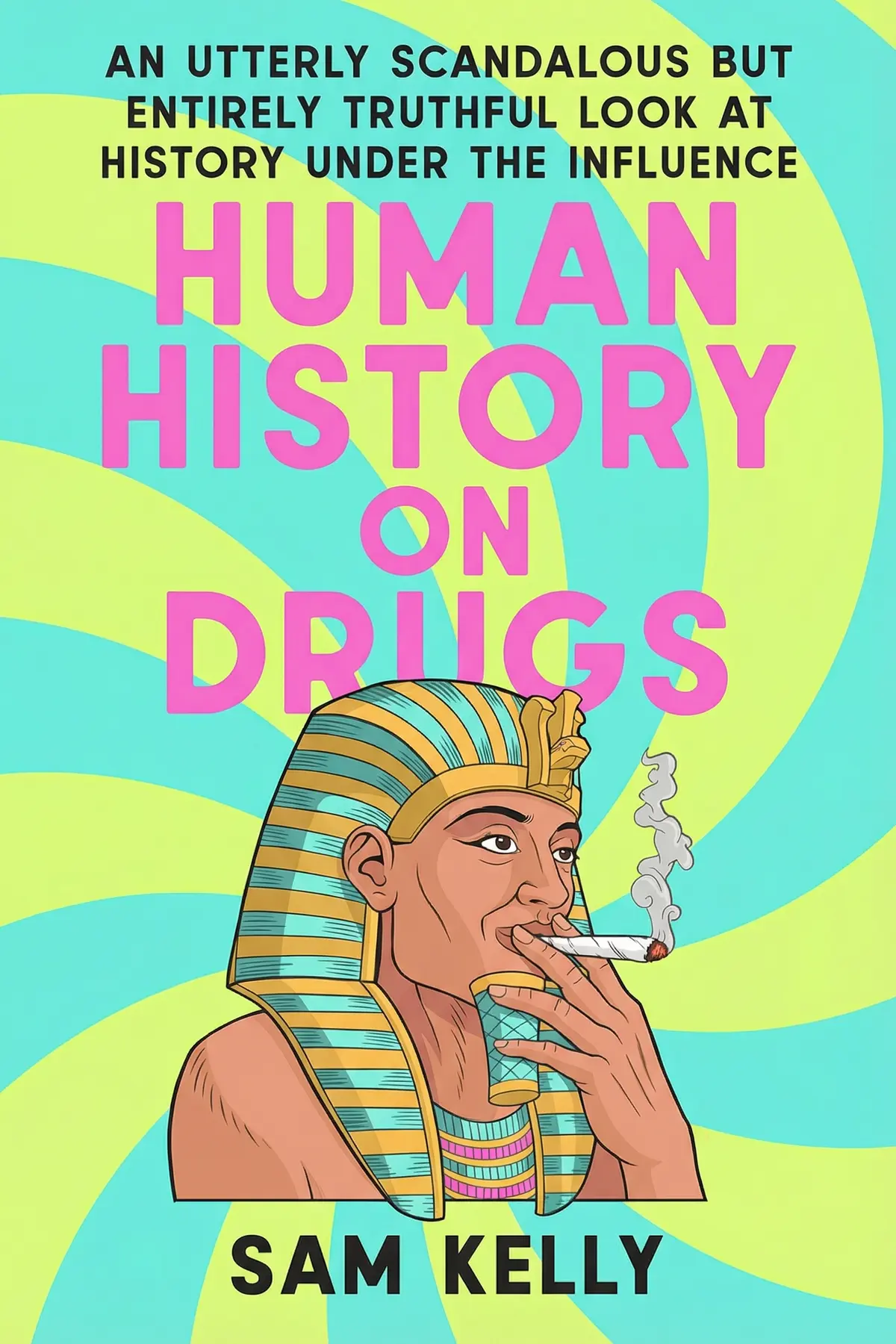
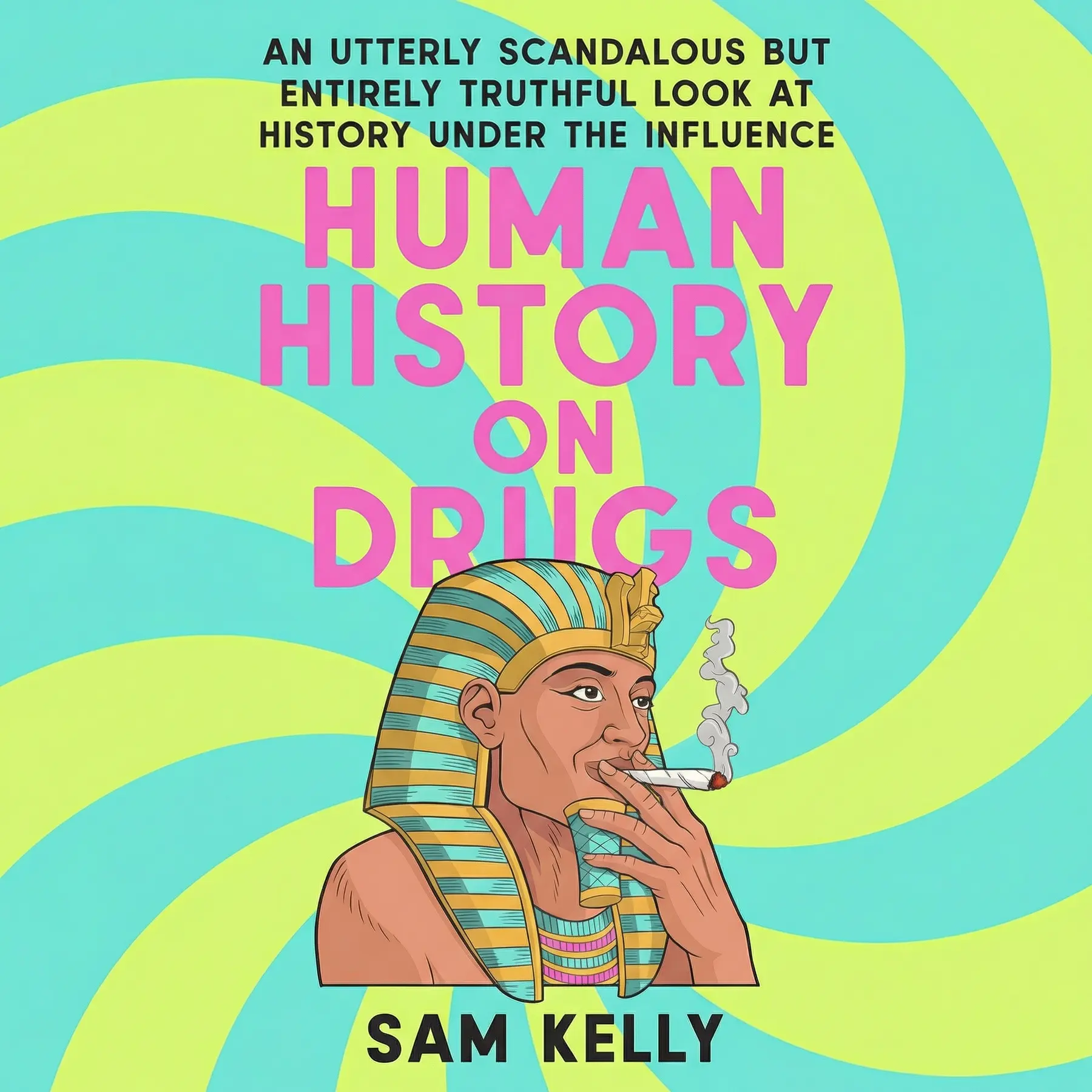
Human History on Drugs explores the surprising and often hidden role of psychoactive substances in shaping civilization. From ancient pharaohs to modern tech moguls, it reveals how mind-altering chemicals influenced history.
2 min 07 sec
When we think of the Victorian era, we usually imagine a period defined by rigid social rules, high collars, and an almost stifling sense of moral propriety. Queen Victoria herself is the face of this era—a symbol of mourning, restraint, and the expansion of the British Empire. Yet, beneath this veneer of extreme discipline, the monarch who presided over a quarter of the world’s population was regularly consuming a variety of substances that would be classified as hard drugs today. For her physical discomforts, her physician provided cannabis-based tinctures, and to maintain her daily vigor, she often turned to wine laced with opium. She even enjoyed chewing gum infused with cocaine. This isn’t just a surprising piece of trivia; it’s a portal into a reality that history books often ignore.
Throughout human history, the pursuit of altered consciousness has not been a marginal activity. It has been a constant companion to power, creativity, and discovery. From the high priests of ancient civilizations to the modern innovators of Silicon Valley, the human story is intertwined with the chemical compounds we have ingested to expand our minds, dull our pain, or connect with the divine. We often like to view history as a series of rational decisions made by sober actors, but the truth is far more complex and, at times, far more chaotic.
In this exploration, we are going to look at how different substances have acted as catalysts for both incredible progress and terrifying instability. We will see how drugs influenced the strategies of pharaohs, the verses of world-renowned poets, and the finger on the nuclear button during the Cold War. As we look at these historical figures and events, we see a throughline: humanity has always sought to transcend the limits of the ordinary mind. This isn’t a story of addiction in the shadows, but a story of how chemicals have been at the center of the world stage, helping to build empires and occasionally bringing them to the very edge of destruction. Prepare to see the past in a way that is far more vibrant, and perhaps a bit more scandalous, than anything you were taught in a traditional classroom.
2 min 19 sec
Ancient rulers and spiritual guides often relied on potent substances to communicate with the divine and maintain their grip on power.
2 min 37 sec
Some of the most revolutionary ideas in science and psychology were developed by thinkers experimenting with mind-altering substances.
2 min 19 sec
During the twentieth century, the world’s most powerful leaders often made life-or-death decisions while influenced by dangerous drug combinations.
2 min 09 sec
The history of Western literature and art is filled with masterpieces born from the sensory distortions of opium, cannabis, and medicinal toxins.
2 min 17 sec
The technological revolution of the modern era owes a significant debt to the psychedelic experiences of its pioneers.
1 min 42 sec
The history of our species is often told as a steady march of rational progress, but as we’ve seen, it is frequently a story written under the influence. From the very beginning of recorded history, psychoactive substances have been used to bridge the gap between the human and the divine, to spark the fires of creative genius, and to manage the heavy burdens of absolute power. We cannot fully understand the peace treaties of the pharaohs, the philosophies of the Romans, or the technological leaps of the twenty-first century without acknowledging the chemicals that were present in the systems of the people who made them happen.
However, this history also serves as a stark warning. When the most powerful individuals in the world lose their grip on reality through substance use, the results can be catastrophic. The same chemicals that can open a poet’s mind to a new world can also cloud a leader’s judgment during a nuclear standoff. This duality—the potential for both transcendence and destruction—is at the heart of our relationship with drugs.
Ultimately, the takeaway from this journey through human history is that the ‘sober’ world is often an illusion. Our past was shaped by people operating in a wide variety of mental states. Recognizing this doesn’t diminish their achievements or excuse their failures; it simply makes our understanding of history more complete and more human. It reminds us that our search for meaning and our desire to push past our biological limits is one of our most enduring traits. As we move into the future, the chemicals will change, and the methods will evolve, but the human drive to alter our consciousness will remain a primary engine of the human story. We have always been, and likely always will be, a species that seeks to see the world through more than just our natural eyes.
Human History on Drugs offers a provocative journey through time, challenging the traditional narratives of world history. It argues that many of the most pivotal moments in human development—from the formation of empires and the birth of scientific theories to the creation of timeless masterpieces—were deeply influenced by the use of drugs. The book investigates the private habits of some of the world's most famous figures, including Queen Victoria, Marcus Aurelius, and Steve Jobs. It examines how substances like opium, cocaine, and LSD were not just peripheral curiosities but central factors in the decision-making of leaders and the breakthroughs of geniuses. By connecting historical events to the chemical states of their protagonists, this summary provides a fresh lens through which to view the rise and fall of civilizations, the evolution of creative thought, and the precarious nature of global power during the twentieth century. Ultimately, it promises to change how you perceive the steady progress of the human story.
Sam Kelly is a historian with a degree from Stanford University. He has gained significant recognition for his ability to uncover and share forgotten historical narratives, particularly through his engaging content on TikTok, where he has amassed nearly 100,000 followers. Kelly attributes his deep-dive research style and intense focus on historical mysteries to his autism, which allows him to find connections and details that many other scholars might overlook.
Listeners find the material both accessible and funny, with one listener noting that it animates history through intriguing background details. They also value the simple, approachable format.
Ever wonder how many of our world's most pivotal moments were fueled by something other than pure ambition? Sam Kelly delivers an incredibly punchy, entertaining look at the pharmaceutical habits of historical heavyweights. I loved how the chapters were bite-sized, making it the perfect "snackable" nonfiction for someone with a busy schedule. Some of the revelations about JFK and even Queen Victoria being a massive drug dealer were genuinely mind-blowing to read. While it doesn't dive into the heavy sociology of drug prohibition, it excels at being a fun, witty conversation starter. To be fair, it’s more of a "did you know" collection than a dense academic text, but that’s exactly why it works so well. The writing is snappy and modern, almost like a really high-quality long-form video essay. I finished it in two sittings because the pacing is just that good. If you want history that feels alive and a little bit scandalous, this is definitely the book for you.
Show morePicked this up on a whim after seeing it mentioned online, and I honestly couldn't put it down. It is such a wild ride through the pharmaceutical history of the famous and infamous. I had no idea about the extent of JFK’s drug use or the chaotic stories surrounding people like Dock Ellis. Kelly’s writing is incredibly witty and he has this way of making history feel incredibly modern and relatable. The chapters are short, which makes it perfect for reading on my commute. Some might say it’s "shallow," but I think it’s just accessible. Not every history book needs to be a 600-page slog with footnotes on every sentence. This is entertaining, scandalous, and just plain fun. I particularly enjoyed the laudanum references—it’s wild to think about how different the world was just a century ago. Highly recommend if you want a non-fiction book that actually keeps your attention from start to finish.
Show moreFinally finished this during my weekend travels and it was exactly the kind of "brain candy" I needed. The book is essentially a highlight reel of history’s most famous drug users, and Kelly’s narrative voice is just fantastic. It’s funny, irreverent, and doesn't take itself too seriously, which is a breath of fresh air for the genre. I loved the variety of figures covered, from the Oracle of Delphi to Steve Jobs. It really puts into perspective how the "war on drugs" is such a recent and weirdly inconsistent phenomenon when you look at how doctors used to hand out addictive substances like Tic Tacs. The chapter on the CIA’s involvement with LSD was particularly chilling. Sure, it’s not a deep academic study, but it’s incredibly readable and brings history to life in a way that feels relevant. It’s quirky, offbeat, and definitely worth a read for anyone who likes their history with a side of scandal.
Show moreI’ll admit I was skeptical at first, but this book is just excellent. Sam Kelly has managed to pull together a wealth of fascinating stories and present them in a way that feels balanced and fact-driven, even with the humorous tone. What I really loved was how tight and engaging the prose is; there’s no unnecessary fluff, just a smooth ride through the chemical history of civilization. The connections drawn between figures like Queen Victoria and the broader drug trade were particularly clever. It’s a perfect companion for a long trip or a lazy weekend when you want to learn something without feeling like you’re back in a classroom. The layout is great, the pacing is perfect, and the "snack-sized" chapters make it very hard to put down. Five stars for making history feel this vibrant and, frankly, this weird.
Show moreAs a history enthusiast, I was pleasantly surprised by how readable and engaging this collection was. Sam Kelly takes a quirky, offbeat approach to figures we think we know, like Richard Nixon or Friedrich Nietzsche, and shows them through a chemical lens. It’s fascinating to see how common highly addictive substances were back in the day—doctors were basically handing out laudanum like it was candy. My favorite parts were the sections on writers like Aldous Huxley; it gave me a whole new perspective on their literary output. The tone is definitely casual and a bit witty, which helps the medicine go down when the subject matter gets dark. I do think the book leans heavily toward American history, and I would have loved to see more global figures included. However, for a quick dive into the hidden habits of the famous, it’s a total win. It’s the kind of book that makes you want to immediately text your friends with trivia.
Show moreNot what I expected, but in a good way. I thought this would be a dry textbook, but it’s actually a hilarious celebrity tell-all spanning centuries. Kelly does a great job of humanizing these monolithic historical figures by showing their flaws and dependencies. The chapter on Philip K. Dick seeing pink lasers was a highlight, though it was also quite sad to see how many brilliant minds were destroyed by their addictions. To be fair, the book does feel a bit like a collection of Cracked articles, which might not be everyone's cup of tea. It’s very snarky and the author’s personal opinions are front and center. Still, the research into MK-Ultra and the CIA’s unethical experiments was genuinely eye-opening, even if some of the connections felt a little speculative. It’s a smooth, well-paced read that manages to be both informative and slightly unhinged. 4 stars for keeping me entertained throughout.
Show moreLook, if you're looking for a deep dive into the socio-economics of narcotics, move along. But if you want a book that tells you crazy stories about famous people being high during major historical events, this is it. It’s written in a very modern style—think "TikTok history"—with short, punchy chapters that get straight to the point. I found the section on Audie Murphy and the general "golden age" of doctors prescribing anything and everything to be fascinating. There’s a bit of snark that can be distracting, and some of the psychological diagnoses the author throws around feel a bit "nilly willy." However, the entertainment value is off the charts. It’s a quick, easy read that manages to be informative without being boring. I wish it were a bit longer and focused a little more on everyday people rather than just the "great men" of history, but overall it’s a very solid 4-star read.
Show moreThis book reads like a series of Reddit threads or a TikTok script, which is both its greatest strength and its most annoying flaw. On one hand, it’s very easy to get through and the short chapters mean you’re never bored. On the other hand, the depth is severely lacking for anyone who actually enjoys rigorous history. Kelly uses a lot of clinical terminology and pop psychology to explain complex behaviors, which feels a bit "unserious" at times. For example, the connections drawn between the CIA's LSD experiments and the Unabomber felt more like sensationalism than proven fact. Truth is, I enjoyed the fun facts about Philip K. Dick and Hitler, but I wanted more analysis on the broader societal impacts. It’s a great "waiting room" book where you can dip in and out, but don't expect it to change your worldview or offer deep insights into the human condition. It’s light, fluffy, and a bit too snarky for its own good.
Show moreSam Kelly has a very specific voice that will either charm you or drive you crazy. Personally, I found it a bit too reminiscent of a sophomore English essay at times. He injects so much of his own commentary into the history that it starts to feel less like a biography and more like a lecture on how you should feel about these people. The stories themselves are undeniably interesting—who doesn't want to hear about Hitler’s drug cocktail or Queen Victoria’s role in the drug trade? But the lack of deep analysis regarding the cultural or societal forces behind these trends left me wanting more. It’s a very bird's-eye view that prioritizes shock value over historical context. It’s a fine book for a beach read or a flight, but it’s not exactly a definitive text on the subject. If you like fast-paced, "unserious" nonfiction, you'll probably enjoy it more than I did.
Show moreThe chapter on Ted Kaczynski was the breaking point for me in an otherwise "okay" reading experience. Kelly pushes the narrative that the CIA basically created the Unabomber through LSD testing, but then admits there isn't actually hard evidence for it in this specific case. It felt very conspiracy-adjacent and lowered the credibility of the rest of the book for me. Frankly, the writing style is a bit grating—it tries way too hard to be edgy and "online," using buzzwords that don't quite fit the historical context. Most chapters are just a few paragraphs of drug trivia followed by generic biographical info you could find on Wikipedia. I expected a more meaningful analysis of drug culture, but instead, I got a collection of shallow anecdotes. If you want a serious look at how substances shaped civilization, this isn't it. It’s clearly aimed at a generation that wants fast facts without the burden of nuanced proof or academic rigor. Disappointing overall.
Show moreCharles C. Mann
James Shapiro
Andrew Ross Sorkin
Pankaj Mishra
Fay Bound Alberti

Ben Macintyre
Ron Chernow
Philip Freeman
AUDIO SUMMARY AVAILABLE
Get the key ideas from Human History on Drugs by Sam Kelly, plus 5,000+ more titles in English and Thai.







