Hyper-Learning: How to Adapt to the Speed of Change
Edward D. Hess
In an era where artificial intelligence and robotics are transforming the workforce, this guide explains why traditional intelligence is no longer enough and why humility is the essential skill for future success.
1 min 35 sec
Imagine a world where the skills that once guaranteed a stable middle-class career are suddenly rendered obsolete. We often think of science fiction when we envision a future filled with high-tech automation and intelligent systems, picturing sleek cities and advanced robotics. Yet, the reality of this transition is far less cinematic and much more personal. It isn’t just about flying cars or humanoid assistants; it is about how we work, how we think, and how we interact with one another in a professional environment that is changing faster than ever before. This is the dawn of the Smart Machine Age, a period where technology doesn’t just assist us—it competes with us.
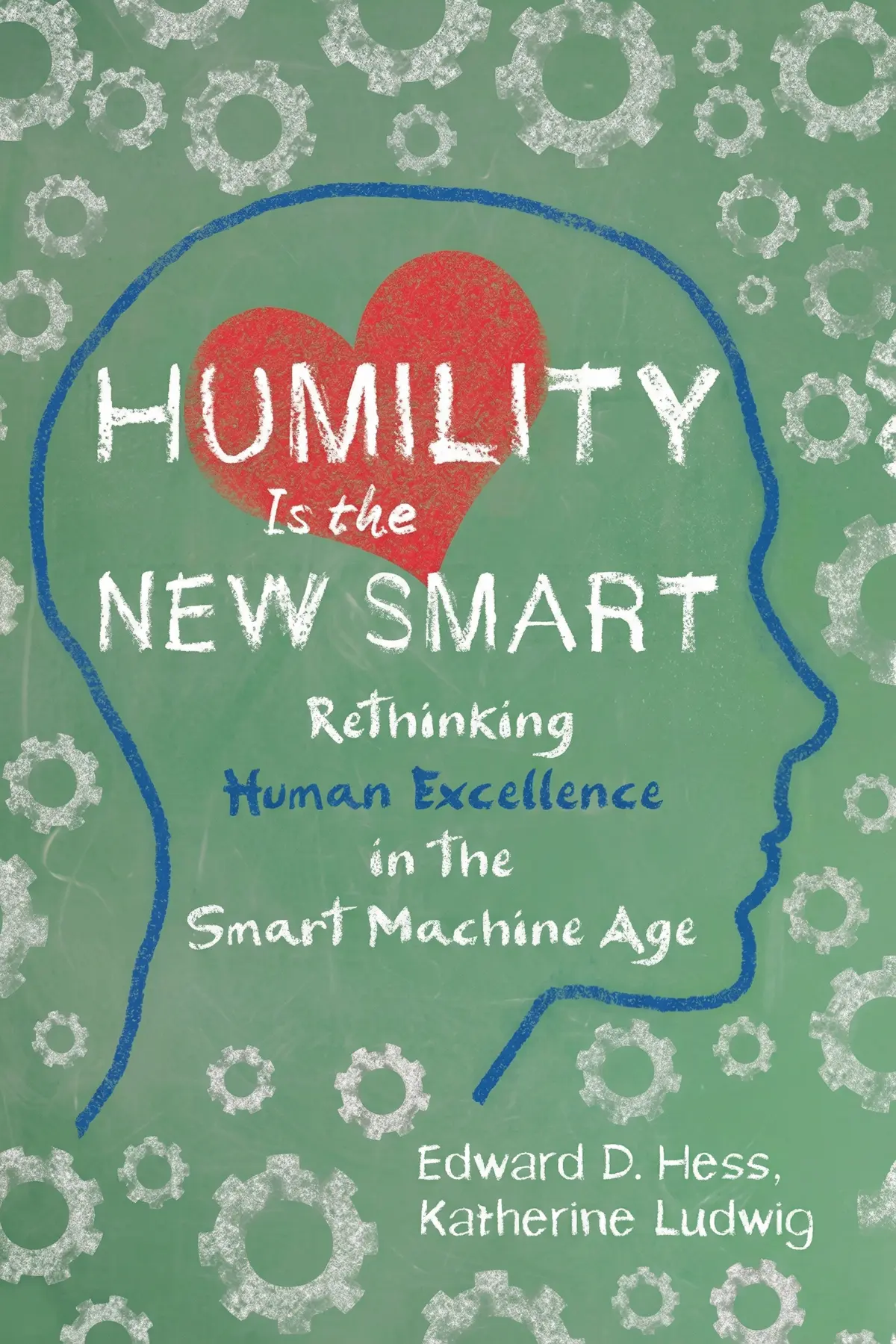
In Humility Is The New Smart, authors Edward D. Hess and Katherine Ludwig argue that the traditional definition of being ‘smart’—characterized by high test scores, the accumulation of facts, and the desire to always be the smartest person in the room—is a relic of the past. In an age where a smartphone can access the sum of human knowledge in seconds, ‘knowing everything’ is no longer a competitive advantage. Instead, machines are poised to take over almost any task that involves logic, data processing, or routine cognitive work. To survive and thrive, humans must pivot toward the qualities that machines lack. This requires a fundamental shift in our mindset, moving away from the ego-driven models of the twentieth century and toward a new framework centered on humility. By the end of this journey, you will understand why the softest human skills are becoming the hardest requirements for professional success, and how you can redefine your own value in a world of smart machines.
2 min 05 sec
As automation moves from the factory floor into professional offices, learn why half of all current jobs are at risk and why human logic alone is no longer enough.
1 min 55 sec
Discover why humility is not about being weak or submissive, but rather a powerful tool for objective thinking and self-awareness in a complex world.
1 min 49 sec
Learn how to dismantle your emotional defenses and become more objective, allowing you to accept criticism and foster growth without feeling threatened.
1 min 56 sec
Explore why the secret to high-level cognitive performance lies in mindfulness and the ability to move beyond your brain’s autopilot mode.
2 min 01 sec
Discover how to break through your personal biases and build deep, collaborative relationships by changing the way you listen to others.
1 min 50 sec
See how small, intentional changes in your daily interactions can transform your career and help you navigate the transition into an automated world.
1 min 31 sec
As we have seen, the Smart Machine Age is not a distant threat but a current reality that demands a new approach to human excellence. The old ways of being ‘smart’—emphasizing individual competition, ego-driven certainty, and the hoarding of information—are no longer effective in a world where technology can outperform us in every logical domain. To remain relevant, we must lean into what makes us uniquely human. This means embracing a new definition of smart, one that is rooted in humility, self-awareness, and the ability to collaborate deeply with others.
The path forward is clear: we must work to quiet our egos, manage our emotional responses, listen with true reflection, and master the art of connecting with others. By doing so, we unlock the creative and critical thinking abilities that represent the pinnacle of human potential. The transformation begins with a simple shift in awareness. Start tomorrow by noticing your own thoughts. When you feel the urge to be ‘right’ or to defend your position, pause and ask yourself if that defensiveness is serving your growth or merely protecting your ego. Practice slowing down, even when the world around you is rushing. By making these small, intentional changes, you will build the NewSmart habits necessary to navigate the future with confidence and purpose. In the end, humility is not just a personality trait; it is the most sophisticated tool we have for surviving and thriving in the age of machines.
The rise of the Smart Machine Age is fundamentally altering the landscape of human labor. As algorithms and automated systems take over tasks that involve processing data and following routine procedures, humans face a critical question: how can we remain relevant? Humility Is The New Smart argues that the answer lies in redefining what it means to be 'smart.' Instead of focusing on who knows the most or who is always right, the authors suggest that human excellence now depends on our ability to excel at the things machines cannot do—namely, critical thinking, creative innovation, and deep emotional connection. This book provides a roadmap for navigating this transition by introducing the 'NewSmart' mindset. It emphasizes that the future belongs to those who can master four key human skills: quieting the ego, managing the self, reflective listening, and mastering otherness. By cultivating humility, we can lower our cognitive defenses, collaborate more effectively with others, and unlock the unique potential of the human mind. The promise of this book is a practical strategy for personal and professional survival in a world increasingly dominated by smart technology.
Edward D. Hess is a professor of business administration and a leading expert on leadership, innovation cultures, and organizational learning. He currently serves as an executive-in-residence at the University of Virginia’s Darden School of Business. Katherine Ludwig, previously a corporate lawyer specializing in finance and securities, is a research associate at the Darden School of Business.
Listeners find the book highly insightful, particularly valuing its thorough exploration of various skills. The writing is also quite accessible, and one listener mentions that the analysis is spot on. Additionally, the content earns praise for its emphasis on humility. However, listeners are divided on the book’s wordiness and the overall caliber of the writing.
The chapter on quieting the ego was exactly what I needed to hear in this hyper-competitive work environment. Frankly, the authors hit the nail on the head regarding how we define "smart" in the age of automation. It’s no longer about knowing all the answers, but about having the emotional intelligence to collaborate and the humility to test our beliefs like hypotheses. I really appreciated the four core precepts, especially the idea that "I am not my ideas." In my experience, separating ego from value is the only way to survive the coming technological shifts. While some might find the business case studies a bit familiar, the synthesis here feels fresh and urgent. We are facing a future where machines handle the logic, leaving us to handle the messy human side of innovation. It is a spot-on analysis that rewards slow reading and deep reflection. If you want to remain relevant in the Smart Machine Age, start here.
Show moreAs a leader in the tech sector, I found the analysis here to be absolutely spot on. We are so used to rewarding the person who knows the most facts that we’ve forgotten how to actually learn and evolve. The authors do a fantastic job explaining why emotional intelligence isn't just a "soft skill" but a survival requirement. I particularly loved the section on reflective listening; it’s embarrassing how often we just wait for our turn to speak instead of truly connecting. This book forces you to look at your personal flaws and realize that your ego is likely your biggest hurdle to success. It’s an easy-to-read, insightful deep dive into the behaviors that will define the next generation of great leaders. While the prose can be a bit wordy, the message is too important to ignore. Truly, this is one of the most humane business books I’ve read in years.
Show moreThis book is a masterclass in how to adapt your mindset for a future we aren't ready for. I was genuinely struck by the authors' argument that our traditional views of intelligence are actually holding us back from collaborating with new technologies. By focusing on humility, we open ourselves up to better data and better relationships. The analysis is spot on, particularly regarding how our internal "stories" prevent us from seeing reality. I didn't find the prose wordy at all; rather, I thought the repetition helped hammer home some very difficult psychological shifts. The focus on humility isn't just about being "nice"—it's about being effective and avoiding the cognitive errors that sink businesses. It’s a refreshing, eye-opening read that I’ve already recommended to my entire management team. We need to start rethinking human intelligence now, and this is the perfect place to start.
Show moreEver wonder how humans will actually stay relevant when AI can outperform us on nearly every technical task? Hess and Ludwig argue that our "New Smart" lies in humility and emotional connection rather than raw data processing. I found the breakdown of how our mental models are just generalized stories—not reality—to be a profound shift in perspective. It's a very accessible read that dives deeper into soft skills than your typical corporate manual. While I'll admit some sections felt a bit like a refresher on Thinking, Fast and Slow, the specific application to the Smart Machine Age gives it a necessary edge. The authors provide a helpful framework for decoupling our ego from our beliefs, which is harder than it sounds. My only real gripe is that it relies a bit too heavily on Ray Dalio’s principles toward the end. Still, it’s an insightful guide for anyone worried about their professional longevity.
Show moreTruth is, we’re all entering a phase where we can’t out-calculate the computer on our desks. This book provides a necessary roadmap for what we should be doing instead: being more human. The authors emphasize that "Old Smart" is the new dumb, and I couldn't agree more. We need to be more open-minded and treat our beliefs as data points rather than fixed identities. I found the advice on building emotional connections to be very practical, though I wish there was more effort to prove these ideas with new data rather than just anecdotes. The writing is generally easy to read, although it does get a bit bogged down in checklists in the middle chapters. It’s a great book for anyone looking to foster a more reflective and evolving mindset in their team. It’s not a technical manual, but a philosophical one for the digital age.
Show morePicked this up because the title was so catchy, but the content was a bit of a mixed bag for me. On one hand, the emphasis on humility as a competitive advantage is a great, humane take on the future of work. On the other hand, the book is quite long-winded and repeats the same three or four points for nearly 200 pages. Not gonna lie, I almost DNF’d it around the 40% mark because the business anecdotes started to blur together. If you’ve read books like Creativity, Inc., you’re going to find a lot of recycled material here. The checklists and self-assessments are probably better in print than in the audio version I consumed. It’s a decent summary of how to be a better thinker, but it doesn't offer much in the way of groundbreaking research. It’s fine as a refresher, just don’t expect a deep dive into actual machine learning technology.
Show moreFinally got around to finishing this, and I’m torn on how to rate it. The central ideas—managing emotions, quieting the ego, and treating beliefs as hypotheses—are all incredibly valuable in a world of rapid change. However, the book feels a bit dated now that we’ve actually entered the era of ChatGPT and generative AI. It peters out toward the end, losing the focus on the "Smart Machine" aspect and turning into a standard leadership manual. To be fair, the business stories about companies like W.L. Gore and IDEO are interesting, even if they’ve been told many times before. I think I would have enjoyed this more as a long-form article rather than a full-length book. It’s a bit repetitive, yet the New Smart framework is still worth knowing. It’s a solid 3-star read that offers good reminders but few "aha!" moments for seasoned readers.
Show moreAfter hearing so much buzz about this, I was surprised by how much of it felt like common sense dressed up in fancy terminology. The New Smart model is basically just a combination of intellectual humility and emotional intelligence. Don't get me wrong, the four precepts are useful and I’ve started applying the "I am not my ideas" mantra to my meetings. But the book is incredibly verbose and could have easily been half its length. Personally, I found the constant references to Ray Dalio a bit tiring, as his brand of radical transparency isn't for everyone. It’s a decent business book, but it lacks the scientific rigor I was expecting given the academic background of the authors. If you're new to the concept of the ego's role in decision-making, you'll love it. If you've read Thinking Fast and Slow, you might find yourself skimming.
Show moreLook, the premise that we need to rethink intelligence for the Smart Machine Age is solid, but the execution left me cold. The prose is incredibly repetitive, and the irony of the author constantly saying "I, Ed" in a book about humility was not lost on me. I found the writing quality to be quite poor, often reading like a collection of blog posts that weren't properly edited for length. To be fair, the core concepts of mindfulness and reflective listening are important, but they aren't new. I felt like I was being sold a self-help book wrapped in a provocative business title that didn't actually deliver on the AI front. It’s very wordy and verbose, making it a slog to get through even the first few chapters. If you've read any modern leadership book, you've likely seen these company examples like Google and Pixar handled better elsewhere.
Show moreNot what I expected based on the subtitle about "Rethinking Human Intelligence in the Smart Machine Age." Honestly, this book has almost nothing to do with machines or technology at its core. It’s really just a book about mindfulness and being a nicer person at the office. You could replace SMA with almost any other context and the advice would remain identical. The authors use that cliché Oxford English Dictionary definition of critical thinking that felt like high school essay filler. Furthermore, the narration on the audiobook was so dry it made the already repetitive prose even harder to stomach. There are some okay insights about quieting the ego, but they are buried under layers of business-speak and corporate cheerleading. I was hoping for a more analytical look at man-machine collaboration, but instead, I got a basic self-help guide that feels somewhat dated.
Show more
William B. Irvine
Andrew D. Thompson
Deepak Chopra
Robin Ryan
AUDIO SUMMARY AVAILABLE
Get the key ideas from Humility Is The New Smart by Edward D. Hess, plus 5,000+ more titles in English and Thai.