
18 min 11 sec
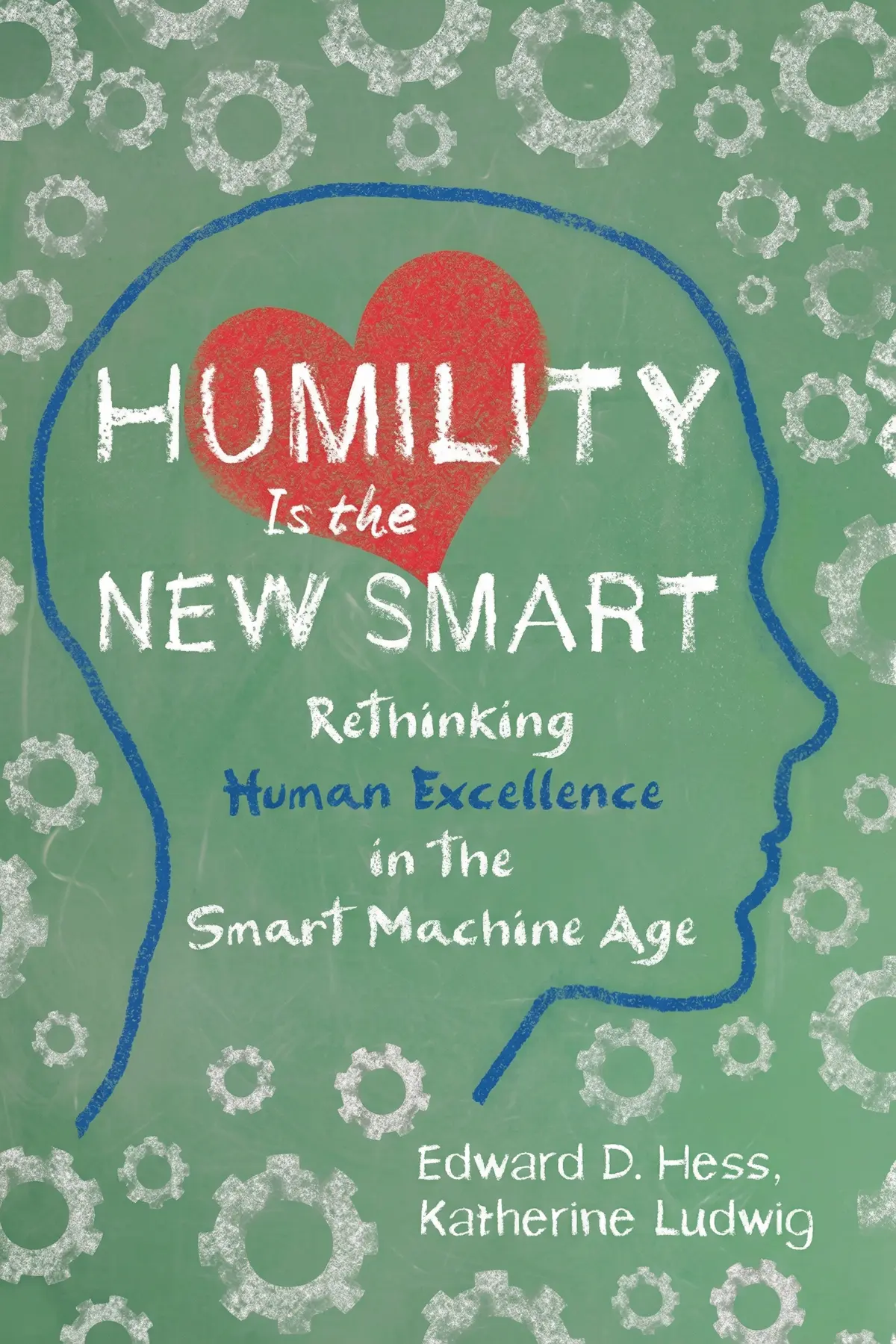
Learn or Die: Using Science to Build a Leading-Edge Learning Organization
Learn or Die explores how individuals and organizations can maintain a competitive edge through continuous learning, leveraging cognitive science to foster innovation, overcome psychological barriers, and build high-performance cultures.
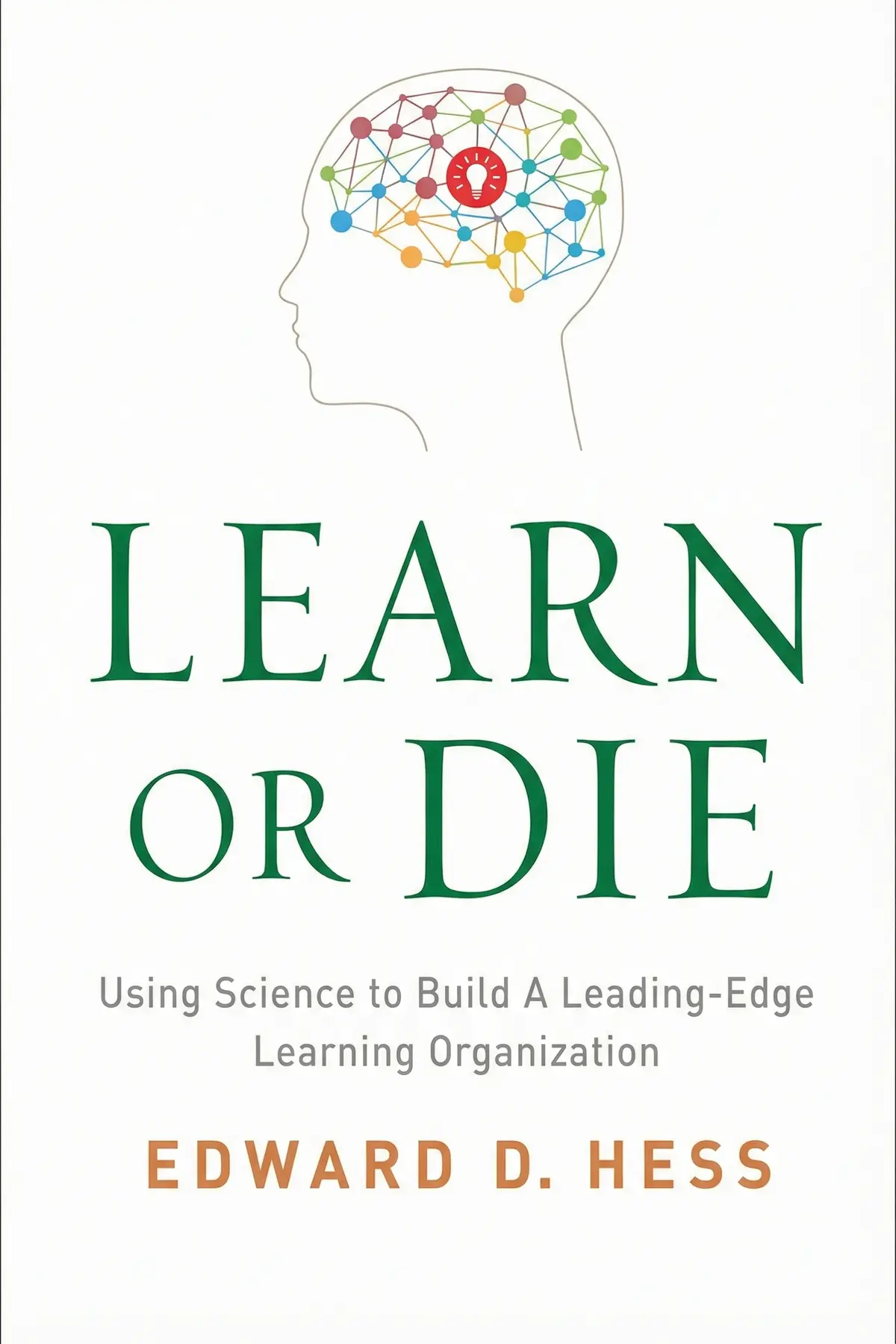
Table of Content
1. Introduction
1 min 36 sec
In the modern business landscape, the phrase “innovate or disappear” has become a common mantra. But if we dig deeper into what innovation actually requires, we find a more fundamental necessity: the ability to learn. Every leader knows that growth is essential, yet many struggle to understand what learning really looks like at an organizational level. It isn’t just about attending a seminar or reading a manual; it is about a fundamental shift in how every person in a company processes information and responds to change.
This journey into the science of learning challenges the traditional ways we run our businesses. It asks us to look at our organizations not just as machines producing output, but as collective minds that need the right conditions to function effectively. The stakes couldn’t be higher. We are living in a time where the pace of change is accelerating, and the competitive advantages of yesterday can vanish in an instant. This means that for any company or individual, the choice is stark: we must learn, or we will face professional obsolescence.
Throughout this exploration, we will bridge the gap between cognitive science and corporate strategy. We will see how our biological instincts, which were designed for survival in a very different world, often get in the way of the high-level thinking we need today. By understanding the mechanics of the human brain—how it handles fear, how it processes conversation, and how it solves problems—we can build environments that don’t just survive the future but thrive in it. From the way Toyota handles mistakes to the psychological safety required for a team to speak up, we are going to look at how to build a High Performance Learning Organization. Let’s dive into the throughline of this transformation: the mastery of continuous, collective growth.
2. The Duality of Human Thought
2 min 12 sec
Explore why our brains prefer to stay on autopilot and how the survival mechanisms of the past might be sabotaging your modern business decisions today.
3. The Myth of the Purely Logical Mind
2 min 17 sec
Discover why the idea of a purely logical leader is actually a myth and how managing your feelings is the secret to sharper decision-making.
4. Recruiting the Mastery-Minded
1 min 52 sec
Learn why hiring the smartest person in the room might be a mistake if they aren’t driven by the right kind of internal motivation.
5. The Safety of the Shared Mistake
1 min 55 sec
Find out how top-tier companies like Toyota turn human error into a competitive advantage by changing the way their employees view the risk of failure.
6. The Power of Humble Inquiry
2 min 04 sec
Uncover the simple conversational shift that turns a standard workplace meeting into a powerful engine for collective growth and deeper understanding.
7. Strategies for High-Stakes Thinking
2 min 10 sec
Get ready to look at problem-solving through the eyes of a firefighter and discover a technique for predicting disaster before it actually happens.
8. Scaling the Learning Culture
2 min 14 sec
See how massive global corporations successfully pivot their entire cultures to stay ahead of the curve by embracing transparency and radical experimentation.
9. Conclusion
1 min 51 sec
As we reach the end of this exploration, the core message remains clear: the ability to learn is the only sustainable competitive advantage in a world defined by change. We have seen that learning is not a passive activity but an active, disciplined process that requires us to master our own biology. By understanding the tug-of-war between the autopilot of System 1 and the analytical power of System 2, we can begin to take control of how we think. We’ve learned that our emotions are not the enemies of logic, but the essential context that determines whether our minds are open to new ideas or shut down by fear.
Building a High Performance Learning Organization means more than just having a training budget. It means hiring people who are driven by a genuine desire for mastery and creating a culture where it is safe to be wrong. It means replacing the arrogance of “telling” with the humble inquiry of “asking” and using strategic tools like pre-mortems to navigate an uncertain future. Whether you are leading a small team or a global corporation, the path forward is the same: you must foster an environment where every mistake is viewed as an asset and every conversation is an opportunity for growth.
Ultimately, the choice to become a learning organization is a choice to be resilient. It is about moving away from the rigid structures of the past and toward a more fluid, adaptive way of being. As you move back into your professional life, start small. Reflect on your daily decisions, ask more questions than you answer, and remember that growth only happens when we are willing to step outside what we already know. In an age where the only constant is change, the most important thing you can do is to keep the engine of learning running at full speed. Stay curious, stay humble, and remember: the future belongs to those who never stop learning.
About this book
What is this book about?
In a rapidly evolving economic landscape, the ability to adapt is no longer optional; it is the ultimate survival skill. Learn or Die by Edward D. Hess provides a comprehensive blueprint for transforming any company into a High Performance Learning Organization. By examining the intersection of neuroscience and business strategy, this guide reveals why traditional management often stifles the very thinking needed for success. The promise of this work is to move beyond the theory of growth and provide actionable methods for hiring the right minds, creating a psychologically safe environment, and mastering critical thinking. From the way our brains prioritize habits over innovation to the techniques used by world-class firms like Toyota and Bridgewater, you will discover how to rewire your organization’s DNA. It is about moving from a state of static operation to one of dynamic, perpetual growth, ensuring that your team doesn't just keep up with the future but actively shapes it.
Book Information
About the Author
Edward D. Hess
Edward D. Hess serves as a professor of business administration at the University of Virginia Darden School of Business. He is a prolific author focusing on leadership, personal growth, and entrepreneurship, with notable works including Grow to Greatness and The Road to Organic Growth.
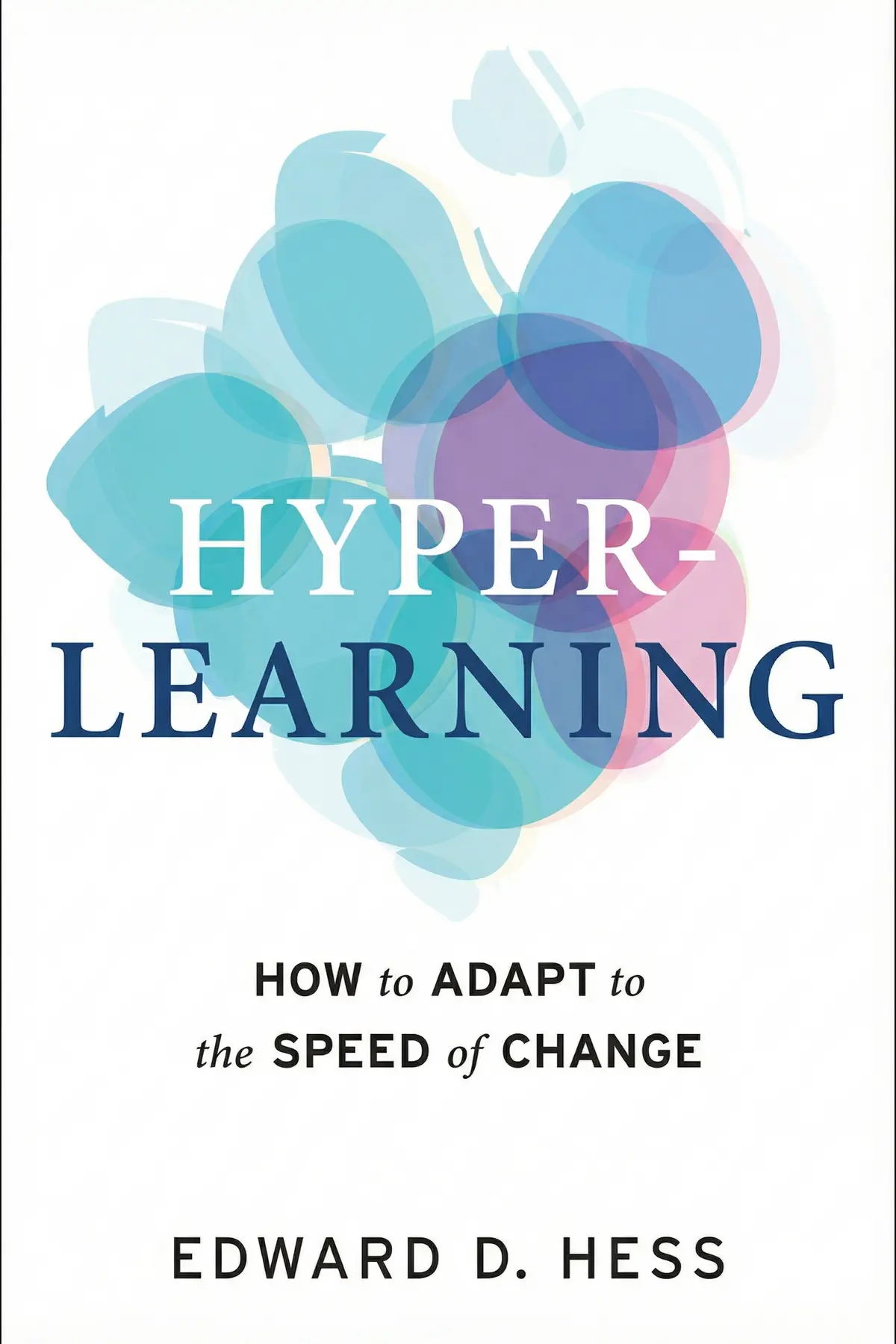
Hyper-Learning: How to Adapt to the Speed of Change
Edward D. Hess
Ratings & Reviews
Ratings at a glance
What people think
Listeners find this book exceptionally accessible, with one noting that it is an effortless experience. Furthermore, the information provided is well-regarded, as listeners value the thoroughness of the academic research and the inclusion of real-world case studies.
Top reviews
Pla
Wow. This is probably the most comprehensive book on organizational learning I've read since 'The Fifth Discipline.' Hess manages to weave together a massive amount of research into an actionable framework. I loved the distinction between 'masters' and 'performers'—it really changed how I look at my own team's development. We often focus so much on demonstrating competence that we stop actually developing it. The book is packed with depth, but it’s still highly readable and not a strenuous read. It isn't just about business; it’s about how we as individuals can get out of our own way. The bibliography alone is a goldmine for anyone interested in psychology or business operations. If you want your company to thrive in a globalized economy, you need to understand the principles in this book. Highly recommended.
Show moreSarocha
Picked this up because I wanted to understand the 'secret sauce' behind high-performing companies, and I wasn't disappointed. The detailed breakdown of Bridgewater’s 'learning machine' was fascinating, even if the radical transparency sounds a bit extreme for my personal taste. What I appreciated most was how Hess explains that technology isn't the ultimate competitive advantage anymore—learning is. He uses real-world examples from UPS and Intuit to show how disciplined execution and constant feedback loops create a dynamic environment. The writing is clear and the knowledge base is obviously very deep. It’s one of those books you’ll want to keep on your shelf and refer back to when you're trying to diagnose why a certain process isn't working. It really does provide a glimpse behind the curtain of top-tier organizations.
Show moreBae
To be fair, I went into this expecting a typical airport business book, but it’s so much more than that. This is a serious look at the intersection of neuroscience and business. Hess explores why our brains are wired to resist change and how we can override those default settings to become better learners. The concept of 'quieting the ego' is something every leader should study. The book is very well put together, and despite some people saying the first half is dry, I found the academic grounding to be essential for validating the case studies that follow. It’s thorough research met with disciplined execution. If you actually implement even a fraction of the processes mentioned here, you’ll see a significant return on your energy. This is a must-read for the forward-thinking professional.
Show moreVipawan
Not what I expected, in a good way! I’ve read a lot of management books, but few go this deep into the 'why' of human behavior in the workplace. The interview with Gary Klein was a highlight for me, offering a different perspective on how experts make decisions under pressure. Hess makes a compelling case that 'out-learning' the competition is the only sustainable strategy left. The book is intense and packed with info, so you really need to sit down and concentrate, but it’s worth the focus. It’s not just theory; it’s an actionable blueprint for high-performance learning organizations. I’ve already started using some of the 'drill down' techniques with my own department. If you’re serious about leadership and personal development, don't sleep on this one. It’s a surprise hit that keeps on giving.
Show moreUbolrat
As someone who has followed Ray Dalio’s work for years, I picked this up specifically for the chapter on Bridgewater. Hess does a fine job describing their 'radical transparency' and the 'drill down' process. While I felt he was a bit too awestruck by their culture at times, he does provide a clear look at why their model works for them. The book offers a lot of solid academic research, even if the transition between the theoretical first half and the case-study second half is a little jarring. It’s a worthwhile read for senior leaders, but be prepared for some very dense passages early on. It isn't a strenuous read in terms of vocabulary, but the depth of the knowledge base is impressive. It’s a good synthesis of modern management theory.
Show moreTippawan
Finally got around to reading this, and I have to say, the science-based approach to organizational growth is refreshing. Hess breaks down the 'HPLO' formula into the right people, environment, and processes. It’s a simple concept but difficult to execute, and the book doesn't shy away from that reality. I particularly liked the discussion on cognitive dissonance and how our 'humanness' often works against our ability to learn. We are inherently lazy thinkers, and Hess provides a solid blueprint for how to snap out of autopilot. While some parts of the academic review at the start were a bit repetitive, the insights into how IDEO and Intuit foster innovation made up for it. It’s a thoughtful look at why smart people make bad decisions and how to build a culture that values truth over ego.
Show moreRungrat
Hess provides a solid, if slightly dense, blueprint for building a culture that can survive the rapid pace of modern technology. I found the section on the power of emotions in the learning process to be the most impactful part of the book. It’s true that if you create negative emotions in a 'teaching moment,' you actually diminish that person’s ability to process info—that’s a neuroscience reality many managers ignore. The book is well-researched, combining psychology and behavioral economics in a way that feels practical rather than just theoretical. My only gripe is that the writing can be a bit uninspired at times, making some of the more data-heavy sections feel like a chore. Still, the case studies are excellent and provide a realistic look at how these theories play out in the real world.
Show moreWatchara
The information isn't bad, and the focus on becoming a High Performance Learning Organization (HPLO) is certainly relevant in today's volatile market. However, the structure is incredibly clunky. I appreciated the case studies on Bridgewater and UPS, which offered a vivid look at radical transparency and disciplined execution, but the first several chapters were a real slog. It felt like a collection of ideas from other popular books—like Kahneman's work—without offering a unique 'hook' to tie them together. Truth is, if you haven't read much in the leadership genre, this is a great starting point. But for seasoned managers, it’s mostly a refresher. I'd recommend skipping straight to Chapter Nine to save yourself some time. It's a decent outline, just not the game-changer I was hoping for.
Show moreMoo
Ever wonder why some business books feel like they are talking down to you? The narration here was just so dry, and the content covered ground I had already explored in much better books. Hess talks about how we can cognitively process information at 600wpm while people speak at 150wpm, but reading this book felt like being stuck in that slow-motion boredom he describes. Personally, I felt the first part was just a cursory overview of 'Mindset' that adds very little new value to the conversation. Then, there is an interview with Gary Klein that feels totally out of place, like a transcript from a completely different project just dropped into the middle. While the chapters on UPS and Intuit have some merit, the delivery is so horribly uneven that it makes the overall experience frustrating. Not for me.
Show moreMonthon
This book was an absolute slog to get through. I found the writing uninspired and the structure completely clunky, especially in the first half which reads more like an academic literature review than a business guide. Edward Hess tries to synthesize a lot of research, but frankly, there isn’t much original thought here if you’ve already read Dweck or Kahneman. The jargon is thick, and the pacing is so dry that I almost stopped at the 35% mark. It felt like I was hacking through a jungle of citations just to get to a point that could have been summarized in a blog post. If you are looking for fresh insights on high-performance learning organizations, you might want to look elsewhere. I struggled to stay engaged, and while the case studies later on are slightly better, they don't justify the effort required to get there.
Show moreReaders also enjoyed
A Year with Peter Drucker: 52 Weeks of Coaching for Leadership Effectiveness
Joseph A. Maciariello

Acting with Power: Why We Are More Powerful Than We Believe
Deborah Gruenfeld
All In: How Great Leaders Build Unstoppable Teams
Mike Michalowicz
7 Powers: The Foundations of Business Strategy
Hamilton Helmer
AUDIO SUMMARY AVAILABLE
Listen to Learn or Die in 15 minutes
Get the key ideas from Learn or Die by Edward D. Hess, plus 5,000+ more titles in English and Thai.
- 5,000+ titles
- Listen as much as you want
- 7-day free trial
- Cancel anytime







