
16 min 13 sec
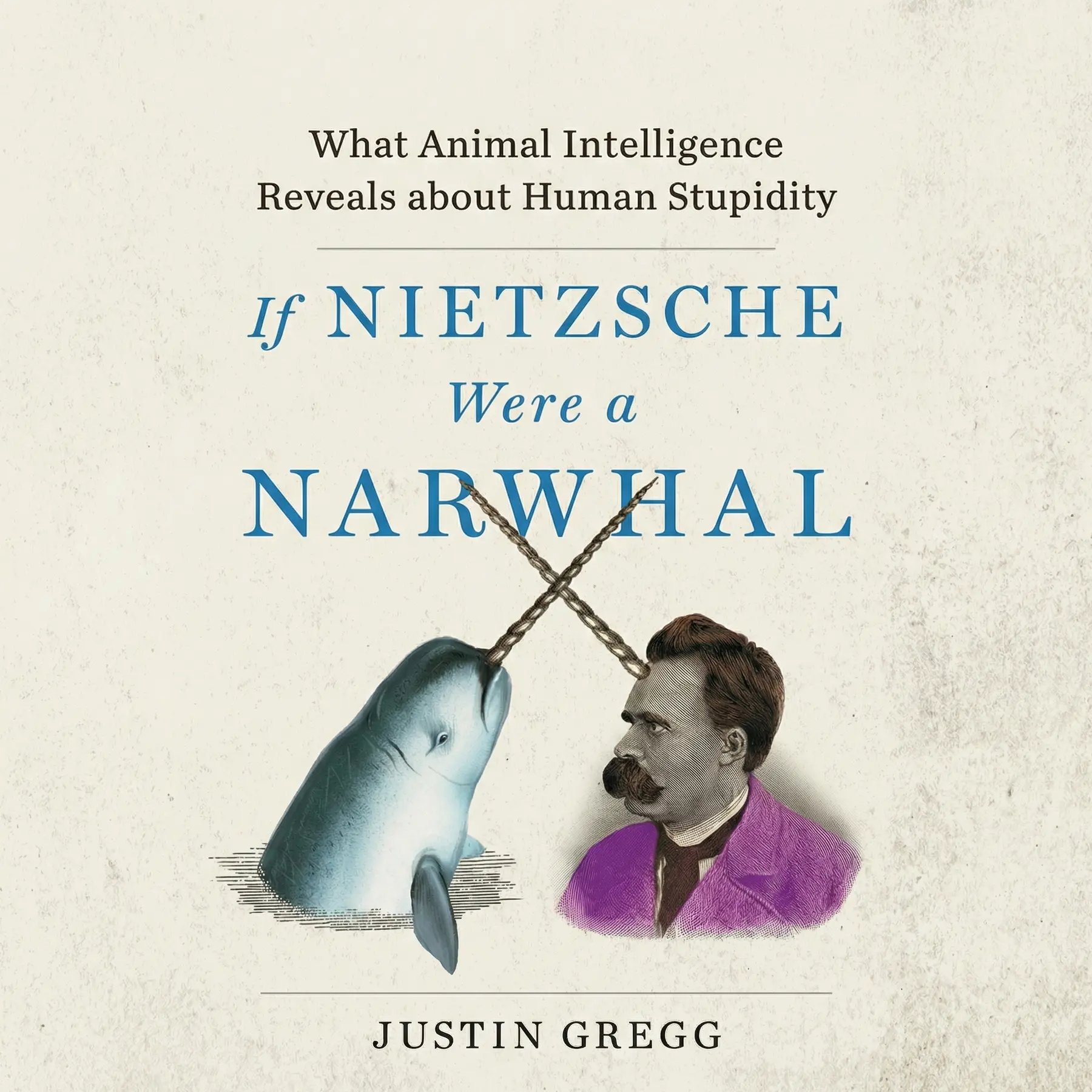
If Nietzsche Were a Narwhal: What Animal Intelligence Reveals about Human Stupidity
By Justin Gregg
Justin Gregg challenges the assumption that human intelligence is an evolutionary gift, suggesting instead that our unique cognitive abilities might actually be our greatest liability compared to the simple, successful lives of animals.
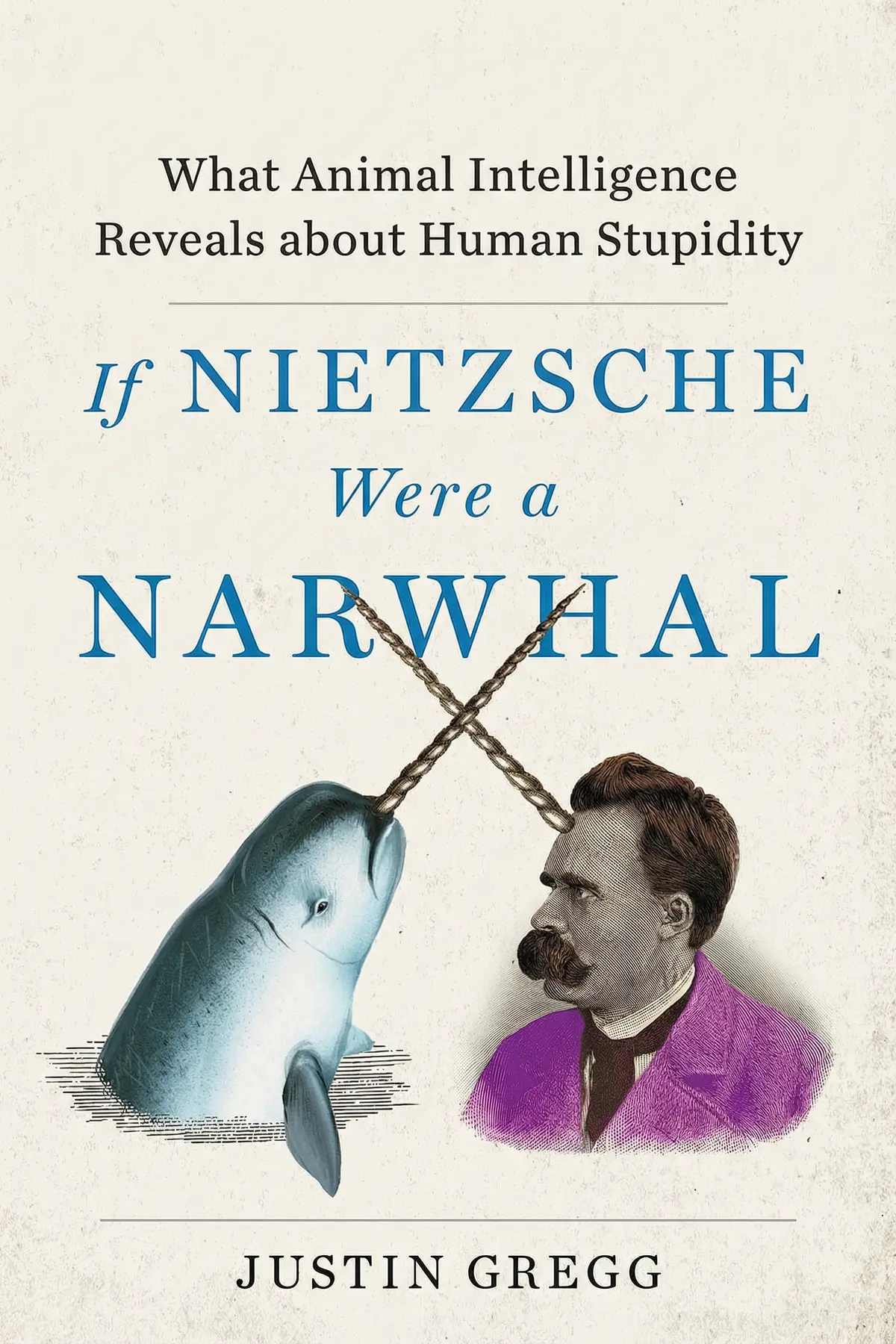
Table of Content
1. Introduction
1 min 57 sec
In 2012, a rather unusual financial experiment took place, organized by the British newspaper *The Observer*. The goal was simple: determine who was best at picking winning stocks. On one side, you had a team of professional investment managers, people who spent their entire lives studying market trends and economic data. On another, a group of schoolchildren. And finally, there was Orlando—a ginger cat.
While the humans used complex algorithms, years of training, and the full weight of human logic, Orlando’s strategy was a bit more direct. He picked his stocks by tossing a toy mouse onto a grid of numbers. You might expect the professionals to win by a landslide, but when the year ended, the results were humbling. Orlando the cat had outperformed everyone. He turned his initial stake into a significant profit, leaving the experts in second place and the kids in last.
This story is more than just a funny anecdote; it serves as a gateway into a profound and unsettling question: Is human intelligence really the evolutionary gold medal we think it is? We often view ourselves as the undisputed champions of the natural world because of our ability to build skyscrapers, write symphonies, and split the atom. But if we define success by more fundamental metrics—like personal happiness, social harmony, or the long-term survival of our species—we might find that our ‘superior’ brains are actually a bit of a disaster.
In this exploration of Justin Gregg’s work, we are going to look at the world through a different lens. We’ll ask why our capacity for complex thought often leads us into dark places, why we struggle with long-term consequences, and why a narwhal might actually be living a more successful life than a philosopher. It’s a journey that challenges our most basic assumptions about what it means to be ‘smart’ and suggests that, in the grand game of evolution, we might be overthinking ourselves into extinction.
2. The Burden of Why
2 min 36 sec
Humans are unique in their constant search for causality, but this ‘Why’ specialty often leads to existential despair that other animals simply don’t experience.
3. When Abstraction Goes Wrong
2 min 34 sec
Our ability to create complex ideas and ‘dead facts’ often results in harmful pseudo-science and the justification of historical atrocities.
4. The Evolutionary Value of Bullshit
2 min 22 sec
Humans aren’t just good at lying; we’ve evolved to value ‘believability’ over truth, making bullshitting a successful social strategy.
5. Prognostic Myopia and the Bedbug Lesson
2 min 40 sec
Our brains are wired for immediate solutions, leading to ‘prognostic myopia’—an inability to foresee the long-term disasters our inventions cause.
6. Redefining Success in the Animal Kingdom
2 min 24 sec
When measured by happiness and survival, animals like chickens and crocodiles might be ‘winning’ the game of life more effectively than humans.
7. Conclusion
1 min 40 sec
The throughline of our exploration is both humbling and a bit dark: the very things that make us human—our search for meaning, our complex causal logic, and our social maneuvering—are often the very things that make our lives difficult and our future uncertain. We have built a world on the foundation of ‘Why,’ only to find that the answers we come up with often lead to conflict and destruction. Our ‘prognostic myopia’ ensures that we keep trading our long-term survival for short-term convenience, a trade that most other animals are too ‘smart’ to make.
However, this realization doesn’t have to be a source of despair. By acknowledging the limitations and the potential ‘glitches’ in our own cognition, we can begin to approach the world with more humility. We can recognize that our big brains are prone to bullshitting, overcomplicating, and ignoring the future. If we want to avoid the 9.5 percent chance of extinction, we need to start making decisions that value the simple, sustainable well-being that other animals seem to achieve so naturally.
The dream of a better world—one with restored biodiversity and a move away from the cruelty of our current systems—is possible, but only if we stop assuming that our intelligence makes us infallible. We might never be as content as a cow in a field or as efficient as a narwhal in the deep, but by learning from their ‘simplicity,’ we might just find a way to stay in the game of life a little longer. The next time you feel overwhelmed by the complexities of the human world, remember Orlando the cat. Sometimes, the most ‘intelligent’ thing you can do is just toss the mouse and trust your instincts.
About this book
What is this book about?
If Nietzsche Were a Narwhal explores the provocative idea that human intelligence, often cited as our greatest achievement, might actually be an evolutionary mistake. While we pride ourselves on our ability to reason, create, and solve complex problems, author Justin Gregg points out that these same traits bring about existential dread, systemic cruelty, and environmental destruction. Animals, from narwhals to bedbugs, seem to possess a brand of intelligence that is far more conducive to long-term survival and immediate well-being. Through a series of fascinating comparisons between human cognition and animal behavior, the book promises to dismantle our sense of intellectual superiority. It examines how our obsession with causal logic and our talent for deception often lead us toward self-destruction. By looking at the world through the eyes of a cow or a crocodile, we can begin to see how our 'big brains' might be leading us toward an evolutionary dead end, while the rest of the animal kingdom continues to thrive in blissful, efficient simplicity.
Book Information
About the Author
Justin Gregg
Justin Gregg is an adjunct professor at St. Francis Xavier University in Nova Scotia, Canada. He’s also a senior research associate who specializes in animal behavior and cognition.
Ratings & Reviews
Ratings at a glance
What people think
Listeners find the book to be deeply thought-provoking, with one listener describing how it shifts perspectives on human superiority. Additionally, the quality of the prose is highly regarded, and listeners overall consider it an exceptional read. However, there is a lack of consensus on its entertainment level, as some find it engaging while others find the experience tiring.
Top reviews
Darawan
Does human intelligence actually make us better off? Gregg challenges the standard narrative that our complex brains are a crowning achievement of evolution, suggesting they might actually be a liability. The writing is incredibly punchy and accessible, making dense concepts like "prognostic myopia" easy to grasp. I especially loved the section on how bees might possess consciousness, which really puts our perceived superiority into perspective. While the outlook on the climate crisis is a bit bleak, the author’s humor keeps the narrative from becoming a total downer. It is a perspective-shifting read that I couldn't put down.
Show morePing
Wow, talk about a reality check for the human ego. Gregg brilliantly deconstructs why "intelligence" is such a slippery concept to define, let alone measure. He suggests that if Nietzsche had the brain of a narwhal, he would have been spared his existential agony, and the world might have been spared the misuse of his philosophy. It’s a bold, thought-provoking premise that made me reconsider everything from my backyard chickens to the global environmental crisis. The book is witty, fast-paced, and manages to make complex biology feel like a conversation at a bar. Absolutely worth your time.
Show moreTawee
The chapter on how animal "norms" compare to human "moral reasoning" was a total eye-opener for me. Gregg makes a compelling case that our elaborate moral systems often lead to more destruction than the simple behavioral rules found in the animal kingdom. The way he discusses "the firehouse of falsehood" regarding our unique ability to bullshit is particularly relevant in our current era of misinformation. The writing is top-notch—fast-paced and genuinely engaging throughout. It’s rare to find a science book that is this informative while remaining such a page-turner. I’ll be thinking about this one for a long time.
Show moreJack
Finally got around to reading this and it’s easily one of the most thought-provoking books I've picked up all year. It really shifts your perspective on what "evolutionary success" looks like—hint: it’s the crocodiles and bacteria that are winning, not the humans. I loved the quirky animal anecdotes, especially the sections regarding animal awareness of mortality and their affinity for getting drunk. It’s rare to find a book that is this scientifically grounded while still being incredibly accessible to a general audience. This is an excellent read for anyone curious about cognition.
Show moreAstrid
As someone who spends way too much time reading about evolutionary biology, I found Justin Gregg’s perspective quite refreshing. He argues that things we prize—like our ability to lie or ruminate on death—often cause more suffering than the "simpler" cognition of other species. The discussion on our obsession with manicured lawns as a symptom of short-sighted thinking was a highlight for me. However, he does occasionally lean into a very pessimistic view of humanity that ignores our capacity for large-scale altruism. Still, the writing quality is excellent and it certainly makes you question your place in the animal kingdom.
Show moreVarinee
To be fair, I went into this expecting a dry science text, but Gregg’s writing is surprisingly funny and irreverent. He does a great job of synthesizing research on animal communication and foresight without getting bogged down in academic jargon. My only real gripe is that he occasionally ignores the benefits of human technology, like how it might protect us from non-anthropogenic existential threats like asteroid strikes. Still, his core argument that our intelligence might be an evolutionary dead end is hard to ignore. It’s a fascinating, if slightly unsettling, look at the downsides of being smart.
Show moreNongnuch
After hearing about the "prognostic myopia" concept on a podcast, I knew I had to check this book out. It explains so much about why we are so terrible at dealing with long-term threats like climate change despite being "intelligent" enough to calculate them. The comparison between the narwhal’s ignorance of death and our own existential dread was particularly poignant and well-argued. While the ending felt a little rushed and perhaps a bit too cynical, the overall journey was incredibly enlightening. It’s a sharp, clever book that challenges the very foundations of human exceptionalism.
Show moreNew
Picked this up expecting a deep dive into narwhals, but they are mostly just a metaphorical placeholder for "dumb" animals. The title is a bit of a bait-and-switch, as the book is really more about the flaws in human reasoning compared to animal norms. It’s an entertaining read with a very colloquial, Malcolm Gladwell-esque style, but some of the arguments felt repetitive by the halfway point. It’s a good choice for a casual weekend read if you enjoy light science, even if the philosophical depth isn't exactly groundbreaking or life-changing.
Show moreSukit
Truth is, I found the author’s tone a bit too preachy and his oversimplification of complex political issues was distracting. While there are some genuinely fascinating animal facts scattered throughout, the book often feels like "philosophy-by-vibes" rather than a grounded academic work. The example of the French soldiers and Japanese prisoners intended to show moral relativism was particularly muddled and didn't seem to support his later points about the nature of evil. It felt like he was reaching for profound conclusions that the evidence didn't quite support. I expected more rigorous science and less social commentary.
Show moreNong
Frankly, I wanted to like this, but the author’s "doom-and-gloom" narrative felt a bit exhausting after a while. He spends so much time focusing on human failures that he starts to sound like a bit of a misanthrope, and his characterization of people with less privilege than him felt somewhat condescending. I also found his dismissive attitude toward the potential for human moral progress to be frustratingly narrow and pessimistic. While the animal facts were mildly interesting, they weren't enough to save the book from feeling like an amateurish philosophy lecture. It was a tiring experience overall.
Show moreReaders also enjoyed
A Life Decoded: My Genome: My Life
J. Craig Venter

59 Seconds: Change Your Life in Under a Minute
Richard Wiseman
A Planet of Viruses
Carl Zimmer
AUDIO SUMMARY AVAILABLE
Listen to If Nietzsche Were a Narwhal in 15 minutes
Get the key ideas from If Nietzsche Were a Narwhal by Justin Gregg, plus 5,000+ more titles in English and Thai.
- 5,000+ titles
- Listen as much as you want
- 7-day free trial
- Cancel anytime







