
15 min 10 sec
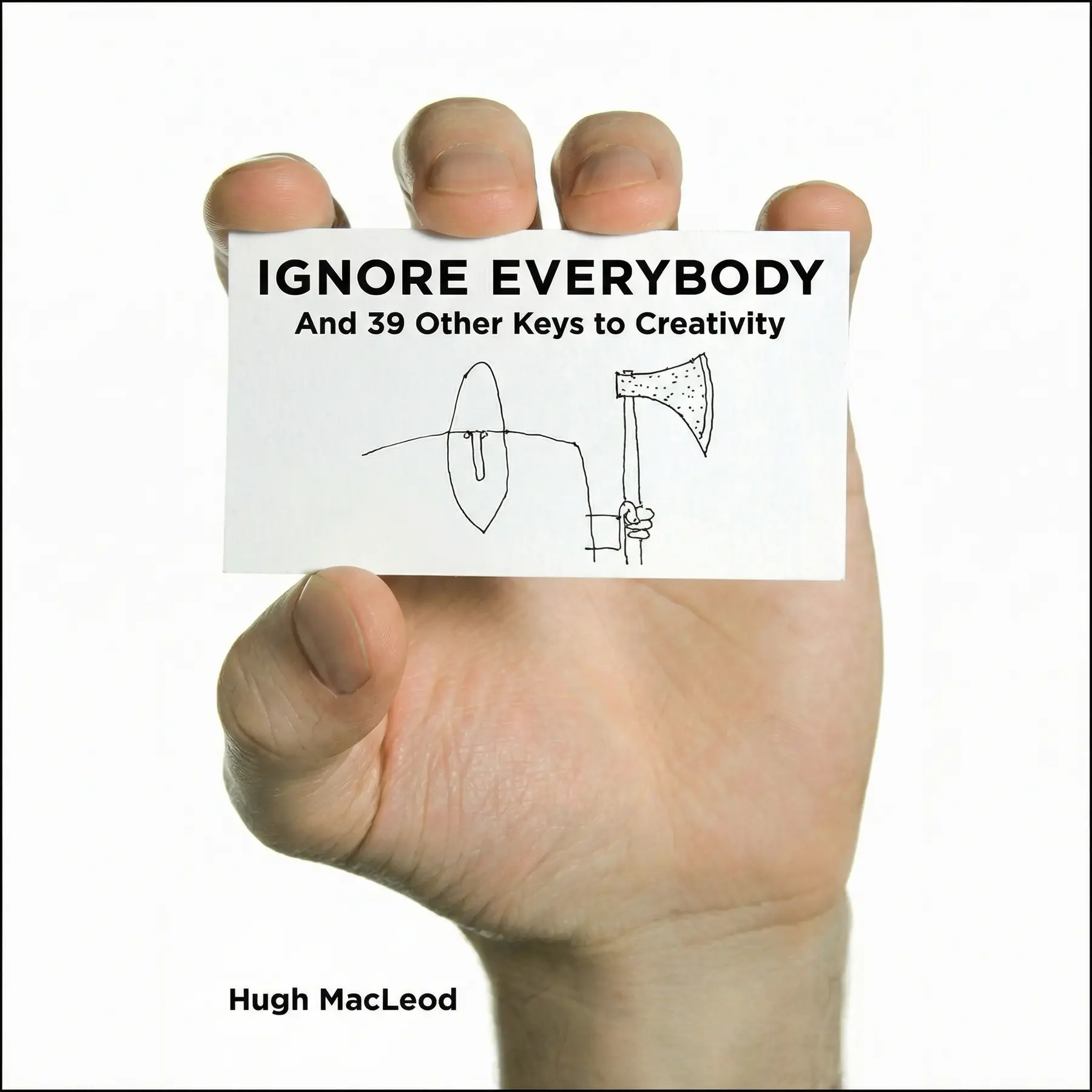
Ignore Everybody: And 39 Other Keys To Creativity
By Hugh MacLeod
A refreshing guide to reclaiming your creative autonomy, Hugh MacLeod offers forty keys to overcoming internal blocks, ignoring critics, and navigating the intersection of passion and professional survival.
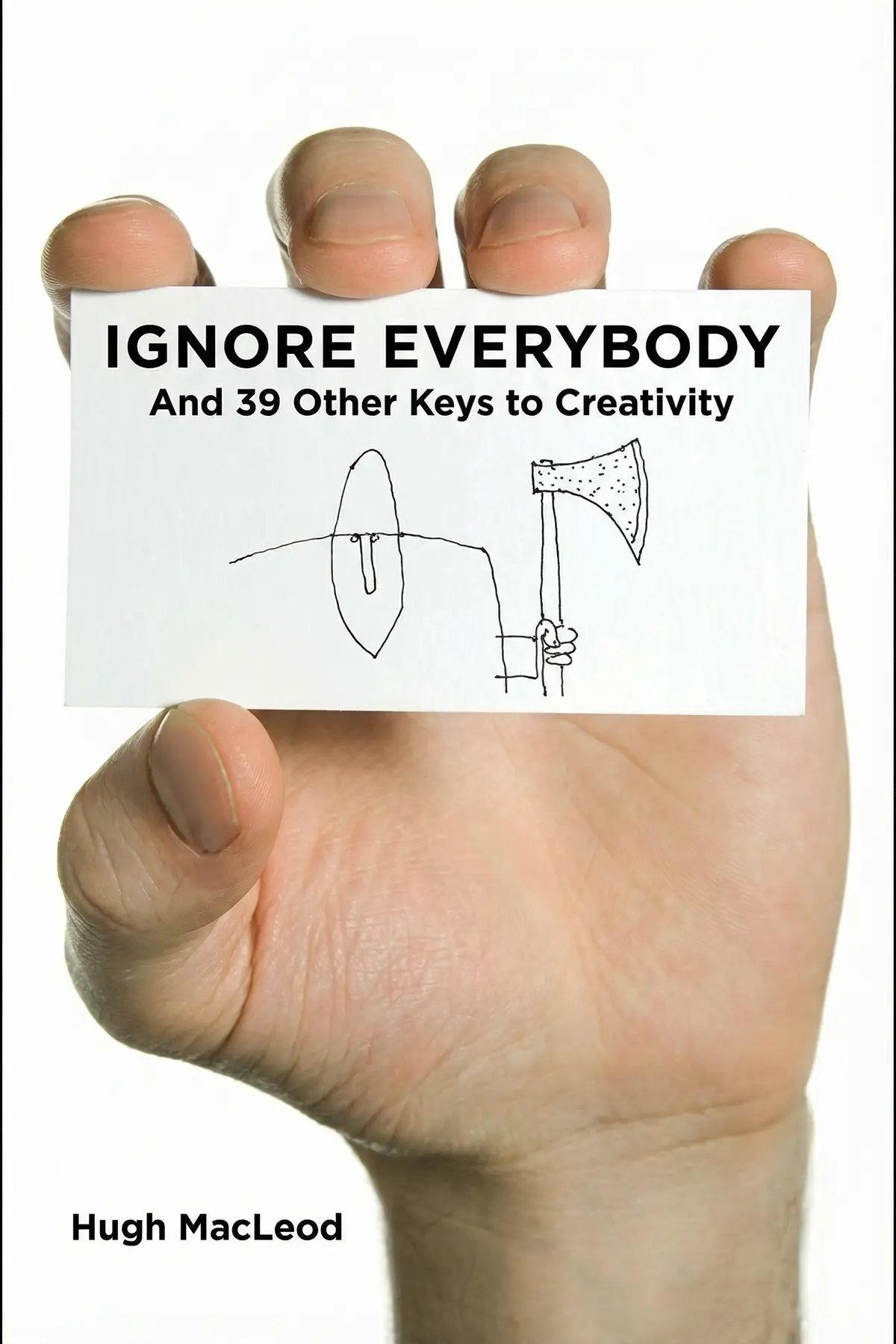
Table of Content
1. Introduction
1 min 35 sec
We have all experienced that peculiar, frustrating phenomenon where we set aside a perfect, quiet Saturday afternoon to finally get to work on a passion project, only to find our minds as blank as the paper in front of us. We sit, we wait, we stare at the wall, and yet the brilliance we felt earlier in the week—when we were stuck in a boring meeting or commuting home—is nowhere to be found. This disconnect is one of the most common hurdles in any creative life. It leads many to believe that they simply don’t have ‘it,’ or that the muse has abandoned them.
But what if the problem isn’t a lack of talent, but a misunderstanding of how creativity actually functions? Hugh MacLeod’s approach to the creative life is built on a foundation of radical independence. The central throughline of this journey is the idea that your best work will always come from a place of personal truth, a place that is often invisible or even threatening to the people around you. To truly tap into that wellspring, you have to learn to shut out the noise of the crowd, the expectations of your peers, and the lure of ‘perfect’ conditions.
Over the next few minutes, we are going to explore how to harness the unpredictable nature of inspiration, why the struggle with procrastination is often a sign of how much the work matters, and how to build a life that supports your art without letting the market crush its soul. We will look at why you shouldn’t wait for permission or discovery, and why the most important person you ever need to satisfy with your work is yourself. By the end, you’ll have a roadmap for navigating the ‘creative jungle’ while keeping your vision intact.
2. The Spontaneity of Inspiration
2 min 05 sec
Creativity is not a faucet you can turn on at will; it behaves more like an involuntary reflex that strikes in the most inconvenient places.
3. Defeating the Procrastination Trap
2 min 09 sec
The urge to delay starting a project is often a masked fear of the unknown, manifesting as a sudden obsession with tools and equipment.
4. Why You Should Ignore the Feedback of Friends
1 min 55 sec
The people closest to you are often the least qualified to judge your most original work because truly new ideas have no precedent.
5. The Importance of Unfiltered Self-Expression
2 min 09 sec
To create work that moves others, you must first refuse to compromise your vision for the sake of popularity or approval.
6. Protecting Art with a Day Job
1 min 53 sec
Financial independence from your art can be its greatest safeguard, preventing your creativity from becoming a mere slave to your bills.
7. Becoming Your Own Agent in the Digital Age
1 min 55 sec
The era of the gatekeeper is over; the internet allows you to build a direct connection with your audience without waiting for permission.
8. Conclusion
1 min 29 sec
As we wrap up this look into the creative philosophy of Hugh MacLeod, the most vital takeaway is that your creativity is a precious resource that requires both protection and persistence. We’ve seen that inspiration is a wild, unpredictable thing that can’t be forced, but can be captured if you’re prepared to work in the small moments of your day. We’ve explored how the fear of starting often disguises itself as a need for better equipment or more preparation, and why the opinions of your social circle can sometimes be the heaviest weights holding you back.
The throughline of this journey is simple: stay true to your own voice. Whether you’re painting a turquoise cat or drawing on the back of a business card, the value of your work lies in its authenticity. By keeping a day job to secure your financial freedom and using the internet to bypass traditional gatekeepers, you can build a creative life that is both sustainable and uncompromising.
Here is your actionable closing thought: the next time you feel completely stuck, staring at a blank screen or an empty canvas, stop. Put down the pen, walk away from the desk, and go outside. Change your scenery and let your mind wander. Remember that creativity is a natural process, and sometimes the best thing you can do for your work is to stop trying so hard and just let it happen. Inspiration will strike when you least expect it—your only job is to be ready to catch it when it does. Now, go out there and create something that is unapologetically yours.
About this book
What is this book about?
Have you ever felt that your most brilliant ideas are constantly under fire from either your own self-doubt or the well-meaning but stifling advice of others? This summary explores the unconventional wisdom of Hugh MacLeod, who argues that the path to true creativity requires a radical commitment to your own vision—even if it means ignoring everyone else. Through a series of practical and often counterintuitive insights, the book explores why inspiration cannot be scheduled, why expensive equipment is often a form of procrastination, and how a steady day job can actually be the greatest protector of your artistic soul. You will learn how to navigate the social pressures that come with being an innovator and how to leverage modern tools to find your audience without waiting for a gatekeeper to grant you permission. It is a promise of creative liberation for anyone looking to turn their unique spark into a lasting fire.
Book Information
About the Author
Hugh MacLeod
Hugh MacLeod spent over a decade working as an advertising copywriter, a career that saw him doodling on the backs of business cards during his downtime. Those doodles eventually evolved into a prolific career as a cartoonist, blogger, and public speaker. Today, he is a bestselling author and entrepreneur known for his sharp, minimalist commentary on creativity and business.
Ratings & Reviews
Ratings at a glance
What people think
Listeners find this work packed with insight and practical suggestions, viewing it as a valuable resource for creative types and budding entrepreneurs. The content incorporates adolescent humor in its illustrations, and listeners value the clear, simple-to-digest presentation. They characterize the experience as enjoyable and uplifting, with one listener pointing out how it provides the motivation to keep advancing. Listeners prize the hands-on material, with one mentioning it works as a guide to starting a business.
Top reviews
Ning
Picked this up after seeing MacLeod’s cartoons on GapingVoid for years and it didn't disappoint. It’s a punchy, irreverent kick in the pants for anyone trying to build something original. The advice to keep your day job while you build your creative "sovereignty" is exactly the kind of grounded realism most art books lack. Look, it’s not a literary masterpiece, and the teenage humor in some of the doodles won't be for everyone, but the core message is vital. He cuts through the romanticized bullshit of the starving artist. Instead of telling you to jump off a cliff, he tells you how to build a parachute while you're still on the clock. It’s less of a manual and more of a manifesto. If you can handle the profanity and the occasional ego-trip, there’s a goldmine of entrepreneurial wisdom here. It’s the kind of book you keep on your desk to flip through when you’re feeling stuck or discouraged by the water-cooler gang.
Show moreNarut
Wow, this was exactly the reality check I needed this morning. Hugh MacLeod writes like a friend who’s had a few drinks and is finally telling you the truth about your career. It’s cynical, loud, and surprisingly hopeful. I found the advice on internalizing the pain to be a game-changer for my own projects. He doesn’t promise you’ll be a star. He just promises that doing the work is its own reward. The format is great for people with short attention spans because you can just flip to a random page and get a dose of wisdom. Personally, I find most business books are 300 pages of fluff, but this is the opposite. It’s all meat, even if some of the meat is a bit salty. It’s a guide for those of us who want to create something meaningful without losing our souls to the cubicle farm. Unapologetic and raw.
Show moreFelix
After hearing MacLeod speak on a podcast, I wanted to see if his written work held the same weight. It does. This isn’t just a book for painters or poets; it’s a guide to starting a business in the modern age. The Ignore Everybody mantra isn't about being a jerk; it’s about protecting your vision from being diluted by committee. The wisdom here is realistic and hard-earned. He talks about the scut work and the years of obscurity that people usually skip over in success stories. In my experience, this is one of the few books that accurately describes the lonely childhood of a great idea. The cartoons add a nice bit of levity, even if the humor is a bit undiplomatic. It’s an original, non-conformist piece of work that actually gives people the incentive to stop talking and start doing.
Show moreHazel
Direct opinion: this is the best fifteen dollars I've spent on my career in years. Hugh MacLeod’s Ignore Everybody is a masterclass in brevity and punchy advice. It’s a simple, straightforward read that cuts through the noise of modern productivity culture. I particularly appreciated the section on remaining frugal and avoiding the props that distract from actual talent. The truth is, most of us use research and planning as an excuse not to do the work, and this book calls you out on that behavior immediately. It’s funny, sarcastic, and deeply practical. If you want a book that will pat you on the head and tell you you're a genius, look elsewhere. If you want something that will tell you to get your ass in the chair and work, this is the one. A must-read for any modern creative.
Show moreOoi
Finally got around to this slim volume after hearing a few friends rave about the 40 keys list. It’s incredibly easy to digest, with most chapters being just a page or two. Truth is, MacLeod doesn't sugarcoat the struggle of being a creative in a corporate world. I loved the section about how good ideas have lonely childhoods; that really resonated with my experience in marketing. Some critics say it’s just a blog post on steroids, and yeah, that’s probably fair. But frankly, sometimes you need those pithy one-liners to snap out of a rut. The business card cartoons are hit-or-miss. Some are profound, while others feel a bit like edgy high school notebook sketches. Still, the overall vibe is deeply encouraging. It’s a great weekend read if you’re looking for a creative spark without the heavy academic tone of most how-to art books.
Show moreAdam
This book is essentially a collection of sharp, jagged little pills for the creative soul. MacLeod’s style is very take-it-or-leave-it, and I chose to take it. He’s blunt about how much the world doesn't care about your art, which sounds depressing but is actually quite liberating. If nobody cares, you might as well do whatever you want! The drawings are a bit crude, but they fit the gapingvoid aesthetic perfectly. Not gonna lie, some of the sexual references felt a little unnecessary and dated, but the core message about personal responsibility and stamina is solid. It's a quick 150 pages that you can finish in a single sitting. If you're feeling stuck, this will definitely give you the incentive to move forward. It's basically a manual for being a geek in a world that wants you to be a drone.
Show moreOrm
Ever wonder why most creative advice feels like it was written by a Hallmark card? MacLeod is the antidote to that. He’s direct, abrasive, and completely sugarcoat-free. I really appreciated the 40 Keys structure because it makes the advice feel actionable rather than just theoretical. Some chapters are literally just one or two paragraphs, which works well with his business card philosophy. Gotta say, I think some people will be put off by his ego, but you have to look past the persona to get to the gems. The section on not needing props or fancy equipment was particularly convicting for me as a photographer. You don’t need the five-thousand-dollar camera. You just need to start shooting. It’s a small book with a big impact. Perfect for artists, entrepreneurs, or anyone tired of the standard corporate line.
Show moreSomboon
The chapter on finding your own voice hit me right where I live. As an aspiring writer, I struggle with the water-cooler gang and the constant need for approval. MacLeod’s advice to sing in your own voice regardless of how it sounds was incredibly moving. Look, the book is definitely light for a hardcover, but the emotional resonance is what matters. It reminded me of why I started creating in the first place—not for the money or the likes, but for the joy of the craft. I loved the unfiltered, direct nature of the prose. It’s not zig-zaggy; it goes straight for the throat. Some of the advice is common sense, but common sense is surprisingly rare in the creative world. I'll be coming back to this whenever I feel my creative spark starting to fade under the pressure of external expectations.
Show moreAurora
As someone who appreciates Seth Godin’s endorsement, I expected a bit more substance from these pages. MacLeod has a very distinct, unfiltered persona that oscillates between brilliant and borderline obnoxious. While I appreciate the sentiment of ignoring everybody, the book often feels like it's contradicting its own logic. One minute he's telling you money doesn't matter, and the next he's explaining how to scale a business. In my experience, his story about drawing on the back of business cards is legendary, but he repeats it so many times it starts to feel like filler. The cartoons are clever enough, but the demeaning tone toward wage slaves felt a bit unearned. It's a fast read, and I did highlight a few lines, but it lacks the depth of something like Stephen King’s On Writing. If you want a quick hit of inspiration, it’s fine, but don’t expect a comprehensive guide to the creative life.
Show moreMarco
Not what I expected based on the glowing reviews from the tech crowd. While there are definitely some pithy one-liners that make for great social media quotes, the book as a whole felt incredibly thin. MacLeod spends half the time patting himself on the back for drawing on business cards and the other half condescending to anyone who works a nine-to-five. The teenage humor in the cartoons felt more immature than rebellious to me. To be fair, it’s a very fast read, but that’s because there’s almost no substance to the chapters. He contradicts himself constantly. One page he's an anti-capitalist artist, the next he's giving business tips. It felt like a collection of blog posts that should have stayed on the internet. I’d recommend Todd Henry’s The Accidental Creative over this any day. This just felt uninspired and repetitive.
Show moreReaders also enjoyed
AUDIO SUMMARY AVAILABLE
Listen to Ignore Everybody in 15 minutes
Get the key ideas from Ignore Everybody by Hugh MacLeod, plus 5,000+ more titles in English and Thai.
- 5,000+ titles
- Listen as much as you want
- 7-day free trial
- Cancel anytime







