
16 min 06 sec
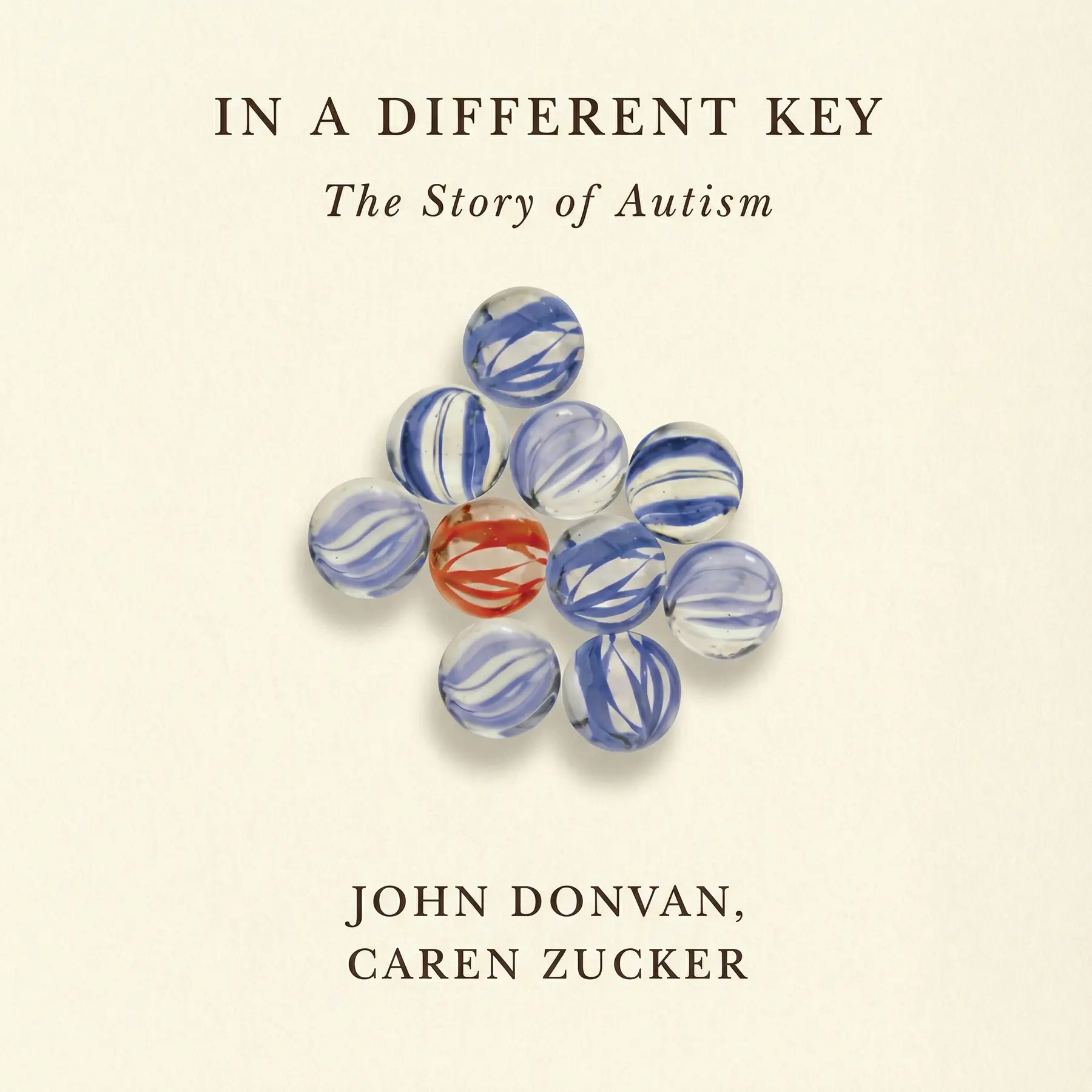
In a Different Key: The Story of Autism
A comprehensive historical narrative of autism, tracing its journey from early 20th-century institutionalization to the modern civil rights movement, highlighting the resilience of families and the evolution of scientific understanding.
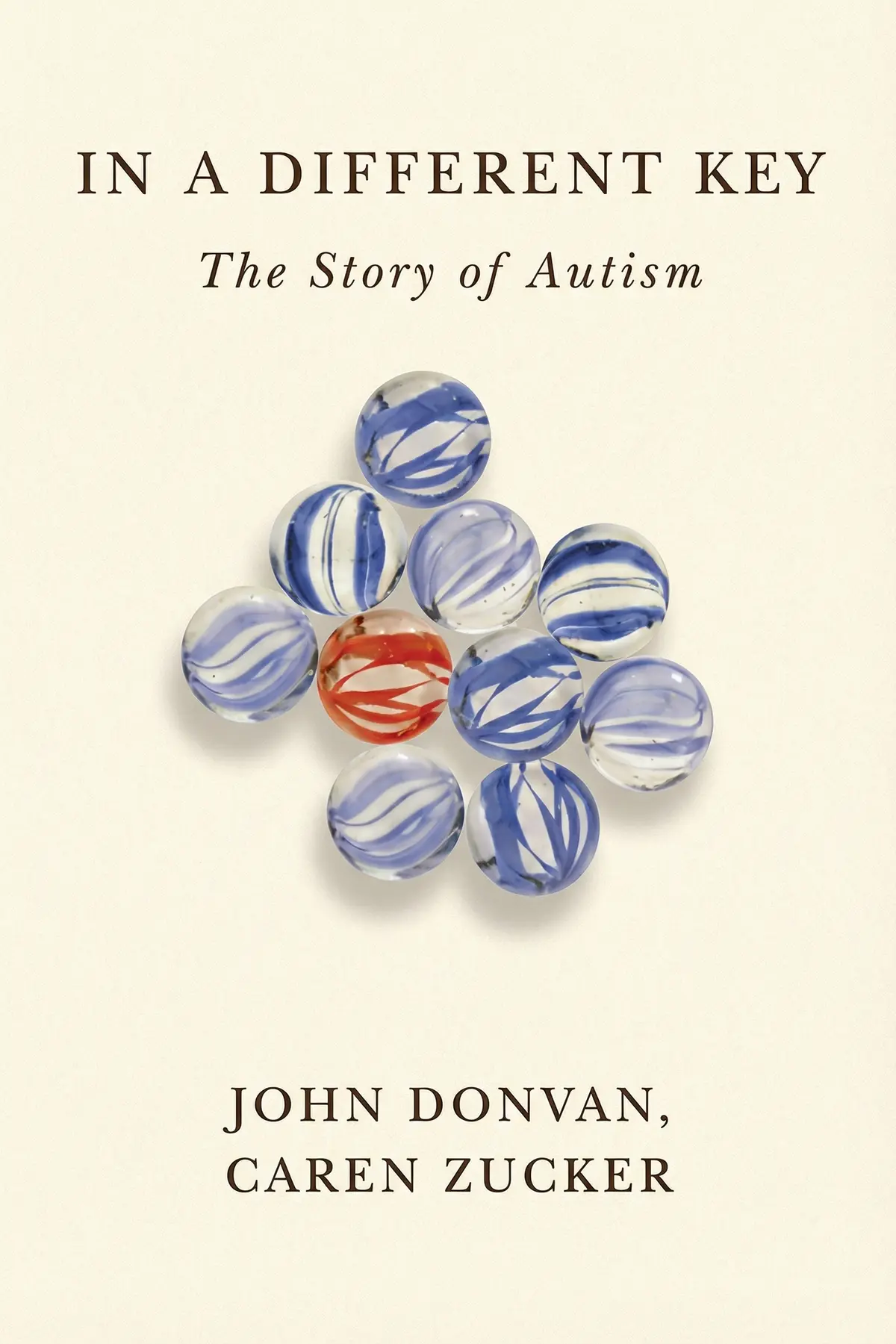
Table of Content
1. Introduction
1 min 37 sec
Imagine standing on a crowded public bus and witnessing a scene of sudden, sharp tension. A teenager is making repetitive, perhaps rhythmic movements that strike onlookers as strange. Two men nearby begin to harass him, their voices rising with frustration and mockery as they demand to know what his problem is. The teen doesn’t answer; he can’t answer in the way they expect. Just as the situation threatens to boil over into something worse, a bystander intervenes, calling out the aggressors by explaining that the boy has autism and asking them why they are the ones who seem to have the problem.
This single moment, occurring as recently as 2007, serves as a powerful window into the current state of autism awareness. It highlights a painful gap that still exists: while the word ‘autism’ is now a common part of our vocabulary, the actual reality of living with it remains misunderstood by many. This book, In a Different Key, takes us on a journey through the history of that misunderstanding, tracing the path from the earliest clinical descriptions in the 1940s to the complex, often contentious debates of the present day.
Over the next few chapters, we will explore a narrative that is as much about social justice and civil rights as it is about medicine. We will look at how the medical community’s dark past influenced the treatment of the mentally ill, meet the very first person to receive an autism diagnosis, and see how parents fought back against theories that blamed them for their children’s struggles. We’ll also examine the evolution of therapies and the controversies that continue to shape the way we see neurodiversity today. By understanding where we’ve been, we can better understand the world we are building for the future.
2. The Legacy of Institutionalization and Eugenics
1 min 55 sec
Before autism was even a named condition, society had a very different—and much darker—way of dealing with those who didn’t fit the mental norm.
3. Donald Triplett and Case Number One
1 min 55 sec
In 1933, a child in Mississippi exhibited behaviors that baffled experts, eventually leading to the birth of a new medical category.
4. The Refrigerator Mother Myth
1 min 46 sec
For decades, a cruel and unfounded theory suggested that autism was caused by cold, unloving parenting.
5. The Power of Parent Advocacy
1 min 43 sec
Refusing to accept blame, a generation of parents rose up to demand rights, education, and a new scientific approach.
6. Behavioral Modification and the Quest for Normalcy
1 min 57 sec
The development of Applied Behavioral Analysis brought new hope for progress, but it also sparked a deep ethical debate.
7. The Rise of the Vaccine Controversy
1 min 46 sec
A retracted study and a fear of an ‘epidemic’ created a public health crisis that still resonates today.
8. Rain Man and the Modern Spectrum
2 min 03 sec
From a Hollywood blockbuster to the neurodiversity movement, our definition of autism has expanded to include a vast range of human experiences.
9. Conclusion
1 min 24 sec
As we look back on the long and often turbulent history of autism, the throughline is clear: it is a journey from the shadows of institutions and blame into the light of recognition and rights. We have moved from a society that sought to erase or ‘fix’ those who were different to one that is beginning to ask how we can better support and include them. The story of Donald Triplett, the first ‘Case 1,’ reminds us that there has always been a place for people who experience the world in a different key, even if the medical world wasn’t always ready to hear their song.
While science still hasn’t unlocked all the mysteries of the condition, and debates over treatments and causes continue to simmer, the progress is undeniable. The most important lesson we can take from this history is the power of human connection and advocacy. It was the refusal of parents to be shamed and the courage of autistic individuals to speak for themselves that changed the world.
Going forward, the challenge is to move beyond mere tolerance. Whether it’s standing up for a teenager on a bus or ensuring that schools and workplaces are designed for all types of minds, the goal is to create a society where ‘being different’ is no longer seen as ‘being less.’ By embracing the full spectrum of the human experience, we don’t just help those with autism; we enrich the world for everyone. Let this history serve as a reminder that empathy and understanding are our most powerful tools in building a future where everyone has a chance to belong.
About this book
What is this book about?
This book provides a deeply researched and human-centered history of autism, exploring how a condition once shrouded in mystery and shame became a central point of modern scientific and social discourse. It begins with the story of the first person ever diagnosed with autism and moves through the dark eras of eugenics and the cruel 'refrigerator mother' theory that blamed parents for their children’s condition. The narrative also covers the rise of parent-led activism, the development of controversial behavioral therapies, and the debunked myths surrounding vaccines. By detailing the personal struggles and systemic shifts that have occurred over decades, the book offers a promise of better understanding and inclusion. It reframes autism not just as a medical diagnosis, but as a rich part of the human experience that demands empathy, rights, and a broader definition of what it means to be normal.
Book Information
About the Author
John Donvan
John Donvan is a journalist and Emmy Award-winning correspondent for ABC News who developed a deep interest in autism after seeing its impact on his wife’s family. Caren Zucker is a Peabody Award-winning television producer for ABC’s World News and Nightline. Her commitment to autism advocacy grew significantly following her oldest son’s diagnosis, leading to her work on the PBS series Autism Now.
Ratings & Reviews
Ratings at a glance
What people think
Listeners describe this work as extensively researched and excellently composed, offering deep insight into the background and history of autism. They value the narrative's novel-like readability and view it as essential, with one listener highlighting the empathetic and sensitive way it portrays various viewpoints. The account includes numerous stories and case studies, which listeners characterize as an engaging and touching experience. Opinions on the tempo vary; while some find the narrative impossible to set aside, others feel it is slow-paced.
Top reviews
Caleb
This book is a masterclass in narrative non-fiction. I was struck by how the authors managed to weave seventy years of complex social history into a story that feels as gripping as a novel. It covers everything from the very first diagnosis of Donald Triplett to the high-stakes battles over education rights in the seventies. While it’s definitely a massive tome, the prose never feels dry or academic. I found myself deeply moved by the stories of parents who refused to hide their children away when society told them to. It’s an essential record of how far we’ve come, even if the road ahead is still long. Some might find the detail overwhelming, but for me, the meticulous research is exactly what makes it so authoritative. This is a vital piece of work for anyone trying to understand the evolution of neurodivergence in the public consciousness.
Show moreRin
After hearing so much buzz about this, I finally dove in and I’m glad I did. It’s a beautifully written, compassionate look at the history of autism that feels incredibly relevant today. The authors don’t just list dates; they tell the story of people like Donald Triplett, the first child ever diagnosed, whose life provides a surprisingly hopeful through-line for the narrative. The book handles sensitive topics like the vaccine controversy and the early, often brutal methods of ABA with a steady, objective hand. It’s quite long, yes, but the chapters are structured in a way that makes it easy to digest. I felt like I was witnessing the birth of a movement. It highlights the sheer grit of parents who fought against a system that wanted their kids forgotten. Truly heartwarming and intellectually stimulating.
Show moreRafael
Picked this up on a whim and was completely absorbed. The way the authors trace the terminology back to Bleuler and the concept of 'Holy Fools' was eye-opening. This isn't just a medical history; it's a social and political one. You see the shifts in how humanity defines 'the other' through the lens of this one diagnosis. The pacing is excellent for such a thick book—it reads like a series of interconnected vignettes. I was especially moved by the section on the 1975 IDEA legislation. It’s easy to forget that not long ago, schools could just refuse to teach 'unteachable' kids. The book manages to be both a rigorous study and a collection of poignant human-interest stories. It gives a voice to the desperate parents of the 50s and 60s who were blamed for their children's condition. Essential reading.
Show morePatchara
Finally got around to this 'definitive' history and it lived up to the hype. It’s rare to find a non-fiction book that balances data with such profound emotional resonance. The story of the first person diagnosed, Donald, really grounds the whole narrative. It shows that autism isn't a new phenomenon, just one we've finally started to name and (slowly) understand. I loved how the authors explored the ego-driven world of psychiatry, showing how men like Bettlelheim caused so much wreckage. It’s a long journey, but it’s one filled with small victories and incredible courage. The book feels like a labor of love, meant to honor the families who stayed in the fight when no one else would. I came away with a much deeper appreciation for the rights we take for granted now. Captivating from start to finish.
Show moreRapee
The chapter on the 'autism epidemic' was worth the price of admission alone. It’s fascinating (and terrifying) to see how a single researcher's arbitrary line-drawing in the UK could ripple out and change global perceptions so drastically. Donvan and Zucker have an incredible knack for explaining complicated medical and legal concepts through the people they affected. This book is meticulous, sensitive, and broad in its scope. I particularly liked the focus on the early days of advocacy—it makes you realize that the rights kids have today were won through literal blood, sweat, and tears. While the pacing slows down in the legislative sections, the overall narrative arc is extremely satisfying. It’s a compassionate, well-written record of a community finding its voice. If you want to understand the 'how' and 'why' behind the current state of autism awareness, start here.
Show moreSin
Ever wonder how we transitioned from institutionalizing children to the modern spectrum of support? Donvan and Zucker provide a staggeringly detailed timeline that answers that question through deeply human stories. I particularly appreciated the sections exposing the cruelty of the 'Refrigerator Mother' era; it’s haunting to see how psychiatric egos did so much damage to families. The book moves with a brisk pace despite its size, though I’ll admit the heavy focus on parental perspectives sometimes leaves the actual voices of autistic adults in the background. It's a bit of a trade-off. While the research into the legal fights for schooling is fascinating, I would have liked more interiority regarding the autistic experience itself. Still, as a historical document of activism and the changing definitions of 'normalcy,' it’s a powerhouse. Highly recommended for the context alone.
Show moreYulia
Donvan and Zucker have produced an incredibly thorough piece of journalism here. The level of detail regarding the rise and fall of various 'cures'—from LSD to the vaccine panic—is impressive and serves as a cautionary tale about scientific hubris. I appreciated the sensitivity they showed toward the families involved, though the book does occasionally feel like it’s siding with the 'tragedy' narrative. It’s a very dense read, and there were times in the middle where the focus on legal battles over funding felt a bit repetitive. However, the overall impact is undeniable. It provides a necessary framework for understanding why the autism community is so fractured today. You get to see the roots of the current debates. It’s not a perfect book, but it’s an important one that doesn't shy away from the messy reality of progress.
Show moreArnav
As a history buff, I found the timeline presented here to be absolutely fascinating. The transition from the dark days of Willowbrook to the modern era is told with clarity and a sharp eye for detail. The prose is fluid, making the 600+ pages fly by faster than you’d expect. I do have some reservations about how the authors frame the clash between the neurodiversity movement and parents of high-needs children; it felt like they were tipping the scales a bit. But to be fair, capturing every angle of such a polarized topic is nearly impossible. The book succeeds most when it’s documenting the sheer tenacity required to change public policy. It’s a sobering reminder of how institutionalized cruelty was once the standard. A solid, well-researched addition to the shelf, even if it’s a bit one-sided at times.
Show moreJack
Truth is, I wasn't sure I'd finish a book this long, but the storytelling is top-notch. It treats the history of autism like a sprawling social drama. You see the heroes, the villains (looking at you, Bettlelheim), and a lot of people just trying to do their best in a world that didn't understand them. My one gripe is that the authors sometimes treat autistic self-advocates with a bit of a cold shoulder, focusing instead on the 'heroic parent' trope. It’s a valid perspective to document, but it feels incomplete without more input from the people actually on the spectrum. Regardless, the chapters on the evolution of ABA and the vaccine debacle are must-reads for the context they provide. It's a complex, multifaceted look at a subject that defies easy answers. Definitely worth the time if you want the full backstory.
Show moreAnong
Disappointed is an understatement. While I can't deny the sheer volume of research that went into this, the tone felt incredibly lopsided to me. It reads more like a history of the 'burden' of autism on parents rather than a history of autistic people themselves. The authors describe behaviors as 'meaningless' or 'destructive' in a way that feels dehumanizing, and they seem to gloss over the trauma reported by those who went through early behavioral interventions. There’s a certain entitlement in how they frame the neurodiversity movement, almost dismissing self-advocates as 'too high-functioning' to understand the 'real' struggle. It’s a massive book that somehow manages to miss the soul of its subject. If you want a book that centers the actual people living the experience, look elsewhere. This serves a specific narrative, and frankly, it's one that feels increasingly outdated.
Show moreReaders also enjoyed

A Splendid Exchange: How Trade Shaped the World
William J. Bernstein

A Spy Among Friends: Philby and the Great Betrayal
Ben Macintyre

A Force for Good: The Dalai Lama's Vision for Our World
Daniel Goleman

1491: New Revelations of the Americas Before Columbus
Charles C. Mann

A Year in the Life of William Shakespeare: 1599
James Shapiro

A Room of One’s Own
Virginia Woolf
AUDIO SUMMARY AVAILABLE
Listen to In a Different Key in 15 minutes
Get the key ideas from In a Different Key by John Donvan, plus 5,000+ more titles in English and Thai.
- 5,000+ titles
- Listen as much as you want
- 7-day free trial
- Cancel anytime







