
4 min 56 sec
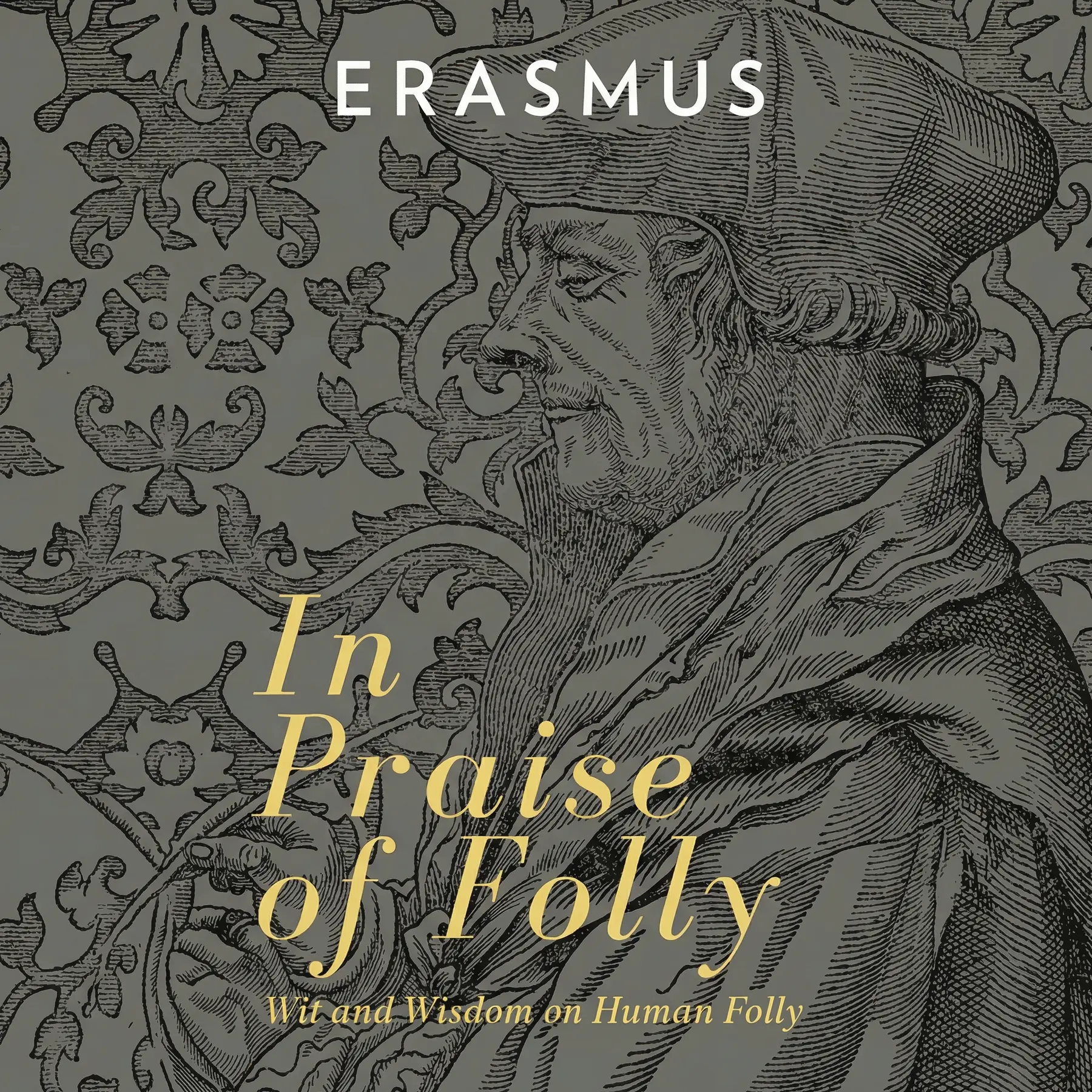
In Praise of Folly
By Erasmus
A daring 16th-century satire that uses the voice of a goddess to expose human hypocrisy and argue that a touch of foolishness is essential for a happy, meaningful life.
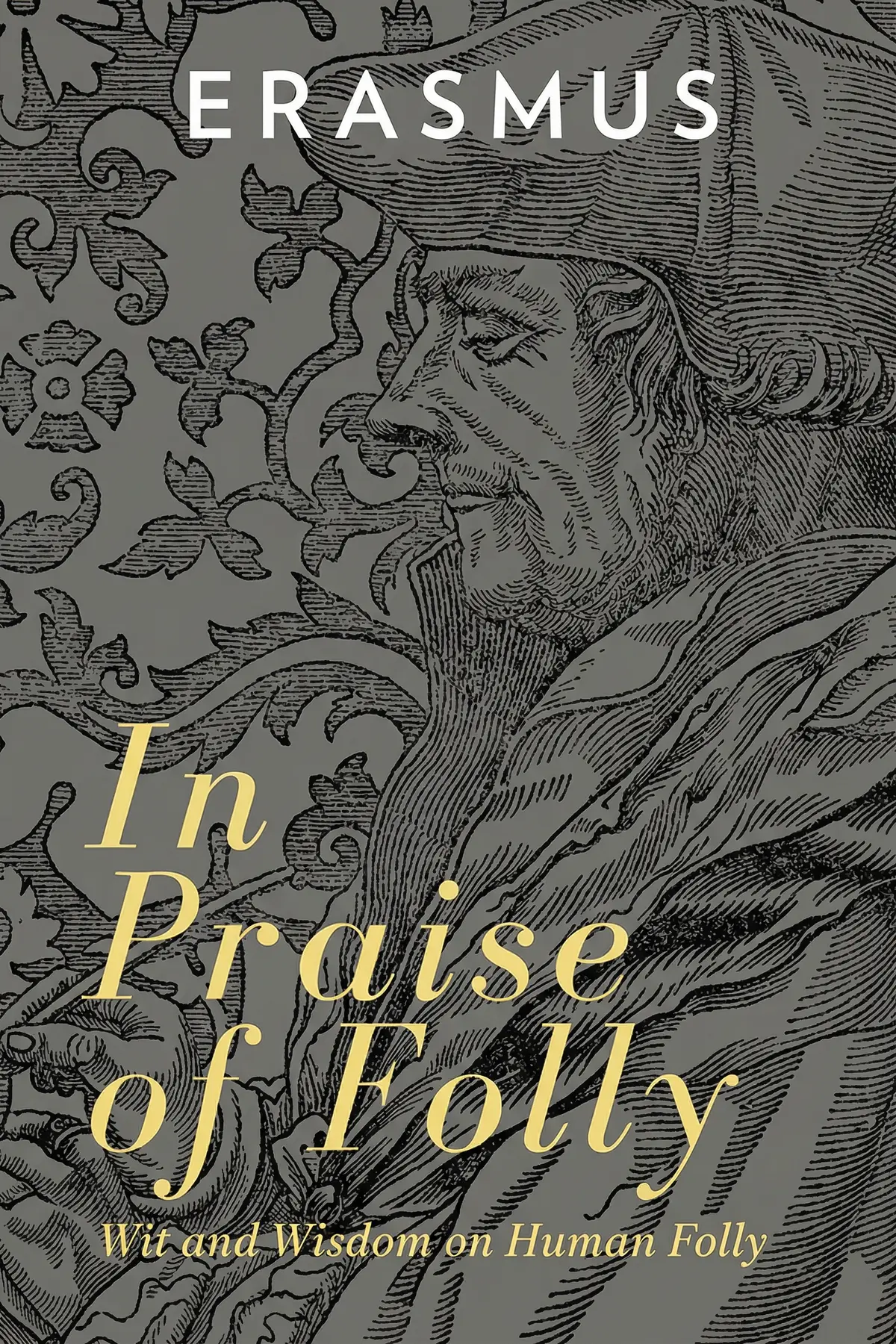
Table of Content
1. Introduction
45 sec
Imagine a stage in the early sixteenth century where the most unlikely figure steps into the spotlight. This is Folly herself, personified as a goddess, ready to deliver a defense of her own existence. Through this clever lens, the great humanist Erasmus invites us into a world that looks surprisingly like our own, despite the centuries between us. He presents a throughline that is as challenging as it is entertaining: the idea that our flaws, our absurdities, and even our lack of logic are not just unavoidable, but are actually the secret ingredients to a life well-lived. As we dive into this exploration, we’ll see how a bit of lightheartedness can expose the most deeply rooted corruptions of power.
2. The Necessity of Nonsense
1 min 12 sec
Could our social bonds actually depend on our ability to be a bit foolish? Discover why perfection is the enemy of friendship and joy.
3. Exposing the Masks of Authority
1 min 07 sec
What happens when the most respected figures in society are held up to a mirror of irony? See how satire strips away the pretense of power.
4. Finding Wisdom in Simplicity
1 min 08 sec
Is true intelligence actually found in acknowledging our own ignorance? Explore the surprising connection between humility and a richer life.
5. Conclusion
44 sec
In the end, this classic satire serves as a mirror held up to humanity, showing us that our desire to appear perfectly wise is often our greatest folly. Erasmus reminds us that while we may strive for intellectual and moral height, it is our ability to embrace our simpler, more ‘foolish’ side that leads to genuine connection and peace. The throughline here is clear: true wisdom is found in humility and the courage to laugh at ourselves. As you move forward, consider the moments where you might be taking life too seriously. By making room for a little more laughter and a little less pretense, you might just find the happiness that the goddess Folly promised all along.
About this book
What is this book about?
At its heart, this work is a playful yet profound critique of the social and religious structures of the early Renaissance. Narrated by the personified goddess of Folly, it turns the world upside down, suggesting that the very things we often fear or mock—like silly mistakes, lack of gravity, and simple ignorance—are actually the glues that hold society together. Erasmus offers a promise that by stripping away the rigid masks of scholarly arrogance and religious corruption, we can rediscover a more authentic and joyful way of existing. It challenges the listener to see that those who claim the most wisdom are often the furthest from it, while those who embrace their own quirks and limitations find a more genuine path to contentment.
Book Information
About the Author
Erasmus
Desiderius Erasmus was a prominent Dutch scholar and priest who lived during the transition from the late 15th to the early 16th century. His extensive contributions to the fields of theology, philosophy, and education solidified his reputation as a central figure in Renaissance humanism.
Ratings & Reviews
Ratings at a glance
What people think
Listeners find the work hilarious and appreciate its tempo, with one noting how Erasmus makes oodles of valid points. Feedback regarding readability is split; some think it is a delightful read whereas others call it tough to follow. The quality of the language also sees conflicting reports, as one listener mentions it reads like a bad machine translation.
Top reviews
Skylar
Ever wonder what Folly herself would say if she stood at a pulpit to defend her existence? This book is a literary carnival, full of hyperbole and brilliant inversions that turn the world upside down. Erasmus argues that without a bit of delusion, friendship, marriage, and society itself would probably crumble under the weight of cold logic. I found myself wholeheartedly converting to her teachings by the final page, especially regarding the ridiculousness of supposedly learned men. Not gonna lie, the sections criticizing the corrupt church and the warmongering papacy are incredibly bold for the time. It is a real Renaissance masterpiece that feels just as relevant to our current era of political madness as it did five centuries ago.
Show moreNutnicha
Wow, I wasn't expecting a 500-year-old essay to be this genuinely funny and relatable in the 21st century. Erasmus creates this wonderful comedy of life where everyone is just walking around in various disguises, acting out their parts until the play ends. Gotta say, the way he uses Folly to highlight how we hide shit under the carpet to keep society running is absolutely brilliant. It is a very interesting work from a famous Dutchman that manages to feel both ancient and urgent. The translation I read was smooth and captured the hyperbole perfectly without making it feel like a chore to get through. If you enjoy satire that doesn't spare anyone, this is a must-read classic that still packs a heavy punch.
Show moreBook
Erasmus manages to be shockingly contemporary for a man writing in the 16th century. His personification of Folly is a stroke of genius, allowing him to skewer everyone from greedy merchants to self-important theologians without technically taking the blame himself. To be fair, some of the classical allusions fly right over a modern reader's head, but the core message remains sharp. It's hilarious to see how little human nature has changed since the Renaissance. We still have people with fancy degrees who lack an ounce of common sense, just as he describes. The pacing is surprisingly brisk, though you might need a dictionary for some of the more archaic translations. It is a witty reminder that a little madness is necessary to survive the suffocating weight of reality.
Show moreSupatra
As someone fascinated by the Reformation, I found this to be an essential look at the intellectual climate of the early 1500s. Folly is not modest, and she takes credit for every human achievement, from love to the founding of great empires. In my experience, the most interesting parts were her scathing indictments of the sovereigns and cardinals who lived in total hypocrisy. The book creates a vivid portrayal of a society in transition, much like our own modern world dealing with its own existential crises. My only minor gripe is that the satire is sometimes so thick that it is hard to tell where the irony ends. Still, it provides a fascinating standoff between material success and the true, foolish essence of belief.
Show moreOrawan
The truth is, some of these insights into self-love feel like they were pulled straight from a modern self-help book. Erasmus suggests that being a little uncritical of ourselves is the only way to deal with the cruelty of rational reality. It is a surprisingly modern take on psychology buried within a thick layer of Renaissance wit and classical rhetoric. I particularly enjoyed the jabs at academics who believe their university degrees make them superior, while they actually lack the basic instincts of the unlearned masses. The pacing is generally good, but you have to be in the right frame of mind for the satirical tone. It is a witty, sharp-tongued exploration of why we choose to stay blissfully ignorant in a complicated world.
Show moreSarawut
Picked this up after seeing a reference to the Erasmus student program and wanting to know more about the man himself. I was surprised by how much the text focuses on the idea that wanting to be what you are is the chief element of happiness. Folly is a delightfully arrogant narrator, and her defense of insanity in the context of true Christian soul-searching is quite profound. The book offers a hilariously coruscating view of the world that makes you question your own self-importance. In my experience, it works best when read in small chunks so you can digest the heavy layers of irony. It is a short work that manages to cover an incredible amount of ground, from friendship to the follies of the Pope.
Show moreTak
To be fair, Erasmus was incredibly brave to publish something this critical of the established order during such a volatile time. He uses a silly, childish fable style to mask some of the most dangerous ideas of the 16th century regarding the papacy and social hierarchy. The readability can be a bit challenging due to the dense classical allusions, but the overarching themes of human vanity are universal. It is basically a literary carnival where no one is spared from the goddess's sharp tongue, least of all the wise men who think they have it all figured out. Not gonna lie, some parts feel a bit verbose, but the sharp wit usually recovers before things get too boring. It is a classic that actually earns its reputation.
Show moreTariq
While the pacing starts off strong with witty observations about human nature, the middle sections become a bit of a slog through arcane theological debates. Frankly, the constant references to Greek mythology and obscure biblical interpretations made me feel like I was reading a precursor to Foucault’s Pendulum. I appreciated the valid points about how we prioritize form over substance in our rituals, but the readability is definitely hit-or-miss. One moment it is hilarious, and the next it is a dense wall of text about the minutiae of grammar. It is a fascinating historical artifact, especially considering its link to figures like Thomas More, but it requires a lot of patience. I am glad I read it, though I doubt I will be revisiting these specific rants anytime soon.
Show morePhimwan
Look, I appreciate the historical weight of this text, but I struggled to stay awake through some of the more repetitive satirical delights. Folly claims that she distinguishes us from AI or mere machines through our capacity for kindness and emotion, which is a lovely sentiment. However, the execution often feels like a long, sugar-infused prattle that eventually wears out its welcome. To be fair, there are plenty of valid points regarding the corruption of the clergy and the vanity of the ruling class. It is just that the format of a single, continuous speech makes the reading experience feel somewhat monotonous. It serves as a decent source of inspiration for understanding the Renaissance, but it did not quite live up to my high expectations.
Show moreNook
Honestly, I really wanted to like this classic, especially given its reputation for biting satire, but the execution felt like a verbose torment. Reading it was like being trapped in a café with an incessant chatterbox who won't stop whispering nonsense into your ear. Personally, the language in this particular edition felt clunky and mechanical, almost like a bad machine translation that sucked all the life out of the prose. While there are some gems hidden in the text, I spent most of the time just wishing the goddess would shut up so I could finish the chapter. My levels of curiosity were not enough to overcome the monotony of her pompous, circular arguments. It is a short work, yet it felt ten times longer than it actually was.
Show moreReaders also enjoyed
A Guide to the Good Life: The Ancient Art of Stoic Joy
William B. Irvine

A Force for Good: The Dalai Lama's Vision for Our World
Daniel Goleman
A Little History of Philosophy
Nigel Warburton
A Theory of Justice
John Rawls
A New Earth: Awakening to Your Life’s Purpose
Eckhart Tolle
AUDIO SUMMARY AVAILABLE
Listen to In Praise of Folly in 15 minutes
Get the key ideas from In Praise of Folly by Erasmus, plus 5,000+ more titles in English and Thai.
- 5,000+ titles
- Listen as much as you want
- 7-day free trial
- Cancel anytime







