

59 Seconds: Change Your Life in Under a Minute
Richard Wiseman
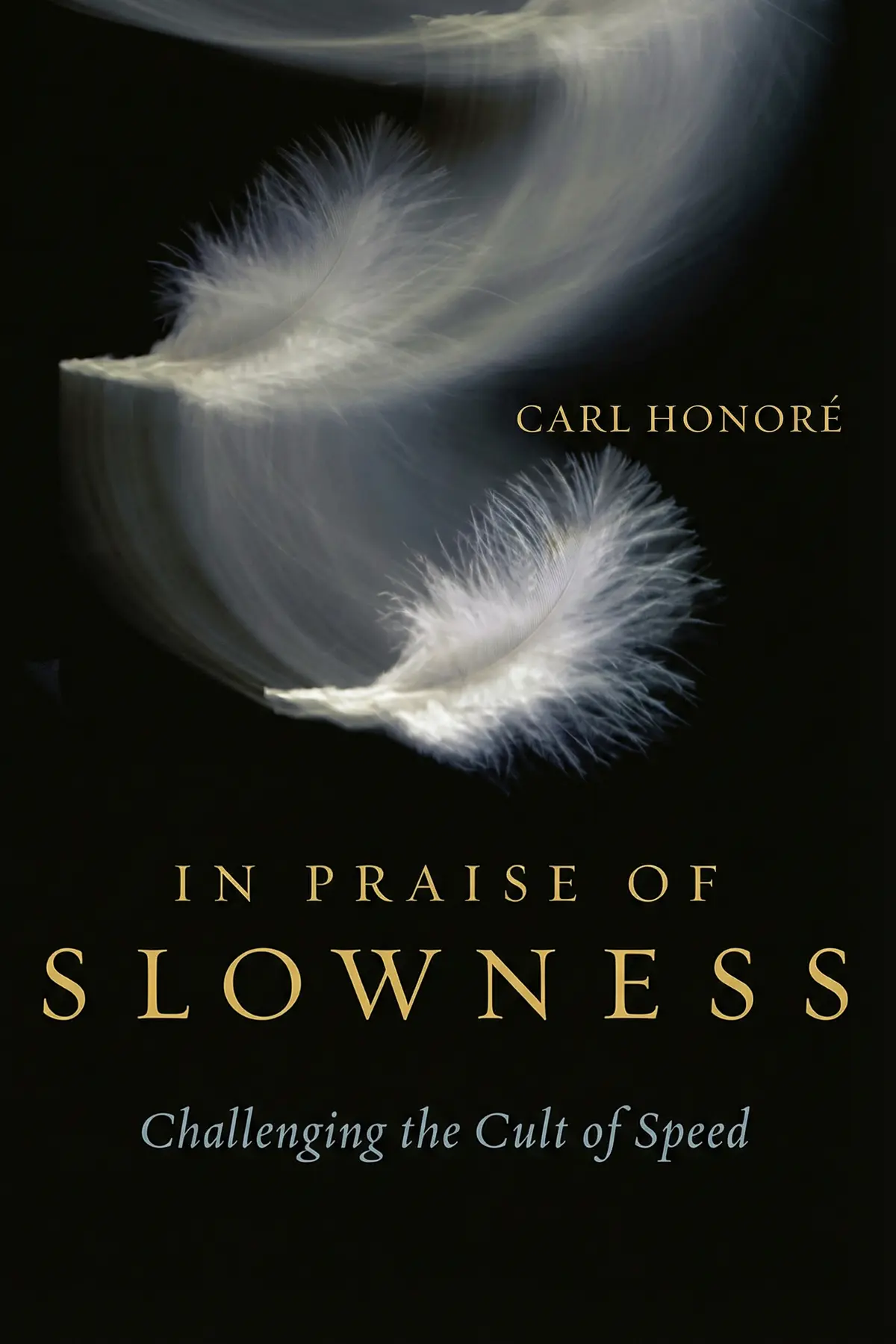
Carl Honoré explores the global Slow Movement, challenging our obsession with speed and demonstrating how decelerating work, diet, and relationships can lead to a more fulfilling and productive life.
1 min 02 sec
We live in an age that worships the quick. We have fast food, high-speed internet, and rapid-fire communication. Speed is often equated with efficiency, and efficiency is equated with success. But what if our obsession with moving faster is actually making us less productive, less healthy, and less happy? This is the central question posed by the ‘Slow Movement,’ a quiet revolution taking place across the globe.
In this summary, we are going to explore the ideas behind Carl Honoré’s exploration of deceleration. We will look at how our history of measuring time turned us into servants of the clock, and how we can break free from that cycle. From the kitchen to the boardroom, and from the classroom to the bedroom, slowing down isn’t about being lazy or unproductive. It is about finding what Honoré calls the ‘tempo giusto’—the right speed for the moment. By the end of this journey, you’ll understand how choosing to take your time can actually help you live your life more fully. Let’s look at how we can stop racing through life and start actually experiencing it.
1 min 45 sec
Discover how humanity moved from tracking lunar cycles to becoming slaves of the industrial clock, and why we are now fighting to reclaim our natural rhythms.
1 min 47 sec
Learn how the rise of fast food has impacted our health and why the Slow Food movement is leading a global return to mindful eating.
1 min 49 sec
Explore the difference between analytical fast thinking and creative slow thinking, and why your brain needs quiet moments to solve complex problems.
1 min 41 sec
See how urban environments are being redesigned to reduce noise, increase green space, and foster deeper connections between neighbors.
1 min 42 sec
Discover how slowing down the approach to healthcare and schooling leads to better long-term outcomes for both patients and students.
1 min 45 sec
Understand why we work longer hours than ever and how our obsession with ‘optimizing’ our free time is causing more stress than relaxation.
1 min 31 sec
Explore how the ‘fast life’ has eroded our intimate relationships and how practicing deliberate slowness can revitalize our personal lives.
1 min 10 sec
As we have seen, the ‘cult of speed’ is a pervasive force that influences almost every corner of our lives. It has changed the way we work, eat, learn, and love. But the Slow Movement offers a compelling alternative. It reminds us that we are not machines, and our value is not determined by how much we can cram into twenty-four hours. Slowing down is not about regressing to the past or rejecting technology; it is about taking control of our own tempo. It is about choosing when to be fast and when to be slow, and having the wisdom to know the difference.
The message of Carl Honoré’s work is ultimately one of hope. We have the power to reclaim our time and our lives. You don’t have to quit your job or move to a rural commune to join the movement. It starts with small, deliberate choices. Maybe it’s choosing to cook a meal from scratch this weekend, or leaving your phone in another room during dinner. Maybe it’s taking a ten-minute walk without a destination, or simply giving yourself permission to think before you act. By introducing a little more slowness into your day, you’ll find that the world doesn’t fall apart. In fact, you might find that for the first time in a long time, you are actually living in it.
In Praise of Slowness examines the high cost of our modern 'cult of speed.' We live in a world where everything is expected to happen instantly, yet this acceleration often leads to burnout, poor health, and shallow connections. Carl Honoré investigates the rising counter-culture known as the Slow Movement, which advocates for finding the 'right speed' for every activity. The book promises a roadmap for reclaiming your time. It covers diverse areas of life, from the way we eat and think to how we design our cities and raise our children. By moving away from the frantic pace of the industrial mindset, Honoré suggests we can rediscover the joys of deep work, meaningful leisure, and genuine intimacy. It is not an argument for doing everything at a snail's pace, but rather a guide to living more mindfully in a world that refuses to slow down.
Carl Honoré is an award-winning journalist, author and TED speaker. In addition to articles published in the Economist, the Houston Chronicle and the Miami Herald, he’s written two other books, including The Slow Fix.
Listeners consider the work to be deep and thoroughly investigated, valuing its advice on adopting a more deliberate speed of life. They view it as essential for individuals with packed routines, and one listener notes that it assisted them in prioritizing time with loved ones. The prose is well-regarded, with listeners finding the storytelling compelling; one describes it as a fascinating study of humanity's cultural landscape. Although many listeners feel the content speaks to their frantic lives, some observe that it seems a bit behind the times.
Finally got around to reading this after feeling completely burnt out by my digital life. It has genuinely changed how I approach my weekends, pushing me to put down the iPhone and actually engage with my surroundings. Honoré’s exploration of the Italian approach to life was eye-opening, especially the idea that "slow" doesn't mean "lazy" but rather finding the right balance. I loved the concept of la dolce vita coexisting with the modern world’s demands for efficiency and dynamism. Although the book was written a while ago, the message feels more urgent than ever in our era of constant notifications. I’m now making a conscious effort to prioritize quality over quantity in my relationships and hobbies. Not gonna lie, I was skeptical at first, but the engaging writing style kept me hooked until the very last page. It’s an essential read for anyone who feels like they’re just racing toward the finish line.
Show moreTo be fair, I didn't expect the chapter on "Slow Sex" or the discussion on "erotic deceleration" to be so enlightening, but it perfectly illustrated the author's point. This book isn't about laziness; it's about intensity and actually being present in the moments that matter most. Honoré writes with a vivaciousness that makes you want to immediately go out and linger over a three-course meal or a long walk. I loved the idea of "tempo giusto"—the right speed for the right moment—as it feels much more realistic than just trying to be slow all the time. The book validates the effort to resist the "cult of speed" and provides a recipe for a more purposeful way of living. While some critics say it lacks depth, I found the breadth of examples to be exactly what I needed to see how the Slow movement applies to real life. It’s a beautiful, life-affirming book.
Show moreThis was a wake-up call for my parenting style and general work-life balance. I particularly appreciated the sections on child-rearing and education, which highlight how we've turned childhood into a competitive sprint. Honoré argues for a middle path—doing things at the "tempo giusto"—and it’s a refreshing take that doesn't demand you move to a farm and start weaving your own clothes. The prose is vivacious and the author's personal journey adds a nice touch of humility to the overall message. My only gripe is that some chapters felt like they had a few too many examples of the same point, making the end a bit of a slog. Despite that, the book is incredibly relevant to anyone feeling the weight of an over-paced lifestyle. It encourages you to find your own rhythm rather than following the frantic pulse of society.
Show moreAs someone who struggles to unplug, I found this exploration of our "inner psychology of speed" incredibly insightful. Honoré does a fantastic job of tracing how we've come to worship efficiency as a false god since the Industrial Revolution. The book provides a well-researched look at various facets of life, from medicine to city planning, that are trying to reclaim their own "Eigenzeit." I particularly enjoyed the distinction between "Fast Thinking" (analytical/linear) and "Slow Thinking" (intuitive/creative). It reminded me that the best ideas often come when we give ourselves the space to simply stare into space, much like Einstein famously did. While I think some of the examples are a little too optimistic about how easy it is to slow down, the overall sentiment is beautiful. It’s not about being a sloth; it’s about doing things better by doing them at the right speed.
Show morePicked this up during a particularly hectic month at the office and it served as a much-needed mental reset. The author’s narrative is engaging and his passion for the subject matter is evident on every page, making it a very persuasive read. It helped me realize that my obsession with "instant gratification" was actually making me less productive and more miserable in the long run. I've started spending more intentional time with my friends and family without constantly checking my watch or my email. The book is never boring, though I will admit that once the main point was made, the later chapters felt a bit like more of the same. Still, the message of finding a middle path between total chaos and complete stillness is one that everyone needs to hear. It’s a thoughtful look at how we can reclaim our lives from the clock.
Show moreLook, Honoré isn't trying to be Plato, and if you go in expecting a deep philosophical treatise, you might be disappointed. This is a journalistic deep dive into a burgeoning movement, and on that level, it succeeds brilliantly. The stories are well-chosen and the structure allows you to dip in and out of different topics like "Slow Sex" or "Slow Work" quite easily. Personally, I found the chapter on health and the failures of "speed-medicine" to be the most compelling part of the entire book. There’s a certain sensuality to the writing that makes the prospect of slowing down feel truly appetizing rather than just another chore on the to-do list. It’s true that some parts feel like a series of articles from the National Post, but the overarching theme holds it all together well enough. A definite read for the modern, over-scheduled professional.
Show moreEver wonder why we're all so exhausted even when we have all these "time-saving" gadgets? Honoré tackles this question with a lot of enthusiasm, though I found the repetitive focus on the Slow Food movement a bit tedious after a while. I get it—artisanal bread and long lunches are great, but the book spends too much time on that specific niche. To be fair, the research is solid and the journalistic tone makes it a very easy, breezy read for a Sunday afternoon. However, it feels a bit dated now, as the "digital detox" conversation has evolved significantly since this was first published. I would have appreciated more discussion on the actual opportunity costs of slowing down in a competitive global economy. What do we actually lose when we opt out of the rat race? It’s a decent starting point for the conversation, but don’t expect a radical new philosophy.
Show moreFrankly, it felt like a long magazine article that got stretched into a book-length format. I recognize several of these ideas from Honoré’s journalism, and while they are well-structured, they lack the deeper philosophical "meat" I was hoping for. The book is great at identifying the symptoms of our "cult of speed" but it falls a bit short on providing concrete, actionable steps for those who can't just quit their corporate jobs. I found myself nodding along with the premise while simultaneously feeling like I wasn't learning anything truly revolutionary. The writing style is engaging, yet the constant shift from one anecdote to another can feel a bit dizzying. It’s an interesting exploration of human culture, but it stays on the surface rather than digging into the roots of our collective anxiety. Good for a quick overview, but perhaps not for those seeking a rigorous academic study.
Show moreThe premise is solid, but the execution left me wanting a more balanced perspective on the trade-offs of the slow movement. Honoré makes it abundantly clear what we gain from slowing down—health, better sex, deeper connections—but he largely ignores what we might have to sacrifice. In a world that is still moving at breakneck speed, how does one slow down without losing their competitive edge or financial stability? Got to say, the book is a consummate work of journalism, but it lacks the intellectual rigor to answer those harder questions. I enjoyed the stories from Italy and the glimpses into "slow cities," yet I felt like I was being sold a lifestyle rather than being given a toolkit. It’s a worthy read if you need validation for your desire to relax, but it doesn't offer many new ideas for those already familiar with the concept.
Show moreThe irony here is palpable; a book about slowing down that feels like it was written on a high-speed train. Honoré touches on fascinating concepts like "time-sickness," but he abandons them for the next anecdote before any real depth is established. I felt like I was reading an extended introduction for three hundred pages because the author relies too heavily on surface-level stories rather than rigorous analysis. While I agree with the core message, the lack of logical proof makes it feel more like a series of blog posts than a cohesive manifesto. Truth is, many of the anecdotes felt cherry-picked to suit the narrative rather than representing a broad reality. It works better as a documentary script where you can just nod along to the visuals without questioning the evidence. If you want a deep philosophical dive into why our culture is obsessed with speed, you might find this frustratingly thin.
Show moreRichard Wiseman
William B. Irvine
Andrew D. Thompson
AUDIO SUMMARY AVAILABLE
Get the key ideas from In Praise of Slowness by Carl Honoré, plus 5,000+ more titles in English and Thai.







