

16 min 08 sec
In Sheep’s Clothing: Understanding and Dealing with Manipulative People
In Sheep’s Clothing explores the hidden tactics of manipulative individuals. George Simon Jr. provides a guide to identifying covert aggression, understanding character disturbances, and reclaiming personal power in difficult relationships.
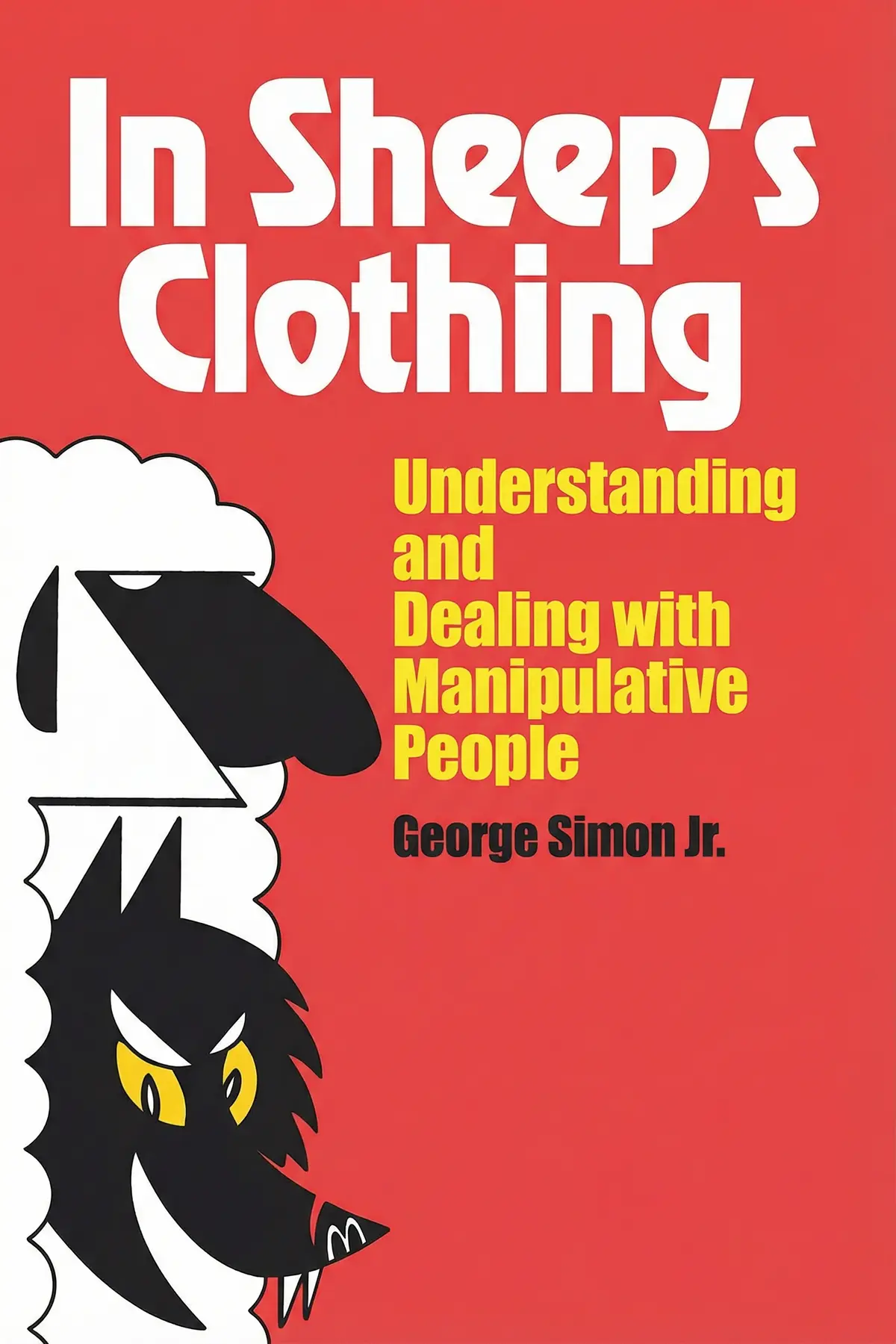
Table of Content
1. Introduction
1 min 54 sec
Picture a typical day at the office. You are walking down the hallway when you witness an interaction that feels just a little bit off. One colleague, who is generally viewed as high-maintenance or perhaps just ‘sensitive,’ is giving another teammate the cold shoulder. They are physically turning away, offering curt, one-word answers, or perhaps just ignoring a direct question entirely. If you’re like most people, your first instinct is to rationalize this. You might think they are just having a bad day, or perhaps they’re dealing with a personal crisis at home. You might even feel a twinge of sympathy for them.
But what if that behavior isn’t a sign of distress? What if it is actually a weapon? This is the central premise of George Simon Jr.’s work. We live in a society that is conditioned to look for the ‘why’ behind every bad action, usually searching for some hidden wound or psychological trauma that explains away the behavior. We are taught to be understanding and to give people the benefit of the doubt. While these are noble traits, they are precisely the vulnerabilities that a manipulative person exploits.
In this exploration of In Sheep’s Clothing, we are going to pull back the curtain on the ‘covert aggressive.’ These are individuals who fight for what they want—be it status, control, or simple convenience—without appearing to fight at all. They use our own empathy against us, wearing the ‘sheep’s clothing’ of normalcy while pursuing their own agendas with predatory precision. Over the course of this summary, we will look at why traditional psychology often fails to stop these people, how to identify their most common tactics, and most importantly, how to shift your own mindset to protect yourself. By the end, you’ll have a new framework for understanding the power plays happening all around you, allowing you to stop being a pawn in someone else’s game and start standing your ground with clarity and confidence.
2. The Hidden Battle for Control
2 min 08 sec
Explore the fundamental difference between healthy self-assertion and the predatory aggression of a manipulator who lacks a traditional conscience.
3. The Mastery of Covert Aggression
2 min 02 sec
Discover why subtle, hidden tactics are often more effective than overt hostility and how manipulators protect their reputations while causing harm.
4. Debunking the Myth of the Wounded Manipulator
2 min 13 sec
Learn why traditional psychological views of neurosis often fail when dealing with modern manipulators who are under-inhibited rather than repressed.
5. Spotting the Signs of Tactical Manipulation
2 min 05 sec
Identify the specific maneuvers like minimization, diversion, and shaming that manipulators use to deflect responsibility and guilt-trip their victims.
6. Confronting the Manipulator with Precision
2 min 06 sec
Shift your strategy from understanding the manipulator to asserting yourself through direct requests and win-win solutions.
7. Strengthening Your Internal Defenses
2 min 03 sec
Understand how your own vulnerabilities, such as low self-esteem or emotional dependency, make you a target and how self-awareness can protect you.
8. Conclusion
1 min 37 sec
As we wrap up our look at In Sheep’s Clothing, the most important takeaway is a shift in perspective. We have to move away from the idea that everyone who acts out is a ‘victim of circumstance’ and accept that some people are simply ‘fighters’ who use covert tactics to win at the expense of others. This isn’t about becoming cynical or paranoid; it’s about becoming realistic. When you stop looking for excuses for someone’s bad behavior and start looking at the behavior itself, you gain a level of clarity that is incredibly empowering.
The throughline of George Simon Jr.’s work is that your gut feeling is often your best guide. If you feel like you are being played, if you feel an odd sense of guilt when you’ve done nothing wrong, or if you find yourself constantly walking on eggshells, trust that instinct. It is your internal alarm system telling you that you are in the presence of a predator.
Moving forward, take the strategies we’ve discussed and put them into practice. Be direct in your communication, refuse to accept diversions, and most importantly, work on strengthening your own self-worth. You don’t have to be a victim of a ‘wolf in sheep’s clothing.’ By recognizing their tactics and asserting your own boundaries, you can take control of your relationships and your life. The power of the manipulator depends on your silence and your willingness to believe their mask. Once you decide to see the person for who they truly are—and to value yourself enough to stand your ground—their game is over. You have the right to be respected, and you have the tools to ensure that you are.
About this book
What is this book about?
Have you ever walked away from a conversation feeling defeated or confused, yet unable to pinpoint exactly what went wrong? In Sheep’s Clothing by George Simon Jr. is a deep dive into the world of manipulative personalities and the underhanded methods they use to get what they want. Unlike overt bullies, these individuals often hide behind a mask of helpfulness, victimhood, or charm, making them particularly difficult to confront. The book promises to change how you perceive conflict and interpersonal power dynamics. By exploring the concept of covert aggression, the text explains that many of the people we find difficult are not suffering from deep-seated anxieties or past traumas, but are instead fighting a calculated battle for dominance. This summary will help you recognize the subtle maneuvers used in offices, homes, and social circles. It moves beyond traditional psychology to offer practical, assertive strategies for setting boundaries. The ultimate goal is to empower you to stop making excuses for bad behavior and start trusting your own perceptions, ensuring you are no longer an easy target for those who seek to exploit your good nature.
Book Information
About the Author
George Simon Jr.
George Simon Jr., PhD, is a clinical psychologist based in Little Rock, Arkansas. He has dedicated over thirty years to the specialized study of manipulative personalities and providing counsel to those who have been their victims. In addition to his work on manipulation, he is the author of Character Disturbance: the Phenomenon of Our Age, published in 2011.
Ratings & Reviews
Ratings at a glance
What people think
Listeners consider this work essential reading, offering in-depth insights and actionable advice for spotting manipulative behaviors. They value its clear explanation of challenging characters, especially those with overt or covert aggressive traits, while one listener highlights the way it categorizes various degrees and forms of narcissism. This guide assists listeners in identifying and managing manipulative individuals, proving to be an indispensable tool.
Top reviews
Somporn
Wow. This wasn't just another self-help book; it felt like a manual for understanding the human monsters hiding in plain sight. George Simon breaks down the "covert-aggressive" personality with such precision that I found myself highlighting almost every page. The list of eighteen tactics, from rationalization to selective inattention, was a revelation because it finally gave a name to behaviors I’ve experienced for years. I used to think these people were just misunderstood or acting out of their own trauma, but Simon argues they often act this way simply to win. It’s chilling. To be fair, some of the case studies felt a bit old-fashioned, but the core message remains incredibly relevant today. If you’ve ever felt "crazy" after an argument, you need to read the chapter on shaming and guilt-tripping. It clarifies the emotional fog and puts the responsibility back where it belongs—on the aggressor. Truly life-changing stuff.
Show morePierre
This book cleared away the fog of confusion I’ve been living in for years regarding my family dynamics. I’ve always felt like I was the one at fault, but reading the chapter on "vilifying the victim" was a total lightbulb moment for me. Dr. Simon explains that some people simply don't have the same moral compass as the rest of us; they get their "brain chemistry" fix from winning and controlling others. It sounds harsh, but accepting this reality is the first step toward freedom. The tactics list is comprehensive, covering everything from subtle shaming to the "playing the victim" role. I actually started keeping a list of these in my phone to reference when I feel myself getting pulled into a circular argument. Honestly, the strategies for direct requests and setting limits have already started to shift the power balance in my home.
Show moreAisha
The biggest takeaway for me was the realization that not everyone possesses a traditional conscience. This book explains that while most of us are motivated by love and social harmony, some people are driven purely by the need for power and dominance. George Simon Jr. does an incredible job of listing the various ways these "covert-aggressives" operate, such as brandishing anger or feigning confusion. I found the chapter on the eighteen tactics to be the most helpful part of the entire book. It’s like having a decoder ring for toxic behavior. I also appreciated the "14 ways to stay empowered," particularly the advice to avoid making threats you won't carry out. The book is concise, direct, and doesn't sugarcoat the reality of dealing with difficult personalities. It’s an essential addition to any library focused on mental health.
Show moreJavier
As someone who has navigated a toxic corporate environment, I found this book to be a necessary survival guide. The author identifies "covert-aggressive" individuals who use underhanded tactics to gain power while maintaining a facade of innocence. Frankly, the most jarring part was realizing that many of these people aren't motivated by deep-seated insecurity, but by a simple desire to dominate the social hierarchy. Simon lists specific maneuvers like diversion and brandishing anger that I see every single day in meetings. While the prose is a bit dry and clinical, the practical advice on how to respond is worth its weight in gold. I especially appreciated the section on judging actions rather than intentions. We often get caught up trying to "understand" the manipulator, but this book teaches you to focus on the behavior itself. It’s an eye-opening read.
Show moreIff
Ever wonder why you walk away from a conversation feeling like the bad guy even though you did nothing wrong? George Simon Jr. answers that question by exposing the "sheep's clothing" worn by covertly aggressive personalities. These individuals are masters of the "guilt trip" and "denial," making it nearly impossible to hold them accountable without looking like the aggressor yourself. The book is incredibly detailed, offering eighteen specific tactics and fourteen ways to counter them. I particularly liked the advice to "judge actions, not intentions," because it stops you from making excuses for someone's bad behavior. My only complaint is that some of the examples feel a bit repetitive after a while. However, the clarity it provides is unmatched. It helps you recognize when you’re being diverted or when someone is feigning ignorance just to get their way.
Show moreFelix
Finally got around to reading this after hearing it mentioned in several psychology circles, and it definitely lived up to the hype. It’s a deep dive into the world of people who view life as a contest to be won at any cost. Unlike many other books that claim abusers are just "hurting inside," Simon takes a more pragmatic approach. He suggests that many manipulators simply haven't developed a conscience and find pleasure in control. This perspective was a bit of a shock to my system, but it makes so much sense when you look at certain people’s track records. I loved the breakdown of the "seduction" tactic, which explains how flattery is used to lower your guard. The writing is accessible, though it leans toward the clinical side. It’s a great tool for anyone who wants to stop being a "pawn."
Show moreHarper
Truth is, I didn't want to believe that people could be this calculating until I saw my own life reflected in these pages. "In Sheep’s Clothing" is a sobering look at how manipulative people use "covert intimidation" and "shaming" to keep others under their thumb. The author’s categorization of these behaviors is brilliant. I’ve dealt with people who use "selective inattention" to ignore my needs for years, and I never had a name for it until now. The book provides a clear path forward by teaching you to make direct requests and accept only direct answers. My only gripe is that the tone can be a little pessimistic at times, but perhaps that’s just the nature of the subject matter. It's a wake-up call for anyone who is "over-conscientious" and finds themselves constantly being taken advantage of.
Show moreYothaka
Dr. Simon provides a roadmap for anyone feeling stuck in a cycle of subtle abuse and emotional manipulation. This book focuses on the "covert-aggressive" person—the one who doesn't yell but still manages to control everything you do. The case studies are particularly effective at showing how these tactics, like "playing the victim" or "projecting the blame," manifest in real-world relationships. I’ve recommended this to several friends because it’s so good at breaking down the "fog" that manipulators create to hide their true colors. It encourages you to be honest with yourself about your own vulnerabilities, like emotional dependency or naivety. While it's not a long book, it’s one you'll want to read slowly to absorb all the nuances of character development. It’s a powerful resource for learning how to stand your ground.
Show moreSarocha
While the insights are undeniably powerful, the writing style felt a bit dated and lacked the flow I usually look for in modern psychology books. I’m giving it three stars because the structure is somewhat repetitive, yet I can’t deny that the content itself is essential. Simon’s breakdown of how people use "selective inattention" and "rationalization" to avoid accountability is spot-on. It’s frustrating to read about how easily we can be fooled by someone "playing the servant role" or using "seduction" to mask their true intent. Look, if you can get past the somewhat stiff delivery, there is a wealth of knowledge here about character disorders. I found the ending sections on self-protection to be the most useful parts of the whole experience. It forces you to look at your own vulnerabilities, like being over-conscientious, which manipulators love to exploit.
Show moreOrm
The content here is a solid five-star lesson, but I'm giving it a lower rating because it feels a bit repetitive at times. The author tends to circle back to the same points, which can make the reading experience feel a bit sluggish. That being said, the information is vital for anyone dealing with a difficult client or an abusive partner. The distinction between overt and covert aggression is explained with great clarity. I found the section on "minimization"—where an aggressor claims they "barely touched" someone or that you're just being "a crybaby"—to be hauntingly accurate. It’s a shorter book, but it packs a punch in terms of psychological depth. The truth is, we often empower these people by being too nice. Simon’s "win-win" suggestions are practical, but he’s also realistic about the fact that sometimes you just have to walk away.
Show moreReaders also enjoyed


59 Seconds: Change Your Life in Under a Minute
Richard Wiseman
A Liberated Mind: How to Pivot Toward What Matters
Steven C. Hayes

AUDIO SUMMARY AVAILABLE
Listen to In Sheep’s Clothing in 15 minutes
Get the key ideas from In Sheep’s Clothing by George Simon Jr., plus 5,000+ more titles in English and Thai.
- 5,000+ titles
- Listen as much as you want
- 7-day free trial
- Cancel anytime







