
14 min 36 sec
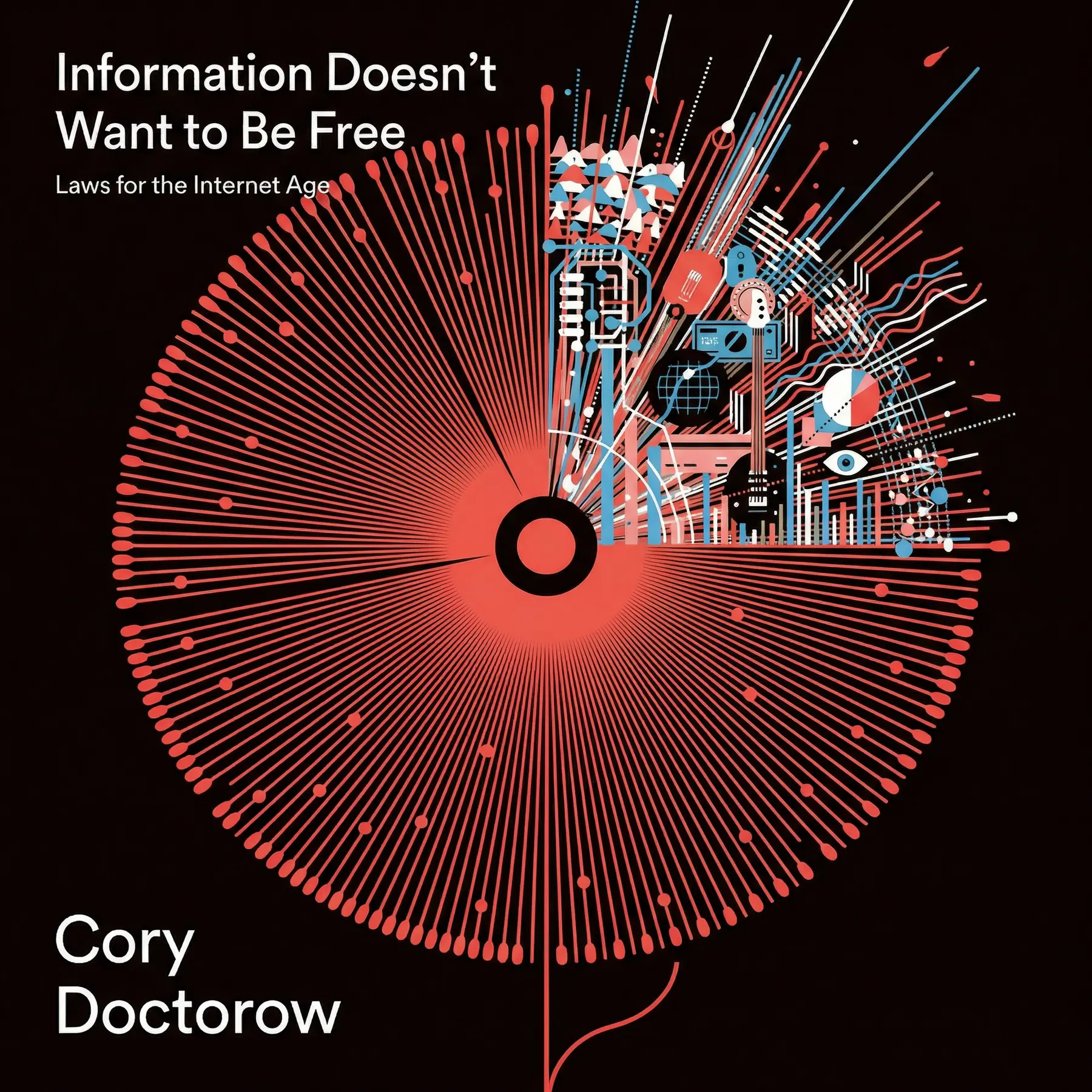
Information Doesn’t Want to Be Free: Laws for the Internet Age
Explore the complex intersection of digital technology, intellectual property, and creative freedom. This summary examines why traditional copyright fails in the internet age and how we can protect creators without sacrificing our civil liberties.
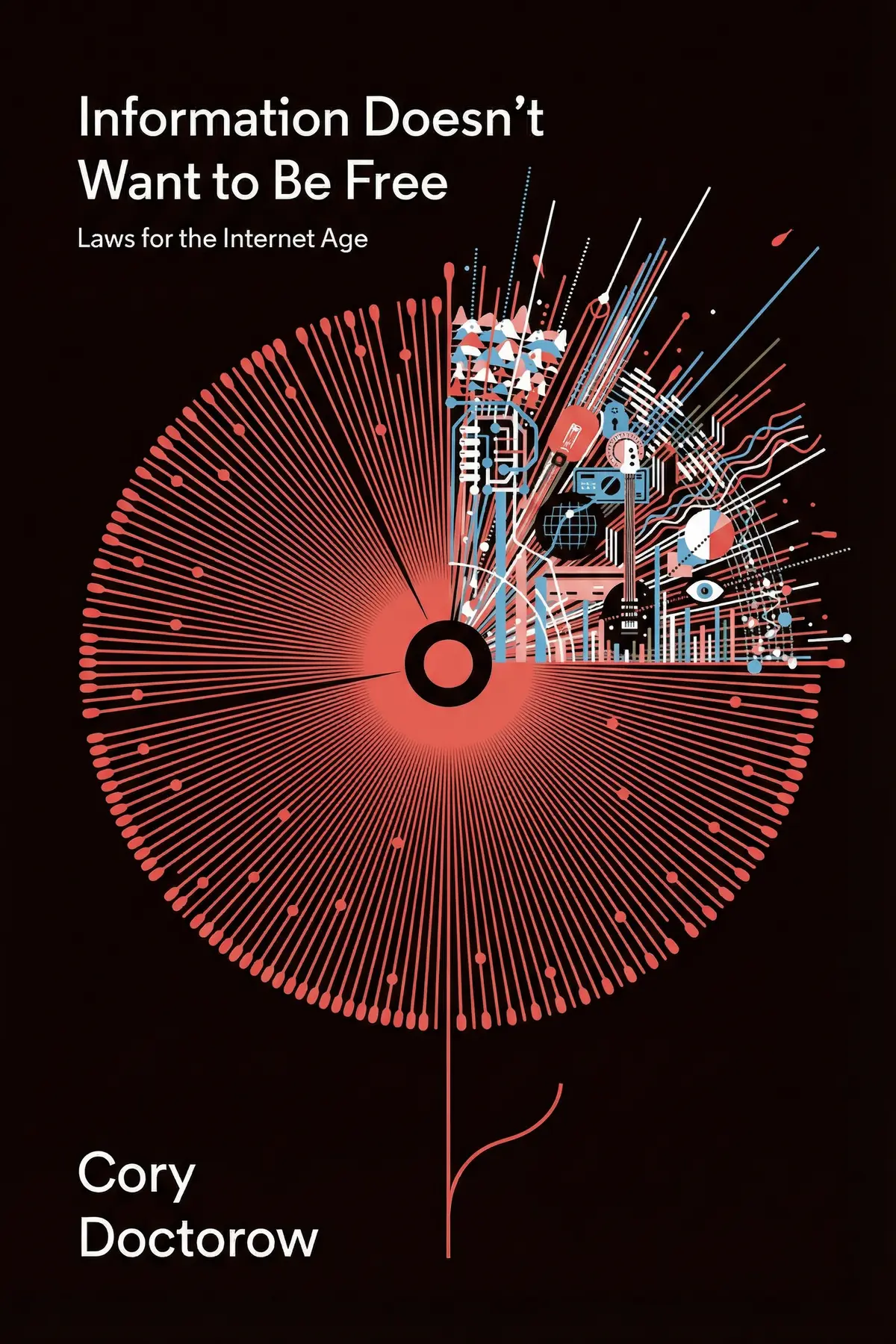
Table of Content
1. Introduction
1 min 40 sec
We live in an era where the boundary between a consumer and a creator has almost entirely vanished. If you have a smartphone in your pocket, you possess a printing press, a movie studio, and a global distribution network all rolled into one. This technological leap has completely upended our traditional understanding of how information moves through society. But as we’ve transitioned from physical bookshelves and record stores to the boundless landscape of the internet, we’ve run into a massive conflict. On one side, we have the established industries trying to maintain the old ways of doing business. On the other, we have a digital reality where copying is as natural and necessary as breathing.
In Information Doesn’t Want to Be Free, we dive into the heart of this struggle. The title itself plays on a famous tech industry adage, but it adds a crucial layer of nuance. While information might not have its own desires, the people who use it certainly do. This summary explores why our current copyright laws are out of step with the way we actually live and work today. We’ll look at the tools used to lock down digital content, the hidden dangers these tools pose to our personal security, and why the fight over intellectual property is actually a fight for the future of human rights. Along the way, we’ll see how the internet can actually be the best thing that ever happened to artists—if we stop trying to treat it like a high-tech vending machine and start seeing it as the vibrant ecosystem it truly is. Let’s get started by looking at how the internet has changed the way we value and pay for the things we love.
2. The Persistence of Value in a Free Environment
2 min 23 sec
Discover why the digital era hasn’t killed the desire to support artists, and how convenience—not just price—determines whether people choose to pay or pirate.
3. The Failure and Frustration of Digital Locks
2 min 14 sec
Explore the world of Digital Rights Management and see how these digital locks often backfire, hurting legitimate customers while failing to stop piracy.
4. The Security and Privacy Risks of Over-Regulation
2 min 26 sec
Learn how the technology used to protect copyrights can become a gateway for hackers and a tool for invasive surveillance in our most private spaces.
5. The Escalating War Over Internet Freedom
2 min 12 sec
Examine the growing tension between government-led censorship and the grassroots movement for an open internet, and the role of tech giants in this struggle.
6. Reframing Copyright for a Digital Human Rights Era
2 min 18 sec
Discover why we need to move away from punishing individual fans and toward a system that regulates industry while protecting fundamental human rights.
7. Conclusion
1 min 23 sec
The central throughline of this exploration is that the internet has forever changed the relationship between creators, consumers, and the law. We cannot go back to the world of 1995, no matter how many digital locks we try to install. The current path—one characterized by invasive DRM, legal threats against fans, and the consolidation of power in a few tech platforms—is not only failing to stop piracy, but it is also making our digital world less secure and less free.
Cory Doctorow’s core message is one of cautious optimism. If we can move away from the ‘war on copying’ and toward a more flexible, human-centric approach to copyright, we can create an environment where artists flourish and our civil liberties remain intact. The internet is a powerful engine for creativity and connection, but only if we keep it open and accessible. As you move forward, remember that the tools you use every day are not just gadgets; they are the battleground for our future rights. By advocating for sensible laws that distinguish between professional industry and personal culture, we can ensure that the digital age is defined by the freedom to create, rather than the fear of being controlled. Let’s work toward a world where technology serves the interests of the people, rather than the interests of the locks.
About this book
What is this book about?
Information Doesn’t Want to Be Free addresses the fundamental shifts in how we create, distribute, and consume art in a world defined by the internet. For decades, the gatekeepers of culture—record labels, movie studios, and publishing houses—controlled the flow of information through physical scarcity and strict legal frameworks. However, the digital revolution has shattered these barriers, making it possible to share and access content with a single click. Cory Doctorow argues that the current attempts to maintain control through digital locks and restrictive laws are not only ineffective but also dangerous to our privacy and freedom of speech. The book explores the 'copyfight,' the myth of the uncooperative consumer, and the security risks associated with digital rights management. Ultimately, it offers a vision for a more balanced approach to copyright—one that supports the financial sustainability of artists while preserving the open nature of the internet and the rights of the individual.
Book Information
About the Author
Cory Doctorow
Cory Doctorow is a blogger, technology activist and science-fiction novelist. He formerly served as director of the European Affairs for the Electronic Frontier Foundation, and is a regular contributor to The New York Times, The Guardian and Wired.
Ratings & Reviews
Ratings at a glance
What people think
Listeners find the writing both accessible and educational, with one review highlighting its thorough exploration of IP locking and DRM concerns. Furthermore, the content earns praise for its persuasive case concerning copyright legislation, and listeners value the depth of insight provided, with one remarking on how the text reshaped their view of the topic. The book is also lauded for its ingenuity, as one review emphasizes how beneficial it is for those in creative industries. Nevertheless, the discussion surrounding copyright prompts varied responses among listeners.
Top reviews
Rod
Ever wonder why the digital landscape feels like such a struggle for independent creators? Doctorow dismantles the persistent myth that strict copyright laws protect artists, arguing instead that they often serve as a tool for powerful intermediaries to control the market. I loved the clear breakdown of how DRM doesn’t actually stop piracy but definitely succeeds in locking consumers into specific platforms. It’s a fast-paced, punchy read that feels incredibly relevant to anyone uploading work to YouTube or selling on Amazon today. Frankly, it changed my whole perspective on digital ownership and the future of creative work.
Show moreThida
Wow, I never realized how much DRM actually protects the distributor rather than the creator until I picked this up. Doctorow argues that when we allow companies to dictate how we use our media, we’re handing them a monopoly on our culture. His "three laws" of the digital age are brilliant summaries of the current mess we’re in. This isn’t a dry legal text; it’s a passionate call for a copyright system that encourages diversity rather than consolidation. It is absolutely essential reading for the internet age and should be on every creator's shelf.
Show moreLaddawan
The chapter on how digital locks compromise our security was terrifying yet necessary reading for anyone with a smartphone or a computer. Doctorow explains that when companies hide their code to protect "intellectual property," they are often just hiding vulnerabilities that hackers can exploit. He moves seamlessly between the philosophy of free culture and the technical realities of encryption. I particularly appreciated his focus on "intermediaries" like Amazon and how they use DRM to keep users from switching to competitors. It's a wake-up call for everyone who values their digital autonomy in an increasingly connected world.
Show moreKenji
This book completely reframed how I view "piracy" and the way large corporations use copyright as a cudgel against innovation. Doctorow’s writing is accessible, energetic, and filled with the kind of common-sense logic that is missing from most policy debates. He makes a compelling case that a healthy culture is one where everyone can create, not just those with the biggest legal departments. The ending, where he discusses the choice between summer blockbusters and the vast creativity of YouTube, really resonated with me. Truth is, we need more thinkers who understand both the code and the culture.
Show moreTee
As someone who makes a living online, I found this to be an incredibly eye-opening look at how copyright really functions in the 21st century. The way the author explains "digital locks" and their impact on security—like the anecdote about reverse-engineering HP printers—is honestly chilling. It’s not just about movies and music; it’s about the devices we own and who actually controls the code inside them. My only real gripe is that the formatting of the sidebars can be a bit distracting when you're trying to maintain a reading flow. To be fair, though, the central message is too important to ignore.
Show moreAnong
Finally got around to reading this, and the historical analogies are definitely the highlight of the experience. I was fascinated by the story of how the movie industry moved to California specifically to escape Thomas Edison’s patents—essentially "pirating" their way to success. Doctorow uses these examples to show that new technology always terrifies the old guard, regardless of the era. While some of the sections on hacker culture felt a bit like "inside baseball," the advice for independent creators is gold. It’s a quick read that packs a significant punch for such a complex subject.
Show moreSupaporn
If you're an artist trying to navigate the mess of modern IP law, you need to pick this up immediately. The book does a fantastic job of explaining why "information doesn't want to be free," but people do. It highlights how the current system favors a few massive blockbusters while squeezing out the middle-class creator. While I found the author's tone a bit overly aggressive at times, his point about the "diversity of creators" being the measure of a good copyright system is spot on. It’s a provocative and necessary contribution to the debate that will make you rethink your digital habits.
Show moreJib
Doctorow is clearly a brilliant guy, but this book reads more like a curated collection of Boing Boing posts than a cohesive manifesto. The first half is exceptionally strong, laying out the power dynamics between creators and distributors with sharp clarity. However, the second half starts to feel a bit like a series of ideological rants on net neutrality and hardware that lack the same depth. While the anecdotes are engaging, I wanted more of a methodology to back up the rhetoric. It’s worth a read for the core concepts, but the organization feels a bit scattered at times.
Show moreFon
Look, the message here is vital, but the delivery feels a bit repetitive if you’ve followed Doctorow’s work for years. He covers a lot of ground—from net neutrality to the old SOPA/PIPA battles—but doesn't always connect the dots in a way that feels like a singular, cohesive argument. I enjoyed the anecdotes about musicians complaining that radio would kill live music, which provides great perspective on our current technological fears. However, the book's structure is a bit chaotic, and some of the smaller sidebars felt out of place. It’s a good introduction to the topic, but it lacks the deep-dive analysis I was craving.
Show moreSuthinee
Not what I expected from such a prominent figure in the tech world. While I agree with many of Doctorow’s sentiments regarding internet freedom, the book relies far too heavily on rhetoric rather than rigorous analysis. It often feels like a long-form TED talk that meanders into complex topics like national security and banking without providing the necessary groundwork. The short, page-long sections make it feel disjointed, almost like I'm scrolling through a social media feed instead of reading a book. I was hoping for something more academically sustained like Lessig’s work, but this felt more like an anecdotal screed.
Show moreReaders also enjoyed
AUDIO SUMMARY AVAILABLE
Listen to Information Doesn’t Want to Be Free in 15 minutes
Get the key ideas from Information Doesn’t Want to Be Free by Cory Doctorow, plus 5,000+ more titles in English and Thai.
- 5,000+ titles
- Listen as much as you want
- 7-day free trial
- Cancel anytime







