
15 min 46 sec
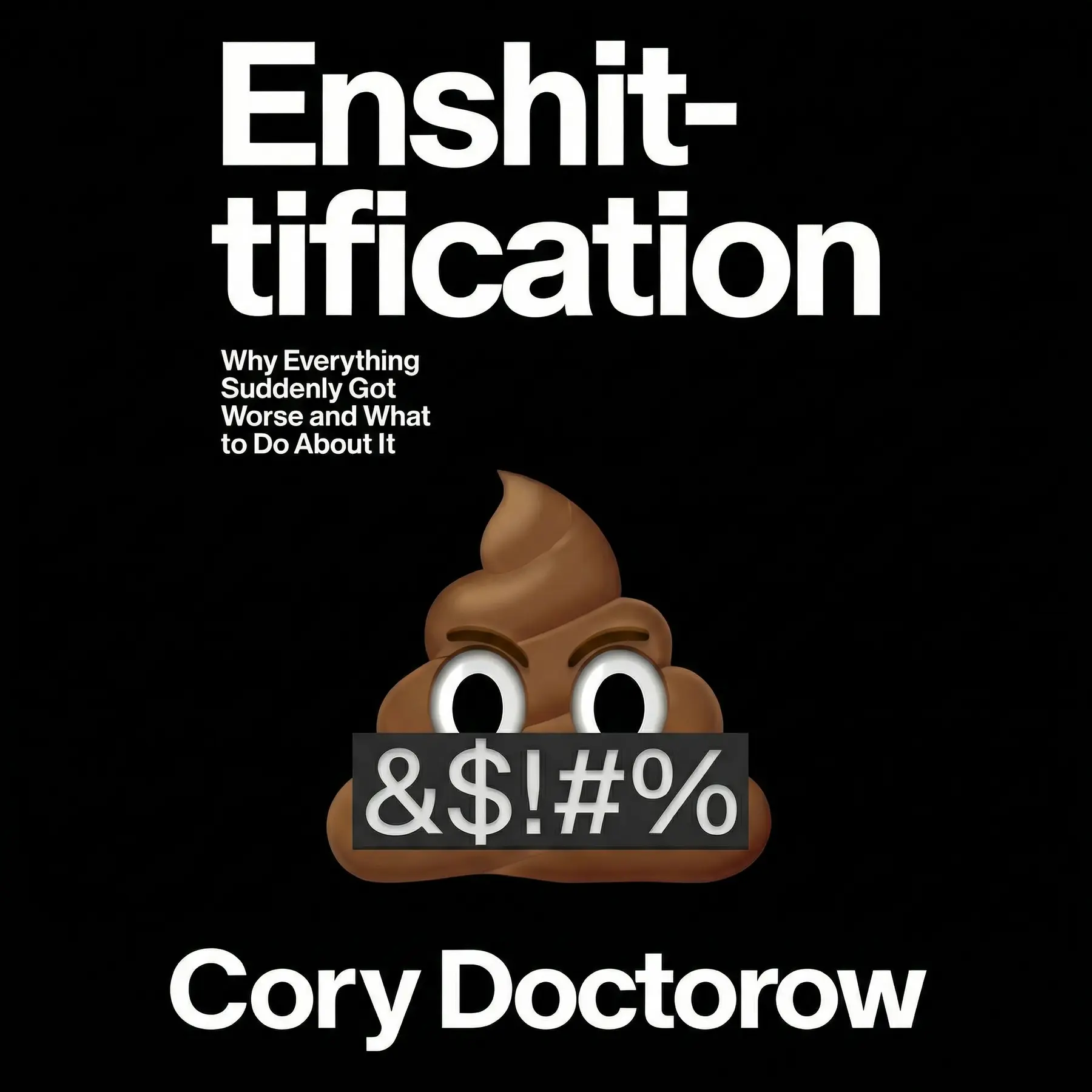
Enshittification: Why Everything Suddenly Got Worse and What to Do About It
A deep dive into the systematic decay of digital platforms. Learn how monopolies and bad policy broke the internet and explore the concrete steps needed to fix it.
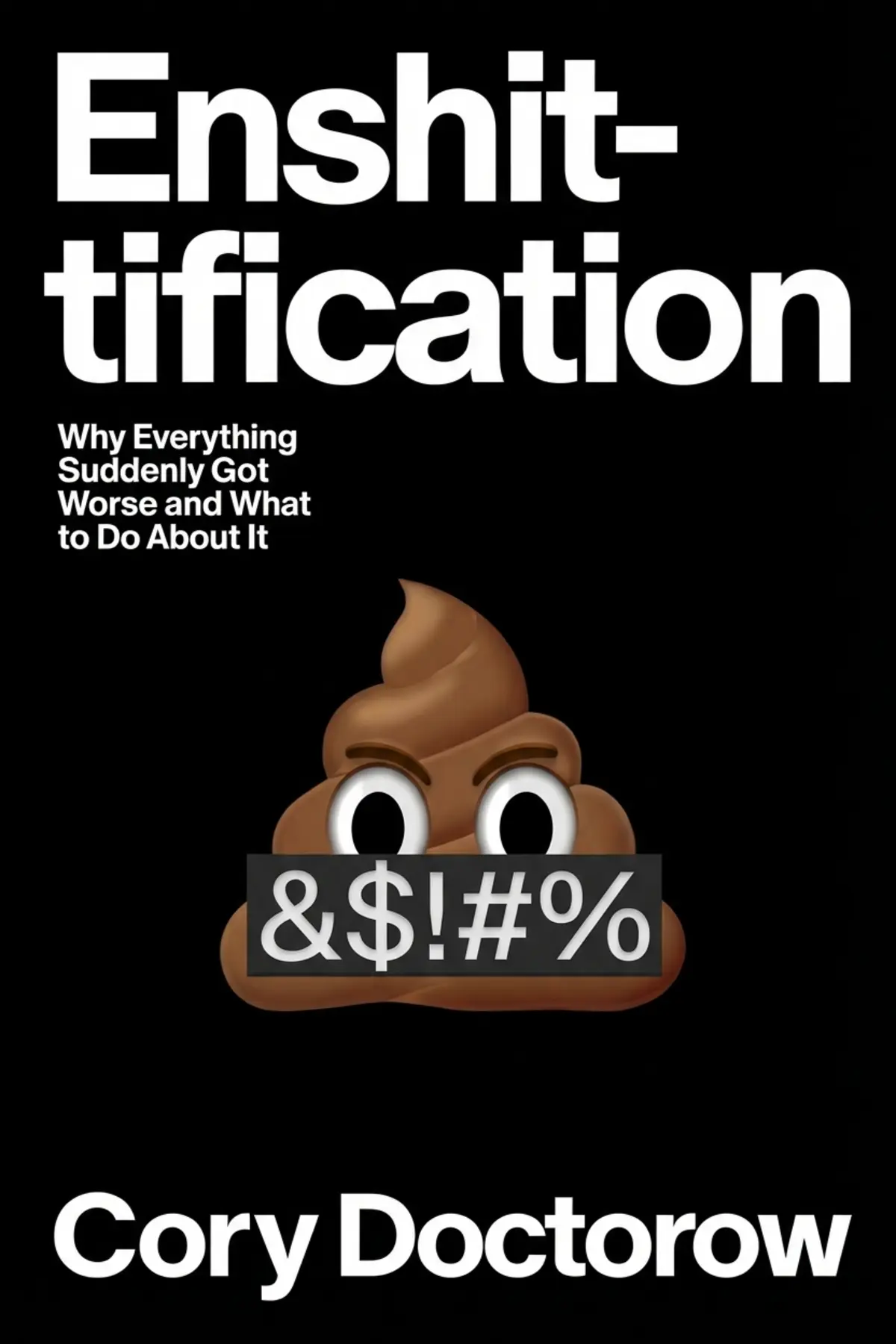
Table of Content
1. Introduction
1 min 52 sec
You’ve probably felt it—that creeping sense of frustration every time you open an app or try to find a simple piece of information online. The search engine that used to deliver the perfect answer on the first try is now a cluttered mess of sponsored links and AI-generated noise. The social network where you once kept up with close friends is now an endless scroll of rage-inducing videos and ads for products you never wanted. It feels like the digital world is rotting, and it isn’t just your imagination. This widespread decay has a specific name: enshittification.
Enshittification isn’t just a catchy term; it’s a systematic process that describes how digital platforms degrade over time. It’s a disease of the modern internet that transforms useful tools into extraction machines. This matters because we don’t just use these platforms for entertainment; they have become the fundamental infrastructure of our lives. We use them to find work, to organize our communities, to stay informed, and to participate in democracy. When these platforms fail, our ability to coordinate as a society fails along with them.
In this exploration, we’re going to look behind the curtain of the tech industry. We’ll examine the four-stage lifecycle that almost every major platform follows—a path that starts with making you happy and ends with making you a captive. We’ll uncover the invisible knobs and dials that engineers use to secretly adjust prices and rankings to squeeze every last cent out of the system. More importantly, we’ll look at why this is happening now, after decades of the internet feeling relatively functional. We’ll see how the legal and economic guardrails that once protected us were dismantled, and what specific, actionable changes we can demand to turn the tide and make the internet work for people again.
2. The Four Stages of Platform Decay
2 min 39 sec
Digital giants follow a predictable path from user-friendly beginnings to total extraction. Discover the four stages that turn helpful services into digital wastelands.
3. The Collapse of Competitive Guardrails
2 min 22 sec
For decades, four powerful forces kept corporate greed in check. See how the dismantling of these protections cleared the way for the Great Enshittening.
4. Twiddling and Algorithmic Wage Discrimination
2 min 21 sec
Behind every screen is a series of invisible knobs that platforms use to manipulate your behavior. Explore the dark logic of algorithmic ‘twiddling.’
5. The Weaponization of Intellectual Property Law
2 min 22 sec
How did fixing your own devices and switching services become a legal minefield? Learn why the law has become a shield for corporate abuse.
6. Breaking the Final Bulwark: The War on Tech Labor
2 min 21 sec
Tech workers were once the last line of defense against corporate rot. Discover how mass layoffs were used to crush the mission-driven spirit of Silicon Valley.
7. Conclusion
1 min 49 sec
The internet doesn’t have to be this way. The decay we see all around us isn’t an inevitable law of nature or a side effect of progress; it is the result of specific choices made by powerful people and protected by bad policy. But if the rot was caused by policy, it can be reversed by policy. To fix the internet, we must restore the four forces that once held the platforms in check. This starts with a return to aggressive antitrust enforcement to break up monopolies and ensure that no single company can control the gateways to our digital lives.
We also need to demand concrete, ‘administrable’ rules that are easy to understand and enforce. Two of the most important are the ‘Right to Exit’ and the ‘End-to-End Principle.’ The Right to Exit means mandating interoperability—giving you the power to leave a platform like Facebook while still being able to communicate with the people you care about who stay behind. This would destroy the ‘lock-in’ effect and force platforms to actually compete for your loyalty by being good. The End-to-End Principle would require that platforms act as neutral pipes, delivering what the sender sent and the receiver requested without ‘twiddling’ the results to favor their own ads or products.
Ultimately, this is a fight for the future of our society. The internet is where we live, work, and organize for every other cause we care about—from climate justice to human rights. We cannot afford to have our primary means of communication controlled by extractive monopolies that profit from our frustration. By reclaiming our digital spaces, restoring the rights of workers, and insisting on technology that serves people rather than shareholders, we can end the era of enshittification and build a digital world that actually deserves our time and trust.
About this book
What is this book about?
This summary explores the enshittification of the internet—the process where platforms move from serving users to exploiting them. It explains the predictable lifecycle of tech giants, from the initial honeymoon phase to the eventual collapse into a swamp of ads and extraction. You will learn about the four pillars that once protected the digital world and how they were systematically dismantled by corporate interests and misguided legal policies. The summary covers how companies like Google, Amazon, and Facebook use algorithmic twiddling to squeeze value out of both users and business partners. It also examines the role of labor and how mass layoffs are used to discipline tech workers who try to maintain ethical standards. Finally, it offers a roadmap for recovery, focusing on interoperability, the right to exit, and the end-to-end principle to ensure that the internet remains a tool for human connection rather than an engine for corporate profit.
Book Information
About the Author
Cory Doctorow
Cory Doctorow is a journalist and activist who spent over two decades with the Electronic Frontier Foundation (EFF) advocating for digital human rights. He writes the daily newsletter Pluralistic.net and has authored other non-fiction works including Chokepoint Capitalism and The Internet Con.
Ratings & Reviews
Ratings at a glance
What people think
Listeners find this investigation into the tech sector's deterioration to be a compelling and pressing examination of how big platforms favor financial gain above their users. Although perspectives differ regarding the repetitive tempo of the narrative, listeners value the deeply researched examples illustrating the downfall of tech titans such as Amazon and Meta. Additionally, the author's humorous and approachable prose transforms a dense subject into an absorbing experience. They also highlight the worth of the proposed "cures" for the digital world, with one listener remarking that the work is "essential reading" for understanding the modern business landscape.
Top reviews
Malee
This book is essentially a post-mortem for the open web we used to love, and it is absolutely essential reading for the current year. Doctorow manages to explain the death of the internet in a way that is both intellectually rigorous and deeply emotional. I was especially struck by the argument that we aren't just 'users,' but people being held hostage by our need to stay connected to one another. The analysis of how Amazon uses its monopoly to tax the entire internet was a revelation that changed how I shop. Even though the topic is heavy, the author’s wit keeps things moving at a brisk pace that never feels like a textbook. It filled me with rage, but it also offered a glimmer of hope through the concept of interoperability. Every person who uses a computer should have a copy of this on their shelf to understand the landscape we are navigating.
Show moreTom
Truth is, I wasn't expecting a book about tech economics to be this much of a page-turner, but I couldn't put it down. Doctorow perfectly captures that feeling of 'something is wrong' that we all have when using our phones lately and gives it a clear, scientific name. The examples he uses, from the decline of Google Search to the predatory nature of Uber, are well-researched and presented with a biting sense of humor. I really appreciated that he didn't just complain about the problem but actually spent time discussing how we can fight back through regulation and technology. Some might find his style a bit aggressive, but given the state of the world, I think a little aggression is entirely justified. This is easily one of the most important books I’ve read in years. It’s a brilliant, scathing, and ultimately hopeful manifesto for a better digital future.
Show moreRod
Not what I expected, but exactly what I needed to read to understand why everything online feels so broken and predatory right now. Doctorow exposes the tech oligarchs for exactly what they are: rent-seekers who have stopped innovating and started harvesting. The way he describes platforms as a giant pile of shit at the end of their life cycle is as accurate as it is visceral. I particularly loved the 'cures' section, even if it feels like a steep uphill battle against billion-dollar corporations and their lobbyists. The book is short enough to read in a weekend but contains enough information to change your entire perspective on the apps you use every day. It’s a wake-up call for the digital age that avoids being overly technical or dry. If you want to know how we got into this mess and how we might get out, look no further.
Show moreElias
After hearing Doctorow on a podcast, I knew I had to dive into the full text of his 'Enshittification' theory, and it did not disappoint. He has a remarkable ability to explain how the drive for infinite growth eventually kills the very things that made a service valuable in the first place. The book is filled with 'aha!' moments that connect the dots between seemingly unrelated frustrations in our digital lives. I especially appreciated his focus on how these companies prey on our social bonds to keep us trapped in their ecosystems. While the tone is certainly snarky, it serves to highlight the absurdity of the situation we've allowed ourselves to get into. It is a fast, engaging read that manages to be both a history lesson and a call to action. I’ve already recommended this to five people because we all need to start pushing back against this decay together.
Show moreFort
Ever wonder why every app you use eventually turns into a frustrating mess of ads and paywalls? This book provides the definitive answer by tracing the life cycle of platforms from user-friendly tools to shareholder-driven nightmares. The way Doctorow explains the 'Darth Vader University' mentality of tech CEOs is both hilarious and deeply depressing. I particularly enjoyed the sections on how Amazon’s price hikes actually drive up costs for items even when you buy them elsewhere. It is a very serious look at the death of competition, yet the writing remains accessible enough for a casual reader to follow along. My only real gripe is that the 'cures' section felt a bit optimistic compared to the overwhelming evidence of decay presented earlier. Still, it is a timely wake-up call that everyone with a smartphone needs to read before the next wave of platforms dissolves into uselessness.
Show moreTum
Doctorow has a gift for taking complex economic theories and turning them into something that makes your blood boil with righteous anger. The chapter on the pathology of tech giants is worth the price of admission alone because it names the specific tactics used to exploit our basic human desire for community. I was fascinated by the history of how we moved from a chronological, open web to these gated silos that treat users like a product to be harvested. While the author’s prose can be a bit 'online' and sassy at times, the underlying research into antitrust law and interoperability is incredibly robust. I did find a few sections where the exact same anecdotes were repeated almost verbatim, which suggests the assembly of the book was a bit rushed. Despite that, the message is too urgent to ignore. It is a chilling account of how greed ruins everything we once liked about the digital world.
Show moreTanawan
Finally got around to reading this after seeing the term 'enshittification' all over my social media feeds lately. It’s an eye-opening analysis that goes way beyond the buzzword to explain the actual mechanisms of corporate decline in the 21st century. I loved the breakdown of how platforms first lure us in with great service before pivotally betraying us for the sake of advertisers and then finally for their own bottom line. The writing style is witty and fast-paced, though I can see why some might find the 'blog-speak' a little repetitive after a while. Personally, I found the case studies on streaming services and the gig economy to be the most compelling parts of the narrative. It really highlights how our governments have failed to protect us from these tech oligarchs. If you’re feeling a sense of despair about the state of the internet, this book will at least give you the vocabulary to describe why.
Show moreMilk
The structure of this book is actually quite clever, dividing the decline of the internet into stages like a spreading disease. I found the section on 'epidemiology' particularly enlightening because it shows how this isn't just a tech problem, but a failure of modern capitalism as a whole. Doctorow’s prose is punchy and direct, making a dense topic feel like a conversation with a very smart, very angry friend at a bar. I learned a lot about how 'lock-in' works and why it is so hard to just leave platforms like Twitter or Amazon even when we hate them. There were moments where the repetition became a bit much, especially regarding the history of Microsoft, but the overall impact remains strong. It’s a necessary read for anyone who wants to understand the forces shaping our daily lives and our increasingly fragile digital economy.
Show morePairot
As someone who remembers the 'old' internet when Facebook status updates were mandatory sentences, this was a nostalgic but ultimately frustrating trip down memory lane. Doctorow is clearly brilliant and his analysis of the 'Enshittocene' is spot on, especially when he discusses how we are trapped by our own social circles. However, the book struggles with a massive pacing issue in the second half where the technical details start to blur together. I appreciated the case studies on Uber and Meta, though I felt like the author kept calling back to them so often that it felt like dejà vu. To be fair, the information is essential for anyone trying to understand why their favorite apps now feel like digital shopping malls. I just wish it weren't so repetitive in its phrasing. It is a solid 3.5-star read that would have been a perfect 5-star long-form essay if it were a hundred pages shorter.
Show moreMan
Look, I really wanted to love this because the concept is so vital to our current digital hellscape, but the execution falls flat. The truth is that this reads exactly like a collection of loosely edited blog posts rather than a cohesive, structured book. Doctorow’s snarky tone is fun for a five-minute read on a screen, yet it becomes incredibly grating over several hundred pages. I found myself zoning out during the copious filler material that seemed to repeat the same three points about platform decay. While the breakdown of how companies like Amazon squeeze both sellers and buyers is intellectually sound, the writing style is just too repetitive for me. Frankly, if you have followed his work online for the last two years, you have already read ninety percent of what is in here. It is an important message buried under an annoying, self-indulgent delivery that desperately needed a more aggressive editor to trim the fat.
Show moreReaders also enjoyed


Abortion: Our Bodies, Their Lies, and the Truths We Use to
Jessica Valenti

Adults in The Room: My Battle With Europe’s Deep Establishment
Yanis Varoufakis

Age of Anger: A History of the Present
Pankaj Mishra

A Different Kind of Power: A Memoir
Jacinda Ardern
AUDIO SUMMARY AVAILABLE
Listen to Enshittification in 15 minutes
Get the key ideas from Enshittification by Cory Doctorow, plus 5,000+ more titles in English and Thai.
- 5,000+ titles
- Listen as much as you want
- 7-day free trial
- Cancel anytime







