
19 min 50 sec
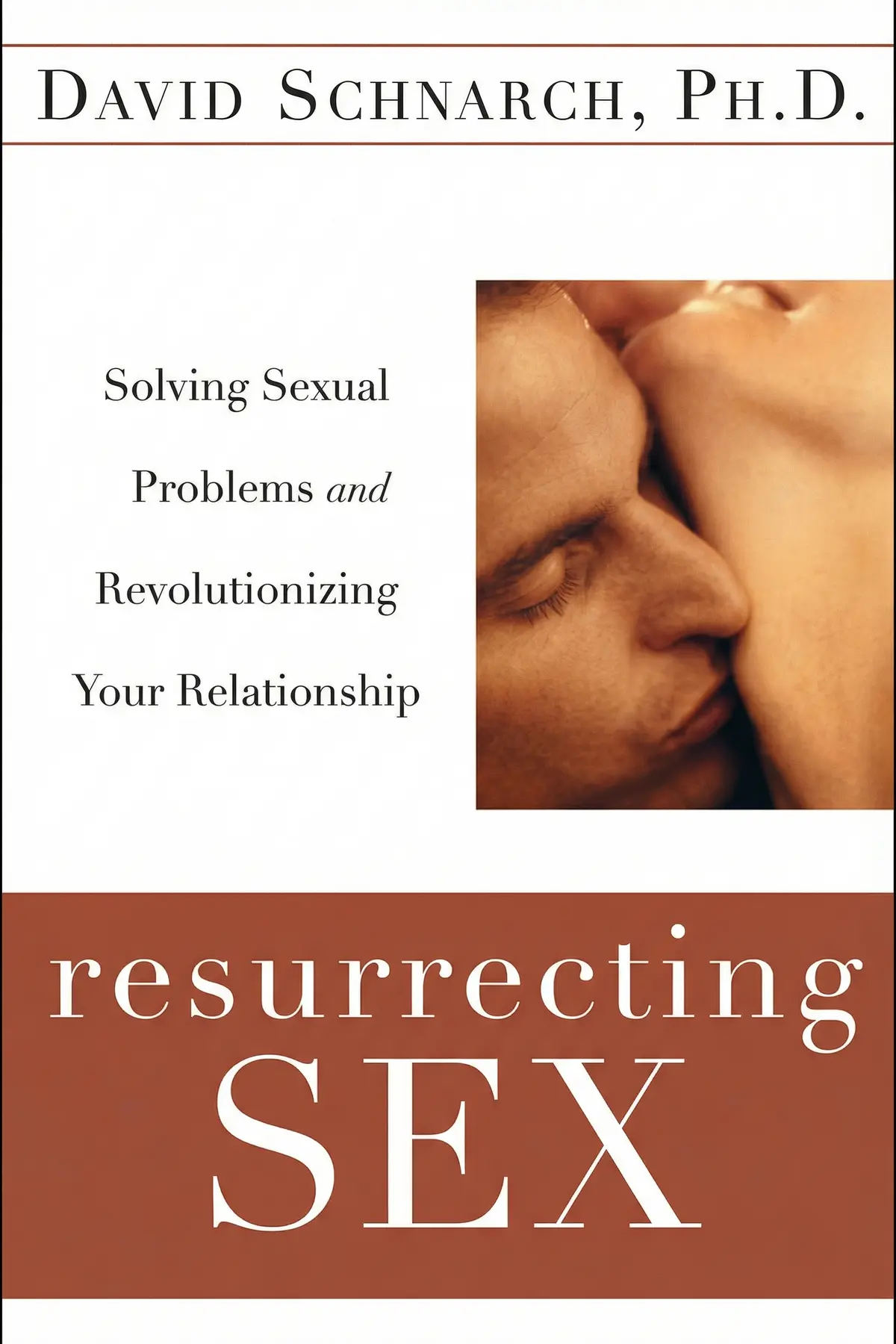
Intimacy & Desire: Awaken the Passion in Your Relationship
Explore a transformative approach to long-term passion by understanding how sexual desire functions. Learn to navigate the inherent power dynamics of intimacy and use relationship challenges as catalysts for personal and emotional growth.
Table of Content
1. Introduction
1 min 54 sec
It is a story told in countless bedrooms across the world: two people fall in love, the chemistry is electric, and for a while, it seems like the passion will never fade. But then, months or years later, something shifts. The spark feels more like a flickering candle, or perhaps it has gone out entirely. When this happens, most people panic. They assume they’ve lost the ‘magic,’ that they’ve chosen the wrong partner, or that they are fundamentally broken. But what if these struggles weren’t a sign of failure, but rather a sign that the relationship is actually doing exactly what it was designed to do?
In this exploration of the dynamics of connection, we are going to look at why intimacy and desire often seem to be at odds in long-term commitments. We’ll uncover the hidden mechanisms that govern how we interact sexually and emotionally, moving past the surface-level advice about ‘spicing things up’ and digging into the psychological roots of why we pull away from the people we love most. The central throughline here is that desire problems are not obstacles to a good relationship; they are the very tools nature uses to help us grow into more mature, self-reliant individuals.
Over the course of this summary, we will examine the roles we play in our partnerships, the ways we inadvertently give away our power, and how we can reclaim our sense of self to create a more authentic and exciting sexual connection. We will look at how our brains are wired to prioritize safety over excitement and how we can consciously choose a different path. By the end, you’ll see that the path to a more passionate life doesn’t involve fixing your partner, but rather evolving yourself. This is a journey toward differentiation—the ability to be fully yourself while being fully connected to another. Let’s begin by looking at the fundamental roles that emerge in every single relationship.
2. The Inevitable Roles of High and Low Desire
2 min 03 sec
Discover why every long-term relationship naturally settles into a dynamic where one person wants more than the other, and why this isn’t a sign of incompatibility.
3. The Power Dynamics of Connection
2 min 01 sec
Explore the counterintuitive truth about who actually controls the sexual intimacy in a relationship and how this power often feels like a burden.
4. The Evolutionary Purpose of Desire Problems
1 min 54 sec
What if the loss of passion isn’t a mistake but a biological push toward personal evolution and self-awareness?
5. The Trap of the Reflected Sense of Self
1 min 59 sec
Learn how our natural tendency to seek validation from our partners can inadvertently sabotage the very intimacy we crave.
6. Differentiation as the Key to Reclaiming Desire
2 min 05 sec
Understand the power of ‘standing on your own two feet’ and how self-validation can transform your relationship’s erotic potential.
7. The Comfort-Safety Cycle and the Boredom of Routine
1 min 58 sec
Why do we settle for boring sex even when we want more? Discover how our brain’s quest for security creates a cage of predictability.
8. Navigating the Tipping Point of Gridlock
1 min 53 sec
Learn why reaching a point where nothing seems to work is actually the moment your relationship has its greatest chance for a breakthrough.
9. Building a Collaborative Alliance Through Physical Presence
2 min 10 sec
Go beyond talk and learn practical, body-based exercises that help couples reconnect and stay present during intimacy.
10. Conclusion
1 min 53 sec
As we reach the end of this journey through the complexities of intimacy and desire, it’s worth reflecting on the core shift we’ve explored. The most important takeaway is that struggle in a long-term relationship is not an indicator of failure. On the contrary, the friction, the gaps in desire, and even the periods of emotional gridlock are all part of a natural process that invites us to become more fully realized human beings. We’ve seen that by stepping out of the roles of High and Low Desire and moving away from a dependency on our partner’s validation, we can create a connection that is both stable and exciting.
True passion isn’t something you ‘find’ or ‘keep’—it is something you create by having the courage to be yourself in the presence of another. It requires the willingness to stand on your own two feet, to soothe your own anxieties, and to stay present even when things feel clumsy or uncomfortable. The goal isn’t to return to the easy, drug-like infatuation of the early days, but to move forward into a more mature, ‘crucible-forged’ intimacy that can withstand the tests of time and life’s challenges.
Your next step is to start practicing differentiation in small ways. The next time you feel that familiar tug of resentment or the urge to hide your true feelings to keep the peace, pause. Ask yourself: ‘What would it look like to act from my own integrity here, rather than seeking my partner’s approval?’ Try the physical exercises like ‘hugging till relaxed’ to begin rewiring your body’s response to closeness. Remember, you don’t need your partner’s permission to start your own growth. When you change how you show up in the relationship, the relationship has no choice but to change with you. By embracing the tension instead of running from it, you can transform your partnership into a source of profound self-discovery and lasting, vibrant desire.
About this book
What is this book about?
Many couples believe that a decline in sexual desire is a sign that their relationship is failing or that they are fundamentally incompatible. This exploration of intimacy challenges that notion, suggesting instead that desire problems are an inevitable and even necessary part of a maturing partnership. By moving away from traditional views of sexual dysfunction, the focus shifts toward the psychological concept of differentiation—the ability to maintain a strong sense of self while remaining emotionally connected to a partner. Readers will discover the roles of the High Desire and Low Desire partners and why the person who wants sex less typically holds the power in the bedroom. The book provides a roadmap for breaking through emotional gridlock and moving past the need for constant external validation. Through specific behavioral exercises and a shift in perspective, couples can learn to handle the anxiety of intimacy and transform their sexual relationship into a vehicle for profound self-discovery and lasting passion. The ultimate promise is not just better sex, but a more resilient, honest, and deeply connected version of oneself within the relationship.
Book Information
About the Author
David Schnarch
Dr. David Schnarch was a highly respected licensed clinical psychologist and a specialist in sex therapy. Throughout his career, he authored several influential books on the intersection of intimacy, sexuality, and emotional commitment. His most famous works include the long-standing best seller Passionate Marriage, as well as Resurrecting Sex, which focuses on rejuvenating desire and resolving sexual difficulties. His theories on differentiation and the Crucible Approach have significantly shaped modern relationship therapy.
Ratings & Reviews
Ratings at a glance
What people think
Listeners find the writing accessible and straightforward, with one listener observing its particular utility for those in long-standing relationships. The quality of the information is also well-received; one listener points out the helpful advice for living out the concepts, while another highlights the easy awareness exercises designed for couples. Furthermore, the book is praised for its depth, with one listener noting it offers a mirror for self-reflection. However, the material draws varied responses, as one listener enjoys the practical examples while another feels it is overly detailed. The tempo also sees mixed reactions, with some finding it peaceful and others finding it bothersome.
Top reviews
Orm
Wow. This book completely flipped my perspective on what "normal" looks like in a long-term marriage. I used to think our mismatched libidos meant we were broken, but Schnarch explains why this is actually a natural part of growing together. The "hugging till relaxed" exercise sounded cheesy at first, but it genuinely helps regulate that frantic anxiety that kills the mood. It’s not an easy, breezy read because it forces you to look into a mirror and confront your own need for validation. Honestly, the focus on developing a "Solid Flexible Self" has helped me in my career just as much as in my bedroom. Highly recommended for couples who are tired of the usual "just communicate more" advice.
Show moreGabriel
Picked this up after seeing a few therapists recommend it online, and I’m glad I took the plunge. What sets this apart is the "mirror for self-reflection" it forces you to hold up. It’s not about fixing your partner; it’s about fixing your own inability to soothe your own anxieties. The idea that sex is a tool for personal growth rather than just a recreational activity was a total lightbulb moment for me. I particularly appreciated the "Heads on Pillows" exercise for building intimacy without the pressure of performance. It’s a calming read in a strange way because it validates that your struggles are common. If you want a book that challenges you to grow up, this is the one.
Show moreAndrew
David Schnarch has a way of cutting through the fluff and getting straight to the uncomfortable truths about why we pull away from those we love. His concept of "Meaningful Endurance" changed my entire approach to relationship conflict. Instead of running away from the discomfort, I’m learning how to stay grounded and face the issues head-on. This isn't just a book about sex; it's a blueprint for becoming a more resilient human being. The focus on "Grounded Responding" has made our house so much quieter and more peaceful. It takes effort to digest the concepts, but the payoff is a much deeper connection that feels earned rather than forced. Essential reading for anyone in a long-term commitment.
Show moreNarong
Ever wonder why the person you love most is the person who can drive you the most insane? This book explains that "emotional fusion" perfectly and offers the "Four Points of Balance" as an escape hatch. The awareness exercises are simple on the surface but incredibly profound when you actually try them with your partner. I liked that he included real-world examples that didn't feel sanitized or "perfect." My only gripe is that the pacing can be a bit annoying, with certain points being reiterated dozens of times. To be honest, you could probably cut 100 pages and still have the same impact. That said, the core message is vital for anyone struggling with mismatched desire.
Show moreThawee
Finally got around to reading this after it sat on my nightstand for months, and I wish I’d opened it sooner. The way Schnarch describes the "low desire partner" and "high desire partner" as roles that can switch over time was eye-opening. It removed so much of the guilt and blame we were both carrying. Truth is, most of us are just looking for someone to tell us we’re okay, and this book teaches you how to tell that to yourself. The exercises like "feeling while touching" are transformative because they remove the goal-oriented pressure of sex. It’s a dense read, but it’s written with a clarity that makes the complex psychological concepts accessible. It's a game-changer for long-term passion.
Show moreRotjanee
This isn’t your typical "spice things up" manual full of positions and toys. Instead, it’s a deep dive into the psychology of how we lose ourselves in our partners and then wonder where the passion went. I found the "Four Points of Balance" extremely helpful for maintaining my own emotional center during arguments. Sometimes the writing felt a bit dense and repetitive, almost like the author was hammering the same nail for ten chapters straight. However, the case studies with real couples provided much-needed context for the heavier theoretical parts. Frankly, it’s a bit clinical, but the insights into the "high desire" versus "low desire" dynamic are groundbreaking. It’s a slow read, but a rewarding one if you’re willing to do the work.
Show moreOmar
If you’ve been married for a decade or more, you probably know that "communication" isn't always the magic bullet it’s cracked up to be. This book dives into the "Collaborative Alliance" and how we often use our partners to validate our own self-worth. It's a bit of a tough pill to swallow. Personally, I found the distinction between the comfort cycle and the growth cycle very enlightening. The writing style is clear, though it definitely leans into the academic side of things. I would have liked more concrete "how-to" steps in the later chapters, as the book starts to feel a bit circular toward the end. Still, it provides a much better framework for understanding desire than anything else I’ve read.
Show moreAubrey
The theory is solid and well-grounded, but I found myself struggling to stay engaged during the middle chapters. It felt like a lot of "think while reading" without enough "do while living." For instance, the chapter that was supposed to be about physical sex spent a weird amount of time discussing the hippocampus and rats. I was looking for more practical guidance on navigating the actual physical disconnect. I did appreciate the "Three important techniques" mentioned early on, but they felt a bit buried in the sea of generalizations. It’s a good book if you want a deep psychological autopsy of your marriage, but it might be overkill for couples just looking for a bit of a spark.
Show moreAir
To be fair, I can see why people swear by this book, but it was a total slog for me to get through. The author spends an enormous amount of time on the theory of differentiation, which is interesting, but it gets buried under layers of jargon. I felt like I was reading a textbook rather than a relationship guide. Where were the practical, everyday tips? While the concept of the "Quiet Mind-Calm Heart" is great in theory, applying it when you're actually frustrated feels nearly impossible without a therapist present. Also, the section on the biology of sex felt a bit out of place with all the talk about rats and brain structures. It’s definitely solid information, but the delivery is just so dry and exhausting.
Show moreNing
I really wanted to like this, but I found the author’s tone incredibly patronizing and arrogant throughout. He seems convinced that every single intimacy issue is a psychological "mental issue" that requires his specific brand of self-confrontation. Look, sometimes a lack of desire is just a lack of desire, or it’s rooted in actual physical discomfort that isn't a "mind game." Schnarch ignores the physiological side almost entirely, which felt dismissive and frustrating. The book is also way too long for the amount of unique information it actually contains. I felt like I was being lectured by a professor who loves the sound of his own voice. It might help some people, but for me, it was just exhausting and didn't offer any real relief.
Show more
Readers also enjoyed


AUDIO SUMMARY AVAILABLE
Listen to Intimacy & Desire in 15 minutes
Get the key ideas from Intimacy & Desire by David Schnarch, plus 5,000+ more titles in English and Thai.
- 5,000+ titles
- Listen as much as you want
- 7-day free trial
- Cancel anytime







