
12 min 05 sec
It Takes What It Takes: How to Think Neutrally and Gain Control of Your Life
Learn the secrets of neutral thinking, a mindset used by elite athletes and astronauts to stay calm and perform under pressure by focusing on facts over feelings and taking the next right step.
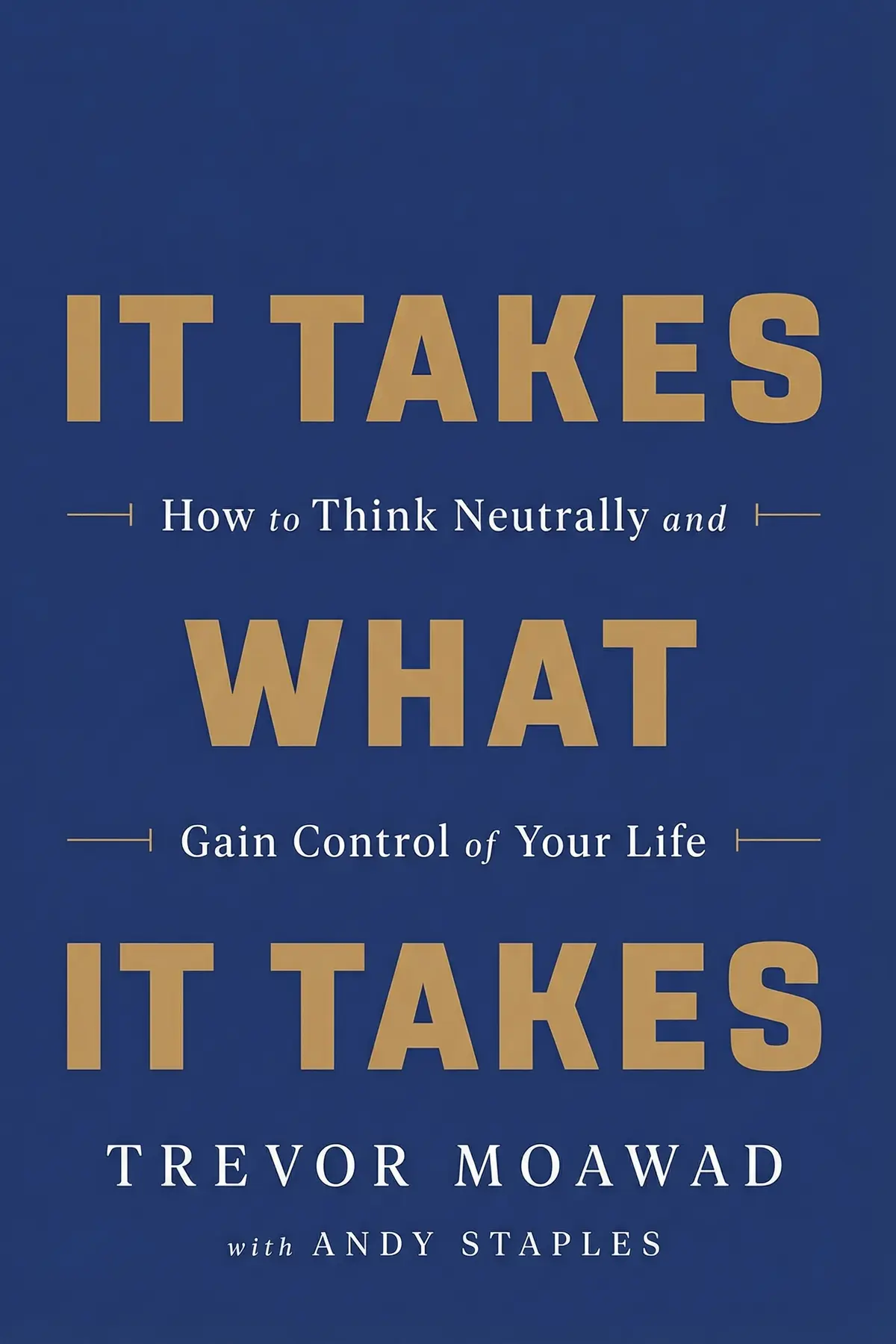
Table of Content
1. Introduction
1 min 26 sec
In the high-pressure arenas of professional sports and space exploration, the difference between success and failure often comes down to what happens inside a person’s head. For years, we have been told that the secret to overcoming obstacles is ‘positive thinking’—the idea that if we just believe hard enough and stay upbeat, everything will work out. But for many people, that advice feels hollow or even impossible when they are facing a genuine crisis. What if there was a more grounded, more effective way to handle the toughest moments in life?
This is where we encounter the philosophy of neutral thinking. It is a mindset that doesn’t ask you to ignore your problems or pretend everything is perfect. Instead, it asks you to look at the facts of your situation with total clarity and no emotional bias. In this exploration, we are going to look at the mental conditioning strategies used by elite performers to stay steady when the world is falling apart.
You’ll discover how to stop your past failures from dictating your future choices and why your environment might be the biggest hurdle standing between you and your goals. By the end of this journey, you will have a clear understanding of how to strip away the noise of your emotions and focus on the one thing that actually matters: the next right move. This isn’t about being happy; it’s about being effective. It’s about recognizing that performance is a choice and that the path to success requires a specific set of behaviors that remain constant regardless of how you feel in the moment.
2. The Foundation of Neutral Thinking
1 min 51 sec
Discover why traditional positive thinking often fails and how a factual, non-judgmental approach can help you navigate life’s most intense pressures with clarity.
3. The Power of the Reset
1 min 26 sec
Learn how the world’s best athletes move past mistakes instantly by focusing on the present moment instead of dwelling on previous failures.
4. Applying Neutrality in Crisis
1 min 26 sec
See how the crew of Apollo 13 used fact-based decision-making to survive a life-threatening disaster in deep space.
5. Managing Your Mental Inputs
1 min 44 sec
Explore why a ‘negativity diet’ is essential for maintaining a high-performance mindset and how to curate your daily environment.
6. Strategy and Visualization
1 min 31 sec
Uncover the importance of creating detailed roadmaps for success and using visualization to prepare for the process, not just the result.
7. Leadership and the Shadow of Influence
1 min 31 sec
Recognize the impact of your daily actions on others and how being a role model is about consistent behavior rather than grand gestures.
8. Conclusion
1 min 10 sec
In the end, neutral thinking is more than just a technique; it is a fundamental shift in how you relate to the world. It is the realization that while you cannot control everything that happens to you, you have absolute authority over how you respond. By moving away from the emotional volatility of extreme highs and lows, you find a steady center where real progress happens. We’ve seen how this mindset allowed Russell Wilson to overcome interceptions, how it brought the Apollo 13 crew home safely, and how it can help you manage your own daily stresses.
Remember that success ‘takes what it takes.’ It has a price, and that price is usually paid in consistent, disciplined behaviors, regardless of your mood. You can audit your environment through a negativity diet, you can visualize the process of your success, and you can lead others through the quiet power of your own example. The next time you feel overwhelmed by a setback or paralyzed by the pressure of a big goal, remember to hit the reset button. Look at the facts. Strip away the judgment. Ask yourself, ‘What is the next right thing to do?’ Then, quite simply, go do it. Your potential isn’t found in your past; it’s found in the neutral, purposeful steps you take starting right now.
About this book
What is this book about?
It Takes What It Takes is a deep dive into the world of mental conditioning, offering a blueprint for resilience and high performance. The book explains why traditional positive thinking is often insufficient during a crisis and introduces a more sustainable, fact-based approach called neutral thinking. By stripping away emotional judgment and focusing on reality, individuals can process failures without spiraling and maintain clarity during intense pressure. The core promise of the book is that by adopting a neutral mindset, you can navigate life's most difficult challenges with the same composure as professional athletes and astronauts. It covers practical strategies such as the 'negativity diet' to curate your environment, the importance of detailed behavioral planning, and the use of visualization to prepare for the process of success. Ultimately, the book teaches that performance is a choice and that excellence is achieved by focusing on the present moment and the next actionable step, regardless of past mistakes or future fears.
Book Information
About the Author
Trevor Moawad
Trevor Moawad was a renowned mental-conditioning expert. He honed the mental prowess of elite athletes like Seattle Seahawk Russell Wilson. His expertise shone beyond sports, influencing top-tier professionals across various domains. He died in 2021. Andy Staples is a prominent sports writer who collaborated on the project.
Ratings & Reviews
Ratings at a glance
What people think
Listeners describe this book as articulate and practical, featuring lucid examples that provide deeper understanding of neutral thinking. They value the encouraging themes, with one listener highlighting its utility in governing one's attitude without emotional charges. The work garners praise for its storytelling, impact, and prose quality, while one listener notes its specific use in sports performance. Even though many consider it a simple read, perspectives on its accessibility are somewhat divided.
Top reviews
Sirinat
Wow. This book fundamentally changed how I view my bad days and professional setbacks. Moawad’s core concept of neutral thinking is a total game-changer because it allows you to strip away the emotional baggage of a crisis. Instead of forcing a fake smile through toxic positivity, you learn to look at the facts and decide what the next right step is. The anecdotes about Russell Wilson and other elite athletes aren't just fluff; they provide a clear roadmap for mental conditioning in high-stakes environments. I especially appreciated the 'negativity diet' advice, which forced me to audit who and what I let into my headspace daily. If you're tired of typical self-help platitudes and want a strategy that actually feels grounded in reality, this is it. It’s articulate, practical, and highly motivating without being cheesy.
Show moreAnucha
Ever wonder how elite performers keep their cool when everything is falling apart? This book provides the answer through the lens of neutral thinking. It’s not about lying to yourself with sunshine and rainbows; it’s about acknowledging the situation without judgment. Moawad is an expert at mental conditioning, and his ability to break down complex psychological states into actionable behaviors is impressive. I loved the emphasis on 'drawing a line in the dirt' and moving forward regardless of what just happened. The stories from the NFL and Special Operations communities add a layer of intensity that kept me hooked from start to finish. It’s a direct, punchy, and incredibly articulate guide to gaining control of your life. Honestly, it’s one of the few self-help books that I’ve actually revisited to highlight specific strategies for my own career.
Show moreBenjamin
After hearing Trevor Moawad speak on a few podcasts, I knew I had to grab his book before he passed. He had such a unique way of articulating how the brain processes failure and success. This isn't your typical 'believe in yourself' fluff; it’s a rigorous system for managing your internal monologue. The way he describes emotions as signals rather than directives changed my entire approach to stress management. By staying neutral, you give yourself the clarity to execute your plan without the fog of anxiety. The book is well-written, fast-paced, and filled with insights that apply just as much to a corporate office as they do to an NFL stadium. It’s a bittersweet read knowing he’s gone, but his legacy of mental excellence lives on in these pages. Highly recommend for anyone looking to level up their mental game.
Show moreTak
Direct and articulate, Moawad delivers a masterclass in mental toughness that is surprisingly easy to digest. He cuts through the bull and explains that champions don't have a choice; they simply do what the situation requires. This 'illusion of choice' concept really resonated with me because it simplifies decision-making during high-pressure moments. You don't need to be an elite athlete to appreciate the value of a 'negativity diet' or the power of visualization. The book manages to be both motivational and deeply practical, offering a clear framework for anyone wanting to improve their performance. I found the sections on how to lead yourself before leading others particularly insightful for my own management style. It’s a quick read but the impact of the message lingers long after you close the cover. This is essential reading for anyone serious about personal growth.
Show moreKavya
Picked this up after seeing several teammates mention it, and I’ve got to say, the logic holds up. Moawad argues that your past doesn’t have to dictate your future unless you choose to stay there, which is a powerful reminder for anyone struggling with a recent failure. The writing style is very conversational—definitely a 'bro' book in some ways—but the advice on mental toughness is top-tier. I found the sections on detailed planning and visualization more useful than the standard motivational speeches you usually get in this genre. My only real gripe is that it feels a bit repetitive toward the end, as if the main points were stretched to fill the page count. Still, the concept of staying neutral when things go sideways is a tool I’ll be using for a long time. It’s a fast, engaging read that delivers on its promise.
Show moreAom
The chapter on the law of substitution alone was worth the price of the book for me. It explains how focusing on a specific behavior can effectively crowd out negative thoughts, which is much more practical than just trying to 'stop' being sad. Truth is, I found the first half of the book much stronger than the second. Once you understand the pivot from negative to neutral, the later chapters start to feel like they’re retreading the same ground. However, the storytelling remains high-quality throughout, and the collaboration with Andy Staples ensures the prose flows smoothly. It’s a great introduction to mindset training for anyone who feels stuck in a cycle of overthinking. While it might feel a bit like a sports-centric 'bro' manual at times, the underlying message is universal. It takes discipline to stay neutral, but this book makes a compelling case for why it’s necessary.
Show moreValentina
To be fair, I went into this expecting a typical ghostwritten sports book, but I was pleasantly surprised by the depth of the philosophy. Moawad’s focus on the present moment and the refusal to let the past taint current actions is incredibly liberating. He explains that while the past is irrevocable, our response to it is entirely within our control. The writing is punchy and moves at a brisk pace, which helps when the concepts get a bit repetitive. I do think the name-dropping of Russell Wilson was a bit excessive, but I suppose that’s the nature of the industry he worked in. Regardless, the core message about neutral thinking is a vital tool for navigating the ups and downs of life. It’s a solid 4-star read that offers real value if you’re willing to actually implement the 'negativity diet' he suggests.
Show moreKamol
Frankly, this book is a bit of a mixed bag for me. On one hand, the premise of neutral thinking is excellent and provides a much-needed alternative to the 'positive vibes only' culture that has become so prevalent. On the other hand, the execution feels a bit like a highlight reel of the author’s famous clients. I was hoping for more concrete exercises or a step-by-step workbook style, but instead, it’s mostly anecdotal. The 'negativity diet' is a solid takeaway, yet I felt like I got the gist of the book within the first fifty pages. If you’re a big sports fan, you’ll probably love the behind-the-scenes looks at various programs and players. If you’re looking for a rigorous psychological deep dive, you might find it a bit superficial. It’s a decent read, just don’t expect it to reinvent the wheel.
Show moreEarn
Not what I expected based on the glowing reviews, though it’s certainly not a bad book. It reads more like a memoir of a high-level consultant than a practical 'how-to' guide for the average person. I found the tone a bit too 'macho' at times, and the lack of structured exercises made it hard to figure out how to actually practice neutral thinking in a systematic way. That said, the central idea is quite good. The analogy of shifting from reverse to neutral before going forward is a perfect way to visualize the process. I think this would have been much better as a long-form article or a series of videos. As a full book, it feels like a lot of fluff surrounding a very solid ten-page thesis. It’s an okay read if you have a few hours to kill, but don't expect a life-altering plan.
Show moreViolet
I really wanted to like this book, but it felt like a hodgepodge of name-dropping and hollow cliches. While I respect Trevor Moawad’s career, the constant reminders that he’s BFFs with Russell Wilson and other celebrities became incredibly distracting after the third chapter. There is a serious lack of research or scientific studies to back up his claims, making the 'neutral thinking' concept feel more like a personal mantra than a proven methodology. To be fair, the idea of a 'negativity diet' is a decent tip, but you can find that same advice in a five-minute blog post. The writing is filled with an unnecessary amount of profanity that felt forced rather than authentic. If you want a deep dive with actionable exercises, you’re going to be disappointed by this diluted version of his coaching. It’s basically a long-winded pitch for his services.
Show moreReaders also enjoyed

Ali: A Life
Jonathan Eig


Abundance: The Inner Path to Wealth
Deepak Chopra

59 Seconds: Change Your Life in Under a Minute
Richard Wiseman


A Guide to the Good Life: The Ancient Art of Stoic Joy
William B. Irvine
AUDIO SUMMARY AVAILABLE
Listen to It Takes What It Takes in 15 minutes
Get the key ideas from It Takes What It Takes by Trevor Moawad, plus 5,000+ more titles in English and Thai.
- 5,000+ titles
- Listen as much as you want
- 7-day free trial
- Cancel anytime







