
16 min 53 sec
Jobs to Be Done: A Roadmap for Customer-Centered Innovation
Discover a customer-centered roadmap to innovation. Learn why people hire products to fulfill specific needs and how to solve their deepest frustrations to drive sustainable business growth and market disruption.
Table of Content
1. Introduction
1 min 27 sec
In the world of business, we are often told that the key to success is building a better mousetrap. We focus on faster processors, sleeker designs, or more features. But what if we are solving the wrong problem entirely? The reality is that customers don’t just buy products; they hire them to do a specific job in their lives. This fundamental shift in perspective is the heart of the methodology we are about to explore. Originally popularized by thinkers like Clayton Christensen, this framework moves us away from looking at who the customer is and toward looking at what the customer is trying to achieve.
In this roadmap for customer-centered innovation, we will dismantle the mystery of why people make the choices they do. We will look at how successful companies move beyond simple functionality to tap into the emotional and social currents that drive purchasing decisions. Throughout this discussion, we will see that innovation isn’t just about a sudden spark of genius. Instead, it is a systematic process of identifying the gaps between where a customer is and where they want to be. By the end of this journey, you will understand how to view your market through a lens of human tasks and desires, allowing you to create solutions that are not just marginally better, but fundamentally essential. Let’s dive into how you can start identifying the real jobs your customers are trying to get done.
2. Defining the Job to Be Done
1 min 45 sec
What if your customers aren’t actually looking for your product, but rather a specific result? Discover the core philosophy that redefines innovation as problem-solving.
3. The Power of Emotional and Social Jobs
1 min 46 sec
Functionality is only half the battle. Learn why the best products succeed by making customers feel a certain way or project a specific image.
4. Identifying the Contextual Drivers
1 min 46 sec
Every choice happens in a specific context. Explore how attitudes, backgrounds, and circumstances dictate which products get hired.
5. Mapping the Stakeholders and the Journey
1 min 35 sec
Innovation isn’t just about the person who swipes the credit card. Discover how to map the entire ecosystem of influence around a job.
6. Navigating Pain Points and Trade-offs
1 min 42 sec
Frustration is a roadmap to opportunity. Learn how to weigh competing customer needs to find the perfect balance.
7. Defining Success and Overcoming Adoption Hurdles
1 min 48 sec
A great idea only works if people can actually use it. Explore the barriers to entry and how to measure real value through the customer’s eyes.
8. Value-Based Pricing and Market Realities
1 min 44 sec
Stop pricing based on costs and start pricing based on outcomes. Learn how brands like Hershey and Uber capture the true value of a job.
9. A Systematic Approach to Brainstorming and Testing
1 min 52 sec
Ideas are cheap, but great execution is rare. Discover how to structure your team’s creativity to produce validated innovations.
10. Conclusion
1 min 28 sec
The journey toward innovation doesn’t have to be a gamble. By adopting the Jobs to Be Done framework, you move from a mindset of guesswork to one of strategic precision. We have seen that the key is to look past the surface-level features of a product and understand the deep-seated motivations of the human being using it. Whether it is a functional requirement, an emotional desire, or a social aspiration, every purchase is an attempt to make progress in life.
You now have a roadmap for identifying the drivers that shape customer behavior, mapping out the journey to find hidden stakeholders, and targeting the pain points that offer the most significant rewards. You understand that success is defined by the customer’s criteria and that adoption hurdles must be cleared through thoughtful design and value-based pricing. Finally, you have seen how a structured, diverse approach to brainstorming and testing can turn these insights into reality.
The most important takeaway is this: stay focused on the job. Markets change, technologies evolve, and competitors will always arise. But the fundamental tasks that people are trying to accomplish remain remarkably consistent. If you commit to being the best at helping your customers get their most important jobs done, you will not only survive the shifts in the marketplace—you will lead them. It’s time to stop selling products and start providing the outcomes that your customers truly value.
About this book
What is this book about?
Have you ever wondered why some products take the world by storm while others, despite being technically superior, fail to gain any traction? This summary explores the powerful framework of looking at customer needs not as demographic data points, but as specific jobs that people are trying to accomplish in their daily lives. It provides a strategic guide for businesses to stop guessing and start innovating with precision. You will learn how to identify the hidden drivers behind consumer behavior, from emotional desires to situational constraints. By mapping out the customer journey and identifying overlooked stakeholders, you can uncover pain points that represent massive opportunities for growth. The book promises to move you beyond feature-driven development toward a holistic, value-based approach that addresses functional, social, and emotional needs simultaneously.
Book Information
About the Author
Stephen Wunker
Stephen Wunker is an expert in customer-centered innovation and jobs-to-be-done theory, with a background in consulting and strategy. Jessica Wattman holds a PhD in political science from MIT and serves as the director of social innovation at New Markets Advisors, specializing in innovative solutions for unstable environments. David Farber is a manager at New Markets Advisors and a specialist in using Jobs-based research to help companies find growth opportunities.
Ratings & Reviews
Ratings at a glance
What people think
Listeners consider the content to offer highly beneficial advice and describe it as an excellent, fast-paced listen. They value the organized approach, with one listener highlighting the 12-part structure, and find the material to be practical. Opinions on ease of use are varied, as one listener suggests the text overcomplicates the process of writing job stories.
Top reviews
Chanon
Finally got around to reading this, and the 'Jobs Atlas' concept is a complete game-changer for my team's innovation process. Unlike many dry business texts, the authors break the methodology into 12 logical parts that actually feel actionable for real-world scenarios. I specifically loved the section on success criteria because it forces you to define a 'win' through the customer's eyes rather than just looking at internal metrics. Some of the examples like Uber might feel a bit dated now, but the core logic of focusing on the 'why' behind behavior remains incredibly sound. It is a terrific quick read for anyone tired of brainstorming sessions that lead nowhere.
Show moreKaen
Ever wonder why some products fail even when they seem to have every feature customers asked for? This book explains that disconnect perfectly by showing that customers buy satisfaction, not just a physical item or service. The authors provide a brilliant blueprint for identifying those hidden needs that traditional market research often misses entirely. I found the sections on reducing effort and eliminating complexity to be especially relevant to my current projects. It is a succinct, powerful read that manages to be both theoretical and highly practical at the same time. If you are starting a new company or launching a new product line, this is absolutely essential reading.
Show moreGun
As someone working in customer insights, I found this to be a very solid roadmap for navigating the 'Jobs to Be Done' landscape. The book is remarkably well-structured into two main parts, moving from theory to execution with a clarity that many business books lack. I appreciated the specific breakdown of 'job drivers' and how they influence why different customers have different needs even when using the same product. My only real gripe is that some of the case studies feel rooted in a slightly older corporate world, lacking a bit of modern flavor. Still, the methodology for assessing the viability of new ideas through switching costs and scalability is incredibly useful for any strategist.
Show moreTum
After hearing colleagues swear by this approach for months, I decided to dive in and see if the hype was real. I was pleasantly surprised by how much it relates 'jobs' to user stories, providing a structured way to prioritize product improvements without getting lost in feature-creep. The distinction between functional and emotional jobs is handled better here than in most other books I have read on the topic. However, the section on writing job stories felt a bit overcomplicated, making a simple task feel like a chore. Regardless, the actionable advice on experimenting and iterating makes it a worthwhile addition to any product manager’s shelf.
Show moreTakeshi
Picked this up because I wanted a practical guide to customer-centric ideation, and that is exactly what Wunker and his co-authors delivered. The 12-part structure makes it very easy to skip around to the sections you actually need, whether that's planning your approach or assessing competition. I particularly enjoyed the example about the racquet club where members joined for social connection rather than just sports. It is those kinds of 'outside the box' insights that make the 'Jobs' methodology so appealing for growth-minded companies. It is not perfect, and the disjointed style can be a bit jarring, but the roadmap for future change is undeniable.
Show moreSatit
While I appreciate the depth of the 'Jobs Atlas,' I have to admit this book was not exactly what I expected at first. I initially thought it would be more about personal productivity, but it is actually a deep dive into business processes and how to solve customer pain points. Once I got past that initial confusion, I found the strategies for creating success—like balancing emotional and functional jobs—to be quite profound. The diagrams are helpful for visual learners, and the advice on avoiding 'one-size-fits-none' products is something every developer should take to heart. It is a solid read that will definitely change how you view your competition.
Show moreVarinee
The chapter on diverse perspectives was a major letdown for me, especially considering the book claims to offer a holistic approach to innovation. While the core framework is undeniably powerful, the authors somehow managed to discuss diversity without addressing racial or gender nuances in any meaningful way. Furthermore, the examples occasionally lean on old-fashioned stereotypes that felt out of place in a modern business text. It is a bit of a mixed bag because the 'Jobs Atlas' is a fantastic tool, but the tone can feel disjointed at times. You will definitely find value here, but be prepared to filter out some of the more 'corporate-speak' sections that do not add much substance.
Show morePisit
This book covers the innovation process from end-to-end, but it occasionally feels a bit lightweight when it comes to the actual theory. I found the examples to be a bit hit-or-miss—some were enlightening, while others felt like common knowledge that did not need ten pages of explanation. The language can be confusing too, as they use 'jobs' to refer to both customer tasks and organizational roles interchangeably. It is a decent introductory text for a corporate team, but it lacks the depth of more academic takes on the subject. Frankly, it is a good 'get your feet wet' book, but do not expect it to be the final word on the topic.
Show moreFelix
To be fair, I went into this with high expectations after reading Christensen, but this felt like a bloated consultant's slide deck. The authors take a relatively simple concept—that people 'hire' products—and bury it under a pseudo-process that feels unnecessarily complex for the sake of looking professional. I found the way they tried to systematize 'job stories' actually made the whole thing harder to use in practice than the original theory suggests. It is frustratingly simplistic in its logic yet over-engineered in its delivery. If you have been in product development for more than five years, most of this will feel like intuitive knowledge dressed up in fancy jargon.
Show moreYuki
Look, the framework is famous for a reason, but this specific iteration of it feels like it is trying to reinvent the wheel. I was hoping for something that would push me to think differently, yet it mostly just confirmed what I already knew from intuition. The writing style is a bit dry and it really struggled to hold my attention throughout the middle chapters. It feels like the kind of book a consultant hands you so they can justify a high fee for explaining 'pain points' that are already obvious. If you are brand new to business, maybe start here, but otherwise, you are better off sticking to the original literature on the subject.
Show moreReaders also enjoyed
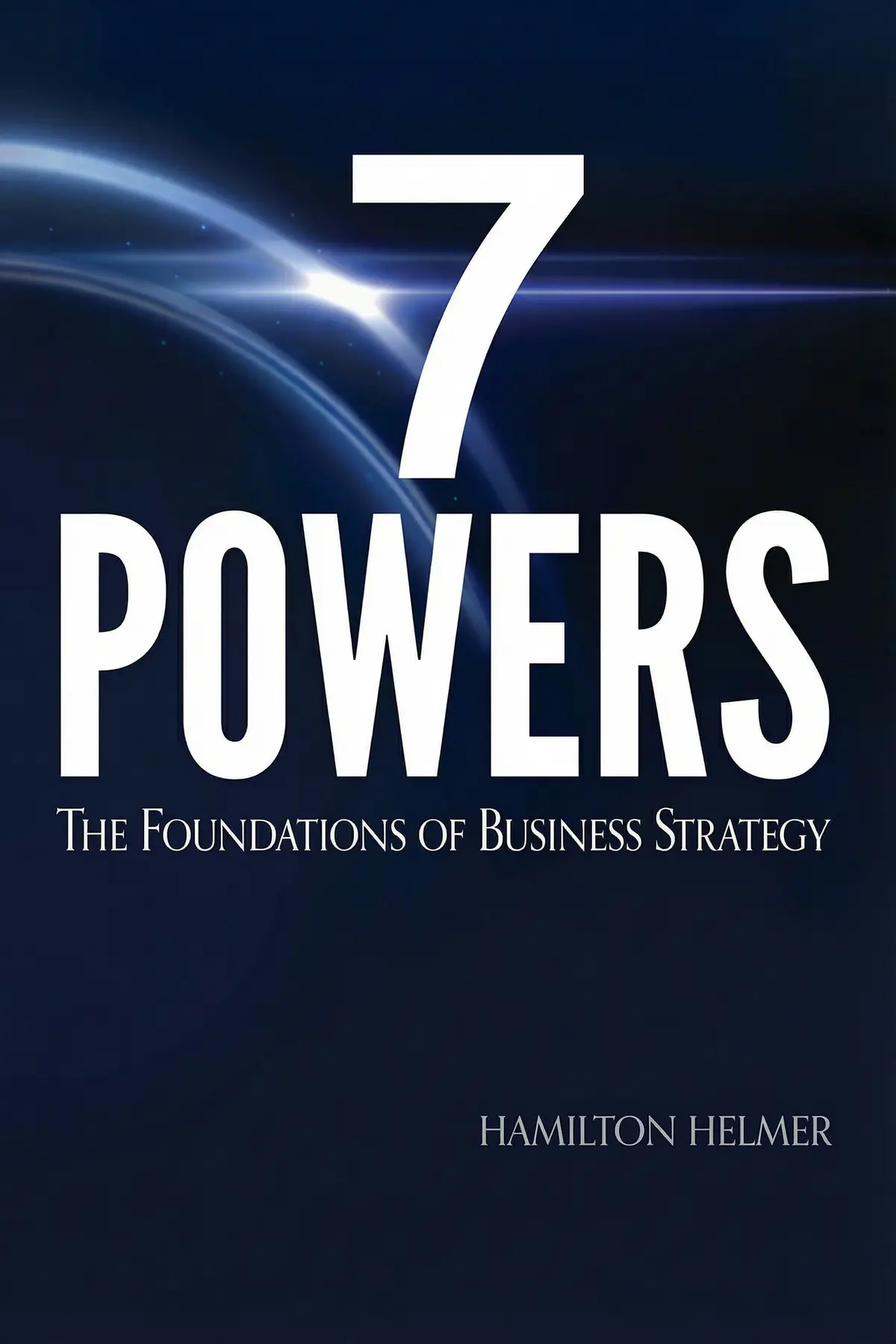
7 Powers: The Foundations of Business Strategy
Hamilton Helmer



Alibaba: The House That Jack Ma Built
Duncan Clark
AUDIO SUMMARY AVAILABLE
Listen to Jobs to Be Done in 15 minutes
Get the key ideas from Jobs to Be Done by Stephen Wunker, plus 5,000+ more titles in English and Thai.
- 5,000+ titles
- Listen as much as you want
- 7-day free trial
- Cancel anytime







