

15 min 09 sec
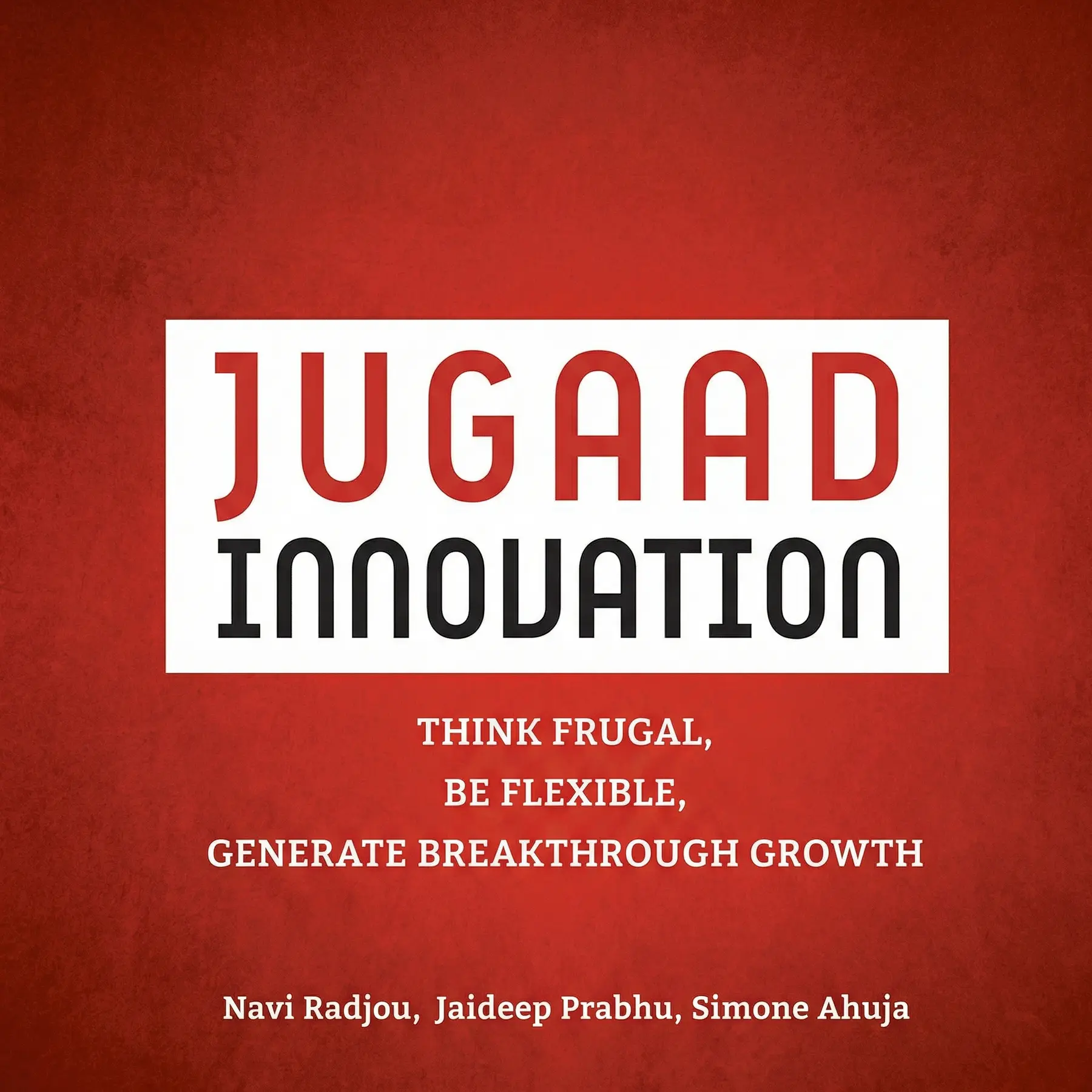
Jugaad Innovation: Think Frugal, Be Flexible, Generate Breakthrough Growth
Discover how the Indian concept of jugaad empowers businesses to innovate through improvisation, resourcefulness, and flexibility. Learn to turn scarcity into a competitive advantage by doing more with less in a volatile market.
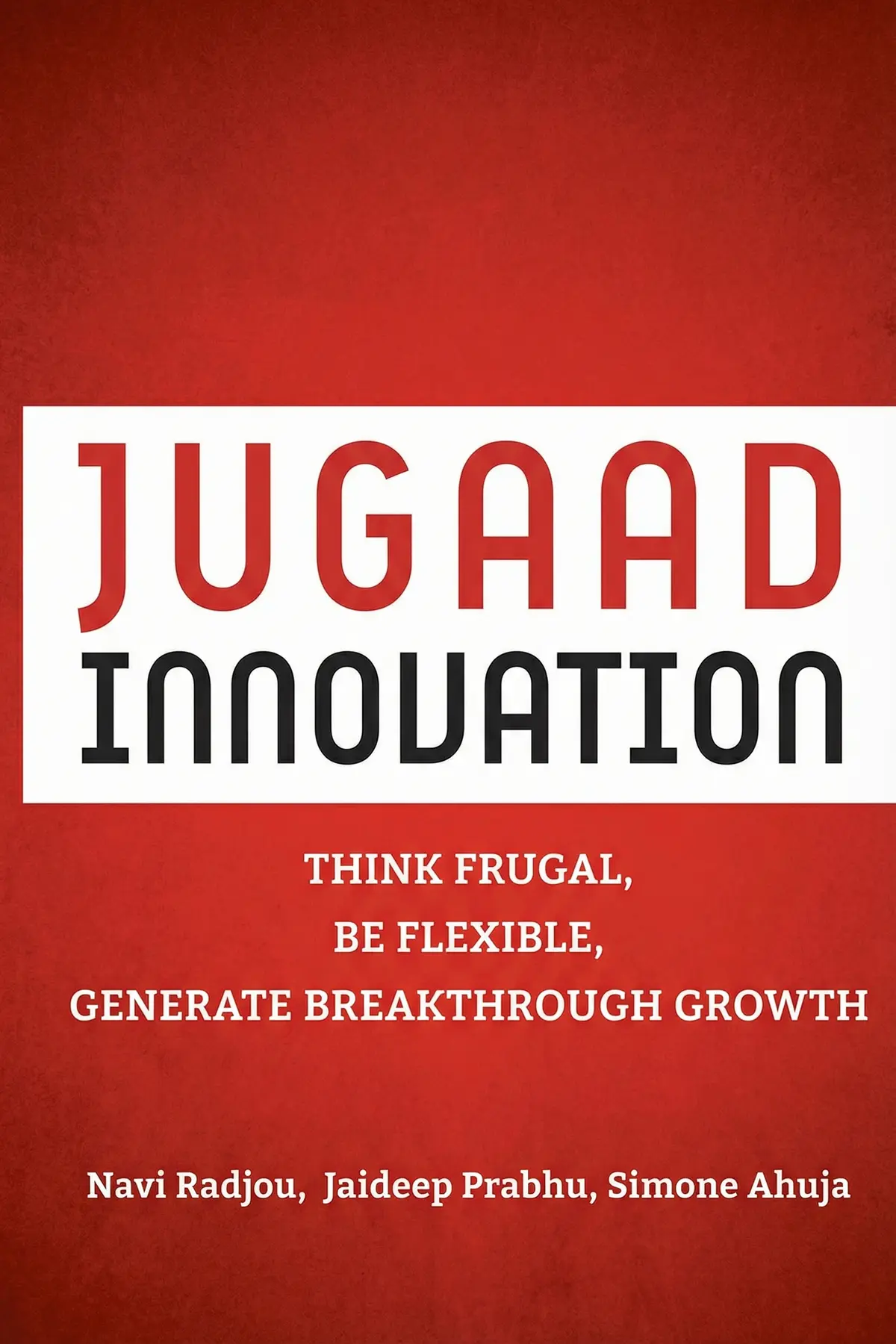
Table of Content
1. Introduction
1 min 43 sec
In 2011, a retail giant that once seemed indestructible—Border Books—was forced to file for bankruptcy. For many observers, it was the end of an era, but for business analysts, it was a loud warning bell. The company didn’t fail because it lacked resources or a famous brand name; it failed because it could not adapt fast enough to a world that was moving under its feet. This story is a perfect illustration of a wider problem in the corporate world. For decades, the Western model of success was built on massive budgets, highly structured departments, and top-down control. But in today’s fast-paced, hyperconnected, and resource-scarce world, those very systems are starting to feel more like anchors than engines.
What if there was a different way to think about growth? What if the answer wasn’t spending more, but doing more with what you already have? This brings us to a concept known as jugaad. Taken from a Hindi word that describes an ingenious, improvised solution, jugaad is more than just a quick fix. It is a philosophy of innovation that thrives on flexibility, resilience, and the ability to see opportunity where others see only obstacles.
In the following minutes, we are going to explore how this grassroots approach is transforming the way the world’s most successful companies operate. We will look at why traditional R&D is becoming a straitjacket, how entrepreneurs are turning power shortages into global energy businesses, and why the most successful firms are now looking at the margins of society—not just the mainstream—to find their next big breakthrough. By the end, you’ll see how merging this improvisational spirit with structured management creates a powerful new model for the 21st century.
2. The Limitations of Structured Innovation
1 min 51 sec
Traditional corporate systems like Six Sigma prioritize efficiency and perfection, but they often leave no room for the messy, unpredictable experimentation needed for modern breakthroughs.
3. Finding Opportunity Within Constraints
1 min 50 sec
True innovators don’t view limitations as walls; instead, they use scarcity as a catalyst to find creative, sustainable, and highly profitable solutions.
4. The Power of Radical Flexibility
1 min 46 sec
Success can often lead to complacency, but staying competitive requires a willingness to abandon old models and question the basic assumptions of your industry.
5. Value in the Margins
1 min 43 sec
Serving excluded or low-income populations is not just a social duty; it represents a massive, untapped market for companies willing to rethink their business models.
6. Simplicity as a Strategic Advantage
1 min 39 sec
In a world of over-engineered products, the most successful innovations are often those that strip away complexity to focus on what the customer truly needs.
7. Integrating Jugaad with Traditional Systems
1 min 43 sec
The goal is not to replace Western R&D entirely, but to create a hybrid model that combines structured quality with improvisational agility.
8. The Mindset of Resilience and Agility
1 min 43 sec
Adopting a new way of innovating requires more than a change in process; it requires a cultural shift toward embracing uncertainty and acting with speed.
9. Conclusion
1 min 11 sec
As we have seen, the landscape of global business has shifted dramatically. The era where a company could rely solely on massive budgets and rigid, top-down structures is coming to a close. To stay competitive, businesses must look toward the principles of jugaad innovation: finding opportunity in adversity, being radically flexible, and simplifying their approach to meet the needs of a diverse global population.
Remember, the goal isn’t to abandon the discipline and quality that traditional Western methods provide. Instead, the real breakthrough happens when you combine that structure with the improvisational heart of jugaad. It’s about being big and stable, yet acting small and agile.
As you move forward, look at your own organization or your own projects. Where are the constraints that you’ve been viewing as obstacles? How could you turn those limitations into a new way of working? By embracing the spirit of doing more with less and refusing to be held back by ‘the way things have always been done,’ you can build a business that is not just efficient, but truly resilient. The future belongs to the improvisers. It’s time to find your jugaad.
About this book
What is this book about?
This summary explores a revolutionary approach to business growth that challenges traditional, rigid corporate structures. In an era of rapid globalization and dwindling resources, the conventional methods of research and development are often too slow and too expensive to keep up. This is where the concept of jugaad innovation comes in. Originally a Hindi term for clever improvisation, jugaad represents a mindset of extreme adaptability. The book outlines how companies can thrive by finding opportunities in their limitations, reaching out to marginalized consumer bases, and keeping products simple yet effective. By blending this grassroots ingenuity with established Western practices, organizations can foster resilience and achieve breakthrough growth even in the most unpredictable economic environments.
Book Information
About the Author
Navi Radjou
Navi Radjou is a Palo Alto-based consultant on leadership and innovation and a fellow at the University of Cambridge’s Business School. Jaideep Prabhu is a professor of Indian business at the University of Cambridge. Simone Ahuja is the founder of the marketing and strategy firm Blood Orange, operating out of Minneapolis and Mumbai.
Ratings & Reviews
Ratings at a glance
What people think
Listeners find the book to be highly perceptive, with one listener emphasizing its actionable material and another pointing to its focus on psychological aspects and human capital involvement. The text earns praise for its ideas on creativity, as one listener calls it essential for those committed to the field of innovation.
Top reviews
Chanon
Finally got around to reading this, and it’s a total game-changer for anyone tired of the overly structured, resource-heavy R&D models that dominate Western tech today. The focus on psychological and human capital engagement is exactly what the industry needs right now. I love how Radjou and his co-authors emphasize the 'do more with less' mentality, proving that constraints are actually a catalyst for creativity rather than a barrier. It’s an important read for anyone serious about innovation in the 21st century. The examples of home-grown companies really drive home the story of identifying opportunities despite a lack of preparation or formal funding. This is easily one of my favorite reads of the year because it celebrates the persistent effort to truly rise above obstacles.
Show moreChloe
Wow, this book really shifted my perspective on what it means to be truly resourceful in a world where we are constantly taught to want more. I used to think of 'jugaad' as just making do with poor materials, but now I see it as a masterclass in simplicity. The authors show that jugaad innovators are masters of turning problems into opportunities by staying persistent and rising above their constraints. It’s motivational and informative, highlighting how even giant brands like 3M and Apple can learn from the raw, real innovation happening in developing countries. It’s a beautiful collection of ventures that prove mindset is a company’s greatest asset. For me, this was an eye-opener on how to achieve sophistication through simple means.
Show moreMarco
The chapter on how emerging markets are redefining the global innovation landscape is a much-needed wake-up call for stagnant Western industries. Radical and real, the concept of 'jugaad' is like a booster for any company’s ability to cope with the volatility of the current market. I was particularly impressed by the discussion on human capital and how engaging people’s natural ingenuity leads to more sustainable growth. The world of the jugaad innovator revolves around the problem, and this book captures that persistent effort perfectly. It’s one of my favorite reads in recent years because it challenges the 'bigger is better' dogma that has held us back for so long. Every entrepreneur looking for a Blue-Ocean strategy should study these case studies.
Show moreJai
As someone who grew up hearing 'jugaad' in every household conversation, seeing it framed as a legitimate business strategy was quite fascinating. Truth is, we often overlook the cultural assets right in front of us until someone writes a book about them. The authors do a solid job showing how companies like Big Bazaar and Yes Bank use this mindset to stay afloat in dynamic environments. Personally, I think the move toward a more flexible and frugal approach is the only way for Western companies to survive upcoming social shifts. My only real gripe is that it can feel a bit overtly long at times, but the core message is vital for modern entrepreneurs. It’s a great look at how simplicity can be a competitive advantage.
Show moreTawee
Ever wonder why small, scrappy startups often outpace giant corporations that have massive budgets and thousands of researchers at their disposal? This book provides a practical answer by diving deep into the mindset of the jugaad innovator, where simplicity is the ultimate sophistication. Not gonna lie, I was skeptical at first, but the practical content regarding how to engage human capital more effectively won me over. It’s not just about being cheap; it’s about being agile and responsive to customer needs rather than their mere desires. While the writing style is a bit dry and the examples can feel repetitive, the message about flexible innovation is one that every corporate leader needs to hear to stay competitive in the current global trend.
Show moreAraya
Gotta say, the practical content in these pages really highlights how to do more with less in an environment where budgets are constantly being slashed. This isn't just about cutting costs; it’s about a psychological shift in how we approach value creation for the end customer. The authors present a compelling case for why simple, flexible models are the future of global business, using a wide range of examples from SBI to Facebook. While the prose is a little dry and repeats itself in the later sections, the underlying message is too important to ignore. If you want to understand the future of raw innovation and how to leverage your existing assets, this is a solid place to start. It’s a very practical, insightful guide.
Show moreMaksim
The core concept here is fascinating, yet the execution feels a bit like an extended marketing brochure for the authors' specific consulting services. In my experience, 'jugaad' is a brilliant way to look at problem-solving, but this book manages to be both insightful and incredibly tedious at the same time. You’ll find some great nuggets regarding the Blue-Ocean strategy, but you have to wade through a lot of repetition to get there. It functions okay as an academic guide to innovation, though it doesn't quite hit the mark of being a compelling page-turner. It’s an interesting book, but definitely prepare yourself for a lot of recycled points across chapters. It’s worth a skim if you can ignore the bloated writing style.
Show moreGioia
After hearing so much about the frugal innovation movement, I found this book to be a mixed bag of brilliant insights and frustratingly dense filler. To be fair, it provides a very interesting look at how people identify opportunities in scenarios where they have zero preparation or resources. However, the tone is quite academic and the structure is repetitive, making it a bit of a slog to get through during the middle chapters. It’s an insightful guide to the future of innovation, but it lacks the 'punch' of a truly great business book. Worth a read if you’re a serious student of the subject, but don’t expect to be entertained. It’s a conceptual booster that could have been much tighter.
Show moreRosa
Not what I expected given the hype surrounding the global 'jugaad' trend lately, as the book is far too long for the amount of information it provides. Look, the case studies are fine, but they aren't terribly interesting or novel if you’ve followed emerging markets at all over the last decade. The writing is repetitive and lacks the engagement factor I look for in a business book of this length. It really feels like they took a 75-page idea and bloated it to nearly 300 pages just to justify a hardcover price point. I agree with the core sentiment of being resourceful, but the delivery here is simply uninspiring and sluggish. There are few concrete case studies that offer fresh value.
Show moreJiraporn
This book is a massive disappointment because it feels less like a guide and more like a repetitive advertisement for the 'jugaad' brand name. Frankly, the content is hardly novel, and the authors spend way too much time circling the same three points without offering real depth. It’s nearly 300 pages of fluff that could have been summarized in a brief 75-page manual for much better effect. While the concept of frugal innovation is important, the writing here is so unengaging that I struggled to reach the end. If they had edited out the constant repetition and focused on concrete case studies instead of vague momentum, it might have been worthwhile. It's essentially a bloated business pitch disguised as a revolutionary text.
Show moreReaders also enjoyed


7 Powers: The Foundations of Business Strategy
Hamilton Helmer
Alibaba: The House That Jack Ma Built
Duncan Clark
AUDIO SUMMARY AVAILABLE
Listen to Jugaad Innovation in 15 minutes
Get the key ideas from Jugaad Innovation by Navi Radjou, plus 5,000+ more titles in English and Thai.
- 5,000+ titles
- Listen as much as you want
- 7-day free trial
- Cancel anytime







