
A Higher Loyalty: Truth, Lies and Leadership
James Comey
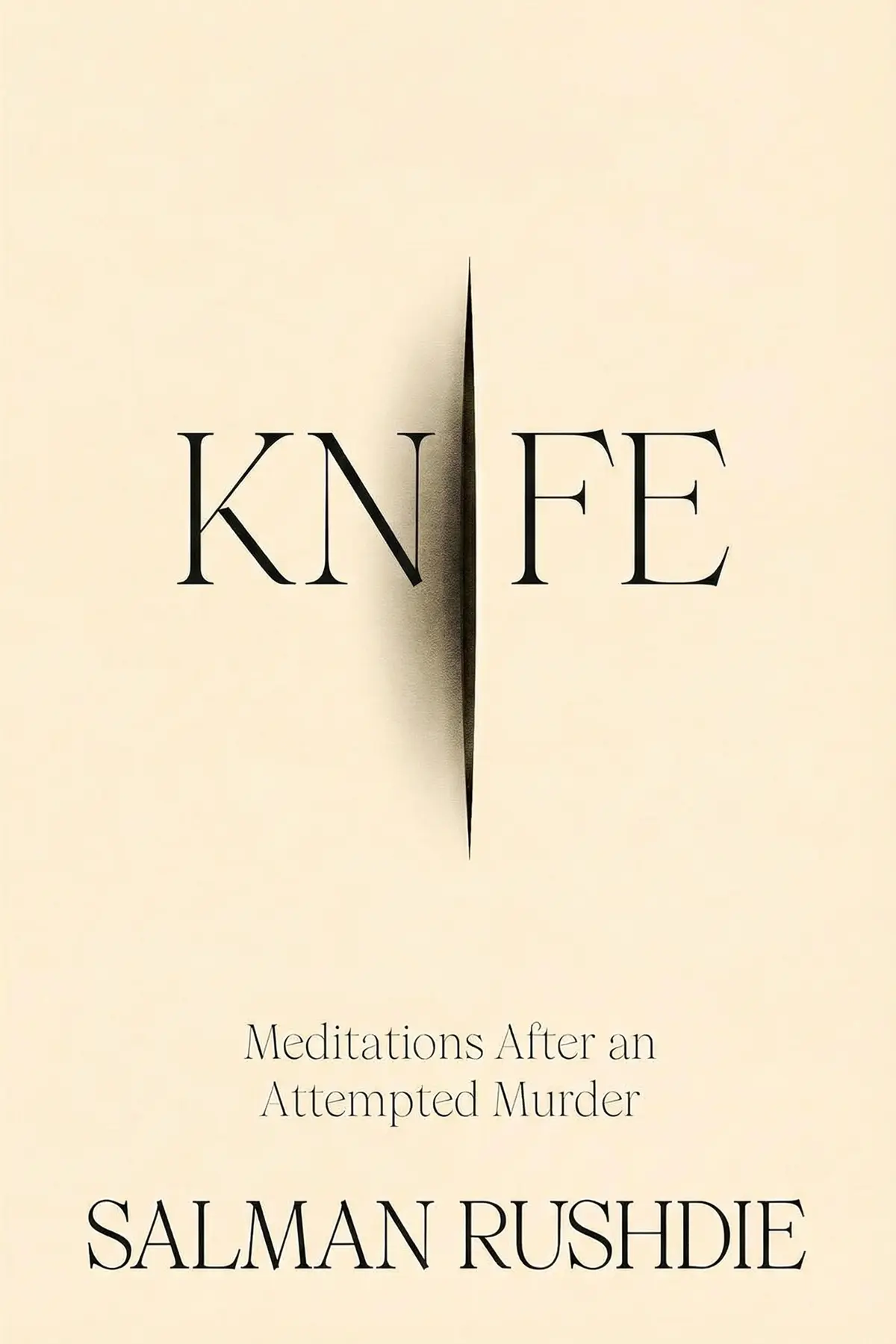
Salman Rushdie recounts the harrowing 2022 attempt on his life, documenting his intense physical recovery and offering a profound meditation on how art and love can overcome senseless violence and ideological hatred.
1 min 42 sec
For over three decades, a dark cloud had hung over the life of Salman Rushdie. Following the publication of his work in the late 1980s, the leadership of Iran issued a call for his assassination, forcing him into years of hiding and constant security. But as time passed, the world seemed to move on, and Rushdie moved with it, eventually settling into a relatively normal life in New York City. That sense of normalcy was shattered on a sunny morning in August 2022. While preparing to speak about the importance of protecting writers, Rushdie was confronted by the very violence he had spent a lifetime discussing.
What followed was a brutal, nearly fatal assault that left the literary world in shock. However, this story isn’t just about the moments of violence. It is about the ‘after’—the slow, agonizing, and ultimately triumphant process of putting a life back together when it has been physically and metaphorically torn apart. In this summary, we will walk through Rushdie’s journey from the auditorium floor to the rehabilitation center and back to the writing desk.
We will explore the strange premonitions that preceded the event, the medical miracles that kept him alive, and the psychological battle to understand a person who wanted him dead without even knowing him. Through it all, a central throughline emerges: the idea that while a knife can wound the flesh, it is the power of language and the resilience of the human spirit that define the ultimate outcome of our lives. This is a story of how a second chance is earned and what it means to live with purpose after facing the unthinkable.
2 min 14 sec
Discover the shocking details of the attack in Chautauqua and the dark irony of the talk Rushdie never got to give.
2 min 01 sec
Explore the surreal experience of the trauma center, where the author’s recovery felt like a scene from one of his own novels.
2 min 14 sec
Follow the slow and painful process of reclaiming basic human functions and the battle against the psychological scars of trauma.
2 min 09 sec
Rushdie uses his imagination to face the man who attacked him, exploring the hollow nature of digital-age radicalization.
2 min 16 sec
Witness the author’s return to public life and his emotional journey back to the very spot where the attack occurred.
1 min 44 sec
The journey of Salman Rushdie following the 2022 attack is a powerful reminder that our stories are never truly finished until we stop telling them. Through the pages of his recovery, we see a man who refused to be reduced to a casualty of a long-standing ideological war. Instead, he took the very instrument of his potential destruction—the memory of the knife—and transformed it into a tool for self-reflection and advocacy. He moved from the chaotic violence of the stage to the sterile silence of the hospital, and finally back into the vibrant, noisy world of literature and public discourse.
What we can take away from this experience is the incredible strength found in the bonds of family and the importance of a clear, creative purpose. Rushdie’s survival was made possible by medical science, but his recovery was fueled by his love for his wife and children and his unshakeable belief in the value of his work. He shows us that when faced with the void of hatred and the hollowness of radicalization, the best response is to fill that space with more life, more art, and more connection.
As you move forward from this summary, consider the ‘knives’ in your own life—the challenges or setbacks that threaten to silence your voice or diminish your spirit. Rushdie’s story encourages us to meet those moments with courage and to recognize that even when we are wounded, we have the power to write our own next chapter. The fight for freedom and enlightenment is ongoing, and as Rushdie himself proves, the most effective weapon in that fight is not a blade, but the enduring power of the word. Keep speaking, keep writing, and cherish the second chances that allow you to reaffirm your place in the world.
This narrative offers a deeply personal look at the aftermath of the August 2022 attack on Salman Rushdie, which took place over thirty years after a death sentence was first issued against him. It begins with the shocking 27 seconds of violence on a stage in Chautauqua and follows the author through the primary trauma center and into the grueling months of rehabilitation. The book serves as a 'meditation' because it goes beyond the physical wounds to examine the psychological and philosophical impact of such an event. Rushdie explores the nature of his attacker—a man radicalized by the digital age—and contrasts that void of understanding with the richness of a life built on literature and family. Ultimately, the work is a testament to the power of the second chance. It promises a journey from the brink of death back to a place of creative and personal strength, proving that even a knife cannot silence a voice dedicated to the truth of the human experience.
Salman Rushdie is a distinguished British-Indian writer recognized for his groundbreaking storytelling. He achieved worldwide fame when his landmark novel, Midnight's Children, was awarded the Booker Prize in 1981. This success established him as a major figure in modern letters. Throughout his career, he has been a vocal advocate for freedom of expression. His extensive body of work includes celebrated titles such as Shalimar the Clown and the highly debated The Satanic Verses.
Listeners consider this work a valuable account of resilience and affection, featuring refined writing that offers a glimpse into the writer's personal history. Listeners call the story gripping, with one listener suggesting it should be mandatory reading for high schoolers, while another points out its close-up depiction of selfhood amidst tragedy. The memoir is touching, as one listener remarks on its inclusion of a gentle romance, and listeners value the nuanced imagery alongside the writer's remarkable bravery.
Wow. This is a staggering testament to the human spirit that manages to be both horrifying and incredibly hopeful. Rushdie takes an act of senseless brutality and answers it with the only weapon he has left: his words. I was particularly moved by the way he describes his wife, Eliza, and the community of writers who rallied around him. While some might find the medical minutiae a bit tedious, it highlights the grit required for such a recovery. He doesn't just recount a stabbing; he reclaims his life from the man he calls 'Mr. A.' It's a meditation on survival that feels like a necessary piece of history. The prose is elegant, stripping away the usual ornaments to get to the core of his experience.
Show moreEver wonder how an artist survives the very thing they’ve feared for decades? Rushdie provides a profound answer in this volume, blending his sharp wit with a new, quiet vulnerability. This isn't just a book about a knife attack; it's a tender love story about the people who pull us back from the brink. The way he discusses his loss of sight in one eye is handled with such grace and lack of self-pity that it’s hard not to be moved. It is a mandatory read for anyone who cares about the intersection of art and political courage. Truly, his head is bloody but remains unbowed against the ignorance of his attacker.
Show moreFinally got around to reading this, and I'm struck by how Rushdie uses language to heal. The prose is elegant and precise, stripping away the usual ornaments to get to the core of his experience. It’s an intimate self-portrait that doesn’t shy away from the gruesome reality of his injuries or the fear that haunted his family for months. Seeing him return to the site of the attack at the end of the book provided a sense of closure that felt earned. This is a masterclass in how to turn a tragedy into a work of enduring art. It's a small book but carries the weight of a lifetime.
Show moreAs someone who found 'Midnight's Children' to be a bit of a slog, I was surprised by how quickly I flew through this. It’s a compelling narrative that moves between the terrifying seconds of the attack and the long, slow months of hospital stays and surgeries. Rushdie captures the absurdity of being targeted for a book written thirty years ago with his signature intelligence. While I think the section where he talks to 'Mr. A' was a bit of a misfire, the rest of the book is incredibly strong. It’s heartwarming to see how much support he received from the world during his darkest hour. Truly a courageous piece of writing.
Show moreAfter hearing about the Chautauqua attack, I felt compelled to read Rushdie’s own perspective on that day. The truth is, this book is far more than a simple true crime memoir; it’s an intimate portrait of a man confronting his own mortality. I appreciated the shift from his usual flamboyant, magical realism style to something much more sober and direct. The focus on his physical rehabilitation was eye-opening and deeply humanizing. Some might say it feels a bit like a diary, but that’s exactly what makes it feel so authentic and raw. It’s a powerful statement on why we must protect the freedom to write, even when the cost is unimaginably high.
Show moreThe chapter on the 'imaginary interview' was easily the strangest part of this entire experience. I understand why Rushdie felt the need to confront his assailant on the page, but it came across as a bit staged and repetitive compared to the rest of the text. Still, the book offers a fascinating look at the logistical nightmare of surviving such a public assassination attempt. I found his reflections on the long-term impact of the fatwa to be the most compelling sections. It's a solid read—informative and important, though it occasionally loses its way in the weeds of his personal life. His resilience is undeniable, even when the narrative flow stumbles.
Show moreThis memoir caught me off guard with its sheer emotional weight. I’ve always found Rushdie’s fiction a bit dense, but 'Knife' is remarkably lucid and accessible. He navigates the trauma of August 2022 with a poise that is frankly inspiring, focusing on the 'victory' of living rather than the victimhood of the event. My only minor gripe is that he occasionally name-drops his famous friends in a way that feels a bit like a social register. However, his gratitude toward the medical staff and his family is so genuine that it balances out the moments of self-importance. It’s a heartwarming narrative of survival that reminds us why stories matter.
Show moreLook, this is a very worthy narrative of survival, but it doesn't quite reach the heights of his best work. It functions well as a direct account of the medical and emotional logistics following a tragedy. I liked the focus on his wife and children, which added a layer of warmth to the otherwise clinical descriptions of his surgeries. It’s a bit surface-level in parts, and I would have loved more deep philosophical reflection on how this changed his view of fiction. That said, it’s a brave book that deserves a spot on any contemporary bookshelf. It provides a rare, firsthand look at the cost of free speech in our modern world.
Show morePicked this up with high expectations, but I found the execution to be a bit of a mixed bag. To be fair, the account of the attack itself is gripping and harrowing, yet the middle section drags significantly. Rushdie spends an inordinate amount of time on his social circle and certain luxury items—like a ruined suit—that felt strangely out of place given the gravity of the situation. The imagined dialogue with his attacker was particularly jarring and didn't offer the psychological insight I was hoping for. It felt more like a therapy exercise than a cohesive narrative. He is undeniably a master of prose, but here the ego sometimes overshadows the actual trauma.
Show morePersonally, I struggled to finish this because the tone felt so incredibly self-centered at times. I have nothing but sympathy for the horrific violence Rushdie endured, but the writing here feels remarkably bereft of any real self-reflection or humility. He spends pages gushing about his relationship in a way that feels more like a performance than a deep exploration of love. The obsession with his status in the literary world and the trivial details of his recovery made it hard to connect with the larger themes of survival. It’s a disappointing follow-up to such a monumental life event, feeling more like a basic diary than a polished, philosophical memoir.
Show moreJames Comey
Philip Freeman
Jonathan Eig
J. Craig Venter
Ishmael Beah
James Herriot
Barack Obama
AUDIO SUMMARY AVAILABLE
Get the key ideas from Knife by Salman Rushdie, plus 5,000+ more titles in English and Thai.







