
8 min 06 sec
Leadership on the Line: Staying Alive Through the Dangers of Change
Leadership on the Line explores the inherent risks of driving transformative change. Authors Ronald Heifetz and Marty Linsky reveal why people resist progress and how leaders can survive the professional and emotional hazards of transformation.
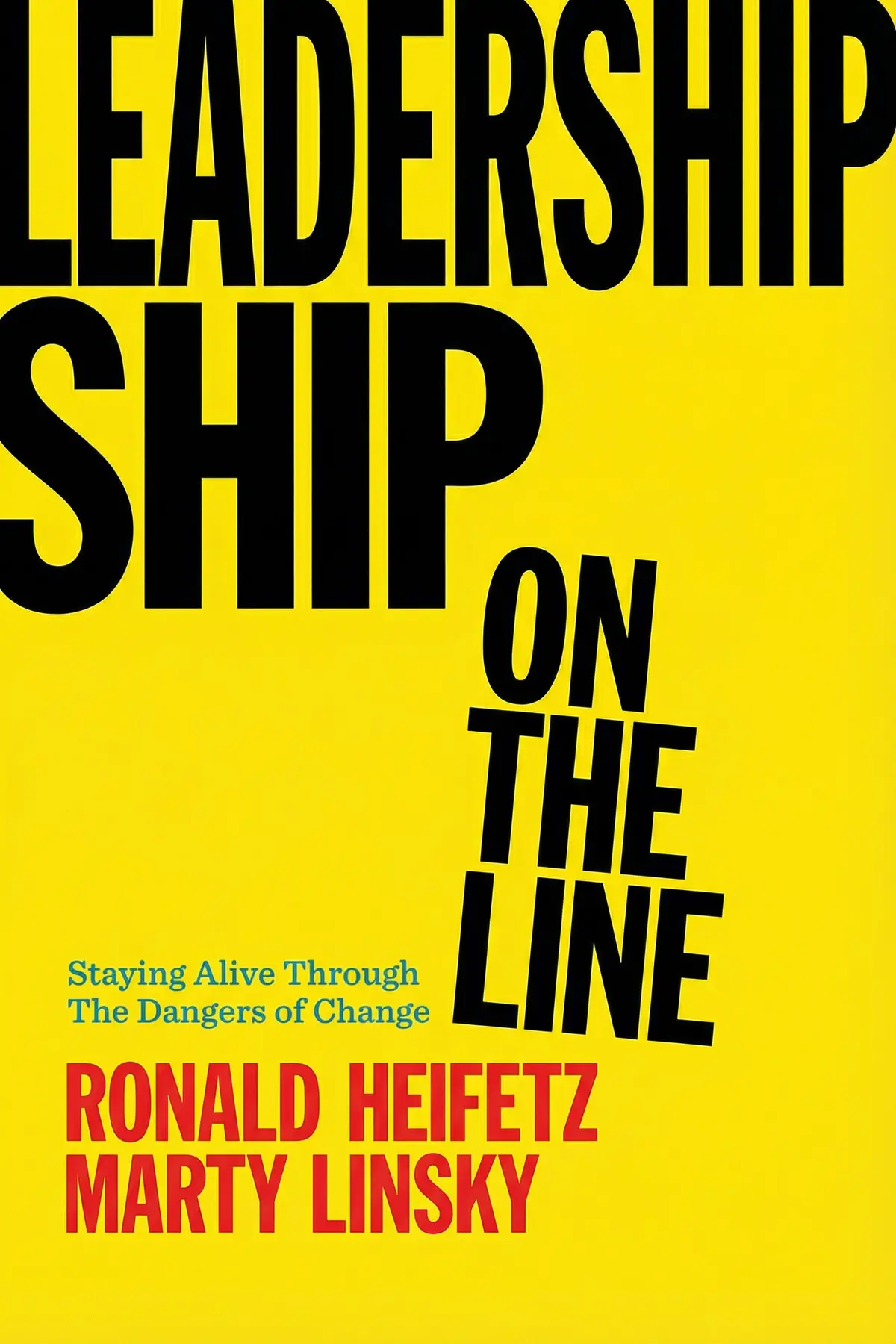
Table of Content
1. Introduction
58 sec
Imagine for a moment that you are standing on a narrow tightrope. On one side is the comfortable past, where everyone knows their role and the rules are clear. On the other side is a future that promises progress but requires everyone to change. As a leader, your job is to guide people across that line. But here is the catch: most people don’t want to cross. In fact, some might try to shake the rope just to make you stop moving. This is the central premise of Leadership on the Line.
True leadership isn’t about having all the answers or exerting authority from a safe distance. It is a high-stakes activity that puts your career, your reputation, and your well-being at risk. It involves challenging the status quo and asking people to face uncomfortable realities. In the following discussion, we will explore why leadership is so perilous, how to recognize the tactics people use to stop change, and how you can manage the delicate balance between pushing for progress and respecting the traditions that people hold dear.
2. Defining the Adaptive Challenge
1 min 28 sec
Discover why traditional authority often fails when facing complex problems that require a shift in human values and behaviors.
3. The Emotional Weight of Loss
1 min 31 sec
Explore why resistance to change is actually a deeply personal reaction to the fear of losing one’s identity or heritage.
4. The Four Methods of Neutralization
1 min 37 sec
Learn to identify the subtle and overt tactics groups use to stop leaders from disrupting the status quo.
5. Regulating the Pressure for Change
1 min 29 sec
Understand how to manage the ‘heat’ of a transformation so that the group stays engaged without becoming overwhelmed.
6. Conclusion
1 min 03 sec
As we reach the end of this exploration into Leadership on the Line, the central takeaway is that leadership is an act of courage. It is not a role defined by a title, but a choice to step into the line of fire for the sake of a better future. We’ve seen that the greatest obstacle to progress isn’t a lack of technical skill, but the human fear of loss. Whether it’s the story of community leaders like Lois and Maggie or the corporate executive facing institutional sabotage, the dynamics remain the same.
To lead without being destroyed, you must learn to read the room and recognize when you are being marginalized, diverted, or attacked. You must understand that the resistance you face is a sign that you are doing the work, not a sign that you have failed. Most importantly, remember that leadership is about keeping the pressure just high enough to foster growth, while having the empathy to support people through their grief over what is being left behind. By staying present, maintaining your purpose, and navigating the dangers with a clear eye, you can lead your organization through the most difficult transitions and emerge on the other side with meaningful, lasting change.
About this book
What is this book about?
Leadership is often romanticized as a position of power and prestige, but this book presents a more sobering reality: leadership is dangerous. When you lead people through meaningful change, you are asking them to give up things they hold dear—their habits, their status, and even their sense of identity. As a result, the people you are trying to help may try to push you aside or take you down to protect the status quo. Ronald Heifetz and Marty Linsky provide a roadmap for navigating these hazards. They distinguish between technical problems, which can be solved with expertise, and adaptive challenges, which require people to change their values and behaviors. By understanding the common ways groups try to neutralize leaders—such as marginalization or diversion—you can learn to stay in the game and keep your purpose alive. The book promises to provide the tools necessary to balance the need for progress with the human reality of loss, allowing you to lead effectively without losing your way or your career in the process.
Book Information
About the Author
Ronald Heifetz
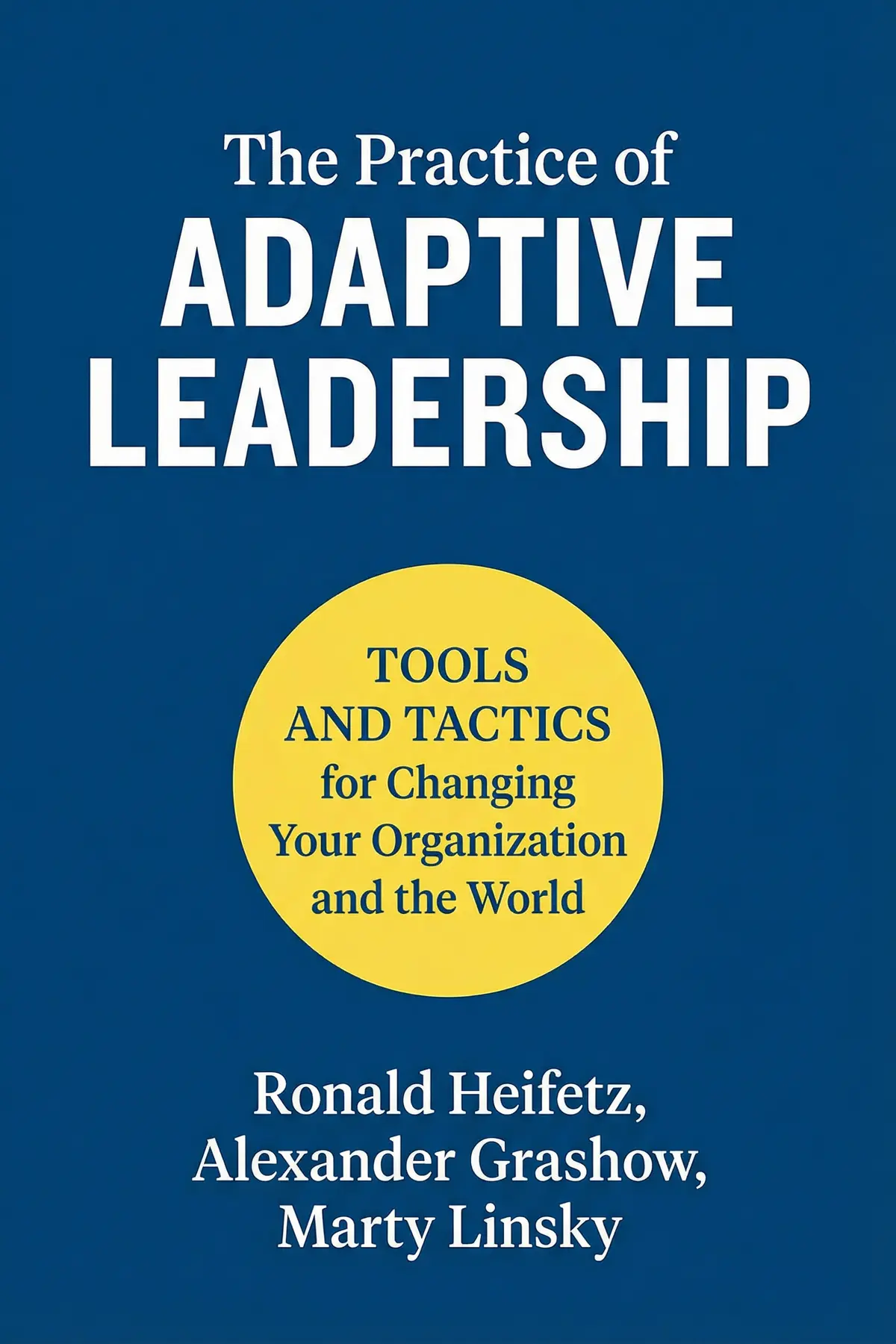
Ronald A. Heifetz is a renowned leadership expert and a senior lecturer in Public Leadership at Harvard University's John F. Kennedy School of Government. He founded the Center for Public Leadership and is recognized for his pioneering work on adaptive change. He has coauthored several influential titles, including The Practice of Adaptive Leadership and Leadership Without Easy Answers. Marty Linsky is an experienced leadership educator and consultant who served on the faculty at Harvard's Kennedy School for over thirty years. Together with Heifetz, he has dedicated his career to exploring the complexities of organizational change and the personal demands of leadership.
Ratings & Reviews
Ratings at a glance
What people think
Listeners consider this work an exceptional resource for leading and rank it among the finest titles they have encountered. They value the book's genuine perspective and depth, with one listener praising its candid examination and another pointing out its practical, grounded style. Its explanations earn high marks, including a mention from one review about the effective examples provided; listeners also appreciate the wealth of information, with one calling it an excellent instrument for managing the difficulties of leadership.
Top reviews
Maja
Finally got around to reading this after seeing it on every corporate 'must-read' list, and it actually lives up to the hype. The central metaphor of getting on the balcony to see the whole dance floor is a game-changer for anyone caught in the daily grind of troubleshooting. It’s not just about solving problems; it’s about distinguishing between technical fixes and the messy, painful process of adaptive change. Truth is, most of us just want to check boxes, but Heifetz and Linsky force you to confront the reality that real leadership means staying in the line of fire. I especially appreciated the 'managing the heat' concept, even if some of the political examples felt a bit dated. It’s a sobering read that doesn't promise easy wins or 'cheat codes' to the top. If you're looking for a shallow 'how-to' book, this isn't it, but for those willing to do the hard work of self-reflection, it’s gold.
Show morePisit
Ever wonder why some 'solutions' never stick? This book explains it perfectly through the lens of adaptive challenges versus technical problems. Technical stuff has a clear fix, but adaptive work requires people to change their values or habits—and that’s where the real pain starts. I loved the Scottie Pippen anecdote; it’s a brilliant illustration of letting the group resolve its own tension rather than the 'leader' swooping in to save everyone. Gotta say, the section on 'tuning the strings of a harp' was a poetic touch that actually made sense in a high-stress work context. I did find the pacing a bit sluggish in the middle chapters, and some of the geopolitical examples are definitely showing their age. Nonetheless, the framework for keeping an organization in the 'productive zone of disequilibrium' is something I will keep in my toolkit. It’s a solid, down-to-earth guide for anyone tired of the usual rah-rah leadership fluff.
Show moreMoo
Not what I expected from a leadership book, and I mean that in the best way possible. Most of these titles are full of 'highly effective habits' and ego-stroking, but Heifetz and Linsky treat leadership as a high-risk activity that might actually get you 'taken out' if you aren't careful. The concept of 'holding the heat'—creating enough tension to motivate change without blowing up the system—is pure genius. Personally, the most impactful part was the distinction between your professional role and your personal self. It’s a crucial shield for anyone who has ever felt like a failure because their team resisted a necessary change. The writing is clear and the insights feel authentic, earned from real-world political battles rather than just theoretical ivory tower posturing. It's a heavy read that demands you look at your own insecurities and 'hungers,' but it’s the most honest analysis of power I’ve seen. Truly a great tool for navigating complex environments.
Show moreMai
Picked this up during a particularly brutal season at my non-profit, and it felt like the authors were reading my mind. Leadership is often sold as a series of victories, but this book focuses on the survival aspect: how to stay alive and keep your soul intact while you’re being attacked. The advice to 'keep your opposition close' and find 'confidants' rather than just allies was exactly what I needed to hear. It’s an inspiring, sobering, and deeply human look at what it takes to drive meaningful change. I particularly appreciated the ending about maintaining an open heart despite the cynicism that leadership often breeds. It’s easy to get bitter when you’re on the line, but Heifetz reminds us that the goal is to serve, not just to survive. It’s the kind of book you don’t just read—you experience it. A must-read for anyone in a high-stakes environment who feels like they’re carrying the world on their shoulders.
Show moreThanit
This book is essentially a treatise on why change is so damn hard. Instead of giving you a 'cheat code' for the corporate ladder, it warns you that climbing that ladder often involves getting your hands dirty and your heart broken. I loved the emphasis on 'the work'—shifting the responsibility for solutions back to the people who actually own the problem. It’s a radical departure from the 'heroic leader' archetype we usually see. My only hesitation is that the book focuses heavily on large, politically charged environments. If you’re at a small startup, some of the advice on maneuvering and 'anchoring' might feel a bit overkill. Still, the insight into human resistance to change is universal. It’s a great tool for anyone who wants a more realistic, less 'sweaty' approach to management. Just ignore the weirdly specific lectures on personal life and focus on the 'balcony' work. It's worth it.
Show moreRodrigo
As someone who has navigated middle management for a decade, I found the distinction between leadership and authority to be incredibly validating. Heifetz and Linsky argue that you don’t need a title to lead, but you do need to be prepared for the 'faces of danger' that come with it. The book is dense, and frankly, the Harvard-centric academic tone can be a bit grating at times. However, the core idea—that leadership is essentially disappointing people at a rate they can sustain—is one of the most honest things I’ve ever read in a management text. It reframes conflict not as a failure, but as a necessary byproduct of growth. My only real gripe is the chapter on 'managing hungers' which felt a little too much like an unprompted therapy session regarding the authors' views on intimacy. Still, the practical advice on anchoring yourself amidst the storm is something I’ll be returning to frequently.
Show moreKai
After hearing several colleagues rave about the 'adaptive leadership' framework, I finally dove in. To be fair, the core thesis is solid. We often try to apply technical fixes to problems that are actually about human behavior and values, which is why so many initiatives fail. But man, the writing can be a slog. It’s a cascade of examples that sometimes feel overly simplified to fit the authors' narrative. I found the lecturing tone of the authors a bit much—they speak from a place of such ultimate authority that it can feel a bit patronizing. Also, the harp metaphor was nice, but do we really need ten different metaphors for the same thing? It’s a four-star read for me because while the 'nuggets' of wisdom are genuinely valuable, you have to dig through a lot of academic fluff to find them. Good as a reference, but maybe not the life-changing experience I was promised.
Show moreTanyaporn
The chapter on 'Managing Hungers' really threw me for a loop. I wasn't expecting a leadership manual to spend so much time discussing the perils of sex and intimacy using Bill Clinton as the primary case study. It felt out of place and a bit uncomfortable, look. On the flip side, the early chapters on diagnostic work are brilliant. Identifying whether a problem is technical or adaptive is a skill I’ve already started using in my meetings. However, the authors tend to use examples that feel a bit clueless regarding broader social dynamics. Mentioning things like police brutality or abusive relationships alongside corporate management feels clumsy at best. It's a book of high highs and weird lows. I’d recommend it for the 'balcony' metaphor alone, but be prepared to skim through some of the more tone-deaf sections. It’s useful, but definitely a product of its specific Harvard-business bubble.
Show morePrayoon
Honestly, this felt like another interchangeable management book designed to make MBA types feel like they’re doing something profound. The distinction between technical and adaptive challenges is basically just a fancy way of saying 'easy vs. hard.' I found the examples to be a huge distraction. Using Martin Luther King Jr.’s stance on Vietnam as a 'failure' of leadership because he lost popularity is a wild take that I just couldn’t get past. It feels like the authors are more concerned with the 'politics' of leadership than the actual ethics or outcomes. Plus, the writing is full of whiplash-inducing contradictions. Stay steady but change! Stay in the moment but get on the balcony! It’s the kind of stuff that sounds deep in a Harvard lecture hall but feels empty when you’re actually dealing with a crisis on the ground. Not for me, though it has a few decent metaphors buried in there.
Show morePot
Wow. I don't get why this is considered a masterpiece in the business sector. To me, it felt like a collection of contradictory platitudes wrapped in an elitist Ivy League bow. One minute you’re supposed to 'hold steady' and the next you need to be 'open to adaptive change.' It’s a lot of word salad that boils down to: some problems are hard and require people to change their minds. Big deal? Also, the way they use Anita Hill as an example of 'The Faces of Danger' is absolutely tone-deaf and borders on offensive. It completely ignores the power dynamics of race and gender to fit a narrow narrative about political maneuvering. I found myself rolling my eyes at the Bill Clinton sections too. In my experience, this feels like the blind leading the blind for people who want to feel deep without actually addressing systemic issues. Save your money and buy a book that actually respects its subjects.
Show moreFeatured in
Readers also enjoyed
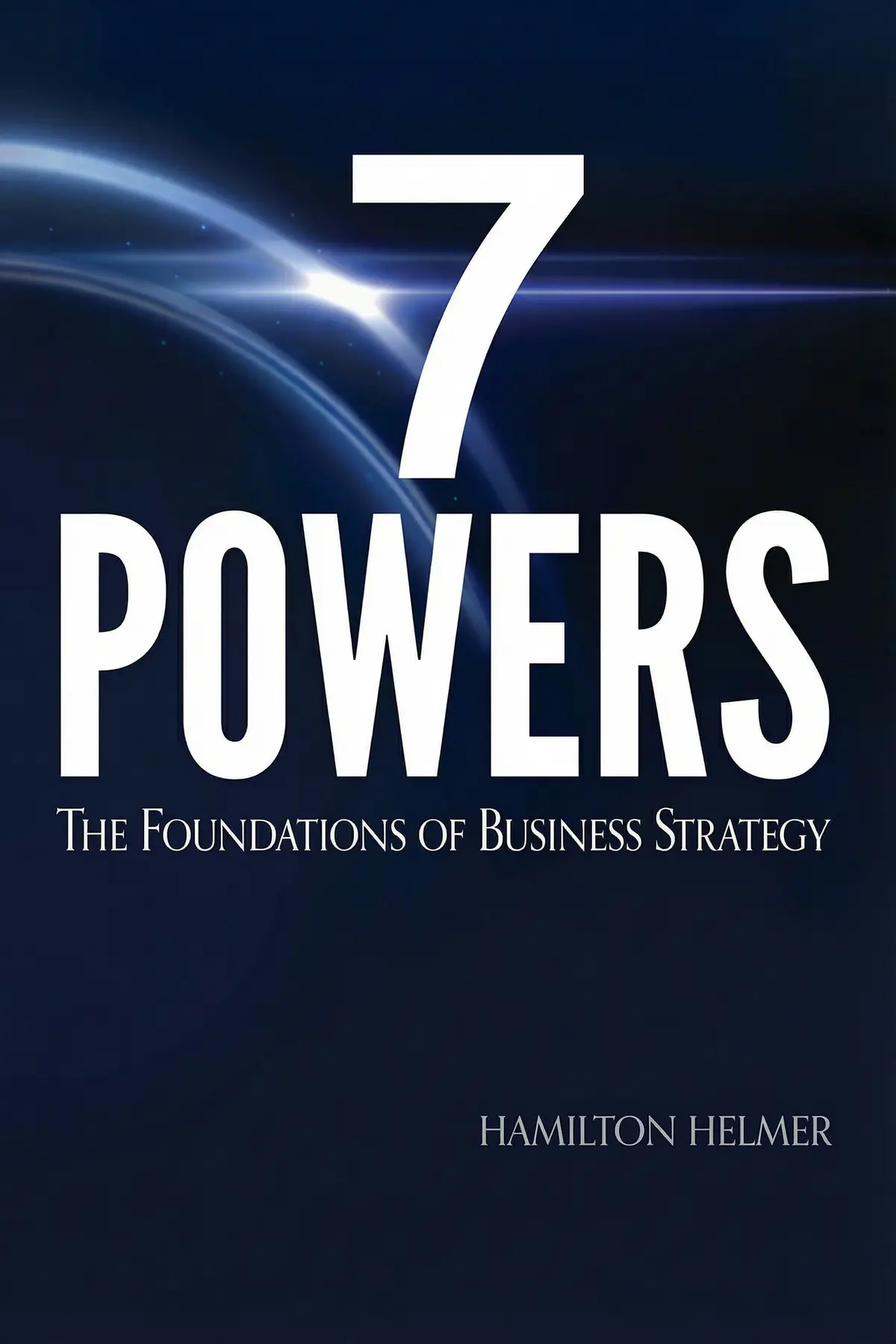
7 Powers: The Foundations of Business Strategy
Hamilton Helmer

A Bigger Prize: How We Can Do Better Than the Competition
Margaret Heffernan

A Year with Peter Drucker: 52 Weeks of Coaching for Leadership Effectiveness
Joseph A. Maciariello
AUDIO SUMMARY AVAILABLE
Listen to Leadership on the Line in 15 minutes
Get the key ideas from Leadership on the Line by Ronald Heifetz, plus 5,000+ more titles in English and Thai.
- 5,000+ titles
- Listen as much as you want
- 7-day free trial
- Cancel anytime







