
All In: How Great Leaders Build Unstoppable Teams
Mike Michalowicz
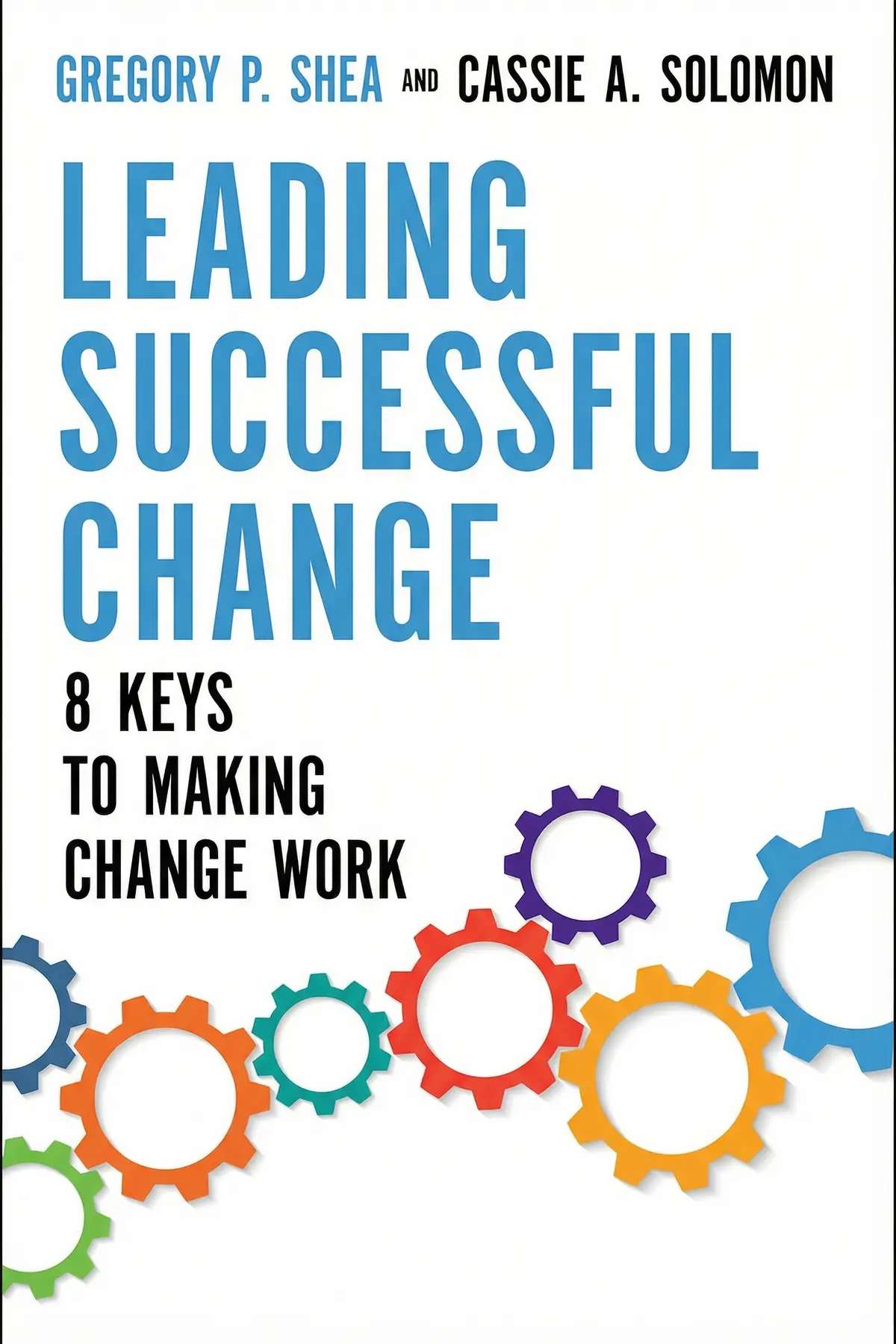
Leading Successful Change provides a practical framework for organizational transformation. By focusing on environmental design and eight specific system levers, leaders can align workplace conditions to make desired behaviors the natural choice for employees.
1 min 52 sec
Change is no longer a seasonal project or a one-time event; it is the permanent climate of modern business. We live in an era where new technologies are introduced before the previous ones have even been mastered, where competitors can disrupt an entire industry overnight, and where the expectations of customers evolve at a staggering pace. In this environment, the ability to pivot isn’t just a competitive advantage—it is the baseline for staying relevant. However, if you look at the track record of large-scale transformations, the results are often disappointing. We see a familiar cycle: a grand announcement from leadership, a wave of excitement followed by a flurry of meetings, and then a slow, quiet drift back to the status quo.
What causes this drift? It usually isn’t a lack of intelligence or willpower. The breakdown happens in the gap between the boardroom vision and the Monday morning reality of an employee sitting at their desk. When the speeches end and the posters are hung, people still return to a work environment that was designed for the old way of doing things. Their tools, their reporting lines, their incentives, and even the layout of their office all whisper—or sometimes scream—that they should keep doing what they have always done. To change the person, you must first change the world they inhabit during their working hours.
This exploration presents a roadmap for moving beyond slogans and into the architecture of behavior. We will examine how to define the future through specific, observable scenes and how to use eight powerful levers of change to reconstruct the workplace. The goal is to make the right behaviors the easiest ones to perform. When the surrounding system supports the new direction, change stops being a struggle against the current and starts becoming the natural flow of the organization. Let’s dive into how we can design an environment where successful change isn’t just possible, but inevitable.
2 min 31 sec
Individual willpower is a weak foundation for change. Discover why the fastest way to alter how people work is to redesign the daily signals and systems surrounding them.
2 min 26 sec
Abstract goals like ‘innovation’ or ‘efficiency’ fail to inspire action. Learn how to transform strategy into reality by writing detailed present-tense stories of the desired workday.
2 min 34 sec
The first four levers of change deal with the physical and structural world. Explore how organization, workspace, tasks, and people define the boundaries of what is possible.
2 min 47 sec
The final four levers—rewards, measurement, information, and decisions—act as the nervous system of an organization, reinforcing the new direction through feedback and power.
2 min 53 sec
Success in transformation requires more than a good idea; it requires the discipline to change enough of the system to create a new reality. Learn the ‘Go or No-Go’ rule.
1 min 29 sec
The journey of leading successful change is ultimately a move from being a visionary to being an architect. We have seen that the most common reason for failed transformation is the persistent gap between what leaders say and what the work environment reinforces. By shifting your focus from the individual’s psychology to the system’s design, you can overcome the gravity of the status quo. The Work Systems Model provides you with the specific tools to make this happen.
Begin by rejecting the comfort of abstract goals and instead embrace the hard work of scripting detailed, present-tense scenes of the future. Once you know exactly what behavior you are looking for, audit the eight levers of your organization: its structure, its physical and digital spaces, its daily tasks, its people, its rewards, its metrics, its information flow, and its decision rights. Remember the golden rule of transformation: you must meaningfully move at least four of these levers to create a environment that feels truly different.
When you eliminate the mixed signals that confuse your team, you create a sense of clarity and momentum. People will no longer have to fight against the system to do the right thing; instead, the system will carry them toward the goals you’ve set. As you iterate on these scenes and refine these levers, you will find that change stops being a burden and starts being a sustainable source of competitive advantage. The future you’ve envisioned is waiting to be built—one lever at a time.
Organizations today face a constant state of flux where the ability to adapt is a prerequisite for survival. Yet, most change initiatives fail not because of a lack of vision, but because leaders underestimate how much the existing work environment dictates old habits. This summary explores the Work Systems Model, a diagnostic and design tool that moves beyond abstract strategy into the realm of concrete daily actions. You will discover how to bridge the gap between high-level goals and the actual behaviors of your team by utilizing eight distinct levers: organization, workplace design, task, people, rewards, measurement, information distribution, and decision allocation. By learning to script vivid future scenes and applying the four-lever threshold for success, you can move from merely announcing change to making it an inevitable part of your organization's daily life. The promise of this approach is a sustainable transformation where the systems around people pull them toward the future you have envisioned.
Gregory P. Shea, Ph.D., is an adjunct professor of management at Wharton and a senior fellow at Penn’s Leonard Davis Institute. He is a renowned advisor to senior leaders on complex, system-wide change and has co-authored several books on workplace survival. Cassie A. Solomon is an organizational development consultant and founder of The New Group Consulting and RACI Solutions. An instructor with Wharton’s Aresty Institute, she specializes in cross-functional accountability and decision-making frameworks for global organizations.
Listeners find the book's perspectives to be highly useful, as one listener notes that it provides well-researched explanations and answers critical strategic questions. This work receives praise for its efficacy, with one listener highlighting how it breaks down change strategies well.
Finally got around to finishing this, and I have to say, it’s one of the most effective books on strategy I’ve encountered recently. Most change management books are 300 pages of fluff, but this one gets straight to the point with well-researched explanations. It answers the critical question of why change fails: we don't support the new behaviors with the right infrastructure. The focus on measurement and rewards as levers is spot on. If you want people to act differently, you have to change how you measure their success and how they are compensated. I love how it breaks down complex organizational theories into a checklist that any leader can follow. It’s brilliant, efficient, and provides a clear path forward for anyone feeling stuck in a stagnant culture.
Show moreWow, this really changed the way I look at my role as a leader during times of transition! Instead of just giving speeches about our vision, I’m now looking at our Decision Allocation and Task levers to see where we are tripping ourselves up. The book is sharp and concise, which is exactly what a busy executive needs. It provides answers to the most difficult strategic questions without burying them under 500 pages of academic jargon. I especially appreciated the insight that change is about behavior, not just results. If you focus on the actions people take every day and design the environment to foster those actions, the results will follow naturally. It’s an excellent, well-researched manual that I’ll be keeping on my desk for reference.
Show moreEver wonder why your team goes right back to their old habits two weeks after a big kickoff meeting? This book argues that we spend too much time on vision and not enough on the nuts and bolts of the work environment. Personally, I found the breakdown of the 8 Levers of Change to be the most valuable part of the text. It moves beyond vague leadership advice into specific areas like workplace design and reward systems. Truth is, most managers ignore how physical or virtual space affects productivity, but Shea makes a compelling case for it. My only gripe is that it feels very geared toward massive organizations with deep pockets. It’s well-researched and answers some critical strategic questions about sustainability, but applying it to a lean startup might require some mental gymnastics.
Show moreThe Disney case study included in these pages really brought the whole environment versus behavior concept to life for me. It’s one thing to read about theoretical frameworks, but seeing how a major corporation applies these levers makes the strategy feel much more attainable. Shea and Solomon do a great job of explaining that successful change requires a two-pronged attack: you have to change the individual behavior and the surrounding system simultaneously. I particularly appreciated the section on Decision Allocation and who actually gets to participate in the process. Not gonna lie, I’ve been guilty of hoarding decision power, which this book correctly identifies as a bottleneck for growth. It’s a sharp, concise guide that offers a practical roadmap for anyone leading a team through a transition.
Show moreLook, change isn't an option in today's market, and Shea makes it clear that it isn't impossible if you have the right tools. This book provides a solid systems approach that looks at the organization as a whole rather than just focusing on inspiring people. In my experience, inspiration fades, but a well-designed task process or a new workplace layout keeps people moving in the right direction. I liked the emphasis on the Workplace Design lever, especially in our new world of hybrid work. The writing is very concise—some might call it short—but I appreciate not having my time wasted with endless anecdotes. It’s a professional, insightful guide that serves as a great investment for any consultant or manager dealing with radical shifts.
Show morePicked this up because the failure rate of corporate initiatives is just terrifying, and I needed something actionable. It’s a remarkably quick read—part of that Wharton Digital Press series—so you can knock it out on a short flight. Shea and Solomon focus on the idea that you can’t just tell people to change; you have to redesign the actual environment to force new behaviors. The 8 Levers framework is logical, particularly the parts about decision allocation and how information is distributed. However, I found the writing style a bit dry and clinical for my taste. It lacks the engaging narrative or storytelling juice that usually keeps me hooked on management books. To be fair, if you want a no-nonsense checklist without the fluff, this is exactly what you need. Just don't expect to be entertained while you're learning.
Show moreAs a small business owner, I struggled to see how some of these 8 Levers would work in a company of only ten people. The authors clearly have large-scale corporate environments in mind when they talk about organizational charts and complex reward systems. That said, I still managed to glean some significant value from the chapter on information distribution and metrics. I realized that my team is often working in the dark because I haven't been transparent enough with our weekly data. The book is very practical in that sense; it gives you a plan you can actually implement tomorrow. It is definitely a quick read, which is great for a busy schedule, but the lack of storytelling makes it feel a bit like reading a textbook. A bit more personality in the writing would have gone a long way.
Show moreWhile the 8 levers are certainly logical, I didn't find anything here that felt truly revolutionary for the field. It’s a good, solid summary of proven methods, but it feels a bit like a Greatest Hits album of management theory. The core idea is that you must change the environment to support new behavior, which is something most experienced consultants already know. Still, the book is very timely, especially for those of us navigating post-pandemic shifts in People and Information Distribution levers. To be fair, it’s a very practical read, and I came away with a few specific ideas for my current client. It just lacks that wow factor or a unique narrative voice to make it stand out from the crowd of other business books.
Show moreI've read quite a few books from the Wharton Digital Press, and they all share this incredibly brief, no-frills style. On one hand, it's great because you can finish the whole thing in about ninety minutes. On the other hand, it feels a little light on the kind of detailed storytelling that helps these concepts stick. The 8 levers of change—Organization, Task, People, etc.—are all very logical and provide a decent framework for a plan. But without more juicy examples or a bit of humor, it's a pretty dry experience. It’s better than most fluff-filled business books, but it won't change your life. If you need a quick primer on how to structure a change initiative, it’s a fine choice, but don't expect anything earth-shattering.
Show moreFrankly, this felt like a collection of universal management rules that have been rehashed a thousand times before. I was looking for something radical or earth-shattering, but instead, I got a very brief summary of common sense. The WDP series is known for being concise, but this was almost too short to provide any real depth or nuance. It’s hard reading because it’s so dry—there are no jokes, no storytelling, just a very clinical delivery of facts. While the authors are clearly experts, the 8 levers felt like a standard systems approach rebranded for a new audience. I didn't find any juicy insights that I hadn't already seen in a dozen other LinkedIn articles or basic HR manuals. It wasn't a total waste of time, but I expected much more for the price.
Show moreMike Michalowicz
Hamilton Helmer

Margaret Heffernan
AUDIO SUMMARY AVAILABLE
Get the key ideas from Leading Successful Change by Gregory P. Shea, plus 5,000+ more titles in English and Thai.







