
21 min 26 sec
Leading Without Authority: How the New Power of Co-Elevation Can Break Down Silos, Transform Teams, and Reinvent Collaboration
Leading Without Authority redefines leadership for the modern era, revealing how anyone can drive massive organizational change and foster deep collaboration by focusing on influence and co-elevation rather than formal job titles.
Table of Content
1. Introduction
1 min 37 sec
Imagine you’re sitting at your desk, looking at a process in your company that is clearly broken. You see the inefficiencies, you see how much time is being wasted, and you have a brilliant idea for how to fix it. But then, that familiar thought creeps in: ‘That’s not my department,’ or ‘I’m not a manager, so nobody will listen to me.’ Many of us spend our entire careers waiting for permission to lead. We believe that leadership is a reward given to us once we reach a certain level on the organizational chart. We wait for the title, the corner office, and the formal authority to tell people what to do.
However, the reality of the modern workplace is that the traditional top-down hierarchy is increasingly becoming an obstacle rather than a solution. In a world of complex global projects and cross-functional teams, waiting for permission is a recipe for stagnation. This is where the concept of ‘Leading Without Authority’ comes in. It’s the idea that you can—and should—take the initiative to drive change, foster collaboration, and elevate the performance of those around you, regardless of your official rank.
In this exploration of Keith Ferrazzi’s insights, we are going to look at how to break down the silos that keep departments isolated and people distant. We’ll learn about a revolutionary way of working called ‘co-elevation,’ which is based on the idea of going higher together. This isn’t just about being a better ‘team player’; it’s about taking responsibility for the success of everyone you work with. Over the next few chapters, we will break down the strategies for winning trust, providing radical feedback, and identifying the problems that others are too afraid to touch. By the end, you’ll see that your potential to lead is not something that is granted by a boss—it is something you claim for yourself starting right now.
2. The Illusion of Formal Power
2 min 31 sec
Discover why having a high-ranking title often fails to produce results and how horizontal partnerships are the true engines of modern organizational success.
3. Leadership as Problem Solving
2 min 35 sec
Learn how to bypass the promotion queue by taking ownership of the workplace issues that everyone else is ignoring.
4. Generosity as the Bedrock of Influence
2 min 32 sec
Explore the surprising effectiveness of ‘the giver’ mindset and how being helpful without expectations creates unbreakable professional bonds.
5. The Three Rules of Rapid Change
2 min 59 sec
Examine the remarkable turnaround of a retail giant to understand how radical inclusion, bold input, and agility can revitalize any team.
6. Feedback as a Leadership Duty
2 min 31 sec
Shift your perspective on workplace coaching and learn why ‘radical candor’ is the most compassionate way to help your colleagues grow.
7. The Strategic Power of Celebration
2 min 29 sec
Learn why the most effective leaders spend their time hunting for things to praise and how positivity directly impacts the bottom line.
8. Leadership is a Team Sport
2 min 29 sec
Discover why the ‘lone hero’ model of leadership is dead and how to empower everyone around you to take ownership of change.
9. Conclusion
1 min 43 sec
As we wrap up our journey through the principles of leading without authority, the most important takeaway is that your power is not defined by your position on an organizational chart. It is defined by the quality of your relationships, the depth of your generosity, and your willingness to take ownership of problems that others ignore. We’ve seen that the old model of top-down command is giving way to a new era of co-elevation—a world where the most successful people are those who commit to the success of everyone around them.
Remember that leadership is an action, not a title. It starts with the simple act of choosing to care. It grows when you offer a peer a piece of honest feedback, when you celebrate a colleague’s small win, or when you reach across departmental lines to turn an adversary into a partner. These might seem like small steps, but collectively, they create a massive shift in how organizations function. They break down the silos that stifle innovation and replace them with a culture of trust and shared purpose.
You don’t need to wait for a promotion to start making your workplace better. You don’t need to wait for a manager’s permission to be a mentor or a coach. The tools for leadership are already in your hands. It’s about radical inclusion, bold input, and the courage to be vulnerable. As you head back into your daily work, look for that one ‘unsolvable’ problem or that one ‘difficult’ colleague. Approach them not with authority, but with the spirit of co-elevation. Ask how you can help, stay committed to their growth, and watch as you transform not just your career, but the very heart of your organization. The future of leadership belongs to those who are brave enough to lead from wherever they are.
About this book
What is this book about?
Leading Without Authority challenges the traditional notion that you need a specific title or a seat in the C-suite to effect change. Instead, it introduces the concept of co-elevation—a collaborative approach where individuals commit to one another’s success to achieve higher goals. The book serves as a roadmap for anyone feeling stuck in a siloed environment, offering strategies to build trust, offer feedback, and lead a diverse group of stakeholders toward a shared vision. By following this guide, listeners will learn how to identify hidden opportunities for leadership in their current roles, foster radical inclusion within their teams, and utilize the power of generosity to bridge professional divides. It promises a transformation from being a mere employee to becoming a dynamic change agent who can mobilize resources and people across departmental lines, regardless of their position on the organizational chart.
Book Information
About the Author
Keith Ferrazzi
Keith Ferrazzi is an author and entrepreneur whose bestselling business books include Never Eat Alone and Who’s Got your Back. Ferrazzi is also the founder and CEO of Ferrazzi Greenlight, a research and consulting firm. Noel Weyrich is an author with over twenty years of experience in investigative journalism and reporting.

Ratings & Reviews
Ratings at a glance
What people think
Listeners find the book perceptive and accessible, valuing its emphasis on practical application and its thorough look at strengthening professional ties. It proves especially useful for agile or remote environments, with one listener identifying it as a must-read for entrepreneurs and leaders. Finally, listeners recognize its significant corporate impact, with one listener describing the work as a game changer in modern work culture.
Top reviews
Praepimon
In today’s remote-first landscape, the traditional hierarchies we once relied on are crumbling, making Keith Ferrazzi’s insights more relevant than ever. This isn't just another dry business manual; it’s an action-oriented guide that treats co-elevation as the cornerstone of modern work culture. Truth is, most managers struggle with influence when they can't rely on a title, yet this book provides a roadmap for building those essential working relationships from the ground up. I particularly appreciated the focus on agile team dynamics, which felt tailored for the current tech environment. While some might find the heavy focus on high-stakes corporate scenarios a bit much, the underlying principles of mutual accountability are universal. It is a genuine game changer for anyone leading a distributed team. Grab a highlighter because you’re going to need it for the specific strategies on deepening peer-to-peer trust.
Show morePaiboon
Finally, a leadership book that actually understands the shift toward decentralization and collaborative networks! Ferrazzi moves past the old 'command and control' model to show how we can achieve massive goals by treating our peers as a 'wider team.' For entrepreneurs who have to build something out of nothing, this is essentially a survival manual. The emphasis on radical candor and mutual interest creates a framework that is both high-impact and surprisingly easy to implement. Not gonna lie, I was skeptical about the co-elevation buzzword at first, but it really is a game changer for how we approach project management. Every chapter provides a new way to look at influence, making it a must-read for anyone operating in an agile or remote environment. It’s rare to find a business book that is this actionable without being overly simplistic.
Show moreFort
Working in a matrix organization is a nightmare if you don't know how to influence people across different departments. This book was exactly what I needed to navigate that chaos. Ferrazzi’s approach to leading change through collaboration rather than coercion is a breath of fresh air in an industry that still loves its hierarchies. Not only is the writing style engaging, but the 'hit me with both barrels' feedback strategy has already transformed how I interact with my cross-functional partners. In my experience, it’s not a philosophical treatise on power; it’s a tactical guide for getting things done when you aren't the boss. For anyone in a middle-management or project-lead role, this is easily one of the most insightful books on modern work culture I've come across in years.
Show morePatcharaporn
Ever wonder how some people manage to get everyone on board with their ideas without having a fancy title? This book answers that question by focusing on the power of co-elevation. Leadership doesn’t have to require authority, and Keith Ferrazzi proves that by showing how to build a 'wider team' based on mutual interests. Gotta say, the section on the Platinum Rule—treating others how *they* want to be treated—was a total perspective shifter for me. It makes you realize how often we impose our own styles on others instead of adapting to what they need to succeed. While the corporate examples are a bit high-level, the underlying message is incredibly empowering for anyone at any level of an organization. This is modern leadership at its best: collaborative, relationship-driven, and results-oriented.
Show moreOtt
Ferrazzi has a knack for breaking down complex social dynamics into something digestible, and this latest work is no exception. The chapter on co-elevation is easily the highlight, shifting the focus from individual success to collective growth in a way that feels fresh. Look, the advice can occasionally veer into the generic, but the specific email templates for soliciting feedback are worth the price of admission alone. I've already started using his 'hit me with both barrels' approach to peer reviews, and the response from my team has been surprisingly positive. It isn't a perfect book—sometimes the tone feels a bit too much like an old-school business seminar—but the practical application for modern, collaborative environments is undeniable. If you’re struggling to get buy-in from people who don’t report to you, there are some real gems here.
Show moreWittaya
If you’re an entrepreneur looking to scale your influence, 'Leading Without Authority' offers a very compelling roadmap. The book excels when it dives into the mechanics of building trusting relationships that aren't based on a paycheck or a title. I particularly appreciated the section on providing high-quality feedback; it’s a skill that most leaders think they have but few actually master. To be fair, the book does have a tendency to cite well-known figures without making it clear if these are original interviews or just pulled from the web. That lack of transparency is a minor annoyance, but it doesn't take away from the core message. It’s a fast read that focuses heavily on the softer side of business, which is exactly what our increasingly digital and disconnected work culture needs right now.
Show moreWilliam
There's a goldmine of practical templates hidden within what is otherwise a fairly standard business read. I found the specific scripts for deepening relationships quite useful, particularly for someone like me who tends to overthink professional interactions. However, I can't ignore how much the book caters to a very specific subset of high-ranking corporate types. Not everyone has the luxury of 'self-authorizing' their way into a project without facing serious repercussions from their actual bosses. Personally, I think the concept of 'co-elevation' is a brilliant rebranding of teamwork, but the execution in these pages feels a bit icky at times, almost transactional. It's an easy read and definitely has its moments of insight, but it lacks the honesty required to address the deeper issues of authority and power dynamics in the workplace.
Show moreTen
The tone here is quite jarring if you’ve been reading more modern, trauma-informed leadership literature recently. On one hand, the Platinum Rule is a fantastic tool for perspective-taking and reducing presumptuous behavior in meetings. On the other hand, the author's dismissal of traditional authority structures feels a bit naive given how most corporations actually function. Truth is, the 'diversity of thought' rhetoric used here often felt like a dog whistle for maintaining the status quo rather than embracing true equity. I stayed for the co-elevation tips, which are genuinely helpful for project leads, but I found myself rolling my eyes at the constant name-dropping of global CEOs. It’s a decent enough read if you can filter out the 'boomer business' vibe and just focus on the relational principles for collaboration.
Show morePia
I really wanted to like this, but the content felt like a relic from a different era of business. While the title promises tools for everyone, the book is cluttered with stories about C-suite executives that most of us simply cannot relate to in our daily grind. Frankly, I grew tired of the constant name-dropping of CEOs and CMOs at Fortune 500 companies. As an engineer, I was looking for tactical advice on navigating office politics, not more generic encouragement to 'invest in relationships.' To be fair, the concept of the 'Platinum Rule' is a nice touch, but it’s buried under layers of bougie anecdotes that feel remarkably out of touch with real-world diversity issues. Often, it felt like the author was oblivious to the systemic hurdles many employees face, suggesting that all problems can be solved by just working harder at being liked.
Show moreNannapat
Not what I expected, and to be honest, it was a total waste of time. The book is peppered with quotations from well-known figures, yet it’s never mentioned whether Ferrazzi actually interviewed them or just copy-pasted what he found on the Internet. It’s the kind of generic advice that never dives deep into the actual essence of workplace problems. Issues with collaboration? Invest in relationships! It literally made me want to puke. The author seems totally blind to the fact that in most of his stories, a guy is awful to everyone until a woman takes on extra work to fix his behavior. This isn't leadership; it's a collection of 'white guy' platitudes that ignore toxic environments and real discrimination. Run away from this one and find something with actual substance.
Show moreReaders also enjoyed
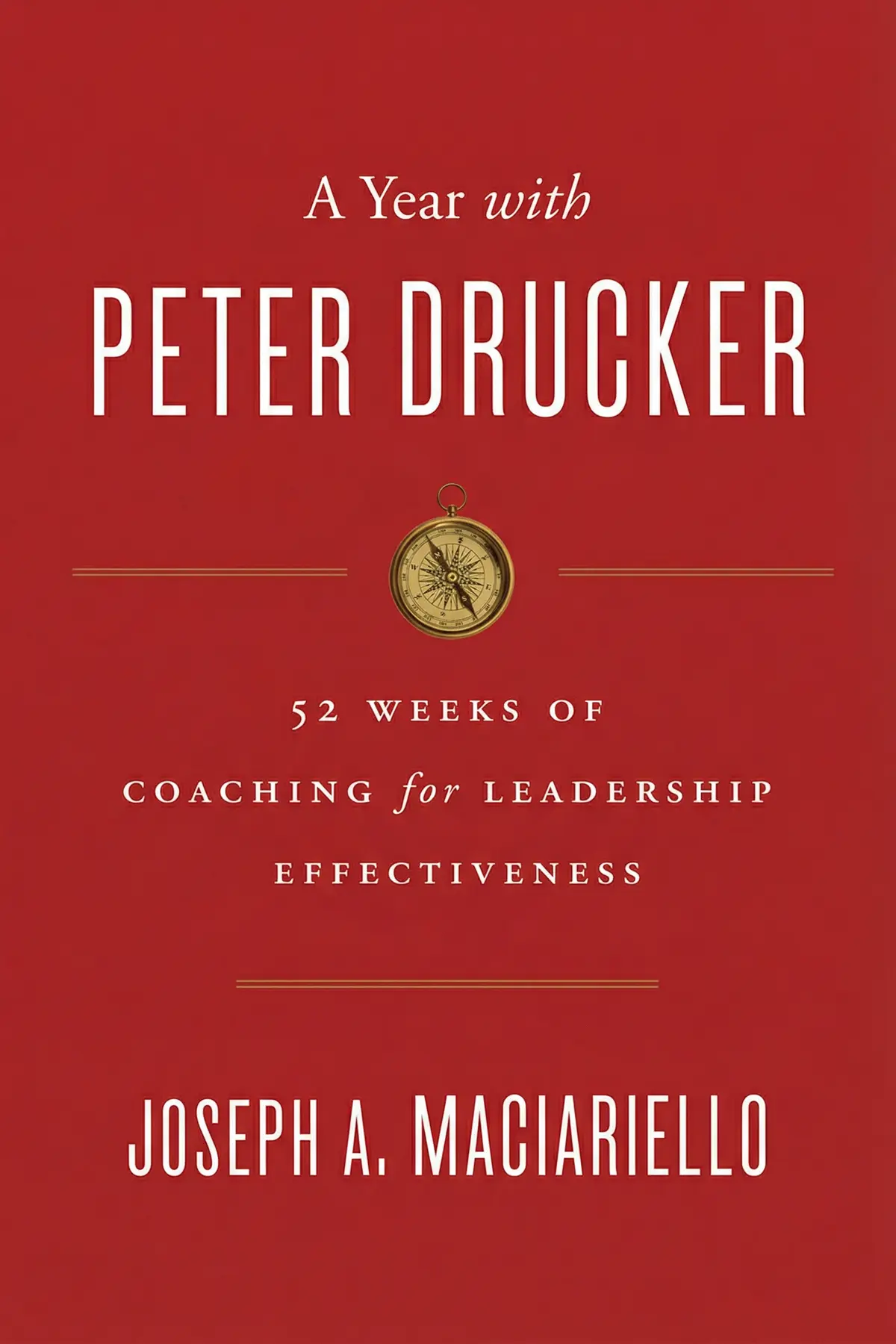
A Year with Peter Drucker: 52 Weeks of Coaching for Leadership Effectiveness
Joseph A. Maciariello
Acting with Power: Why We Are More Powerful Than We Believe
Deborah Gruenfeld
All In: How Great Leaders Build Unstoppable Teams
Mike Michalowicz
7 Powers: The Foundations of Business Strategy
Hamilton Helmer
AUDIO SUMMARY AVAILABLE
Listen to Leading Without Authority in 15 minutes
Get the key ideas from Leading Without Authority by Keith Ferrazzi, plus 5,000+ more titles in English and Thai.
- 5,000+ titles
- Listen as much as you want
- 7-day free trial
- Cancel anytime







