
17 min 36 sec
Never Lead Alone: 10 Shifts from Leadership to Teamship
Never Lead Alone challenges the outdated model of the solo hero-leader. It provides a practical roadmap for transitioning to teamship, where collective intelligence and shared responsibility drive organizational success in a complex world.
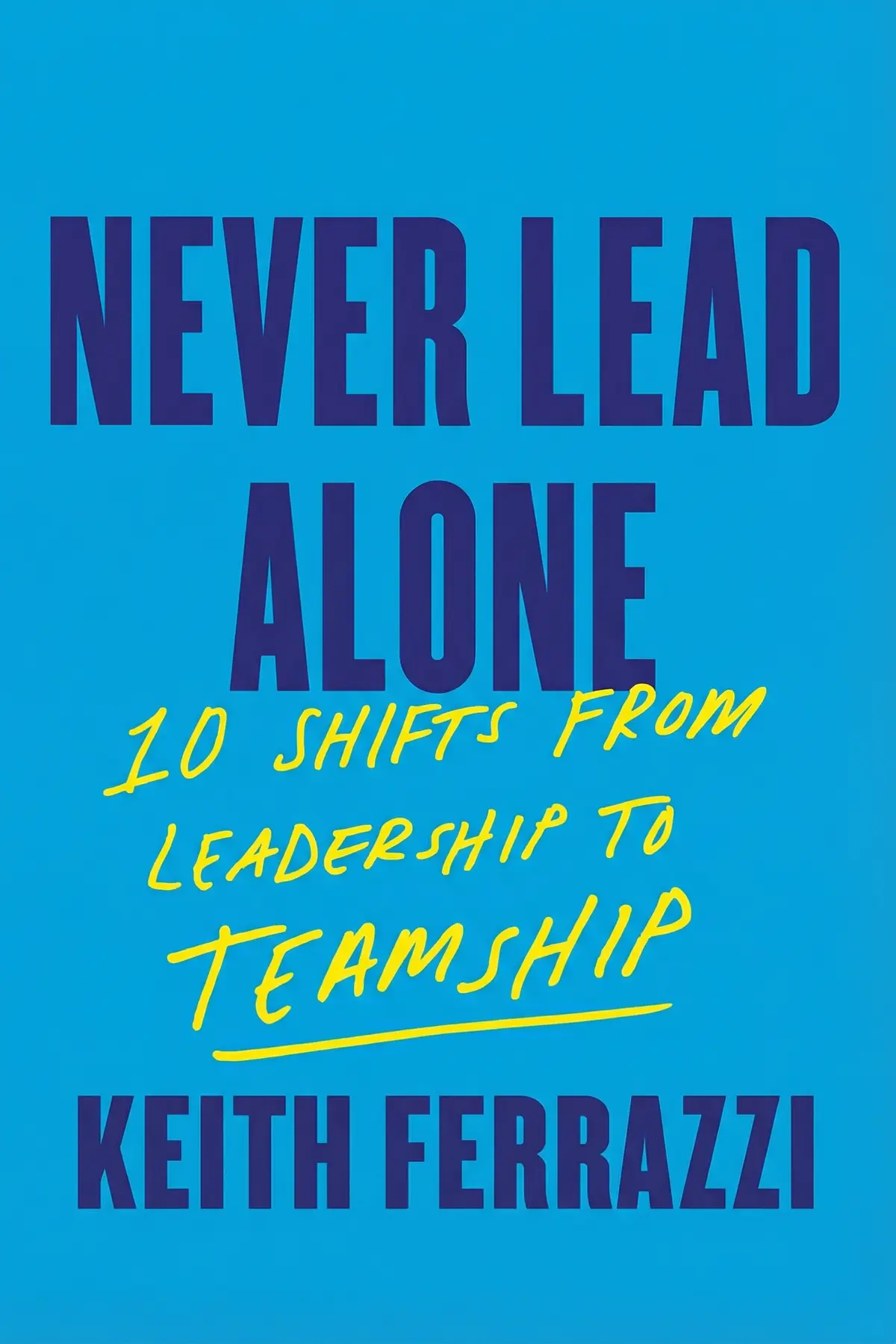
Table of Content
1. Introduction
1 min 30 sec
In the fast-paced world of modern business, we often cling to a romanticized image of the leader as a solitary hero. We imagine a person with all the answers, someone who stands at the helm and navigates through the storm by sheer force of will and intellect. But if you look closely at the organizations that are truly thriving today, you’ll see that this image is fading into the past. The reality of our current landscape—defined by non-stop disruption and immense complexity—has simply become too much for any single individual to manage. Whether you are leading a small startup or a global corporation, the hard truth is that if you try to lead alone, you are setting yourself up for burnout and missed opportunities.
This is where the concept of teamship comes in. It’s a transition from the traditional “me-centric” leadership model to a “we-centric” approach. It’s not just about being a better manager; it’s about fundamentally changing how your team interacts, solves problems, and takes ownership of the collective mission. The goal is to move from a system where one person directs the many, to a system where the group’s collective intelligence is the primary engine of progress.
In the following sections, we are going to walk through the ten vital shifts required to make this transformation. We’ll look at how you need to change your mindset, your daily behaviors, and ultimately the very culture of your organization. By the end, you’ll understand that the most powerful thing a leader can do is stop trying to be the hero and start building a team of heroes who lead alongside each other. Let’s explore how to unlock that potential.
2. The End of the Solo Hero
1 min 38 sec
Traditional leadership models are failing because the modern world is too complex for one brain. Learn why the lone-genius approach is becoming a liability.
3. Practicing Radical Humility
1 min 33 sec
The most effective leaders are those who admit they don’t know everything. Discover how humility opens the door to collective problem-solving.
4. From Scheduled Meetings to Continuous Collaboration
1 min 32 sec
Status updates are the death of innovation. Shift your team’s rhythm toward a fluid, ongoing dialogue that moves as fast as the market.
5. Sourcing Wisdom from Every Corner
1 min 34 sec
Great ideas don’t follow the org chart. Learn how to tap into the hidden insights of your front-line workers and junior staff.
6. Vulnerability as the Gateway to Trust
1 min 28 sec
Sharing your struggles isn’t a sign of weakness; it’s the fastest way to build a high-performing team. Discover the power of being real.
7. Reimagining Meetings as Co-Creation Spaces
1 min 22 sec
Stop using meetings for reports. Start using them to build solutions together. Here’s how to change your collaborative behavior.
8. Distributing Decision-Making Authority
1 min 25 sec
Bottlenecks happen when the top has to decide everything. Learn how to empower your team to act without losing control.
9. Cultivating Multi-Directional Feedback
1 min 23 sec
Feedback shouldn’t just come from the boss. Create a culture where everyone is invested in each other’s growth through constant, honest input.
10. Restructuring Power from Hierarchy to Network
1 min 25 sec
Formal titles are becoming less relevant than informal influence. Discover how to lead through connection rather than command.
11. The Disciplined Path of Transition
1 min 29 sec
Transformation doesn’t happen overnight. Learn the strategic way to implement these shifts without overwhelming your organization.
12. Conclusion
1 min 17 sec
The journey from traditional leadership to true teamship is perhaps the most significant challenge a modern leader will face. It requires you to set aside the ego of the solo hero and embrace the messy, complex, and ultimately rewarding work of collective collaboration. We’ve explored how this requires a deep mindset shift toward humility and vulnerability, a behavioral shift toward co-creation and distributed power, and a cultural shift toward networked influence and radical transparency.
Remember that you don’t have to do this all at once. The path forward starts with a single step. Maybe today, it’s simply admitting in a meeting that you don’t have the answer. Maybe tomorrow, it’s asking a junior team member for their unfiltered perspective on a project. These small actions, when repeated consistently, create the foundation for a transformative culture.
In a world that is becoming more unpredictable by the day, your greatest asset isn’t your individual brilliance—it’s the collective intelligence and commitment of your team. By choosing to never lead alone, you aren’t just making your job easier; you are making your organization better, more resilient, and more capable of achieving great things. The future belongs to those who lead together. Now is the time to start building that future with your team, one shift at a time.
About this book
What is this book about?
In an era defined by rapid change and overwhelming complexity, the traditional image of the lone leader at the top is no longer sustainable. Never Lead Alone argues that the burden of decision-making and innovation has become too heavy for any one person to carry. Instead, success now depends on the ability to foster teamship—a collaborative approach where leadership is a shared endeavor rather than an individual title. This book outlines ten fundamental shifts designed to transform organizational culture. It moves from top-down directives to co-creation, and from individual accountability to collective resilience. By embracing radical humility, transparency, and distributed decision-making, leaders can tap into the diverse wisdom of their entire workforce. The promise is a more agile, innovative, and engaged organization that doesn't just survive market disruptions but thrives through them by leveraging the power of the group.
Book Information
About the Author
Keith Ferrazzi
Keith Ferrazzi is a renowned executive team coach, entrepreneur, and author whose best-selling books include Never Eat Alone, Who's Got Your Back, Leading Without Authority, and Competing in the New World of Work. As founder of Ferrazzi Greenlight and the Greenlight Research Institute, he has guided transformative change at Fortune 50 companies, global organizations, and government institutions, while regularly contributing insights to leading business publications.

Ratings & Reviews
Ratings at a glance
What people think
Listeners find this work outstanding for its focus on teamship, as it delivers hands-on techniques to encourage cooperation and boost group results. The text provides excellent real-world cases and helps shift perspectives on successful leadership, with one listener mentioning its potential to spark significant shifts in team dynamics. They value its readability as a must-have for those in charge and admire its capacity for building trust, while one review emphasizes its practical methods tailored for contemporary groups.
Top reviews
Milk
This book is a game-changer for anyone drowning in a 'hub-and-spoke' management style where everything bottlenecks at the top. Ferrazzi breaks down how the complexity of the modern market has basically outgrown the individual leader. I love the focus on transparency and vulnerability—admitting you don't have all the answers is actually a strength here. The ten essential shifts provide a clear, though challenging, roadmap for transforming organizational culture. We’ve already started experimenting with the peer-to-peer appreciation model and the energy in the office has noticeably shifted. It takes patience to let go of old command-and-control habits, but the results in our collective intelligence are worth the effort. Truly, this is essential reading for leaders.
Show moreGai
Ever wonder why your team hits a wall despite having smart people? Ferrazzi argues it’s because we’re still using outdated, hierarchical leadership models that stifle diverse perspectives. This book is a masterclass in building a culture of mutual celebration and radical transparency. I especially loved the idea of 'mentorship circles' where junior staff share digital expertise while learning strategy from the veterans. It’s a two-way street that breaks down those annoying silos that plague most large companies. The focus on 'architecting' solutions rather than just providing them is a vital mental shift. It’s a long journey, but these ten shifts are the perfect starting point for any modern organization. Definitely a 5-star resource for driving transformative change.
Show moreZoe
Finally got around to reading this, and the concept of 'co-elevation' really stuck with me. In today’s complex landscape, the idea of a single, all-knowing leader is just a fantasy. We need to move toward a model where every team member feels empowered to make decisions and hold each other accountable. This book provides a fantastic blueprint for that transformation, starting with small, meaningful changes that build momentum. The emphasis on 'radical humility' was exactly what I needed to hear. It’s about creating an environment where constructive disagreement becomes a tool for better outcomes rather than something to be avoided. Exceptional focus on teamship and highly recommended for any growth-minded manager.
Show moreSuthinee
After hearing Ferrazzi on a podcast, I was eager to dive into the full 'teamship' framework. The shift from a lone-wolf leader to an architect of collective problem-solving is exactly what my department needs right now. I particularly appreciated the section on radical humility; it’s a refreshing take on how to build psychological safety without sounding too 'fluffy.' However, some of the charts are a bit dense, and I found myself re-reading certain sections just to grasp the implementation steps. It’s not just a checklist, it’s a total behavioral overhaul. While it is heavily corporate-focused, the core message about co-elevation is universal. I’ll definitely be trying the fifteen-minute feedback sessions next week to see if we can spark better peer-to-peer accountability.
Show moreChamp
The transition from top-down command to actual collective intelligence isn't easy, but this book makes a compelling case for why it’s necessary. I’ve been implementing the 'agile' ways of working mentioned in chapter five, and the daily stand-ups have already reduced our email volume significantly. Ferrazzi is right—resistance usually comes from uncertainty, not malice, so creating those safe spaces for team members to express concerns is key. Not gonna lie, some of the shifts felt a bit redundant, but the emphasis on co-elevation is a powerful mindset change. It’s a practical handbook for any manager looking to foster a more resilient and self-leading team in a high-pressure environment. It provides excellent real-life examples that make the theory feel attainable.
Show moreOscar
Picked this up because I’m a fan of his earlier networking work, but the transition to 'teamship' felt a bit repetitive in places. The core idea is solid: leaders can't handle the current volume of decisions alone and need to empower their teams to operate semi-independently. I found the '10 shifts' framework useful, especially the bits about moving from sporadic feedback to a continuous culture of growth. Truth is, though, it feels geared exclusively toward high-level corporate executives. If you work in the nonprofit sector or a very small startup, some of these strategies might feel too bureaucratic. It's a solid 3-star read with some actionable advice if you can filter out the self-promotion and corporate jargon.
Show moreVimolwan
Frankly, I expected more substance and fewer references to his previous bestseller 'Never Eat Alone.' The first half of the book is semi-intriguing and offers some good descriptions of the benefits of a team-based management model. However, the author spends so much time talking about his past 'best-selling' status that it gets distracting. The second half, which dives into DEI and cultural evolution, felt a bit lacking in concrete tools compared to the earlier chapters on behavioral shifts. I think the concept of 'teamship' is brilliant, but the book itself could have been about fifty pages shorter. It’s a useful tool for modern teams, just be prepared to skim through some of the repetitive fluff.
Show moreNew
As someone who usually listens to business books during my commute, this was a mixed bag. The narration is decent, and the stories about factory supervisors and software divisions are engaging enough to keep you listening. But I realized halfway through that I really needed the hardback version to see the actual charts and assessments he keeps mentioning. The concepts of personal trust and shared feedback are great, but implementing them requires more than just listening to the theory. Personally, I found the section on 'red flag rules' a bit confusing without the visual aids. It’s worth a read for the core 'teamship' philosophy, but get the physical copy if you’re serious about doing the exercises.
Show moreFon
To be fair, I really wanted to like this after how much 'Never Eat Alone' helped my career years ago. But this felt like a massive ego trip where the author constantly reminds us of his past successes rather than focusing on the new material. The 'Red Flag Rule' is a strangely named concept that didn't quite land for me, and the hard shift into DEI felt tacked on and lacked the depth seen in the earlier chapters. It’s a bit of a disappointment compared to something like 'Radical Candor.' There are a few nuggets of wisdom regarding peer-to-peer accountability, but you're better off just listening to his book tour interviews. The writing is often repetitive and lacks the punch I expected from someone of his tenure.
Show moreFinn
Honestly, I struggled to get through even the first few chapters because of the writing style. It feels like an author trying to squeeze more profit out of a previous winning title by rebranding common sense as a revolutionary 'transformational journey.' The suggestion that sitting around discussing privilege is the most effective use of a team's time felt out of touch with my daily operational realities. Look, there are some decent points about psychological safety and removing silos, but the execution is poorly written and often wanders off-track. If you want real advice on feedback and communication, stick to 'Crucial Conversations.' I didn't find much here that I couldn't have found in a long-form blog post or a quick podcast episode.
Show moreReaders also enjoyed
A Year with Peter Drucker: 52 Weeks of Coaching for Leadership Effectiveness
Joseph A. Maciariello


Acting with Power: Why We Are More Powerful Than We Believe
Deborah Gruenfeld
All In: How Great Leaders Build Unstoppable Teams
Mike Michalowicz
7 Powers: The Foundations of Business Strategy
Hamilton Helmer
AUDIO SUMMARY AVAILABLE
Listen to Never Lead Alone in 15 minutes
Get the key ideas from Never Lead Alone by Keith Ferrazzi, plus 5,000+ more titles in English and Thai.
- 5,000+ titles
- Listen as much as you want
- 7-day free trial
- Cancel anytime







