

Abortion: Our Bodies, Their Lies, and the Truths We Use to
Jessica Valenti
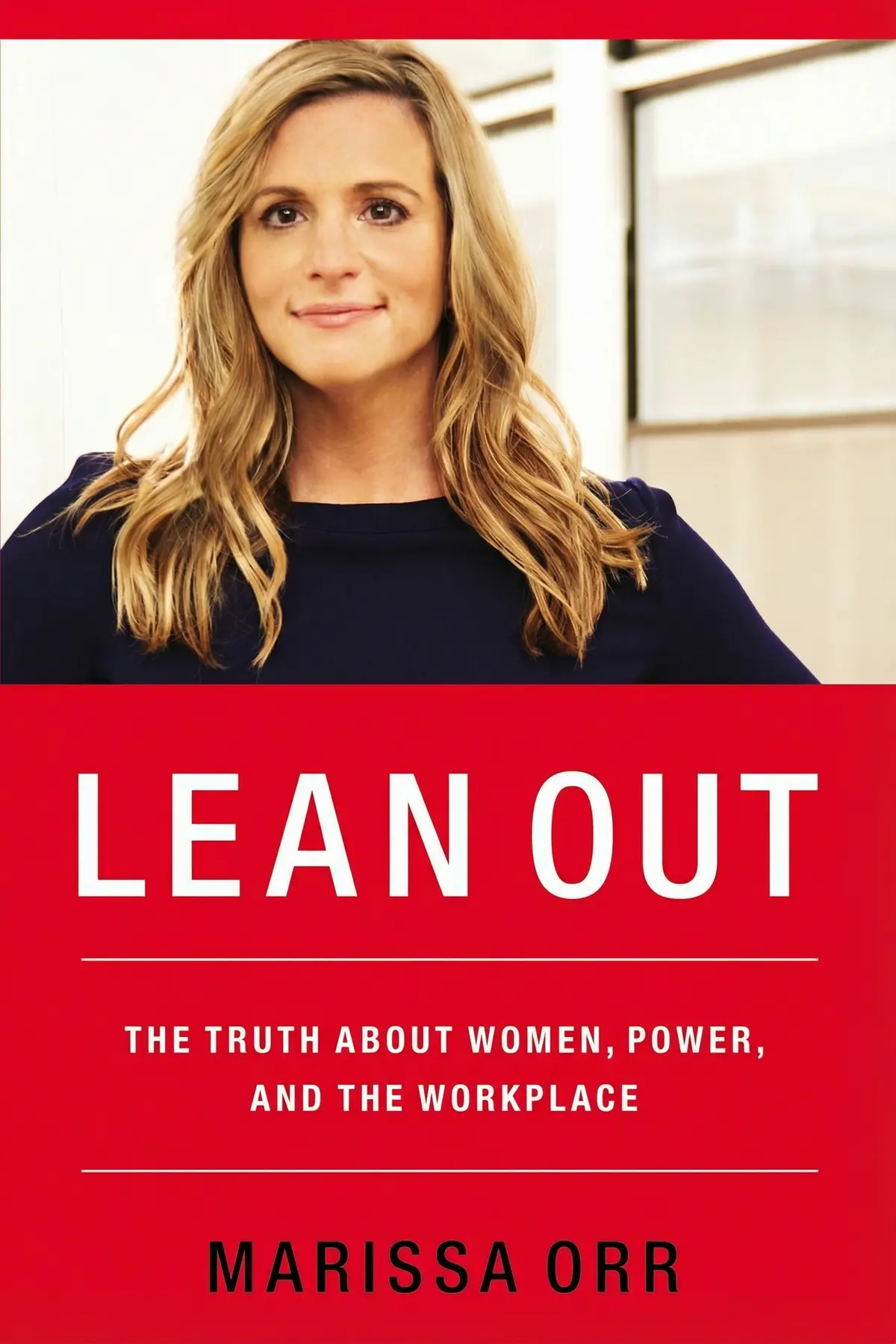
Lean Out offers a provocative critique of modern corporate feminism, arguing that the push for women to mimic masculine traits ignores systemic flaws. Marissa Orr suggests reshaping workplaces to value collaboration and influence over traditional authority.
1 min 52 sec
For the past decade, the dominant narrative for women in the professional world has been defined by a single, powerful command: lean in. We have been told that the secret to breaking the glass ceiling is a mixture of individual grit, unshakeable confidence, and a willingness to adopt the same aggressive tactics that have traditionally propelled men to the top. The underlying assumption is that the workplace is a neutral meritocracy, and if women aren’t reaching the summit, it must be because they aren’t trying hard enough or aren’t playing the game the right way.
But what if the game itself is the problem? In Lean Out, Marissa Orr offers a necessary and sharp departure from this conventional wisdom. She suggests that the current brand of corporate feminism isn’t actually helping women; instead, it’s essentially asking them to stop being themselves and start acting like the very ‘alpha males’ who created the lopsided power structures in the first place. Through this exploration, we begin to see that the push for women to conform to masculine standards is just a different, more veiled form of the same old bias.
This summary will walk through the core arguments that challenge our ideas of ambition, power, and success. We will examine why common diversity programs often miss the mark, how the rules of school differ so drastically from the rules of the office, and why the most successful teams are built on psychological safety rather than cutthroat competition. By the end, we will see a new vision for the workplace—one where the goal isn’t to change the people to fit the system, but to change the system to better serve the people. It’s a journey from individual blame to systemic accountability, and it starts with a simple, radical question: Why are we telling women to change when it’s the corporations that are broken?
2 min 21 sec
Traditional advice often encourages women to mimic masculine traits to succeed, but does this actually help achieve true equality or just reinforce existing norms?
2 min 20 sec
The lack of women in top executive roles is often attributed to a lack of desire, but what are the external factors driving this choice?
2 min 08 sec
Is confidence truly about being the loudest person in the room, or have we mistaken performative masculine behavior for professional competence?
2 min 13 sec
Modern business relationships often resemble alliances more than genuine connections, and this shift significantly disadvantages those who value true collaboration.
2 min 21 sec
Women dominate in the educational sphere but often stall in the corporate world. The reason lies in how we measure and reward achievement.
2 min 11 sec
There are two distinct ways to exercise power in the workplace, and our current obsession with one of them is driving talented people away.
2 min 33 sec
History shows that campaigns aimed at changing individual behavior rarely work, yet corporate diversity programs continue to double down on this failed strategy.
2 min 28 sec
The most effective teams aren’t those filled with aggressive individualists, but those that foster an environment of trust and authenticity.
2 min 11 sec
The message of Lean Out is a clarion call for a fundamental shift in how we think about gender and the workplace. For too long, we have accepted a narrative that places the burden of change squarely on the shoulders of women. We have treated the lack of female leadership as a personal failing—a lack of confidence, a lack of ambition, or a failure to ‘play the game’—rather than as a symptom of a systemic mismatch. By dismantling the myths of the ‘confidence gap’ and the ‘ambition gap,’ we can finally see that women aren’t the problem that needs to be solved. The real problem is a corporate culture that remains stubbornly anchored in a narrow, outdated, and often toxic definition of success.
True progress won’t be achieved by more workshops or ‘ban bossy’ campaigns. It will be achieved when corporations stop trying to mold women into ‘alpha males’ and start valuing the unique perspectives and collaborative strengths they bring to the table. This means moving toward a model of influence rather than raw authority, rewarding genuine competence over performative confidence, and creating structural changes that allow for a sustainable work-life balance for everyone. It’s about creating a workplace that is psychologically safe, truly meritocratic, and human-centered.
As an actionable step, consider the way you approach negotiation and leadership in your own life. We are often told to be unyielding and to view every negotiation as a battle to be won. But what if you ‘negotiated like a woman’? What if you focused on finding a win-win compromise that preserved the relationship while achieving the goal? What if you valued influence over the simple power to give orders? By embracing these traits—whether you are a woman or a man—you can begin to model the very changes that our workplaces so desperately need. The goal is no longer to just get a seat at a broken table; it’s to build a better table for everyone.
For years, the rallying cry for women in business has been to lean in, speak louder, and demand a seat at the table. In Lean Out, Marissa Orr argues that this advice is not only exhausting but fundamentally misguided. Drawing on her fifteen years of experience at tech giants like Google and Facebook, Orr exposes how corporate diversity initiatives often fail because they focus on fixing women rather than fixing the broken systems they operate within. The book promises a fresh perspective on the gender gap, moving away from the idea that women lack the confidence or ambition to succeed. Instead, it explores how traditional corporate structures are built around masculine norms that reward aggression and transactional relationships. By looking at psychological research and real-world examples, Orr illustrates why the current model of corporate feminism actually reinforces the patriarchy it claims to dismantle. The goal is to envision a workplace that respects diverse strengths, values influence over authority, and recognizes that the problem isn't women—it's the environment.
Marissa Orr is a tech industry veteran with over fifteen years of experience working for major corporations, including Google and Facebook. Throughout her career, she navigated the complexities of corporate culture while raising three children as a single mother. Her firsthand observations of the tech world’s attempts to close the gender gap led her to critique mainstream corporate feminism and advocate for systemic workplace reform.
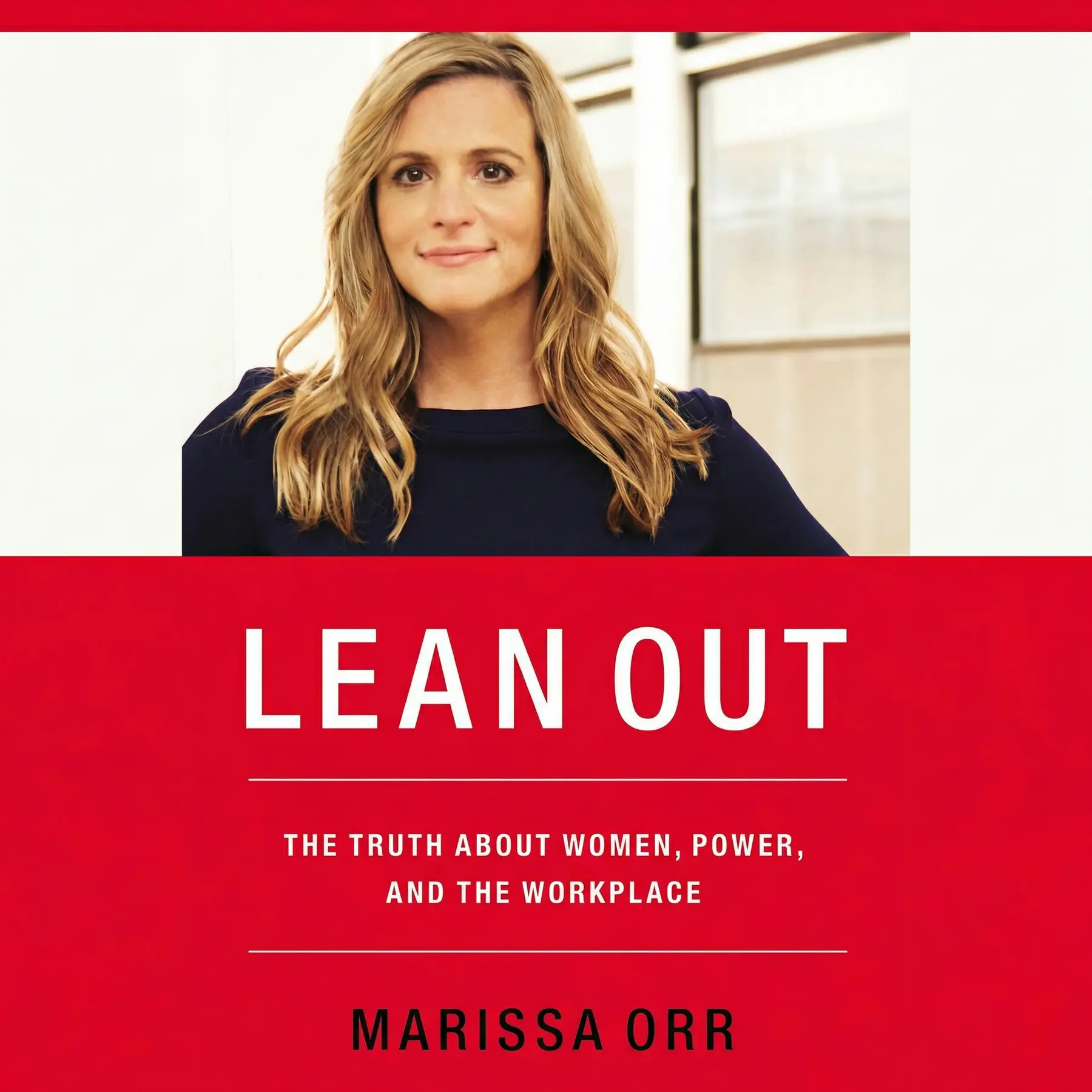
Listeners find the material well-supported by behavioral science and extensive research, which helps shift their mindsets. The writing is also approachable and punctuated by clever humor, and one listener considers it a mandatory read for women in the workplace. Additionally, they value the author’s use of personal anecdotes, with one review highlighting the book's unique perspective on the dysfunction found in corporate life.
Ever wonder why the standard advice for women in business feels so hollow and exhausting? Marissa Orr provides a refreshing antidote to the 'Lean In' philosophy by questioning why we are trying to fix the women instead of fixing the broken system. Her writing style is incredibly easy to digest, blending behavioral science with a self-deprecating humor that made me laugh out loud. I particularly loved the focus on empathy and consensus-building as underappreciated strengths that should be valued in leadership roles. Instead of demanding we change our personalities to fit a rigid hierarchy, she encourages us to define success on our own terms. This book changed my entire perspective on my career trajectory and relieved a lot of the hidden guilt I felt about not wanting to be a CEO. It is truly an essential guide for anyone who feels out of place in a male-dominated corporate culture.
Show moreAfter hearing the author speak at a conference, I knew I had to grab a copy immediately to see if her writing was as sharp as her talk. It did not disappoint! Orr has a gift for taking complex behavioral science concepts and making them applicable to the everyday office grind. She captures the sentiments so many of us feel but can’t quite put into words. This isn't just a 'women's book'; it’s a critique of how we value human capital in the 21st century. The way she weaves her personal journey through Facebook with broader observations about leadership is masterful. Not gonna lie, I highlighted nearly half the book because so many sentences felt like they were written specifically for me. It is easily one of the most honest books on business I have read in years. Every manager, regardless of gender, should have this on their shelf to understand why their best people are leaving.
Show moreFinally got around to finishing this after seeing it recommended on several leadership blogs. The author’s voice is remarkably authentic, and she manages to articulate the exact frustrations I’ve felt during my ten years in tech. Her insights into how reward systems are skewed toward specific personality traits are spot on. Frankly, the way she deconstructs corporate dysfunction is more valuable than any standard HR manual I have ever been forced to read. I did find some of her generalizations about human resources departments to be a bit broad and slightly unfair, but her core message remains powerful. The blend of personal stories from her time at Google and research on motivation kept the pacing brisk and engaging. It is a thought-provoking read that will definitely spark some uncomfortable but necessary conversations in the office. I wish I had read this right after college graduation.
Show moreWow, Marissa Orr really doesn't hold back when describing the 'broken' nature of our current work culture. Her honesty regarding the pressure to conform to a specific type of 'power' is a breath of fresh air in a sea of corporate platitudes. The writing is punchy, smart, and filled with a sarcasm that hits the mark more often than not. I found the sections on how we define success to be the most moving parts of the book. Personally, I have struggled with the idea that my desire for balance was a sign of weakness, and this book helped me realize that’s a systemic lie. My only minor gripe is that the narrative flow can be a bit disjointed in the middle sections. Regardless, her message about individual values is something every working professional needs to hear. It is an empowering call to stop playing a game that was never designed for us to win.
Show moreLook, we’ve been having the same conversation about women in the workplace for decades, but Orr actually adds something new. She moves past the tired tropes of 'confidence gaps' and looks at the underlying structures that drive corporate behavior. I found the analysis of how competition is framed in the office to be particularly enlightening. Her tone is casual and inviting, making the medicine of her systemic critique go down much easier. I did find myself wanting more detail on her experiences at Facebook, as those sections were the most riveting. The book occasionally leans too heavily on her own perspective, but her insights are grounded in enough reality to be genuinely useful. It’s a smart, funny, and deeply human look at what it means to work today. I finished the book feeling much more hopeful about my own career choices. This is a must-read for anyone feeling burnt out by the corporate machine.
Show moreThis book offers a fascinating look at the internal politics of Silicon Valley giants like Facebook and Google, but it often struggles to balance personal grievances with broader systemic analysis. To be fair, Orr makes several compelling points regarding how corporate dysfunction specifically penalizes those who don't fit the aggressive, extroverted mold. I appreciated her rejection of the typical 'act like a man' advice that dominates most business bestsellers. However, the reliance on her own lived experience sometimes feels like a double-edged sword. While her anecdotes are witty and sharp, they don't always translate into a universal solution for the gender gap in management. I found her dismissal of certain peer-reviewed studies a bit hand-wavy, even when her intuition felt right. It is a solid, provocative read for any woman questioning the current corporate ladder, though it lacks the data-driven punch I was hoping for.
Show moreAs someone who has spent fifteen years in middle management, I found the chapters on talent evaluation particularly biting and relevant. Orr does a great job of identifying why so many talented women eventually decide to 'lean out' of the traditional career path. Her critique of the modern workplace as a system that prioritizes ego over results is something that resonated deeply with my own observations. Look, the truth is that the book is quite anecdotal, which makes it feel intimate but occasionally less than authoritative. I appreciated her wit, but I sometimes felt like I was listening to a friend vent over drinks rather than reading a strategic business book. It is a quick read, and her perspective as a mother in a high-pressure environment is valuable. I would recommend it for the perspective shift, even if I didn't agree with every single conclusion she drew about gender dynamics.
Show morePicked this up because I was tired of being told to 'lean in' to a system that doesn't seem to want me there. The author makes some very strong points about the psychological differences in how people approach power and competition. It’s not a boring textbook; the prose is lively and she integrates research on motivation in a way that is easy to follow. Gotta say, I enjoyed the 'insider' feel of her stories from her time at Google, though they occasionally felt a bit settled-score-ish. Her argument that we should value empathy and collaboration is great, but she doesn't offer many practical steps for changing a stubborn organization from the bottom up. It’s more of a philosophical shift than a 'how-to' guide for the corporate world. All in all, it's an important addition to the conversation, even if it feels incomplete in its solutions.
Show moreThe truth is, while I appreciated the counter-perspective on traditional business tropes, the narrative structure felt a bit disjointed. I enjoyed the author's personality and her willingness to go against the grain of the current zeitgeist regarding women in leadership. She brings up excellent points about how the definition of 'ambition' is often too narrow. However, the transition between her personal anecdotes and the academic research felt clunky at times. To be fair, her humor keeps the pages turning, and she never becomes overly preachy or academic. I think the book serves as a great starting point for a larger discussion about workplace culture reform. It’s a bit light on actual data compared to some of its competitors, but it makes up for it with heart and relatability. It’s a 3.5-star read for me, rounded down because I wanted more concrete examples of her theories in action.
Show moreNot what I expected based on the marketing blurb, which promised a deep dive into behavioral science. While the author has an impressive resume at major companies, the book felt more like a collection of personal blog posts than a rigorous thesis. To be direct, her arguments against mainstream feminism often rely on logical leaps that aren't backed up by much more than her own office interactions. I struggled with the way she dismissed decades of research with a few sarcastic remarks. There were moments of genuine insight regarding how corporations value the wrong traits, but those were buried under layers of cynicism. If you enjoy memoirs about working at Facebook, you might find this entertaining, but don't expect a comprehensive roadmap for reform. It felt a bit one-sided and lacked the macro-level perspective needed to really change the industry. I was disappointed by the lack of actionable data.
Show moreJessica Valenti



Johny Pitts

bell hooks

Margaret Heffernan
AUDIO SUMMARY AVAILABLE
Get the key ideas from Lean Out by Marissa Orr, plus 5,000+ more titles in English and Thai.







