

A Bigger Prize: How We Can Do Better Than the Competition
Margaret Heffernan
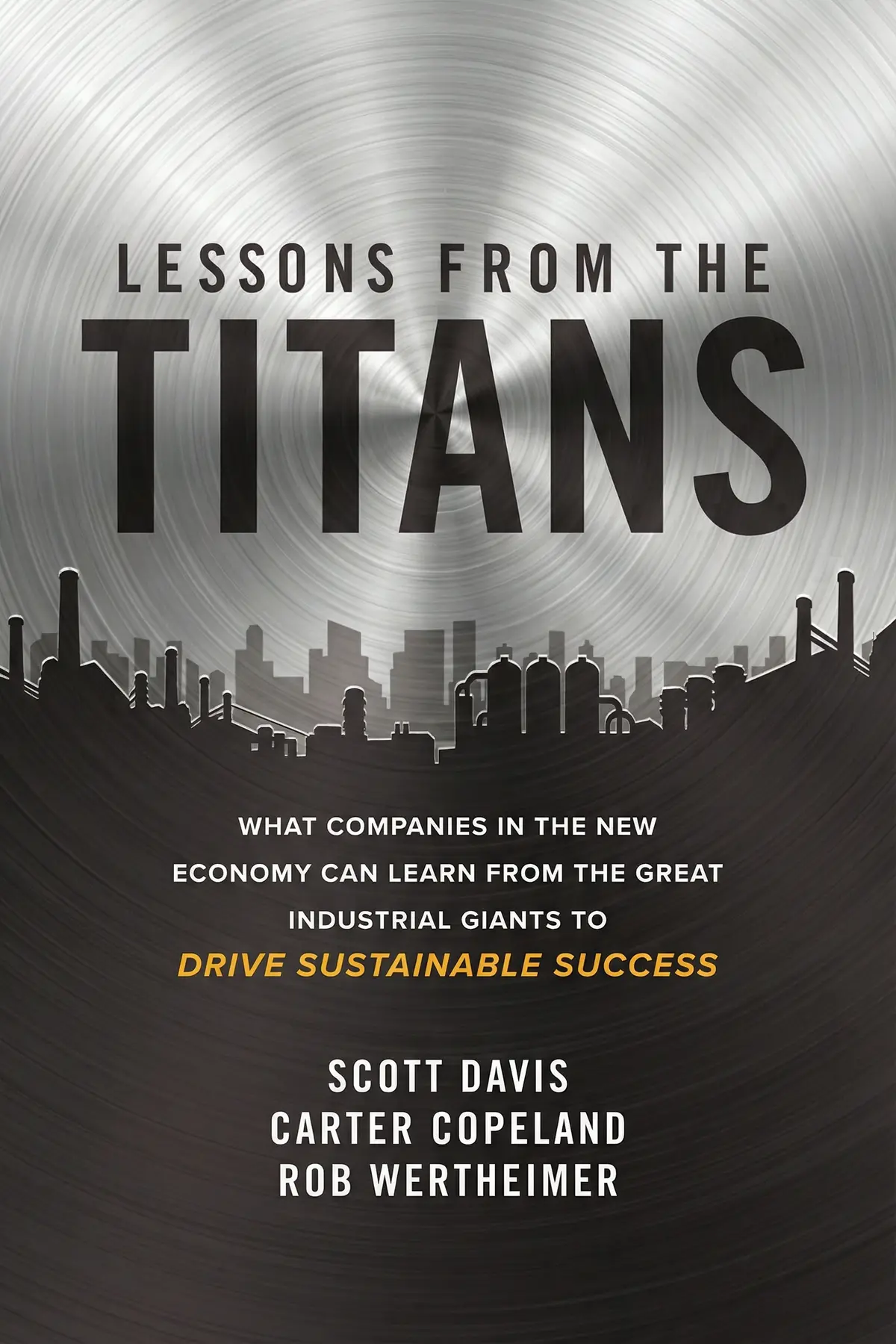
Lessons from the Titans explores the lifecycle of industrial giants. It examines how leadership, culture, and capital discipline determine whether massive corporations thrive through economic shifts or collapse under their own weight.
1 min 40 sec
In the modern business landscape, we are often told that the only way to survive is through radical disruption. We look at the meteoric rise of Silicon Valley giants and assume the rules of the game have changed forever. However, if we peel back the curtain on the massive industrial giants that built the modern world, we find a different story. The reality is that the downfall of a corporate titan is rarely the result of a single technological breakthrough by a competitor. More often than not, it is the result of a slow, internal decay fueled by arrogance, a lack of transparency, and the abandonment of core operational disciplines.
In this exploration of Lessons from the Titans, we are going to look at the spectacular arcs of companies like General Electric, Boeing, and Honeywell. These aren’t just stories about manufacturing widgets or leasing equipment; they are case studies in the high-stakes world of corporate leadership. We will see how a single strategic deal can set a company on a path toward decades of dominance, and how a shift in company culture can lead a global powerhouse to the brink of insolvency.
What makes this journey particularly valuable is that it provides a bridge between the old economy and the new. Whether you are running a startup or a multinational conglomerate, the principles of cash flow, cost management, and capital deployment remain universal. We’ll look at the legacy of Jack Welch, the controversial tenure of Jeffrey Immelt, and the remarkable turnaround of Honeywell under Dave Cote. Along the way, we’ll uncover why some organizations can weather any storm, while others crumble as soon as the wind changes. Get ready to understand the mechanics of industrial greatness and the pitfalls of corporate hubris.
2 min 48 sec
Discover how a puzzling multi-billion dollar deal for an electronics company turned out to be a masterclass in strategic maneuvering that yielded a television network for free.
2 min 34 sec
What happens when an industrial giant turns into a shadow bank? Learn how a lack of oversight and creative accounting created a ticking financial time bomb.
2 min 25 sec
Explore the internal environment where questioning the boss was a career-ending move and image mattered more than operational reality.
2 min 36 sec
Analyze how an obsession with de-risking and financial targets can lead to engineering failures and the loss of public trust.
2 min 25 sec
How a company facing massive debt and lawsuits transformed into a high-performing leader by focusing on local solutions and rigorous internal systems.
2 min 23 sec
Witness the transformation of a fragmented group of local branches into a cohesive, data-driven national leader through small, continuous improvements.
2 min 32 sec
What do all these giants have in common? Learn the three core pillars that separate sustainable winners from temporary wonders.
2 min 08 sec
As we conclude our journey through the triumphs and tribulations of these industrial giants, the throughline becomes clear: long-term success is a marathon of discipline, not a sprint of financial engineering. We’ve seen how the strategic foresight of Jack Welch built an empire, but we’ve also seen how a culture of arrogance and a lack of transparency can bring even the mightiest institution to its knees. The story of GE serves as a powerful warning that when a company stops being an expert in its core products and starts being an expert in its own public image, the end is often near.
On the other hand, the remarkable turnarounds at Honeywell and United Rentals offer a roadmap for any business facing a crisis. These companies didn’t find a magic bullet; they found their way back by returning to the basics. They embraced the hard work of lean manufacturing, they broke down silos to foster cooperation, and they focused on the tiny, incremental improvements that eventually add up to a massive competitive advantage. They proved that a company’s greatest asset isn’t just its intellectual property or its physical equipment, but the collective discipline and humility of its people.
The most actionable takeaway for any leader or aspiring entrepreneur is to shift your focus from the superstars to the backbone of your organization. It is easy to obsess over the top five percent of your talent, but sustainable growth is driven by the middle eighty percent. If you can create a system where the average employee is empowered to improve their performance by just ten percent through better processes and clearer goals, you will generate an impact that dwarfs any individual breakthrough.
Ultimately, Lessons from the Titans teaches us that the principles of sound business are timeless. Whether you are building the next generation of jet engines or the next great software platform, your survival depends on your ability to manage costs, deploy your capital wisely, and maintain a culture that values truth over theater. By learning from the mistakes and successes of these industrial legends, you can build an organization that is not just a temporary wonder, but a true titan for the ages. Mark this as finished, and take these lessons with you into your next big challenge.
This summary delves into the histories of major industrial players like General Electric, Boeing, and Honeywell. It reveals that the success of these Titans isn't just about the products they make, but about the rigor of their internal systems and the health of their corporate cultures. Through detailed case studies, the narrative illustrates how legendary leaders like Jack Welch drove growth and how successors like Jeffrey Immelt presided over declines. You will learn the fundamental differences between sustainable growth and success theater, where financial engineering masks operational decay. The story explores why some companies, like United Rentals and Honeywell, were able to stage miraculous turnarounds by embracing lean principles and local autonomy, while others stumbled by ignoring manufacturing quality in favor of lobbying and debt. By the end, you’ll understand the core pillars of industrial success: disciplined cost management, humble leadership, and the effective deployment of capital. This is a blueprint for any leader looking to build a business that can survive the pressures of the modern economy.
Scott Davis is the Chairman and CEO of Melius Research, bringing over 25 years of Wall Street experience. He previously led the Global Industrials Research Group at Morgan Stanley as a Managing Director. Lessons from the Titans is his first book, written alongside his colleagues Carter Copeland and Rob Wertheimer, who are also part of the Melius Research team.
Listeners find the book provides useful lessons that can be applied across various industries, with one review highlighting its strong emphasis on process discipline. Furthermore, the text is thoroughly researched and enjoyable to read, with one listener characterizing the work as "wildly entertaining narratives." Listeners also appreciate the authors' writing style, with one noting it is written by articulate former sell-side analysts, and they value the investment insights, as one review mentions its relevance for both public and private markets investors.
Rarely do you find a book written by sell-side analysts that actually captures the soul of the industrial sector. The authors provide a masterclass in how culture and process discipline drive long-term value. I found the investment frameworks particularly sharp, especially the focus on metrics like inventory turns and incremental margins. Most business books are fluff, but this offers a rigorous look at how Danaher and Honeywell actually operate. The breakdown of the Danaher Business System (DBS) is the best I've seen in print. If you want to understand why some conglomerates thrive while others like GE crumble, this is your roadmap. It’s a deep dive that rewards careful reading.
Show moreWhat surprised me most was how the authors turned dry industrial data into wildly entertaining narratives. You wouldn't think a chapter on Stanley Black & Decker would be a page-turner, but the focus on 'skunk works' projects was fascinating. The book excels at explaining the 'why' behind corporate evolution. I loved the emphasis on humility as a leadership trait. In an era of celebrity CEOs, hearing about managers who focus on 'first pass' rates and safety is a breath of fresh air. This is an essential toolkit for both public and private market investors. Truly a solid read that I'll be referencing for years.
Show moreFinally got around to finishing this and the chapter on Transdigm alone is worth the price of admission. The authors explain the aerospace aftermarket and regulatory moats with incredible clarity. It’s rare to find such a blunt assessment of how pricing power and niche monopolies actually work. I’ve been an investor since the late 70s, and I still learned a lot about the nuances of Lean manufacturing. The book strikes a perfect balance between being an educational resource and an entertaining read. The concluding chapter ties all the 'lessons learned' together perfectly. This is high-level analysis that stays accessible throughout. Highly recommended for any serious portfolio manager.
Show moreIndustrial stocks aren't usually known for being the subject of page-turners, but Davis and his co-authors pulled it off. This book is a fascinating look at the 'titans' that build the world around us. Not gonna lie, I expected something much drier. Instead, I got a series of insightful stories about grit, failure, and the relentless pursuit of efficiency. The breakdown of Caterpillar’s inability to forecast cycles was particularly enlightening. It’s a great reminder that even the biggest players can stumble if they lose their lean edge. The authors' style is engaging and authoritative. It's a must-read for anyone who wants to understand the backbone of the economy.
Show moreLook, if you're an investor, you need this on your shelf. The authors use their sell-side experience to point out the red flags that most people miss until it's too late. The GE sections are infuriating but necessary, showing how analysts were coerced into ignoring negative data for years. It’s a cautionary tale about the dangers of executive celebrity and wasteful spending. Beyond the drama, the book offers a clear investment framework based on humility and continuous improvement. It’s well-researched and avoids the fluff usually found in business biographies. You get real metrics, real history, and real lessons. This is easily one of the best business books I've picked up in a decade.
Show moreAs an operator in the industrial space, I found these historical case studies incredibly grounded. The authors don't just celebrate success; they dissect the failure of GE with refreshing honesty. It connects the dots between leadership decisions and the resulting financial dynamics in a way that feels authentic to the shop floor. I do think some of the stories are well-worn in investing circles, leading to a bit of repetition in the middle chapters. However, the lessons on 'lean' and capital allocation are essential for anyone trying to fix a cost base. It’s not just for Wall Street guys. It’s for anyone trying to build a disciplined organization.
Show morePicked this up after seeing a recommendation on Twitter and it mostly lived up to the hype. The writing style is articulate, clearly coming from people who have spent decades grilling management teams. To be fair, if you’re looking for high-frequency data tables, you might find it a bit ‘squishy’ in parts. But the qualitative insights on Boeing and United Technologies are gold. I particularly appreciated the warning signs for investors, like CEOs pursuing mega-mergers in their twilight years. It’s a bit of an old-school investing perspective, but the logic is sound. It’s a refreshing deviation from the tech-heavy narratives dominating the market today.
Show moreThe chapter on Danaher is essentially a manual for how to run a disciplined business. I appreciated how the authors highlighted that most companies talking about culture don't actually have one. It’s a sobering look at the industrial landscape. My only gripe is that it feels a bit repetitive if you read it cover-to-cover in one sitting. Some of the case studies start to blend together after a while. Still, the focus on R&D investment and capex-to-depreciation ratios provides a great framework for screening stocks. It’s a solid, practical book for anyone who values process over personality. It helped me connect many dots regarding my own employer’s leadership.
Show moreEver wonder how these massive blue-chip companies actually function behind the scenes? This book provides the answer through ten detailed case studies. I work for one of the included companies, and the insights into our corporate history were spot on. The authors describe the 'defense before offense' mindset of Honeywell and it perfectly explains our internal incentives. While the narrative can feel a bit dismissive of modern tech companies at times, the long-term perspective is valuable. It’s a sobering reminder that turnarounds take time—usually five years or more. It’s not perfect, but it’s a very useful tool for understanding industrial dynamics. I wish I’d read this during my orientation.
Show moreFrankly, I was disappointed given the glowing reviews I’d seen elsewhere. This felt like a typical business book where the analysis could have been so much deeper. These are public companies with decades of freely available data, yet the authors stayed at the surface level far too often. I wanted more on how strategy specifically translated into return on capital and FCF growth. Instead, we got a lot of high-level talk about culture and leadership. The GE chapter was okay, but I’ve read much better post-mortems on Immelt’s tenure. It felt like average sell-side commentary stretched into a book. It’s a great idea that just didn’t hit the mark for me.
Show moreMargaret Heffernan

Joseph A. Maciariello



Deborah Gruenfeld
Mike Michalowicz
AUDIO SUMMARY AVAILABLE
Get the key ideas from Lessons from the Titans by Scott Davis, plus 5,000+ more titles in English and Thai.







