
Abundance: The Inner Path to Wealth
Deepak Chopra
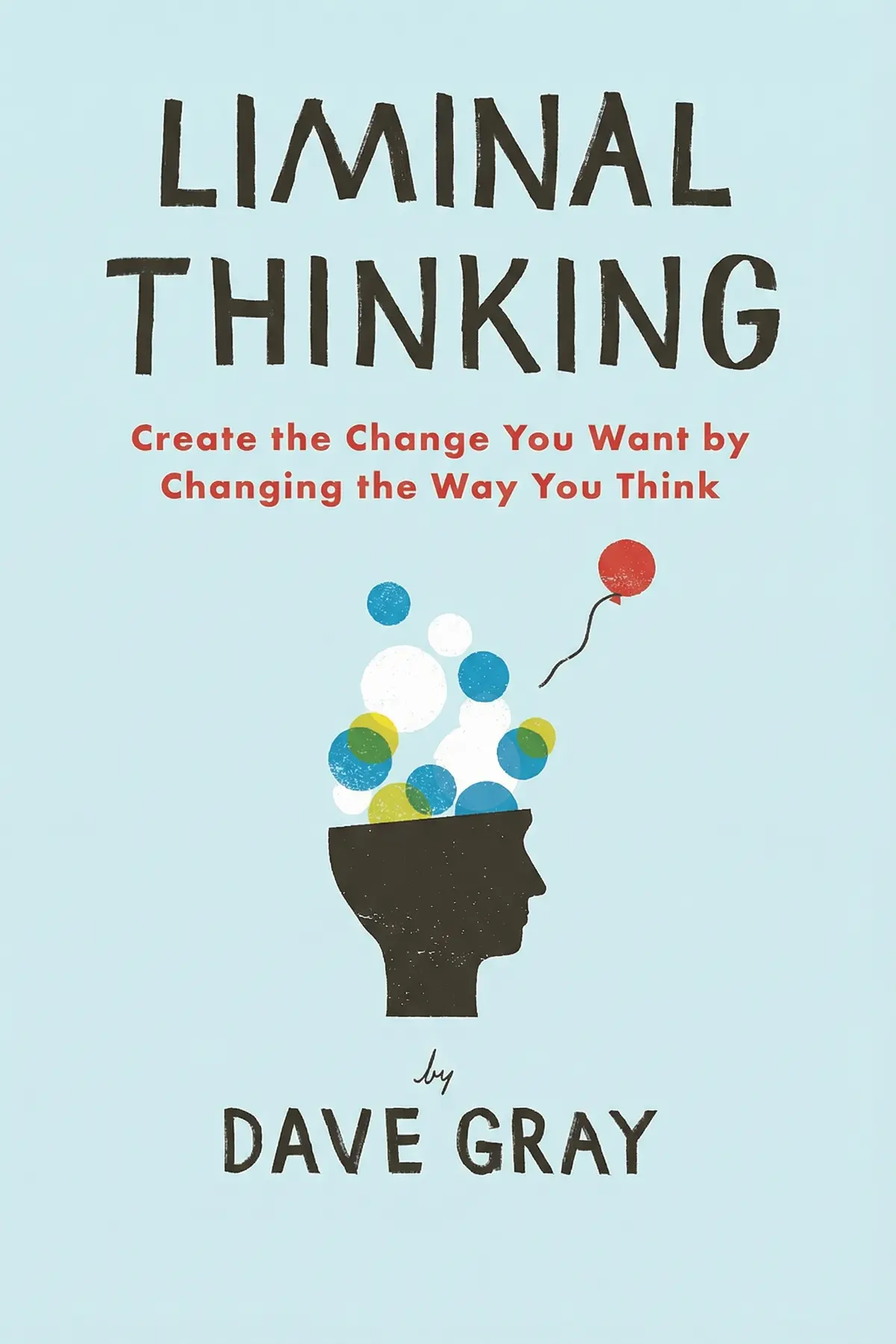
Liminal Thinking reveals how our internal belief systems dictate our reality. Learn to identify the invisible boundaries of your mind and use practical tools to foster collaboration, innovation, and personal growth.
2 min 01 sec
Imagine for a moment a man in his late twenties. He is twenty-nine years old, sitting in a bathrobe, and suffering through a miserable chest cold. Every few minutes, a racking cough shakes his frame. Despite the physical toll, he reaches for another cigarette. He is caught in the cycle of addiction, feeling powerless to stop even as his body rebels. But then, a mental shift occurs. He doesn’t just see himself in the present; he catches a glimpse of his future self—an old man, still coughing, still struggling to breathe, still trapped.
This sudden flash of insight, a moment of profound internal clarity, allowed Dave Gray to do what he had failed to do many times before: he quit smoking for good. This wasn’t just a change in behavior; it was a fundamental shift in his reality. Once he realized he could change something as deep-seated as an addiction, the dominoes began to fall. He realized that if this part of his life wasn’t fixed in stone, perhaps nothing was. He ended a stagnant relationship, moved to a new city, and reinvented his career.
This is the core of what we call liminal thinking. The term “liminal” comes from the Latin word for threshold—it represents that thin line or doorway between where you are and where you could be. Our beliefs act as the walls and boundaries of our mental world. They provide us with structure and safety, but they also limit our view. Liminal thinking is the art of standing on those thresholds, looking past the boundaries, and finding the hidden possibilities that exist just beyond our current reach.
In the following minutes, we are going to explore how our beliefs are constructed, why we defend them so fiercely even when they hurt us, and, most importantly, how we can systematically dismantle the ones that no longer serve us. By the end, you’ll have a new set of tools to help you navigate conflict, foster innovation, and create the change you want to see in the world.
2 min 19 sec
Discover why our version of the truth is rarely the whole story and how our personal experiences create a limited model of the world around us.
2 min 20 sec
Learn how our deepest convictions create blind spots and why we often ignore evidence that contradicts our established worldview.
2 min 32 sec
Explore the first steps of liminal practice by challenging your own objectivity and creating the safety required for others to speak their truth.
2 min 37 sec
Learn how to use multiple perspectives to uncover hidden truths and how asking the right questions can bridge the gap between problems and solutions.
2 min 51 sec
See how acting ‘as if’ a new reality already exists can break down institutional barriers and how small risks can lead to significant cultural shifts.
1 min 44 sec
Explore how to maintain these practices for long-term growth and why embracing the threshold is a lifelong journey.
1 min 22 sec
As we wrap up this exploration of Dave Gray’s insights, let’s return to the core message: our beliefs are the architects of our reality, but we are the architects of our beliefs. We often live inside mental houses built long ago, ignoring the fact that we have the power to renovate, expand, or even move to a new location. Liminal thinking isn’t about finding one ‘correct’ way to see the world; it’s about developing the flexibility to move between different perspectives.
You’ve learned how to identify the blind spots that certainty creates and how to use tools like the SCARF model to foster safety and collaboration. You’ve seen how small acts of defiance and the willingness to act ‘as if’ can dismantle even the most rigid institutional barriers. The most important takeaway is that change doesn’t require a miracle—it requires a shift in focus.
Take a moment today to identify one belief you hold that feels like an absolute truth. Ask yourself: ‘What if the opposite were true? What data am I filtering out to keep this belief alive?’ By standing on that threshold and questioning your own certainty, you take the first step toward a more open, creative, and fulfilling life. The world is much larger than the slice you are currently seeing. All you have to do is look beyond the edges.
Have you ever wondered why two people can look at the exact same situation and walk away with two completely different interpretations? In Liminal Thinking, Dave Gray explores the hidden mechanics of human belief and explains why we often find ourselves trapped in rigid ways of thinking. The book introduces the concept of 'liminality'—the threshold between one state and another—and shows how staying at these mental edges allows us to see opportunities that others miss. This summary provides a roadmap for anyone looking to drive change in their personal life or within a large organization. By breaking down the six principles of how beliefs are formed and the nine practices for shifting them, Gray offers a toolkit for overcoming 'doom loops' and blind spots. The promise of the book is simple yet profound: by changing the way you think, you can fundamentally change the reality you inhabit. Whether you are a leader trying to align a divided team or an individual seeking a breakthrough, these insights help you dismantle defensive thinking and build a more open, effective way of interacting with the world.
Dave Gray is a visionary leader and the founder of XPLANE, a consultancy that uses visual thinking to help global corporations and startups achieve organizational alignment and clarity. With a background rooted in design and leadership, Gray has spent his career helping people navigate complex systems. He is also the acclaimed author of the best-selling books Gamestorming and The Connected Company.
Listeners find this work both profound and accessible, valuing its functional methods and straightforward prose. The content is richly illustrated, featuring handwritten diagrams mentioned by one listener, and listeners appreciate the emotional depth, which one listener characterizes as an informed love letter. They commend the book's inventiveness, with one listener highlighting its creative solutions, while another values the way it renders intricate subjects understandable.
Dave Gray has crafted what feels like an informed love letter to the human mind. The book avoids the clinical dryness of most psychology texts, opting instead for a warm, accessible tone that encourages deep self-reflection. I was particularly struck by the idea that we must assume we are not objective in our observations. By acknowledging our own blind spots, we open the door to genuine change and better relationships. It’s not just a business book; it’s a manual for being a more conscious human being. The simple, handwritten diagrams throughout the chapters made the complex concepts feel much more approachable. I found myself slowing down to really process his points about how we construct our own realities. This is a must-read for anyone feeling stuck in their current patterns.
Show moreEver wonder why your dog barks at every stranger but wags his tail for you? Gray uses the brilliant example of the 'delight loop' to explain how we can rewire our conditioning through new experiences. I loved the story about using bones to change a dog's association with other animals from threat to reward. This book is packed with these kinds of creative solutions that are immediately applicable to real life. It moves beyond theory and gives you a sequence of insights to help you make wiser choices. The focus on 'liminal moments' as sources of creativity was a huge lightbulb moment for me. I’ve already started applying the 'cookies and tea' strategy to my more difficult team meetings. It’s a deceptively simple book that carries a lot of emotional weight.
Show moreThe concept of '400 billion bits' of information being processed by our brains every second really put things into perspective for me. It’s a staggering number that reinforces Dave Gray’s point about how narrow our conscious focus actually is. This book is beautifully illustrated with handwritten diagrams that make the reading experience feel personal and intimate. Personally, I found the advice on disrupting patterns and exploring alternative beliefs to be exactly what I needed for the New Year. The author manages to make complex topics like heuristic thinking feel approachable for a general audience. It's a quick read, but the ideas stay with you long after you close the cover. Gray reminds us that we construct our own boundaries, and therefore, we have the power to dismantle them. Truly a gem.
Show moreFinally got around to reading this after a friend recommended it for my creative block, and I’m so glad I did. The central premise—that we live in a world of our own construction—is both terrifying and incredibly liberating. I loved the distinction between facts and stories, and how stories are the only real way to bridge the gap between different belief systems. The book is short, punchy, and filled with the kind of 'aha' moments that usually take years of therapy to reach. It’s written with a clarity that is rare in the self-help genre, avoiding the usual 'woo-woo' language in favor of practical logic. Even the sections on business strategy felt deeply human and relevant to my personal life. If you feel like you’re stuck in a rut, this is the shovel you need to dig yourself out. Absolutely brilliant.
Show moreThe visual component of this book is what truly sets it apart from other productivity or mindset guides. Dave Gray uses these charming, handwritten diagrams to break down the Toyota Way and other complex systems into something digestible. I appreciated the practical approach to identifying our 'doom loops' and how they keep us stuck in failing routines. The writing style is simple and direct, which makes it an easy read over a weekend. While some sections felt a little light on the scientific details, the overall message about reframing beliefs is powerful. It served as a great reminder that the 'obvious' is often just a fiction we've built for ourselves. I’ll definitely be keeping this on my shelf for when I need a quick mental reset.
Show moreAs someone who devours psychology books, I found this to be a helpful companion to the works of Kahneman and Ariely. Gray focuses specifically on how our internal belief systems create invisible barriers to our own success. He argues convincingly that stories are more effective than facts when you're trying to promote a new belief, which is a vital lesson for any leader. The writing is incredibly concise, almost to a fault, but it ensures that the core message doesn't get lost in jargon. I did wish he had delved more into the science of NLP instead of just dancing around the terminology. However, the actionable insights provided are well worth the time. It’s an excellent tool for anyone looking to increase their self-awareness and break out of rigid thinking.
Show morePicking this up for the office was a gamble, but it turned out to be a very insightful tool for our management team. The section on how difficult conversations can be softened by something as simple as a warm cup of tea was fascinating. It highlights how much our physical environment and small gestures impact our psychological openness. Gray’s explanation of why we get into conflicts—confusing our beliefs with objective reality—is something every professional needs to hear. While the book is definitely on the shorter side, it doesn't feel like it's wasting your time with unnecessary academic fluff. I would have liked more deep dives into the case studies, like the Vietnam War example, but it serves its purpose as a quick catalyst for change. It really forces you to question what you take for granted.
Show moreIs this just common sense rebranded for the TED Talk generation? At times, the book gives off heavy PowerPoint vibes, with big ideas condensed into catchy slogans that don't always hold up under scrutiny. I listened to the audio version at 1.5x speed while commuting, and I think that was the right choice. There’s a lot of talk about suspending judgment and exploring alternative beliefs, which is fine, but it lacks the rigor of books like 'Thinking, Fast and Slow.' To be frank, the list-heavy nature of the chapters made it feel a bit disjointed in audio format. It's a decent enough primer if you're new to the concept of liminality, but seasoned readers of social science might find it a bit thin. Still, it’s well-written for what it is.
Show moreTo be fair, I expected a lot more depth from a title as intriguing as 'Liminal Thinking.' Most of the content feels like recycled NLP concepts that have been given a trendy, modern polish to appeal to the corporate crowd. You could summarize the entire 150-page book into a short blog post about the importance of being open-minded. There is an enormous amount of filler, and even the illustrations feel like they are there just to take up space. While the author is clearly passionate, the 'fresh' ideas aren't actually that fresh if you’ve read any basic cognitive psychology. I struggled to find anything truly actionable that wasn't already common sense. It’s a fast read, but that’s mostly because there isn’t much substance to chew on.
Show moreNot what I expected given the high praise I saw on social media. I found myself getting increasingly frustrated with the lack of new information, eventually giving up after about 60% of the way through. The book is essentially a very long way of saying 'take a risk' and 'be nice to people.' Gray has a nice writing style, but he spends way too much time on filler that doesn't add anything to the core argument. If you've read any other books on mindset or cognitive biases, you can probably skip this one entirely. It feels like a series of blog posts that were stretched out to fill a paperback. I wanted more substance and fewer slogans. It might work for some, but I just didn't connect with it at all.
Show moreDeepak Chopra
Richard Wiseman
William B. Irvine
Andrew D. Thompson
AUDIO SUMMARY AVAILABLE
Get the key ideas from Liminal Thinking by Dave Gray, plus 5,000+ more titles in English and Thai.







