
15 min 53 sec
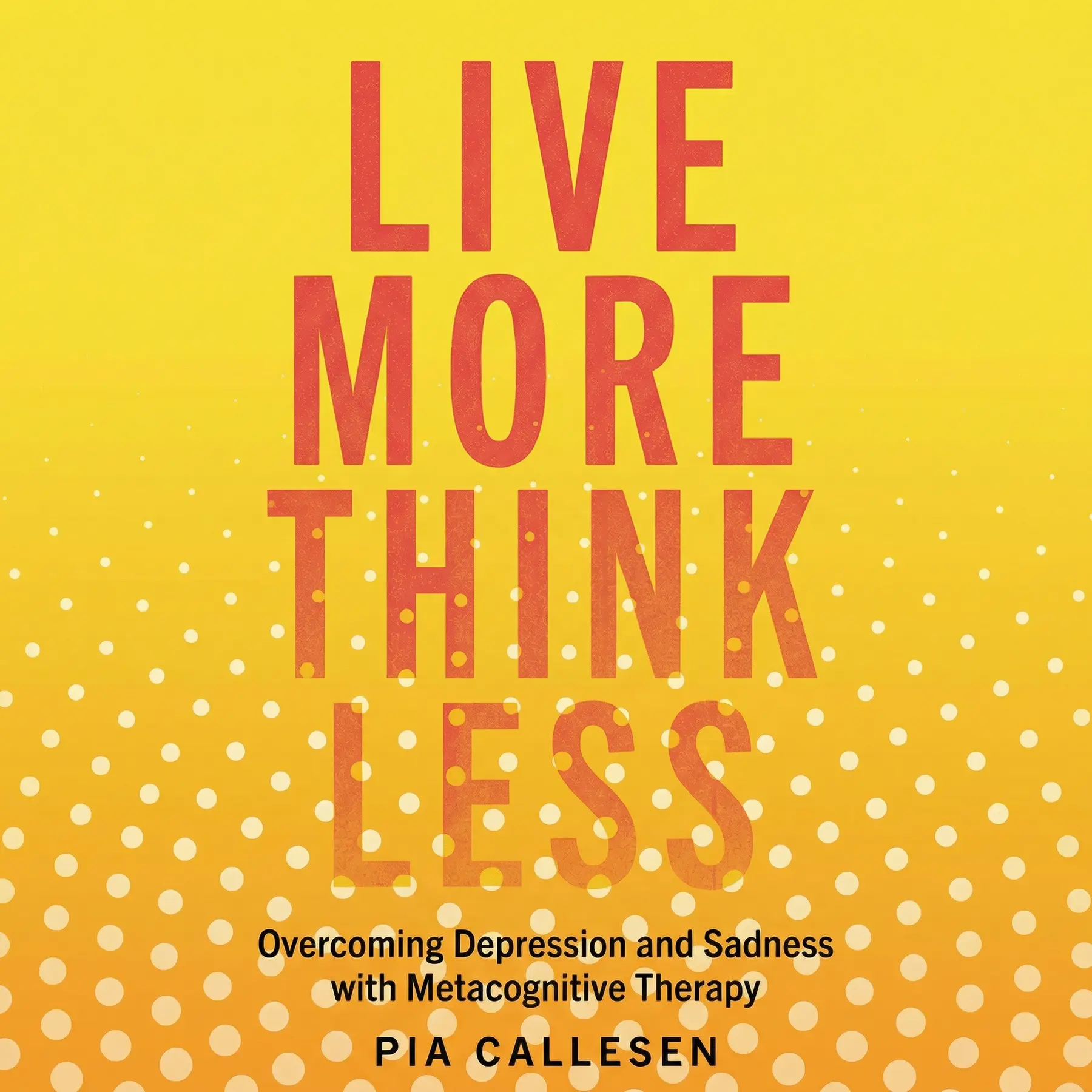
Live More Think Less: Overcoming Depression and Sadness with Metacognitive Therapy
By Pia Callesen
Discover a revolutionary approach to mental well-being by shifting your focus away from overthinking. This guide introduces metacognitive therapy as a tool to break the cycle of rumination and reclaim your life.
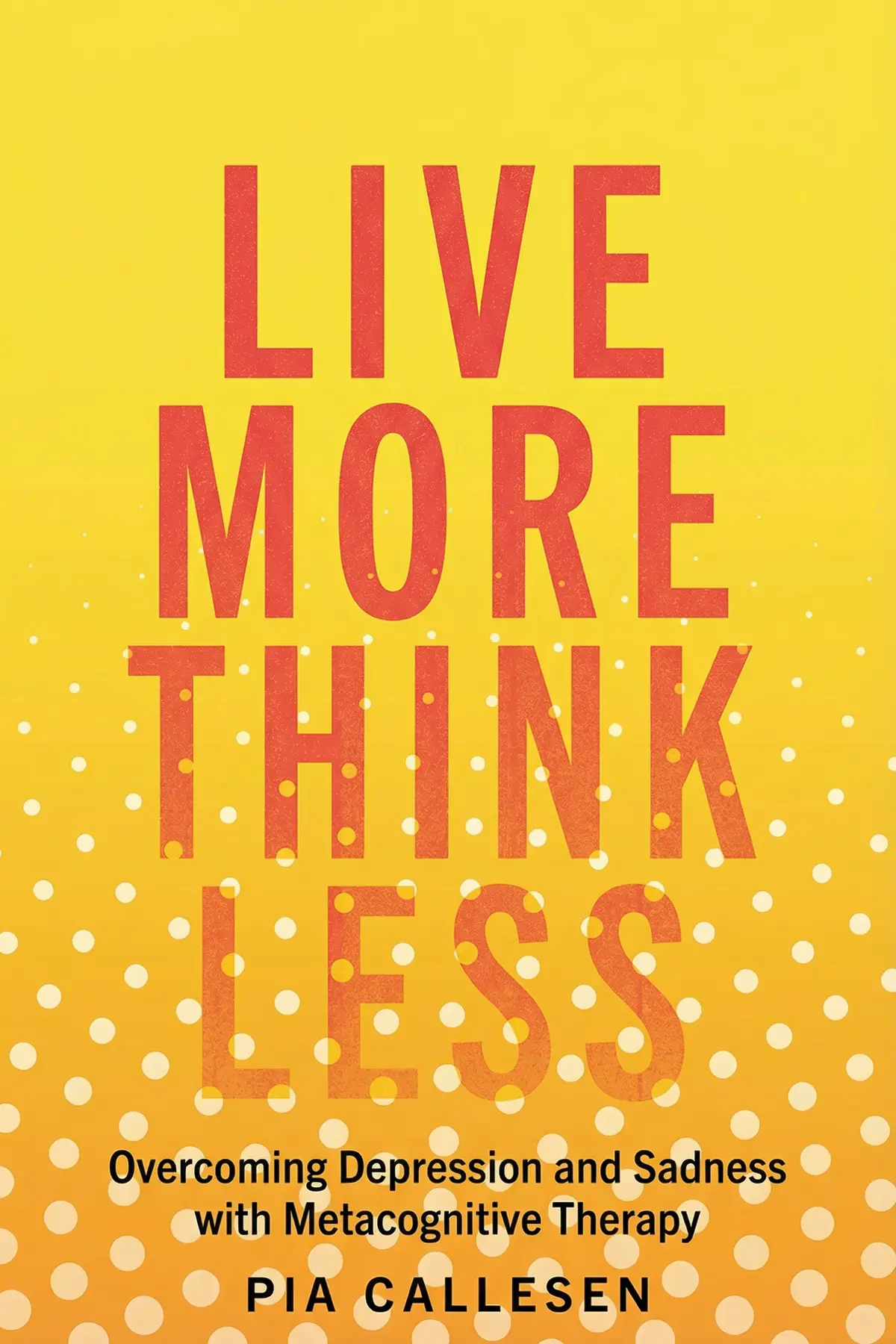
Table of Content
1. Introduction
1 min 53 sec
Picture your typical morning. You open your eyes, and almost immediately, a heavy cloud of yesterday’s anxieties begins to settle over your consciousness. Before you’ve even had your first cup of coffee, you are already deep in the trenches of a familiar mental battle. You examine every angle of your problems, convinced that if you just think about them hard enough or long enough, you’ll finally find the key to making the sadness go away. It feels productive, but in reality, you’re just digging a deeper hole.
For a long time, the prevailing wisdom has suggested that depression is largely a matter of biology—a chemical imbalance in the brain that requires medical intervention. The message was that our brains were fundamentally broken. However, a growing body of research is pointing toward a different culprit: our relationship with our own thoughts. It turns out that the suffering we experience isn’t necessarily caused by the problems themselves, but by how we choose to process them.
This is where metacognitive therapy, or MCT, comes into play. It suggests that the primary difference between someone who slides into a depressive episode and someone who remains resilient is a set of mental habits. The good news is that habits can be changed. By identifying the patterns of overthinking that keep us stuck and learning how to shift our attention, we can fundamentally transform our mental landscape.
The goal here isn’t to force yourself to think happy thoughts or to pretend that problems don’t exist. Instead, it’s about freeing yourself from the exhausting cycle of rumination so you can actually live your life. This journey is about learning to think less so that you can live more. As we move through these ideas, we’ll explore the architecture of your mind and the practical steps you can take to reclaim your mental freedom. Let’s look at how we can stop being spectators of our own misery and start being active participants in our own lives.
2. The Strategic Mind and the Levels of Thought
2 min 24 sec
Explore the three-layered structure of human thinking and discover why depression is often a result of the strategies we use to manage our mental events.
3. The Trap of the Cognitive Attentional Syndrome
2 min 42 sec
Uncover the four specific mental habits that create a depressive spiral and learn why monitoring your mood can actually make you feel worse.
4. Challenging the Beliefs that Keep You Stuck
2 min 26 sec
Learn how our hidden assumptions about overthinking prevent us from stopping, and why giving yourself permission to stop is a radical act of self-care.
5. Identifying Triggers and Changing the Channel
2 min 13 sec
Discover the ‘trigger thoughts’ that spark a depressive cycle and how to use the TV metaphor to regain your mental autonomy.
6. Practical Training for a Focused Mind
2 min 21 sec
Learn concrete exercises to strengthen your ‘attention muscle,’ from outward listening to the art of detached mindfulness.
7. Conclusion
1 min 54 sec
The most important thing to remember from this exploration of Pia Callesen’s work is that you are not your thoughts. For many of us, our identity has become so entwined with our analytical nature that we fear losing our overthinking habit would mean losing ourselves. But as we have seen, the ability to analyze is a tool, while chronic rumination is a cage. You can be a deeply thoughtful, creative, and intelligent person without being a prisoner of constant worry.
As we bring these ideas to a close, consider the metaphor of a physical wound. If you have a cut on your hand, the best way to help it heal is to keep it clean and then leave it alone. If you pick at it every hour to see how it’s doing, you will only cause more irritation and potentially an infection. Your mind works in much the same way. It has a natural capacity to heal from sadness and setbacks, provided you stop ‘picking’ at your thoughts through endless rumination.
Your path forward involves a simple but profound shift in your daily life. Start by becoming aware of your ‘trigger thoughts.’ When you feel that familiar pull toward the cycle of ‘why’ and ‘what if,’ recognize it for what it is: a choice. You don’t have to fight the thoughts or try to banish them. You just have to stop feeding them with your attention.
Try implementing a scheduled ‘worry time’ today. Give yourself fifteen or twenty minutes to think about everything that bothers you, and then, when the time is up, move on. Use your attention training exercises to keep your focus on the world around you—the sounds, the sights, and the people in your life. By choosing to think less about your problems, you are finally giving yourself the permission to live more. The weight you’ve been carrying isn’t a permanent part of who you are; it’s just a habit, and today is the perfect day to start letting it go.
About this book
What is this book about?
Many people believe that the only way to solve their emotional problems is to think through them more deeply. However, this book challenges that assumption, suggesting that our tendency to ruminate and worry is actually what keeps us trapped in depression and anxiety. By drawing on the principles of metacognitive therapy, the text explains that while we cannot control the initial thoughts that pop into our heads, we have full control over how much attention we give them. The promise of this summary is a practical roadmap for mental freedom. You will learn about the mechanisms of the mind, specifically how our beliefs about thinking influence our habits. Instead of analyzing the content of your sadness, you will discover techniques to step back and let thoughts pass by like clouds. This approach offers a way to stop being a prisoner of your own mind, providing actionable strategies like attention training and scheduled worry time to help you engage more fully with the world around you.
Book Information
About the Author
Pia Callesen
Dr. Pia Callesen is a prominent Danish therapist who has dedicated her career to the field of metacognitive therapy. She holds a PhD from Manchester University and has completed extensive specialist training at the MCT Institute. Her work focuses on providing evidence-based tools for overcoming depression and anxiety by changing the way people engage with their thoughts.
Ratings & Reviews
Ratings at a glance
What people think
Listeners find that while views differ on the book's repetitive style and basic approach to trauma, many value the practical introduction to Metacognitive Therapy. They appreciate the functional methods for curbing rumination, like designating a specific daily time for worry instead of dwelling on thoughts all day. Additionally, listeners emphasize the mind’s self-healing ability, with one listener mentioning the "passing train" metaphor’s effectiveness for letting go of intrusive thoughts. Many also report that the direct advice has greatly improved their mental clarity and confidence.
Top reviews
On
This book completely transformed my mental clarity during a really dark period. I was someone who thought that 'thinking harder' would eventually solve my problems, but Callesen shows that the thinking itself is often the problem. The 'passing train' metaphor really clicked for me; I don't have to jump on every train of thought that enters the station. Learning that I can just let a negative thought sit there without engaging with it has reduced my stress levels significantly. It’s straightforward, easy to digest, and avoids the usual psychological jargon that makes these books a chore to read. If you’re tired of feeling trapped by your own brain, just buy this. It really works if you’re willing to actually apply the rules every single day.
Show moreThawee
After hearing so much buzz about Pia Callesen, I had high expectations, and for the most part, they were met. The post-pandemic world has left so many of us in a state of constant 'threat monitoring,' and this book is the perfect antidote. I love the specific instruction to designate just one hour for worry. It’s such a simple shift, yet it’s incredibly effective at reclaiming the other 23 hours of your day. I feel more confident and less like a victim of my own intrusive thoughts. The metaphor of the 'train' is something I use every single day now. It’s a short read that packs a punch, focusing on action rather than endless, fruitless reflection. Highly recommended for everyone who feels stuck.
Show morePawinee
Finally got around to reading this after struggling with constant anxiety for months. The idea that we don't need to analyze every single feeling is a massive relief, especially in a culture that's obsessed with 'processing' emotions. I’ve started implementing the 'one-hour worry window,' and frankly, it’s a game-changer for my productivity. Instead of letting a trigger ruin my entire morning, I just tell myself I’ll think about it at 5 PM. Usually, by then, I don't even care anymore! My only gripe is that it feels a bit over-simplified at times. The author makes it sound like you can just 'stop' being sad, which is easier said than done when you're in the thick of it. Still, the focus on the mind's natural self-healing capacity is very empowering.
Show moreSomrutai
Ever wonder if your brain is just doing too much work for its own good? Pia Callesen introduces us to Metacognitive Therapy (MCT) with a lot of enthusiasm, and for me, it was a needed wake-up call. The core message is simple: stop ruminating and start living. She suggests that we have far more control over our attention than we think, which is a powerful message for chronic overthinkers. However, the tone can be quite dismissive of other psychological approaches that have helped millions. I liked the practical exercises and the focus on 'externalizing' attention to break the cycle of the Cognitive Attentional Syndrome. That said, I wish there was more scientific depth rather than just anecdotal success stories. It's a solid introduction but feels a bit like a long-form pamphlet.
Show moreSamroeng
Picked this up on a whim after a friend mentioned MCT, and I’m glad I did. The writing is very accessible and the chapters are short, which is perfect if your concentration is already shot from overthinking. I never realized how much time I wasted 'monitoring' my own mood until I read the sections on CAS. By shifting my focus to external tasks—music, work, even just the sounds in the room—I’ve managed to break several spirals this week. It does get a bit repetitive, and I think some of the claims about it being 70-80% effective are a bit bold without more provided evidence. Regardless, the practical tools are solid and much easier to implement than the heavy soul-searching required by other therapies.
Show moreIsabelle
Look, I’ll be direct about the writing style: it’s not going to win any literary awards. It reads like a transcript of a very enthusiastic lecture series. But the content itself? There is a nugget of gold in there. The realization that my mind can heal itself just like my body heals a physical wound was a major 'aha' moment for me. We often make things worse by 'poking' at our mental wounds through rumination. However, the book ignores the difficulty of breaking these habits. It tells you what to do but doesn't always acknowledge how hard it is to actually do it when you're in a pit. Good as a starting point, but you might need a real therapist to actually make it stick long-term.
Show moreJackson
As someone who spends way too much time in my own head, this was a breath of fresh air. It’s refreshing to be told that I don’t have to explore every dark corner of my psyche to be healthy. The book is very practical, focusing on attention training and reducing the 'threat monitoring' that keeps us stuck in anxiety. I do agree with other reviewers that it can be a bit repetitive, and the author's tone toward other types of therapy is a little bit arrogant. But personally? If it works, it works. The strategies for acting without waiting for motivation have helped me get back into a routine. It’s a blunt, no-nonsense guide to taking back control of your brain.
Show moreSoontorn
To be fair, the central premise of Metacognitive Therapy is quite intriguing, but the execution here feels incredibly repetitive. Callesen spends a significant portion of the book bashing traditional therapy forms—like CBT or psychoanalysis—rather than just getting to the heart of her own method. While the 'passing train' metaphor is a useful visual for detaching from intrusive thoughts, I found the 'just do it' advice bordering on condescending for those with genuine clinical depression. It completely ignores the complexities of trauma or perfectionism, treating the human mind like a simple machine you can just switch off. If you’ve never read a self-help book, this might feel fresh, but for anyone else, it’s old wine in new bottles. It’s a very quick read, yet it feels twice as long because of how many times the same three points are recycled.
Show moreSomsri
Not what I expected from a psychology book based on how much people rave about it. While I appreciate the attempt to offer a faster alternative to talking therapies, the presentation feels dangerously close to 'pull yourself up by your bootstraps.' The author claims that depression is essentially caused by over-analysis, which feels like a gross oversimplification that ignores biology and environmental factors. I found the constant repetition of the same case studies and metaphors quite grating after the first fifty pages. It’s a very black-and-white approach to the human experience. If your issues are mild, the 'worry time' technique might help, but for anything deeper, this feels inadequate. I wouldn't recommend it to anyone dealing with significant past trauma.
Show moreBae
The truth is, this felt more like a long marketing brochure than a therapy guide. It starts with the bold claim that most existing psychology is wrong and that MCT is the only real solution, which immediately put me on the defensive. The advice basically boils down to 'just stop thinking about it,' which is incredibly frustrating to read when you're struggling with clinical depression. It's repetitive to an annoying degree, as if the author didn't have enough material for a full book and had to stretch it out. The lack of nuance regarding trauma or life circumstances is a huge red flag for me. It feels like a 'one size fits all' solution for an incredibly complex problem. Use with caution.
Show moreFeatured in
Readers also enjoyed
Alcoholics Anonymous
Alcoholics Anonymous World Services
A Liberated Mind: How to Pivot Toward What Matters
Steven C. Hayes



ADHD an A-Z: Figuring It Out Step by Step
Leanne Maskell

AUDIO SUMMARY AVAILABLE
Listen to Live More Think Less in 15 minutes
Get the key ideas from Live More Think Less by Pia Callesen, plus 5,000+ more titles in English and Thai.
- 5,000+ titles
- Listen as much as you want
- 7-day free trial
- Cancel anytime







