
28 min 55 sec
Losing Eden: Why Our Minds Need the Wild
By Lucy Jones
Losing Eden explores the essential biological and psychological connection between humans and the natural world, revealing how our modern disconnection from the wild is fueling a silent global mental health crisis.
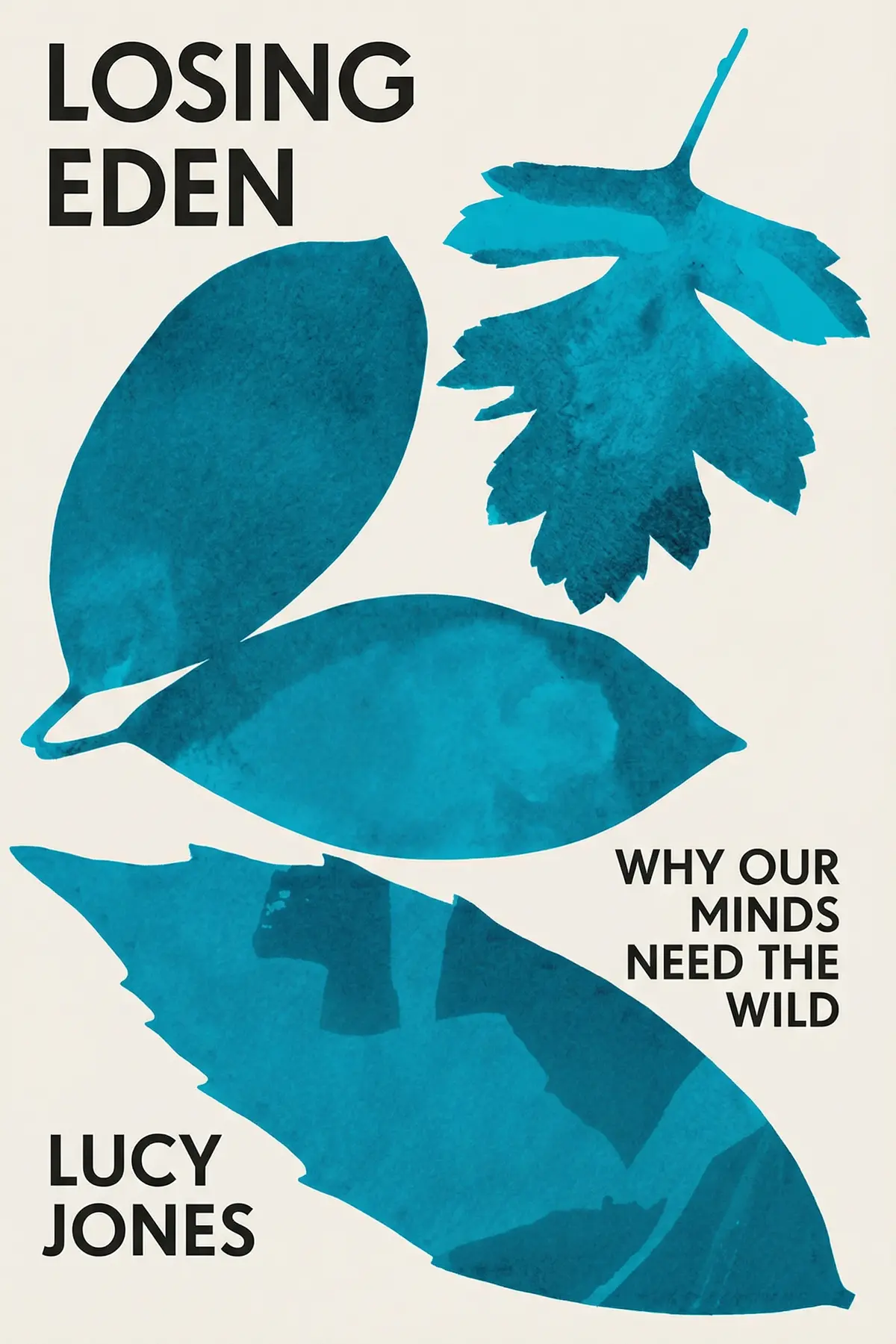
Table of Content
1. Introduction
1 min 58 sec
Imagine for a moment the environment in which you spend the vast majority of your life. For most of us in the modern world, that environment consists of four walls, a ceiling, and perhaps a window looking out onto a paved street. We live in a world of temperature-controlled boxes, artificial lighting, and digital interfaces. This shift from the wild outdoors to the sanitized indoors has happened with breathtaking speed in evolutionary terms, and we are only just beginning to understand the toll it is taking on our minds.
In this exploration of our relationship with the natural world, we are invited to look at the earth not as a resource to be extracted or a backdrop to be ignored, but as a vital component of our own biological machinery. Our alienation from the flora and fauna that once defined our existence is not just an aesthetic loss; it is causing severe psychological harm. We have begun to view nature as an optional extra—a pleasant frill for those with the time and money to visit it—rather than the very foundation of our mental and physical health.
But the tide is shifting. A new wave of scientific discovery is proving that our brains and bodies are hardwired to respond to the rhythms of the earth. From the microscopic organisms in the dirt beneath our feet to the vast canopies of ancient forests, the natural world offers a form of healing that modern medicine is only starting to quantify. This narrative will take us through the chemistry of our emotions, the evolutionary blueprints of our preferences, and the urgent need for a societal transformation.
Over the course of this journey, we will see how the lack of greenery in our lives contributes to a global crisis of well-being, how children are uniquely vulnerable to this ‘extinction of experience,’ and how we might begin to rebuild our cities and our legal systems to reflect our true nature. This is a story about coming home to the wild, and realizing that by saving the planet, we might actually be saving ourselves.
2. The Chemical Connection Between Soil and Serotonin
2 min 41 sec
Discover how a simple walk in the garden or a view of a single tree can trigger powerful biological responses that combat stress and depression.
3. Biophilia and the Blueprint of the Human Mind
2 min 44 sec
Explore the theory that our modern landscape preferences are actually ancient survival strategies coded into our genetic past.
4. The Crisis of the Disconnected Childhood
2 min 43 sec
As children spend less time outdoors than even prison inmates, we must examine the developmental cost of a life lived behind screens.
5. How Nature Recalibrates the Nervous System
2 min 54 sec
Learn about the fascinating physiological mechanisms, from negative ions to NK cells, that allow nature to heal our bodies and minds.
6. The Power of Green Spaces in Social Harmony
2 min 43 sec
From reducing crime in public housing to calming the most stressed prison populations, nature proves to be a vital tool for social health.
7. Bridging the Inequality Gap Through Nature
2 min 34 sec
Explore the concept of ‘equigenesis’ and how providing equal access to green spaces can dramatically reduce health disparities between the rich and poor.
8. The Legal and Philosophical Rights of Nature
2 min 35 sec
Shift from seeing the earth as property to seeing it as a living entity with its own rights through the emerging framework of Wild Law.
9. Language and the Psychology of Connection
2 min 57 sec
How the words we use—from ‘Natural Capital’ to ‘ecocide’—shape our ability to care for and connect with the world around us.
10. Redesigning Our Future: The Path to Biophilic Cities
2 min 55 sec
Learn how urban centers like Detroit are leading the way in transforming ‘urban decay’ into thriving, natural habitats for the 21st century.
11. Conclusion
2 min 11 sec
The journey through the pages of Losing Eden brings us back to a simple, yet profound truth: we are not separate from nature; we are nature. Our modern crisis of mental health, characterized by rising rates of anxiety, depression, and social fragmentation, is inextricably linked to our disconnection from the living world. The science is clear: our brains require the ‘soft fascination’ of the wild to recover from fatigue, our immune systems need the microorganisms of the soil to stay strong, and our communities need the shared space of the green world to remain peaceful and equitable.
We have seen that this connection is a biological inheritance, a biophilia coded into our very DNA. From the way children learn and grow to the way our nervous systems recalibrate in the presence of trees, every aspect of our well-being is tied to the earth. But this connection is under threat. The ‘extinction of experience’ is a real and present danger, leading to a world where we no longer care for what we no longer know. To reverse this, we must act on multiple levels—from the personal to the political. We must rethink our cities, rewrite our laws to protect the rights of nature, and reclaim a language that acknowledges our interdependence with all living things.
As a final piece of actionable advice, the book suggests that we seek out and embrace feelings of ‘awe.’ Scientific experiments have shown that experiencing awe in the face of nature’s vastness can significantly lower inflammation in the body, reduce narcissistic tendencies, and increase our sense of generosity toward others. Next time you feel overwhelmed by the demands of your indoor life, find a place that inspires that sense of wonder. Whether it’s a local park, a rugged coastline, or an ancient forest, let the wild remind you of who you truly are. By restoring the earth, we restore ourselves. It is time to step out of the loft extension of our modern minds and reconnect with the deep, wild foundations of our existence.
About this book
What is this book about?
Losing Eden is an investigative journey into the profound impact that nature has on the human psyche. Lucy Jones combines personal narrative with cutting-edge scientific research to demonstrate that our relationship with the earth is not a luxury, but a fundamental biological requirement. The book explores how contact with the wild affects our brains on a cellular level, from the serotonin-boosting bacteria in the soil to the stress-reducing effects of forest bathing. Beyond individual health, the book promises a broader look at the social and political implications of our environmental estrangement. It examines how the lack of green space exacerbates socioeconomic inequalities and how a new framework of 'Wild Law' could provide nature with the legal protections it needs to thrive. By the end, readers are offered a hopeful vision for the future: a world where urban design, education, and our own personal habits are restructured to prioritize our innate biophilia and restore the bond between humanity and the planet.
Book Information
About the Author
Lucy Jones
Lucy Jones is a writer, journalist, and author of Foxes Unearthed (2015). She previously worked at NME and the Daily Telegraph and has written about culture, science, and nature for BBC Earth, BBC Wildlife, The Sunday Times, the Guardian, and the New Statesman.
Ratings & Reviews
Ratings at a glance
What people think
Listeners consider *Losing Eden* a compelling and revelatory investigation into the vital connection between the environment and psychological well-being. They enjoy the way Lucy Jones blends intricate scientific findings—ranging from neuroscience to soil biology—with her own poignant story of healing. Furthermore, listeners prize the work's pressing plea for ecological preservation, describing the author’s stance as both expert and intensely fervent. They also remark that the writing remains very approachable for the public, with one listener highlighting how the "fascinating tidbits" concerning nature’s ability to reduce heart rates and cortisol levels offer a welcome scientific basis for our improved mood outside.
Top reviews
Orm
Lucy Jones has written something that feels like a vital love letter to the planet. It’s a rare book that manages to weave raw, personal vulnerability—specifically her own path through addiction recovery—with hard-hitting neurological data. I was particularly moved by the descriptions of the 'extinction of experience' as we lose species like swifts and hedgehogs. The way she describes nature 'picking her up by the scruff of the neck' during her darkest times resonated deeply with my own experiences of finding solace in the woods. While the science on cortisol and the prefrontal cortex is dense, Jones makes it accessible for anyone. It isn't just a book about plants; it's a book about what it means to be a human being in an increasingly artificial world. Essential reading for 2024.
Show moreVipawan
Wow, this was exactly the nudge I needed to get back into my garden. I loved the 'fascinating tidbits' scattered throughout—did you know that simply smelling cedar or looking at the patterns in ferns can physically alter your brain chemistry? Jones makes a brilliant case for why we need the 'wild' rather than just manicured parks. Her writing is incredibly evocative; you can almost smell the damp earth and green leaves as you read. Not gonna lie, the sections on species extinction were a tough read and made me quite emotional, but that discomfort is necessary. It’s more than just a science book; it’s an urgent call to fall back in love with the living world before it’s too late. I’ve already bought copies for three of my friends.
Show moreKru
Rarely does a book change the way I look at my daily walk, but this one did. Lucy Jones writes with such clarity and passion about the 'biological annihilation' we are currently witnessing. The way she links our mental health to the health of the planet is genius. We aren't just observing nature; we are part of it, and its decline is our decline. I was particularly struck by the concept of 'ecological grief.' It put a name to a feeling I’ve had for years but couldn't quite articulate. The book is beautifully balanced—part scientific inquiry, part memoir, and part manifesto. It’s deep, it’s beautiful, and it’s absolutely necessary for the times we are living in. I finished it feeling both heartbroken and incredibly motivated.
Show moreDome
Ever wonder why your heart rate drops the moment you step into a forest? Losing Eden dives deep into the 'biophilia' hypothesis to explain that very sensation. Jones explores fascinating research on how soil bacteria can actually boost our immune systems and even affect our mood. I found the section on 'nature therapy' and forest schools to be the strongest parts of the book. To be fair, a few chapters felt a little heavy on the statistics, which slowed the pacing down, but the overall message is too important to ignore. It really challenges the idea that green space is a luxury. Instead, Jones argues convincingly that access to the wild should be treated as a fundamental human right for everyone, regardless of their socioeconomic status. A very thoughtful, well-researched piece of non-fiction.
Show moreGiulia
After hearing it compared to Rachel Carson’s Silent Spring, I had high expectations, and for the most part, Losing Eden delivers. It’s a powerful explication of the biological and spiritual toll that our modern, 'boxed-in' lives are taking on us. Jones is incredibly thorough, visiting everything from ancient woodlands to the Svalbard Global Seed Vault. One statistic that absolutely floored me was that UK children spend less time outside than prison inmates. That alone should be a wake-up call for our society. The book is at its best when it bridges the gap between the internal world of our minds and the external world of the ecosystem. It's a sobering read, yet it remains hopeful by highlighting the biophilic urban planning that could save our collective sanity.
Show moreEvelyn
As a city dweller who often feels 'nature-starved,' this book hit home. Jones does a fantastic job of highlighting the inequality of nature access, showing how the 'health gap' is often tied to how much green space is available in a neighborhood. The fact that trees can actually lower crime rates was an eye-opener for me. The truth is, we’ve built our cities as if we are separate from the earth, and Losing Eden shows the psychological price we’re paying for that arrogance. My only minor gripe is that the tone can get a little dry when she lists study after study, but her personal anecdotes usually pop up just in time to save the momentum. It’s a very persuasive argument for changing how we design our future.
Show moreOn
Truth is, we've always known instinctively that the woods make us feel better, but having the empirical evidence to back it up is incredibly satisfying. Jones covers everything from wild swimming to the calming effect of fractals in nature. I appreciated that she didn't shy away from the darker side of things—the looming climate chaos and what it will do to the human spirit. The book is quite compact at 200 pages, yet it manages to cram in a massive amount of information without feeling too cluttered. There were a few points where the language got a bit academic, but she always brings it back to the big picture. It’s a motivating read that makes you want to go out and touch some dirt immediately.
Show moreTan
Picked this up because I loved Jones’ previous book on foxes, and while this is a very different beast, it’s just as meticulously researched. She has a real knack for taking complex biological findings and making them feel relevant to our everyday lives. Her exploration of how our estrangement from the wild leads to negative rumination and sadness was especially enlightening. Frankly, the middle section drags slightly with the sheer volume of data, and I agree with other reviewers that the 'Xena' future-scenarios felt a bit out of place in a non-fiction work. However, the core of the book is so strong and the writing is so earnest that these are small complaints. It’s a vital reminder that we ignore our connection to the land at our own peril.
Show moreChanpen
To be fair, while I agree with every word of the author’s message, the execution felt a bit repetitive for me. If you’ve already read much about the climate crisis or the benefits of the outdoors, a lot of this will feel like familiar ground. The chapters on rising stress levels in urban environments and the 'fight or flight' response cover well-trodden territory in the world of psychology. Look, the prose is lovely, and Lucy Jones is clearly passionate, but I couldn't help feeling this might have worked better as a long-form essay rather than a full-length book. I also found the speculative fiction prologue about the year 2100 a bit jarring compared to the scientific tone of the rest of the work. It’s a good primer, just not quite as groundbreaking as I’d hoped.
Show moreSombat
I'll be blunt: I struggled with the methodology in some of the studies cited here. Jones relies on a lot of psychological research where the link between cause and effect feels a bit tenuous. Is it the trees that lower stress, or is it just the break from our screens? Without lab-controlled conditions, it's hard to be certain. However, I found the chapters where she veers into soil biology and the medicinal use of bacteria to be much more compelling and grounded. The book is definitely well-written, but I think a more skeptical eye toward some of the 'nature-as-panacea' claims would have made it stronger. Still, it’s a nice reminder to get out of our urban boxes more often, even if the science isn't always 100% airtight.
Show moreReaders also enjoyed
Alcoholics Anonymous
Alcoholics Anonymous World Services
A Liberated Mind: How to Pivot Toward What Matters
Steven C. Hayes
AUDIO SUMMARY AVAILABLE
Listen to Losing Eden in 15 minutes
Get the key ideas from Losing Eden by Lucy Jones, plus 5,000+ more titles in English and Thai.
- 5,000+ titles
- Listen as much as you want
- 7-day free trial
- Cancel anytime







